The long-held vision of individualized sound, once confined to the realm of science fiction and speculative technology, is poised to become an everyday reality following a groundbreaking announcement from Pohang University of Science and Technology (POSTECH). Researchers at the South Korean institution have engineered a novel speaker system, dubbed MiPAL, that leverages advanced acoustic and elastic metamaterials to direct sound precisely to a single listener while effectively eliminating lateral leakage. This innovative low-cost, single-element device promises to fundamentally alter how we experience audio in shared environments, ushering in an era of personalized public sound without the pervasive issue of noise pollution. The development marks a significant leap from conceptual validation to practical application in the burgeoning field of metamaterial engineering, offering a solution that sounds remarkably similar to a sophisticated gadget plucked straight from a James Bond film.
The Enduring Quest for Private Sound: A Historical Overview
For decades, engineers and acousticians have grappled with the inherent challenge of sound propagation: unlike light, which travels in relatively straight lines and can be easily directed, sound naturally disperses in all directions, bleeding into surrounding spaces. This fundamental characteristic has made the creation of truly "private" audio zones without the use of headphones an elusive goal. Early attempts to achieve directional audio often relied on complex and expensive parametric array loudspeakers. These systems typically employ hundreds of individual emitters meticulously arranged to generate highly focused sound beams by modulating ultrasonic waves with audible content. While effective to a degree, their complexity and prohibitive cost largely confined them to niche applications, such as specialized museum exhibits or industrial settings where budget constraints were less of an issue.
Simpler, single-element designs have also been explored, but these frequently encountered a critical flaw: unwanted vibrations within the speaker structure would invariably lead to significant audio leakage, compromising the desired directional effect. The resulting "tinny audio bleed" and "annoyed glances" from unintended listeners became an all too familiar outcome, underscoring the limitations of conventional approaches. The challenge lay not just in directing sound, but in doing so efficiently, cost-effectively, and without generating unwanted auditory disturbances for those nearby. This historical context highlights the magnitude of POSTECH’s achievement, as MiPAL addresses these long-standing limitations with an elegantly integrated solution.
Unpacking MiPAL’s Innovative Engineering: The Metamaterial Advantage
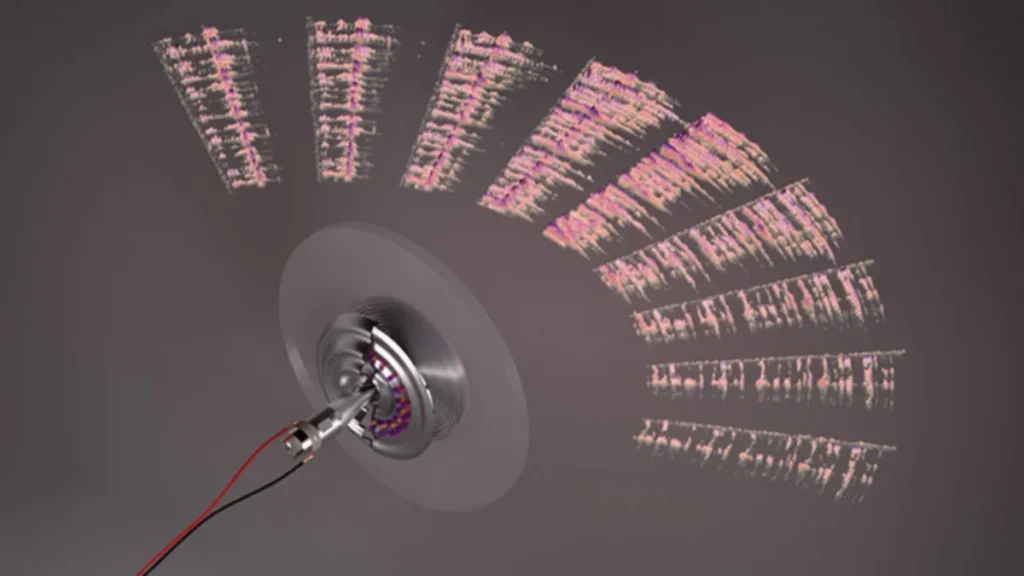
At the heart of MiPAL’s revolutionary capability lies its ingenious integration of dual-domain metamaterials within a single transducer. Metamaterials are artificially engineered materials designed to possess properties not found in naturally occurring substances, often achieved through precisely structured sub-wavelength geometries. In MiPAL’s case, these materials are tailored to manipulate sound waves in unprecedented ways. The system functions as a highly sophisticated parametric array loudspeaker, modulating high-frequency ultrasound waves with the desired audible content. This process leverages the nonlinear behavior of sound in air, allowing the modulated ultrasound to self-demodulate as it travels, generating a focused beam of audible sound that behaves much like a ray of light.
The critical innovation is the "dual-metamaterial safeguard." At the front of the speaker, an acoustic metasurface acts as a specialized lens. This metasurface is precisely engineered to shape the ultrasonic waves, coercing them into a narrow, highly directional beam. Its function is analogous to an optical lens focusing light, ensuring that the sound energy is concentrated along a specific trajectory towards the intended listener. Simultaneously, the rear of the MiPAL transducer incorporates elastic meta-units. These structures are designed to suppress parasitic vibrations within the speaker itself, which are a common source of unwanted lateral sound leakage in conventional single-element designs. By actively mitigating these internal vibrations, the elastic meta-units ensure that the sound remains contained within the desired beam, preventing it from spreading sideways and disturbing others.
Professor Junsuk Rho, a lead researcher on the project, emphasized the significance of this integrated approach. "By co-designing the metamaterials and the ultrasonic device as a single system, we overcame the limitations of cost, complexity, and design flexibility at the same time," Rho stated. He further highlighted the broader impact of this work on the field of metamaterials: "Research on acoustic and elastic metamaterials has largely remained at the stage of validating principles and demonstrating concepts. This study is the first to integrate metamaterials into a functional device and demonstrate their potential for practical use." This statement underscores MiPAL not just as a product innovation, but as a pivotal moment in the transition of metamaterial science from theoretical exploration to tangible engineering solutions.
Performance and Practical Demonstrations: Proof of Concept
The MiPAL device exhibits impressive performance characteristics, demonstrating its viability for a wide array of applications. It is capable of directing audio across a broad frequency range, specifically from 500 Hz to 10 kHz. This spectrum is particularly crucial as it covers more than four octaves of the audible range, encompassing the majority of human speech frequencies and a significant portion of musical content. This broad coverage ensures that the private audio experience is rich and comprehensive, whether the listener is engaged in a phone call, listening to music, or consuming multimedia content.
To validate its effectiveness in real-world scenarios, the researchers conducted simulated aircraft seating tests. These simulations utilized real broadcast and music signals, meticulously designed to replicate the challenging acoustic environment of a packed passenger cabin. The results were compelling: the addition of the elastic meta-units dramatically improved directional control, effectively delivering isolated sound to individual passengers without disturbing those in neighboring seats. For instance, in comparative tests, the sound pressure level (SPL) for the target listener remained high and clear, while measurements taken at adjacent seat positions showed a significant drop in SPL – in some cases, a reduction of 15-20 decibels or more compared to the target, making the sound virtually inaudible to others. This level of attenuation is critical for achieving true auditory privacy in close quarters. Such rigorous testing provides concrete evidence that MiPAL can overcome the noise bleed issues that have plagued previous directional audio attempts.
Manufacturing for the Masses: Scalability and Customization
Beyond its technological prowess, MiPAL is engineered with an eye towards practical adoption and commercialization. A key aspect of its design philosophy is ease of manufacturing and rapid customization. The modular metamaterial structures, both the acoustic metasurface and the elastic meta-units, are fabricated using advanced 3D printing techniques. This approach offers several distinct advantages. Firstly, 3D printing allows for the rapid prototyping and iteration of complex designs, accelerating the development cycle. Secondly, it enables cost-effective production, particularly for intricate geometries that would be challenging or expensive to create with traditional manufacturing methods.
Crucially, the modular nature of the metamaterial components means that engineers can quickly adapt and reconfigure the design to suit varying environments and specific operational requirements. This adaptability is vital for widespread application. For example, the beam angle can be adjusted to accommodate different seat spacings in various transportation modes (e.g., a tighter beam for closely packed economy seats, a broader one for more spacious business class). The system can also be recalibrated for unique operating conditions, such as different ambient noise levels or the specific acoustical properties of a room. This flexibility ensures that MiPAL can be seamlessly integrated into diverse settings, from the tightly constrained confines of an aircraft cabin to the expansive, open spaces of a museum hall, maximizing its utility and market reach.
Transforming Public and Private Spaces: Broader Impact and Future Applications
The implications of MiPAL’s commercialization are profound and far-reaching, promising to redefine our relationship with sound in virtually every public and semi-private domain. While the era of headphones, particularly for personal audio devices, is unlikely to end tomorrow, the technology paves the way for a significant reduction in our reliance on them for privacy in shared spaces.
One of the most immediate and impactful applications will be in transportation. Commuters on planes, trains, and even autonomous vehicles will be able to enjoy individualized entertainment, listen to personalized announcements, or conduct private phone calls without the need for headphones and, crucially, without disturbing fellow passengers. Imagine watching an explosive action movie on a jammed subway train with zero headphones, the passenger pressed right against your shoulder hearing not a single thud or explosion. The elimination of "tinny audio bleed" and the associated "annoyed glances" could significantly enhance the travel experience, reducing auditory clutter and fostering a more serene environment. This extends beyond entertainment; in an emergency, specific passengers could receive targeted instructions without causing general alarm.
In public venues, MiPAL could revolutionize information delivery. Museum visitors could receive tailored exhibit commentary simply by standing in front of a specific display, creating a deeply personalized and immersive educational experience without the need for handheld audio guides or crowded speaker systems. Similarly, art galleries, historical sites, and even theme parks could leverage this technology for localized audio narratives. Libraries could offer quiet listening zones, and airports or shopping malls could direct specific announcements or advertisements to individuals in particular areas without broadcasting them to everyone.
The workplace stands to benefit immensely. Open-plan offices, often criticized for their high noise levels and lack of auditory privacy, could be transformed. Employees could take private video calls, listen to focused work-related audio, or engage with multimedia content without disturbing colleagues. Meeting rooms could facilitate discreet side conversations or targeted information delivery to specific participants.
Even in healthcare settings, the technology holds promise. Hospitals could deliver private patient information to individuals in waiting rooms or recovery areas, enhancing confidentiality and reducing anxiety. Public health announcements could be directed to specific groups without causing undue concern for others.
The societal benefits extend to a reduction in overall noise pollution. In an increasingly urbanized world, auditory clutter contributes to stress and diminishes quality of life. Technologies like MiPAL, by localizing sound, contribute to quieter, more harmonious public spaces, improving well-being for everyone. The simple, yet culturally significant, prospect of ending the "suffering through a stranger’s phone call on speakerphone" highlights the profound impact this technology could have on daily civility and shared public etiquette.
Challenges and the Road Ahead
While MiPAL presents a monumental leap forward, the journey from laboratory innovation to widespread commercial adoption will undoubtedly involve further challenges. Key considerations include:
- Commercialization Costs: While the single-element design and 3D printing suggest a lower cost than previous complex arrays, scaling production to meet mass market demand will require significant investment and optimization of manufacturing processes.
- Aesthetic Integration: For many applications, particularly in consumer electronics or public spaces, the physical integration of the speakers must be discreet and aesthetically pleasing. Design considerations for seamless blending into various environments will be crucial.
- Power Consumption: The energy efficiency of the system will be important, especially for battery-powered devices or large-scale installations where cumulative power draw could be substantial.
- Regulatory Approvals and Standards: As a new class of audio technology, MiPAL may necessitate the development of new industry standards or regulatory guidelines, particularly concerning ultrasonic emissions, even if they are modulated for audible content.
- User Acceptance and Education: Introducing a novel way of experiencing sound may require a period of user adaptation and education to fully appreciate its benefits and integrate it into daily habits.
- Limitations in Extreme Environments: While effective in many scenarios, the performance in extremely noisy environments (e.g., construction sites, concert venues) may still face limitations, requiring further research into noise cancellation or adaptive beamforming.
Despite these hurdles, the foundational technology developed by POSTECH researchers represents a robust and versatile platform. Future research directions could include miniaturization for integration into even smaller devices, expansion of the frequency range to encompass the full human hearing spectrum, and potentially even multi-user targeting from a single source, enabling different individuals in proximity to hear different audio streams simultaneously.
In conclusion, MiPAL stands as a testament to the power of interdisciplinary research, blending advanced physics with practical engineering. By harnessing the unique properties of acoustic and elastic metamaterials, POSTECH has delivered a solution that not only promises to personalize our auditory experiences but also to alleviate the pervasive problem of noise pollution in public spaces. As this technology moves closer to commercialization, the silent revolution of private sound is set to redefine the soundscapes of our future, offering a sophisticated and elegant answer to a long-standing challenge.