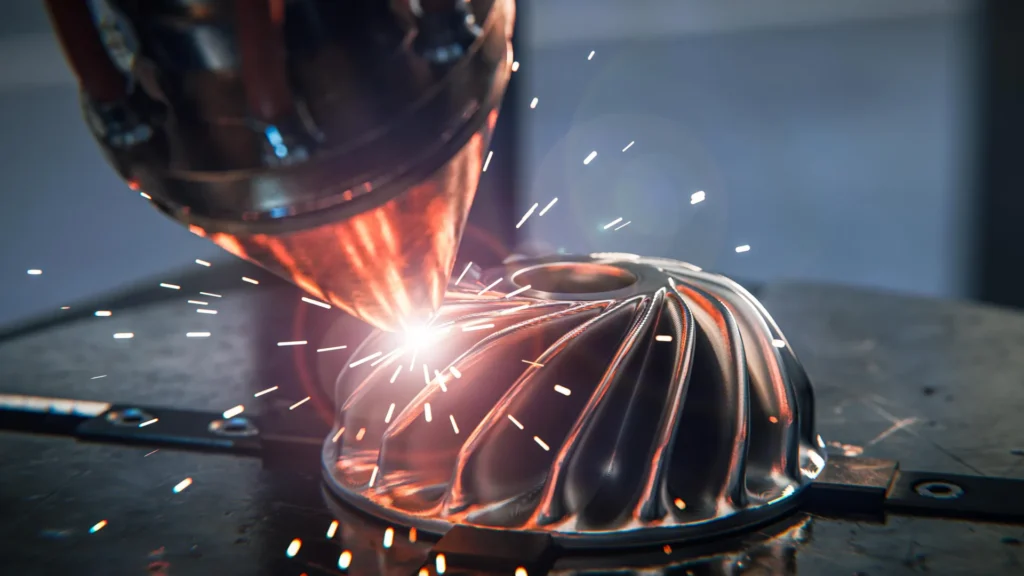
The field of material science has reached a significant milestone as researchers from Hiroshima University and Mitsubishi Materials Hardmetal Corporation successfully demonstrated a novel additive manufacturing technique for tungsten carbide-cobalt (WC-Co) cemented carbides. This development, published in the International Journal of Refractory Metals and Hard Materials, addresses a decades-old manufacturing bottleneck: the difficulty of shaping one of the world’s hardest industrial materials without incurring massive waste or compromising the material’s structural integrity. By utilizing a laser hot-wire irradiation process that softens rather than completely melts the material, the team has provided a blueprint for producing high-performance industrial tools that are both cheaper to manufacture and more resource-efficient.
The Industrial Significance of Tungsten Carbide-Cobalt
Tungsten carbide-cobalt, often referred to as "cemented carbide" or simply "carbide" in machining circles, is a composite material that serves as the backbone of modern heavy industry. It is a metal matrix composite where fine particles of tungsten carbide serve as the aggregate and cobalt acts as the binder. This combination results in a material that possesses a unique duality: the extreme hardness and heat resistance of a ceramic, and the toughness and ductility of a metal.
In practical terms, WC-Co is the gold standard for cutting tools, drill bits for mining and oil exploration, and high-wear components in the automotive and aerospace sectors. Its ability to maintain a sharp edge even when subjected to the intense heat generated by high-speed friction makes it indispensable. However, the very properties that make it useful—its resistance to deformation and wear—make it an absolute nightmare to process. Traditionally, creating a complex shape out of carbide involves expensive diamond-tipped grinding tools or slow electrical discharge machining, both of which contribute to high production costs and significant material loss.
The Limitations of Conventional Powder Metallurgy
For over a century, the primary method for producing cemented carbides has been powder metallurgy. This process involves mixing tungsten carbide and cobalt powders, pressing them into a "green" compact shape, and then sintering them in a furnace at temperatures typically ranging from 1,300°C to 1,500°C. During sintering, the cobalt binder melts and "wets" the carbide grains, pulling them together into a dense, solid structure.
While effective, powder metallurgy is inherently limited. It is best suited for simple, uniform shapes. Producing intricate geometries requires the use of molds, which are expensive to design and manufacture, or extensive post-process machining. Because tungsten and cobalt are classified as critical raw materials with volatile pricing and complex supply chains, the waste generated during machining—where as much as 50% of the raw material can be ground away—represents a significant economic and environmental burden.
The Additive Manufacturing Breakthrough: Laser Hot-Wire Irradiation
To solve these challenges, the research team, led by Assistant Professor Keita Marumoto of Hiroshima University’s Graduate School of Advanced Science and Engineering, turned to additive manufacturing (AM). Commonly known as 3D printing, AM builds parts layer-by-layer, adding material only where it is needed. However, 3D printing WC-Co is notoriously difficult. Conventional laser powder bed fusion (LPBF) often leads to "decarburization," where the intense heat of the laser causes the carbon in the tungsten carbide to react and escape as gas, leaving behind brittle phases that cause the tool to fail prematurely.
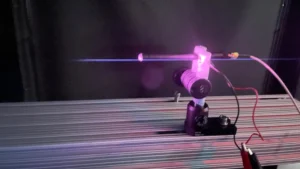
The Hiroshima team utilized a specialized process called laser hot-wire irradiation, or laser hot-wire welding. In this setup, a filler wire of the material is pre-heated using an electric current before it even reaches the laser’s focal point. When the pre-heated wire meets the laser beam at the substrate, it requires significantly less energy to reach a state of "softening" or partial melting.
This distinction is the crux of the study’s success. By avoiding the total liquefaction of the tungsten carbide particles, the researchers were able to preserve the original microstructure of the material. "The approach of forming metal materials by softening them rather than fully melting them is novel," Marumoto explained. This controlled heat input prevents the dreaded grain growth—where microscopic crystals expand and weaken the material—and limits the chemical decomposition of the carbide.
Experimental Configurations and Technical Results
The study meticulously compared two different fabrication arrangements to determine the most stable method for depositing the carbide onto an iron base.
-
Rod-Leading Method: In this configuration, the cemented carbide rod (the filler material) was positioned in front of the laser beam relative to the direction of travel. While this allowed for rapid deposition, the researchers found that it caused some decomposition of the tungsten carbide in the upper layers of the build, leading to microscopic defects and inconsistencies in hardness.
-
Laser-Leading Method: In this setup, the laser beam preceded the filler wire, irradiating the space between the rod and the base material. This proved more successful in maintaining a consistent temperature profile. To further improve the bond and prevent cracking caused by the difference in thermal expansion between the carbide and the iron base, the team introduced a nickel alloy-based middle layer. This buffer zone absorbed the thermal stresses that typically occur during the rapid cooling phases of 3D printing.
The results were verified using the Vickers hardness test (HV), a standard measurement of a material’s resistance to indentation. The researchers achieved a hardness level exceeding 1400 HV. To put this in perspective, high-strength structural steel typically measures around 200 HV, while hardened tool steels reach about 700-800 HV. Achieving 1400 HV through additive manufacturing puts the printed material on par with traditionally sintered industrial carbides, confirming that the 3D-printed version does not sacrifice performance for efficiency.
Economic and Geopolitical Context
The implications of this research extend beyond the laboratory and into the realm of global economics. Tungsten is currently listed as a "critical mineral" by the United States, the European Union, and Japan. Approximately 80% of the world’s tungsten supply is controlled by China, making the global supply chain vulnerable to geopolitical tensions and export restrictions. Similarly, cobalt mining is concentrated in the Democratic Republic of Congo, raising significant ethical and sustainability concerns regarding its extraction.
By enabling "near-net-shape" manufacturing—where a part is printed almost exactly to its final dimensions—this new AM technique could drastically reduce the demand for these raw materials. Instead of carving a small tool out of a large block of carbide, manufacturers can print the tool to size, or even better, print a carbide coating only on the high-wear edges of a cheaper steel tool. This "multi-material" approach could lower the cost of high-performance machinery by 30% to 50%, making advanced manufacturing more accessible to smaller enterprises.
Industry Reactions and Future Trajectory
While the research is still in the experimental phase, the involvement of Mitsubishi Materials Hardmetal Corporation suggests a clear path toward commercialization. Industry analysts suggest that the ability to 3D print carbide could revolutionize the "on-demand" spare parts market. For example, a mining operation in a remote location could potentially print a replacement drill bit on-site rather than waiting weeks for a specialized part to be shipped.
However, the researchers acknowledge that hurdles remain. The current study focused on depositing the material onto flat or simple surfaces. The next phase of research will focus on:
- Reducing Micro-Cracking: Even with the nickel buffer layer, the high thermal gradients of laser processing can induce tiny cracks that might expand under the heavy vibrations of industrial use.
- Complex Geometries: Developing software and hardware controls to print internal cooling channels or complex helical shapes for specialized drill bits.
- Scalability: Moving from laboratory-scale "beads" of material to large-scale industrial components.
"The potential for this process to be applied to other refractory metals and hard materials is immense," said Marumoto. Indeed, if this softening-based additive manufacturing can be perfected, it may change how we think about "unworkable" materials, turning the world’s toughest substances into flexible building blocks for the next generation of industrial technology.
Conclusion: A Foundation for the Future
The Hiroshima University study serves as a vital proof of concept. It demonstrates that the trade-off between manufacturing efficiency and material hardness is not an absolute law. Through the precise application of laser energy and the strategic use of pre-heated filler materials, it is possible to bypass the wastefulness of the past. As the team continues to refine the process, the industrial world moves one step closer to a future where the most durable tools are also the most sustainable and cost-effective to produce. This research doesn’t just offer a new way to make tools; it offers a new way to conserve the precious elemental resources that drive global progress.