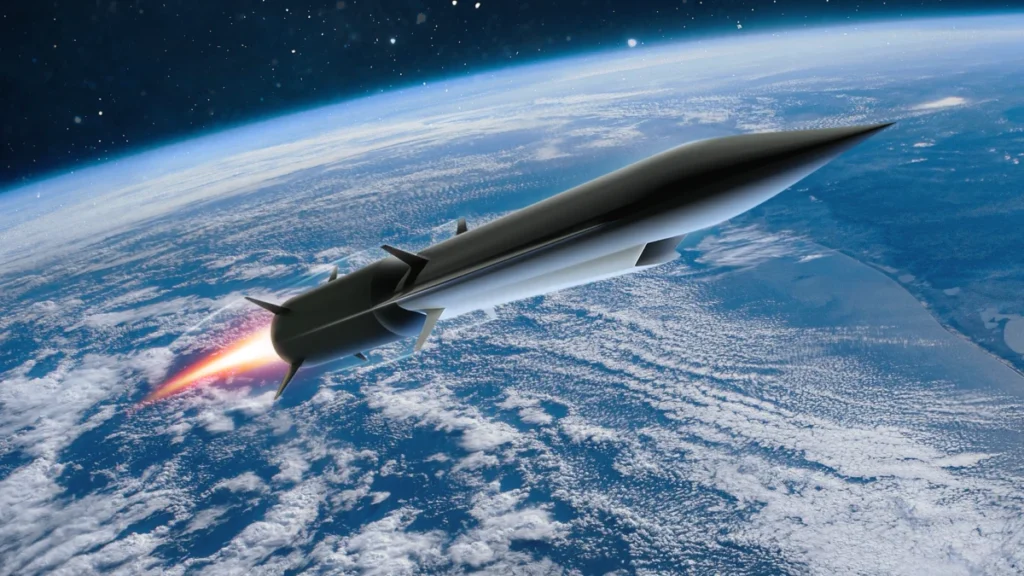
GE Aerospace has secured a pivotal new contract from the Defense Innovation Unit (DIU) to significantly advance the development of a liquid-fueled hypersonic test platform. This initiative falls under the auspices of the Hypersonic and High-Cadence Airborne Testing Capabilities, or HyCAT, program, marking a crucial step in the United States’ broader strategy to accelerate its capabilities in hypersonic flight. The core objective of this ambitious project is to streamline and expedite hypersonic flight testing, making it both faster and more repeatable—a critical endeavor aimed at resolving one of the most significant bottlenecks currently impeding the progress of advanced weapons systems and other technologies designed to operate at speeds exceeding Mach 5. The sophisticated platform being developed by GE Aerospace is envisioned as a versatile test bed, capable of executing a wide array of flight demonstrations and generating invaluable real-world data essential for the future design and refinement of next-generation hypersonic systems.
Unlocking Rapid Iteration in Hypersonic Development
The latest contractual agreement represents a significant escalation of efforts that commenced in 2023. During that initial phase, GE Aerospace received foundational funding for concept development and strategically assembled a specialized team dedicated to the complex engineering challenges posed by the platform. This new phase propels the project into a more intensive design and development stage, focusing on a unique combined booster and cruiser configuration. This innovative design will function as an "all-up-round" (AUR) test bed, specifically engineered to support and facilitate rigorous hypersonic flight testing.
The architectural philosophy behind this integrated system is to provide an exceptionally flexible and adaptable platform for evaluating diverse hypersonic technologies. Crucially, this approach aims to circumvent the current necessity of developing a bespoke flight-test vehicle for every new system or component under evaluation. Such a paradigm shift is expected to dramatically reduce both the time and financial investment traditionally associated with collecting essential real-world performance data during the development lifecycle. The company frames this concentrated effort as an integral component of a wider national imperative to dramatically increase the pace and frequency of hypersonic testing. Steve Russell, vice president and general manager of Edison Works at GE Aerospace, emphasized the strategic importance of this acceleration, stating that it is fundamental to the successful development and deployment of next-generation capabilities that are vital for national security.
The Intricate Challenges of Hypersonic Flight Testing
The strong emphasis placed on developing a dedicated, reusable test platform underscores the unique and extraordinarily difficult testing requirements inherent to hypersonic systems. Engineers face an unparalleled challenge in acquiring accurate flight data across a multitude of critical subsystems, including propulsion, advanced aerodynamics, sophisticated thermal management, precise guidance and control, and novel materials science. These elements must be evaluated under operational conditions that are incredibly arduous and, critically, exceedingly difficult to accurately reproduce or simulate within ground-based testing facilities.
Hypersonic flight, defined as speeds above Mach 5 (approximately 3,800 miles per hour at sea level), generates extreme conditions. The vehicle experiences intense aerodynamic heating, where temperatures can soar to thousands of degrees Fahrenheit, posing immense challenges for material integrity and thermal management systems. The air itself behaves differently at these speeds, requiring novel aerodynamic designs and control surfaces to maintain stability and maneuverability. Propulsion systems, such as scramjets (supersonic combustion ramjets), are highly complex and demand precise fuel-air mixing and combustion efficiency under extreme velocity and pressure. Furthermore, accurate navigation and targeting at such high speeds, often combined with unpredictable atmospheric conditions, necessitate advanced guidance systems that can process data and make rapid adjustments with unprecedented precision. Collecting reliable data on these interdependencies in a true flight environment is paramount for validating designs and ensuring operational effectiveness.
Program Chronology and Key Milestones
The journey towards a fully operational HyCAT platform has followed a structured and progressive timeline, with GE Aerospace and its consortium of partners successfully navigating several critical development milestones since the program’s inception.
- 2023: Initial Concept Development: The foundational year saw the program initiate with concept development, laying the theoretical groundwork and defining the core requirements for the hypersonic test bed. This phase involved extensive research into propulsion, aerodynamics, and structural integrity, establishing the feasibility of the liquid-fueled approach.
- 2024: Subsystem Refinement and Evaluation: Building on the initial concepts, 2024 was dedicated to the detailed refinement and rigorous evaluation of individual subsystems. This included extensive simulations and bench testing of components related to propulsion, thermal management, guidance, and control systems, ensuring their theoretical performance aligned with program objectives.
- 2025: Preliminary Design Review (PDR) for All-Up-Round (AUR): A significant achievement in 2025 was the successful completion of the Preliminary Design Review (PDR) for the integrated all-up-round configuration. This critical review assessed the overall system design, ensuring it met performance, cost, and schedule targets, and validated the architectural choices for the combined booster and cruiser.
- 2026: Full AUR Integration and Component-Level Testing: The current phase in 2026 is focused on the comprehensive integration of the AUR, bringing together all refined subsystems into a cohesive whole. Concurrently, this period will include the commencement of the first qualification and component-level testing of key subsystems. This marks a crucial transition from purely design-focused work towards tangible hardware validation, providing essential empirical data on component performance under simulated operational stresses.
Looking ahead, subsequent phases are anticipated to involve ground-based static fire tests of the integrated propulsion system, followed by a series of captive carry tests where the platform is flown attached to a carrier aircraft to gather aerodynamic data. The ultimate goal remains a series of independent flight tests, where the platform will demonstrate its full hypersonic capabilities and its capacity to accurately collect and transmit crucial flight data for analysis.
The Strategic Imperative: The Global Hypersonic Race
The development of programs like HyCAT is not merely a technological pursuit but a strategic imperative driven by the rapidly evolving geopolitical landscape. The United States military’s renewed emphasis on increasing the availability and accessibility of hypersonic flight-test infrastructure reflects a broader national effort to regain and maintain technological superiority in an era of great power competition. Both China and Russia have made significant strides in developing and deploying hypersonic weapon systems, creating an urgent operational need for the U.S. to accelerate its own capabilities.
China, for instance, has demonstrated advanced hypersonic glide vehicles and has heavily invested in extensive testing facilities. Russia has also publicly announced the deployment of its Kinzhal air-launched ballistic missile and the Avangard hypersonic glide vehicle. These developments have highlighted a potential gap in U.S. defensive and offensive capabilities, spurring a rapid push from the Pentagon to fast-track its own programs. The HyCAT program, by offering more frequent and cost-effective opportunities to test critical technologies in realistic flight conditions, directly supports this national security objective. It enables developers to identify and rectify problems earlier in the development cycle, facilitating quicker iterations and ultimately accelerating the fielding of robust hypersonic systems. This approach aligns with the Pentagon’s "prototyping and experimentation" strategy, which aims to infuse agility and speed into defense acquisition processes.
DIU’s Role in Accelerating Innovation
The Defense Innovation Unit (DIU) plays a unique and critical role in this ecosystem. Established in 2015, DIU’s mission is to accelerate the adoption of commercial technology for national defense. It acts as a bridge between the Department of Defense and the commercial innovation base, identifying cutting-edge technologies and rapidly prototyping solutions to address pressing military challenges. The HyCAT program is a prime example of DIU’s mandate in action. By engaging with industry leaders like GE Aerospace, DIU aims to inject commercial best practices, speed, and efficiency into complex defense projects.
DIU’s involvement in HyCAT underscores a broader strategy to "democratize" access to hypersonic testing. Historically, access to specialized test ranges and flight vehicles has been limited, expensive, and time-consuming, often creating a bottleneck for smaller innovators or academic institutions. By fostering the development of a more accessible and repeatable test platform, DIU seeks to lower barriers to entry, encouraging a wider array of participants in the hypersonic development ecosystem and fostering a more dynamic innovation environment. This approach is expected to lead to a faster discovery of new materials, propulsion methods, and guidance systems that could prove vital for future military applications.
GE Aerospace: A Legacy of Innovation in Advanced Propulsion
For GE Aerospace, the HyCAT project is a natural extension of its long-standing legacy and deep expertise in advanced propulsion and defense technologies. The company boasts an impressive installed base of approximately 50,000 commercial and 30,000 military aircraft engines globally, signifying its unparalleled experience in designing, manufacturing, and supporting high-performance aerospace systems. While its core business has traditionally revolved around turbofan and turbojet engines, the challenges of hypersonic flight—particularly in propulsion—present a unique opportunity for GE Aerospace to leverage its foundational knowledge in thermodynamics, materials science, and fluid dynamics in novel ways.
Edison Works, GE Aerospace’s advanced research and development arm, is at the forefront of this effort. Named after Thomas Edison, the unit is dedicated to pushing the boundaries of aerospace technology, exploring next-generation capabilities that include advanced materials, adaptive engine designs, and, critically, hypersonic propulsion systems. The HyCAT effort, while focused specifically on developing a dedicated testing capability, will undoubtedly inform and accelerate GE Aerospace’s broader research into operational hypersonic engines, potentially leading to future commercial or military applications beyond test beds. This strategic investment not only reinforces GE Aerospace’s position as a leader in defense innovation but also aligns with its long-term vision for shaping the future of flight.
Broader Implications and Future Outlook
The successful realization of the HyCAT program and the widespread adoption of its liquid-fueled test platform will carry profound implications across several dimensions:
- Strategic Advantage: By drastically reducing the time and cost associated with hypersonic testing, the U.S. can accelerate the development and deployment of its own hypersonic weapons. This will enhance deterrence capabilities, provide a more robust response to peer competitors, and ensure the nation maintains a technological edge in a critical domain.
- Economic Impact: The program represents a significant investment in the defense industrial base, fostering innovation, creating high-tech jobs, and stimulating growth within the aerospace sector. Reduced testing costs for the Department of Defense will free up resources for other critical defense initiatives.
- Technological Advancement: The data and lessons learned from the HyCAT platform will be invaluable. It will not only inform the design of future hypersonic weapons but also contribute to a deeper understanding of extreme flight environments, potentially leading to breakthroughs in materials science, advanced manufacturing, and high-speed communications that have dual-use applications beyond military systems.
- International Collaboration: While currently a U.S.-focused effort, the methodologies and technologies developed under HyCAT could eventually pave the way for enhanced international cooperation with key allies, potentially enabling shared testing capabilities or joint development programs in the future.
However, challenges remain. Sustained funding, attracting and retaining top engineering talent, and overcoming unforeseen technical hurdles in an entirely new operational regime will be critical for the program’s long-term success. Despite these challenges, GE Aerospace’s contract with DIU for the HyCAT program marks a decisive stride towards overcoming the formidable barriers to hypersonic flight testing, promising to revolutionize the pace of innovation in this crucial national security domain.