Global circularity has alarmingly slipped to 6.9%, a stark indicator that industries worldwide are consuming resources at a pace significantly outstripping their recuperation rates. This escalating resource deficit poses profound environmental and economic challenges, demanding urgent and transformative industrial solutions. Among the most impactful strategies to help bridge this critical gap lies in the widespread adoption and intelligent design of efficient motor drives, particularly Variable Frequency Drives (VFDs). As Anne Franzas, Global Product Manager for Circularity at ABB, underscores, these technologies are pivotal in fostering a more sustainable industrial future.
The Alarming Decline in Global Circularity
The latest "Circularity Gap Report," specifically referencing the 2025 edition and building upon previous analyses, paints a sobering picture of humanity’s relationship with natural resources. The metric of global circularity, which measures the proportion of materials that are reused, recycled, or otherwise kept in productive loops within the economy, has fallen from 9.1% in 2018 to just 7.2% in 2020, and now to a mere 6.9%. This downward trend signifies a deepening reliance on virgin resources, exacerbating issues such as habitat destruction, biodiversity loss, and climate change due to the energy-intensive extraction and processing of raw materials. The report highlights not only today’s environmental predicaments but also the fundamental structural challenges faced by companies. For long-term competitiveness, industries must urgently redesign their operational models and industrial assets to consume less, last longer, and meticulously preserve critical raw materials (CRMs) — the finite elements indispensable for modern technologies, from electronics to renewable energy systems.
The decline in circularity is not merely an environmental concern; it represents a significant economic vulnerability. Supply chains become more susceptible to disruptions, price volatility, and geopolitical tensions as reliance on a diminishing pool of virgin materials intensifies. Businesses face increasing pressure from consumers, investors, and regulators to demonstrate environmental stewardship and build resilience into their operations. This context makes the efficient management of industrial resources, particularly through technologies like VFDs, not just an ecological imperative but a strategic business necessity.
The Pivotal Role of Variable Frequency Drives in Industrial Sustainability
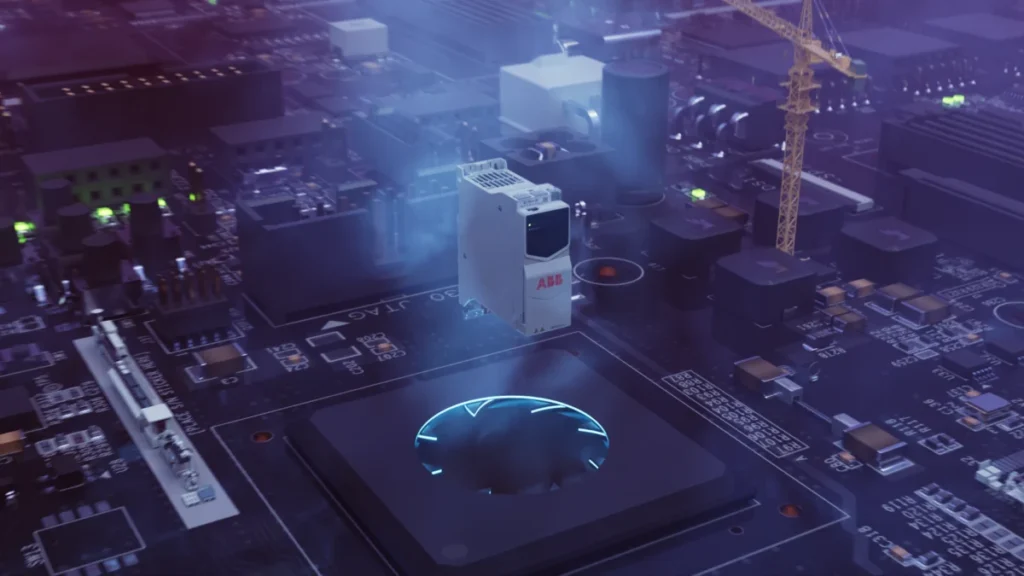
For manufacturers and operators responsible for supplying or operating motor-driven automation, Variable Frequency Drives (VFDs) are not just components but long-life infrastructure assets. These sophisticated electronic devices control the speed and torque of AC electric motors by varying the frequency and voltage of their power supply. Their operational lifespan and material efficiency directly influence energy consumption, uptime, and the generation of waste across decades of industrial use. The impact of VFDs extends far beyond immediate energy savings; they are central to mitigating resource depletion and enhancing the overall circularity of industrial processes.
Traditionally, the definition of "premium" in industrial equipment often centered on initial purchase price, power efficiency ratings, and perhaps basic reliability metrics. However, in the face of the global circularity crisis, this definition must evolve dramatically. For VFDs, "premium" now encompasses durability, inherent reliability, a material-efficient design philosophy, and the capacity to retain value across multiple life cycles. This expanded definition necessitates a holistic view of the product, from its initial conception through its manufacturing, operational life, and eventual end-of-life processing.

Chronology of Circularity and VFD Evolution
The concept of a circular economy, though gaining widespread traction in recent years, has roots stretching back decades. Early ideas emerged from fields like industrial ecology and cradle-to-cradle design in the 1970s and 80s, advocating for waste prevention and resource cycling. However, it wasn’t until the early 22nd century that organizations like the Ellen MacArthur Foundation began to popularize and systematize the circular economy framework, providing tangible pathways for industries to transition away from linear "take-make-dispose" models. The "Circularity Gap Report" series, starting in 2018, has provided critical data and benchmarks, highlighting the urgency and specific areas for intervention, further accelerating the global discourse and corporate action.
Concurrently, VFD technology has undergone its own evolution. Early VFDs, emerging in the 1960s and 70s, primarily focused on providing precise speed control for industrial processes, offering benefits like improved product quality and process optimization. The 1990s and early 2000s saw a significant shift towards energy efficiency as rising energy costs and environmental awareness grew. Manufacturers focused on improving power electronics and control algorithms to maximize energy savings, especially in applications like pumps, fans, and compressors, where VFDs can dramatically reduce energy consumption compared to traditional direct-on-line (DOL) motor operation.
Today, the evolution of VFDs is entering a new phase where circularity is becoming a core design principle. This shift, prominent in the mid-2020s, integrates material efficiency, extended product life, upgradeability, and end-of-life recovery into the very fabric of VFD development. This latest stage signifies a mature understanding that technology must not only perform efficiently but also contribute to broader sustainability goals, aligning with global efforts to decarbonize industries and secure critical resources.
Redefining "Premium": Beyond the Conventional
Circularity, particularly for industrial drives, is frequently misconstrued as an end-of-life consideration—a matter of recycling once a product is discarded. However, true circularity begins much earlier, fundamentally at the stages of design, material selection, and intended operating life. The preservation and efficient utilization of Critical Raw Materials (CRMs) have ascended to a central strategic priority for industries globally. This necessitates that equipment, including VFDs, be meticulously designed with fewer dependencies on scarce materials, engineered for significantly longer lifetimes, optimized for higher recoverability of components and materials, and equipped with clearer traceability mechanisms throughout its lifecycle. For drive manufacturers, this implies a paradigm shift, moving towards:
-
Enhanced Reliability and Durability: Reliability is no longer merely an engineering target for operational performance; it is an indispensable resource-conservation strategy. By extending the operational life of VFDs, the demand for new manufacturing, and thus new materials and energy, is significantly reduced. Leading manufacturers, such as ABB, invest heavily in rigorous quality and reliability testing. At facilities like their Helsinki laboratory, extensive research investigates the mechanisms of component degradation. This involves sophisticated techniques such as electron microscopy to analyze material structures, accelerated aging tests to simulate decades of use, and exhaustive vibration and corrosion exposure assessments. The insights gleaned from these comprehensive tests directly inform design work, ensuring that VFDs are built to last as long as possible, thereby preserving CRMs and minimizing the need for premature replacements.
-
Material-Efficient Design and Lightweighting: A crucial part of the circular approach involves minimizing the total material footprint. Every kilogram of avoided material in manufacturing and every kilowatt-hour saved over a drive’s operating life contributes substantially to the preservation of non-renewable resources and aids in meeting ambitious climate goals. Recent redesigns from forward-thinking suppliers showcase how modularity and lightweight construction techniques can significantly reduce overall material demand. For example, optimizing internal layouts and using advanced, lighter-weight alloys or composites where appropriate can decrease the physical mass of the drive without compromising performance or robustness. This not only conserves materials but also boosts installation flexibility and reduces transportation costs and associated emissions.

-
Energy Efficiency as the Forefront of Circularity: While material efficiency is paramount, the biggest circularity impact still emanates from energy efficiency. Globally, a substantial proportion of industrial motors continue to operate direct-on-line (DOL), meaning they run at full speed irrespective of actual load conditions, often with mechanical throttling used to control output. This represents one of the largest untapped opportunities for industrial decarbonization. Implementing speed control through VFDs can dramatically reduce a motor’s energy consumption, typically by 25% to 70%, depending on the application. Beyond energy savings, VFDs boost process yield, reduce wear and tear on mechanical systems (extending their life), and prevent unnecessary electricity usage. Therefore, increasing the adoption rates of VFDs is arguably one of the most effective ways to reduce total lifecycle material and energy consumption across diverse industries.
-
Upgradeability and Adaptability: In a rapidly evolving technological landscape, VFDs must retain their relevance even as customer requirements, digital ecosystems, and regulatory expectations shift. A truly premium drive incorporates a modular, forward- and backward-compatible architecture. This design philosophy significantly reduces the need for full unit replacements when upgrades or changes are required, keeping CRM-intensive components in productive use for longer. Examples include upgradable electronics modules, easily replaceable cooling units, and firmware-based performance enhancements that can be deployed remotely. These features extend the useful life of the drive without consuming new materials for an entirely new unit. Digital diagnostics also play a crucial role by preventing premature replacement and optimizing maintenance schedules, thereby avoiding wasteful spare-parts usage that fixed service schedules might entail.
-
Recoverability and End-of-Life Management: When a VFD finally reaches the end of its exceptionally long service life, its technical and material value should not be lost to waste streams. Circular design extends to end-of-life strategies where materials and components from retired units are reclaimed and reintroduced into the manufacturing cycle through comprehensive take-back and remanufacturing programs. This closed-loop approach ensures that valuable resources, especially CRMs, are continuously circulated within the economy, reducing reliance on virgin extraction and minimizing landfill waste. Traceability of materials, facilitated by digital product passports, will become increasingly important in ensuring effective recovery and recycling processes.
Supporting Data and Broader Implications
The potential impact of redefining premium for industrial drives is immense. Globally, industrial motors and drives convert over 40% of all generated electricity into motion. If even a fraction of the currently under-automated DOL applications were equipped with VFDs, the energy savings would be staggering, translating into gigatons of avoided CO2 emissions annually. For instance, the International Energy Agency (IEA) estimates that widespread adoption of efficient motor systems could save over 300 TWh of electricity annually by 2040, equivalent to the current total electricity consumption of Australia. This directly contributes to global decarbonization targets and reduces the environmental footprint of electricity generation.
Beyond energy, the material savings are substantial. A VFD designed for circularity, with reduced CRM content, modularity for upgrades, and high recoverability, could significantly lower the lifecycle material intensity of industrial operations. While specific figures vary by drive size and type, studies suggest that optimized designs can reduce material demand by 10-20% per unit over its lifecycle, leading to collective savings of thousands of tons of critical metals and rare earths when scaled across millions of installed units globally.
Economically, the shift to circular VFDs provides robust benefits. Companies investing in these truly premium drives will experience lower operational expenditures through reduced energy bills and decreased maintenance needs due to enhanced reliability. Furthermore, by reducing reliance on volatile CRM markets, businesses can build more resilient supply chains, mitigating risks associated with material scarcity and price fluctuations. This provides a clear competitive advantage in an increasingly resource-constrained world.
Official Responses and Industry Perspectives

Anne Franzas’s statement from ABB clearly articulates a leading manufacturer’s commitment to this redefined premium. ABB, a major player in industrial automation, is actively developing and promoting drives engineered for circular material flows, as evidenced by their ongoing R&D in areas like component degradation analysis and modular design. This proactive stance from industry giants is crucial, signaling a broader market trend.
While explicit statements from all related parties are not available, the logical inference is that other progressive manufacturers are either already pursuing similar design philosophies or will inevitably adopt them to remain competitive. The increasing pressure from regulatory bodies, such as the European Union with its ambitious Circular Economy Action Plan, will likely mandate higher standards for product longevity, repairability, and recyclability across all industrial equipment. Policymakers are recognizing that product design is a powerful lever for resource efficiency and will increasingly introduce legislation to encourage circular practices.
Furthermore, end-users, from small manufacturers to large enterprises, are becoming more sophisticated in their purchasing decisions. They are moving beyond simple price comparisons to a total cost of ownership (TCO) model that incorporates energy costs, maintenance, expected lifespan, and environmental impact. This growing demand for sustainable and long-lasting solutions from the customer side will naturally push the entire supply chain towards adopting circular principles.
Broader Impact and Future Implications
The redefinition of "premium" for industrial drives carries profound implications for global industry and the environment. It fundamentally shifts the paradigm from a disposable economy to one that values longevity, efficiency, and resource stewardship. This movement is not just about making products "greener" but about embedding sustainability as a core driver of innovation and economic value.
By prioritizing circularity in VFD design and deployment, industries can significantly enhance their supply chain resilience. Reducing dependence on virgin materials, especially those sourced from politically unstable regions, insulates companies from market shocks and geopolitical risks. It fosters local economies around repair, remanufacturing, and recycling, creating new job opportunities and strengthening regional industrial bases.
Ultimately, VFDs are powerful accelerators for the green transition. Their ability to drastically reduce energy consumption in motor-driven systems, coupled with their potential for long life and material circularity, positions them as indispensable technologies for achieving global climate goals and fostering a truly sustainable industrial ecosystem. The challenge now lies in increasing their adoption rates in currently under-automated DOL applications and ensuring that the drives themselves are continuously engineered for circular material flows. This integrated approach is a direct pathway for end-users to simultaneously boost performance and profitability while forging a leaner, cleaner, and more resilient industrial landscape for generations to come. The future of industrial drives is not just about power and control; it is about preservation and possibility.