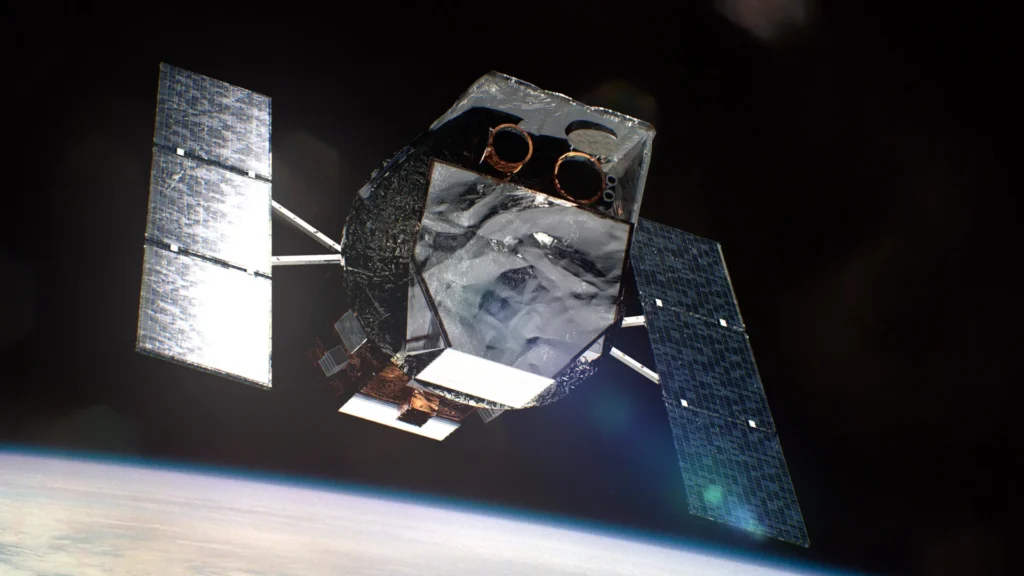
The Neil Gehrels Swift Observatory, a cornerstone of NASA’s astronomical research for nearly two decades, has resumed its vital mission of studying the universe after a temporary hiatus necessitated by orbital challenges. Two of its three powerful science instruments, the Ultraviolet/Optical Telescope (UVOT) and the X-ray Telescope (XRT), were reactivated on Wednesday, August 26th, marking a significant step in the observatory’s continued scientific output. This return to active duty comes as plans for a complex orbital boost, designed to extend Swift’s operational lifespan, were scaled back due to unforeseen technical difficulties with the supporting spacecraft.
Swift’s journey back to its observational duties began with the shutdown of its UVOT and XRT instruments in February. This measure was implemented as part of a strategic effort to mitigate atmospheric drag, a persistent foe for satellites in low Earth orbit, and to conserve power while NASA strategized for a potential orbital raise. The observatory’s third instrument, the Burst Alert Telescope (BAT), which plays a crucial role in detecting transient cosmic phenomena, has not yet rejoined the science operations. Its deactivation in April further reduced the spacecraft’s power demands, allowing engineers to optimize the orientation of Swift’s solar panels to minimize drag. The Swift team anticipates restoring the BAT to data collection within the coming weeks, signaling a full return to its multi-wavelength observational capabilities.
Swift’s Enduring Legacy: A Versatile Cosmic Watcher
For 21 years, the Neil Gehrels Swift Observatory has been an indispensable asset in humanity’s quest to understand the cosmos. Launched on November 20, 2004, Swift has carved a remarkable niche for itself through its exceptional versatility and its ability to observe the universe across a broad spectrum of light, from X-rays to ultraviolet and optical wavelengths. This multi-wavelength approach is particularly critical for capturing and studying some of the most dynamic and fleeting events in the universe, such as gamma-ray bursts (GRBs), supernovae, and other transient astrophysical phenomena.
Swift’s operational paradigm is built around its rapid response capabilities. Upon detecting an energetic outburst, the observatory can autonomously slew to the source of the event within seconds to minutes, alerting ground-based and space-based observatories worldwide. This swift coordination is paramount for astronomers, enabling them to gather crucial follow-up observations before these ephemeral cosmic displays fade from view. Without Swift’s rapid alert system, much of the valuable data associated with these transient events would be lost. The observatory has been instrumental in numerous groundbreaking discoveries, including the identification of the most distant known supernova, SN 2011kf, which occurred just 500 million years after the Big Bang, and the detection of a plethora of GRBs that have shed light on the extreme physics of the early universe and the life cycles of massive stars.
The Persistent Challenge of Low Earth Orbit
Despite its impressive scientific record, Swift faces a fundamental challenge inherent to its operating environment: low Earth orbit (LEO). Even at altitudes of several hundred miles above our planet, traces of Earth’s tenuous atmosphere persist. These outermost atmospheric layers, though incredibly thin, exert a constant drag on orbiting spacecraft. This drag gradually reduces a satellite’s velocity, causing its orbit to decay over time, a phenomenon that requires regular orbital boosts to counteract.
Swift, unfortunately, lacks an onboard propulsion system capable of independently raising its orbit. This limitation means that the observatory is reliant on external means to counter the effects of atmospheric drag and extend its operational life. The observatory’s initial operational altitude was approximately 700 kilometers (435 miles). However, over its two decades of service, the cumulative effect of atmospheric drag has necessitated a continuous effort to maintain its orbit.
Escalating Drag: The Impact of Solar Activity
The urgency of Swift’s orbital predicament was amplified by a recent surge in solar activity. The Sun’s activity levels fluctuate in cycles, and periods of heightened solar output lead to an expansion of Earth’s upper atmosphere. During these solar maximums, increased energy from the Sun heats the atmosphere, causing its outer layers to extend further into space.
This atmospheric expansion directly translates to increased drag on satellites operating in LEO. For Swift, this meant a more rapid than anticipated loss of altitude, posing a significant threat to its continued operation. The observatory’s orbital altitude had been steadily declining, and projections indicated it would fall below a critical threshold in the coming months.
An Ambitious Orbital Boost Initiative
In response to this escalating challenge, NASA, in September 2023, embarked on an ambitious and novel endeavor. The agency contracted with Katalyst Space, a private aerospace company, to design, build, and deploy a specialized spacecraft named LINK. The objective of the LINK mission was unprecedented: to rendezvous with Swift in orbit, capture it, and then physically lift the observatory into a higher, less drag-prone orbit. This undertaking represented a significant investment in extending the scientific life of a critical national asset.
Katalyst was given a tight one-year deadline to bring the LINK spacecraft from concept to launch and operational readiness. This accelerated timeline underscored the pressing need to address Swift’s orbital decay. The LINK spacecraft was designed with sophisticated grappling and towing capabilities, marking a pioneering effort in the realm of active orbital servicing.
The LINK Mission Encounters Setbacks
The LINK spacecraft, aboard a Northrop Grumman Pegasus rocket, successfully launched in July, carrying with it the hopes of securing Swift’s future. However, shortly after reaching orbit, the mission encountered significant technical difficulties. Reports emerged that the LINK spacecraft experienced problems with its attitude control system, hindering its ability to precisely orient itself in space.
Following a period of intensive investigation and assessment by both NASA and Katalyst, a difficult decision was made. On August 19th, the two organizations jointly announced that the LINK mission would no longer proceed with its primary objective of capturing and boosting Swift. This pivot marked a significant shift in the strategy to preserve Swift’s operational capabilities.
While the primary mission objective was abandoned, the LINK mission is not entirely concluded. Katalyst still intends to bring the LINK spacecraft into close proximity with Swift. These rendezvous and proximity operations, while not involving a physical capture, are designed to serve as a crucial testbed for advanced in-space satellite servicing technologies. The data gathered from these maneuvers will be invaluable for developing future missions focused on satellite refueling, repair, and debris removal.
Swift’s Diminishing Orbit and Continued Scientific Pursuit
Prior to the recent developments, NASA had estimated that Swift’s current low-drag operational mode would allow it to maintain an altitude above 185 miles (300 kilometers) until approximately October. This 300-kilometer altitude is considered a critical threshold. Below this altitude, atmospheric drag intensifies significantly, leading to an accelerated rate of orbital decay and making sustained telescope operations increasingly challenging.
With the resumption of science observations by its UVOT and XRT instruments, the Swift team now anticipates that the observatory will reach this critical 300-kilometer milestone within the next one to two months. This means that while Swift is once again actively observing the cosmos, its time at its current orbital altitude is finite and rapidly dwindling.
The scientific community has expressed a mix of relief and concern regarding Swift’s situation. Dr. Anya Sharma, an astrophysicist specializing in transient events at the California Institute of Technology, commented, "Swift has been an absolute workhorse for transient astronomy. Its ability to pivot and capture fleeting events is unparalleled. While we are thrilled to see it back in action, the ongoing orbital decline is a constant reminder of the challenges of maintaining long-term space missions. Every observation we can get now is precious."
Implications for Future Astronomical Research
The recent events surrounding Swift’s orbital boost and its ongoing operational status highlight several critical implications for the future of astronomical research and space exploration. Firstly, it underscores the inherent vulnerability of spacecraft operating in low Earth orbit due to atmospheric drag, particularly in an era of increasing solar activity. This necessitates ongoing investment in propulsion technologies or innovative orbital servicing solutions.
Secondly, the scaled-back LINK mission demonstrates the potential and the complexities of private sector involvement in critical space infrastructure maintenance. While the primary objective was not met, the secondary objectives of testing servicing technologies are vital for the long-term sustainability of space operations.
Finally, Swift’s continued scientific output, even as its orbit declines, emphasizes the resilience and adaptability of NASA’s scientific missions. The observatory is currently focused on maximizing its scientific return, gathering as much data as possible in its remaining time. This includes continuing its vigilant watch for GRBs, supernovae, and other cosmic transients that provide invaluable insights into the fundamental workings of the universe. The scientific legacy of Swift is already immense, and its final months of operation are expected to yield further significant contributions to our understanding of the cosmos. The observatory’s story is a testament to both the ingenuity of space exploration and the persistent challenges of operating in the unforgiving environment of space.