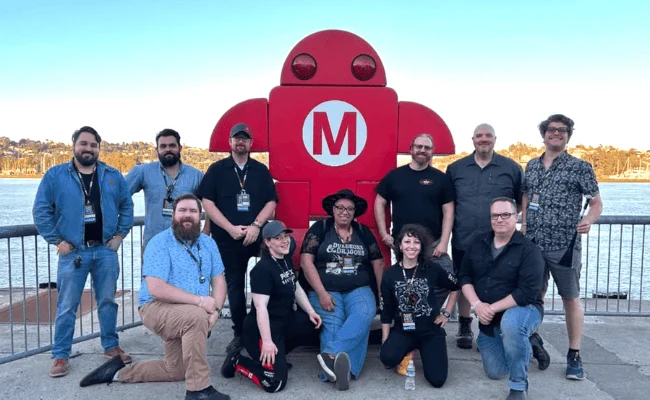
In an era increasingly dominated by computer-generated imagery (CGI), a notable shift towards the tactile and tangible is capturing the imagination of audiences worldwide. This growing appreciation for practical effects and animatronics will be prominently showcased at Maker Faire Bay Area 2025, where Jesse Velez, a distinguished animatronics designer and the visionary behind Raptor House FX, is set to reveal the intricate process of creating one of television’s most memorable and unexpectedly mobile characters: "Thing" from Netflix’s hit series, Wednesday. His presentation promises a deep dive into the fusion of traditional craftsmanship and cutting-edge robotics, demonstrating how real-world engineering can not only compete with but often surpass digital illusions in terms of audience engagement and immersive experience.
The Resurgence of the Tangible in a Digital Age
For years, the entertainment industry has leaned heavily on CGI to bring fantastical creatures and complex effects to life. While undeniably powerful, this digital reliance has, for some, led to a certain degree of audience fatigue, fostering a longing for the authenticity and physical presence that only practical effects can provide. The success of Velez’s "Thing" animatronic serves as a compelling testament to this sentiment, proving that meticulously crafted physical props can forge a more visceral connection with viewers and live audiences. Velez’s work on "Thing" is not merely a behind-the-scenes anecdote; it represents a significant chapter in the ongoing narrative of practical effects’ resurgence, highlighting their unique ability to surprise, delight, and engage in ways that digital creations often cannot. This movement suggests a future where the line between the virtual and the physical blurs, with practical effects carving out an indispensable niche in immersive storytelling.
"Wednesday": A Global Phenomenon Born from Practical Effects
Netflix’s Wednesday, a spin-off of The Addams Family universe, quickly became a cultural phenomenon upon its release, garnering immense viewership and critical acclaim. Starring Jenna Ortega as Wednesday Addams, the series captivated audiences with its dark humor, gothic aesthetics, and compelling narrative. Among its most beloved characters, the disembodied, sentient hand known as "Thing" stood out, providing comic relief, crucial assistance to Wednesday, and a unique, non-verbal performance that resonated globally. The decision by the show’s creators to largely utilize practical effects for "Thing" on set, with a performer portraying the hand, was instrumental in its authenticity. However, for the show’s high-profile global premieres and promotional events, a new challenge emerged: how to bring "Thing" to life as an independent, interactive entity without a human actor physically present.
This is where Jesse Velez and his team at Raptor House FX stepped in. Tasked with translating the on-screen magic into a real-world, interactive experience, Velez envisioned an animatronic "Thing" that could move, express, and interact autonomously. This ambitious project aimed to extend the show’s charm beyond the screen, allowing fans and cast members to engage directly with the beloved character. The goal was to create a portable, wireless animatronic that could mirror human movements in real-time, enabling spontaneous interactions on red carpets across the globe. This approach underscored a commitment to fan engagement and a belief in the power of tangible spectacle, distinguishing Wednesday‘s promotional efforts in a crowded media landscape.
From Concept Sketch to Red Carpet Star: The Development Journey
Like many groundbreaking innovations, the journey of the animatronic "Thing" began with a deceptively simple idea and a foundational prototype. Velez’s initial concept was a "walking hand"—a basic mechanism designed to demonstrate the feasibility of independent locomotion for the prop. This early stage involved rudimentary designs, experimenting with various motors, linkages, and control methods to achieve a convincing, if unrefined, movement. The challenge was not just to make it walk, but to imbue it with personality, to make it feel "alive" in the way the on-screen character did.
The evolution from a mere walking prototype to a fully performing, globally-traveling animatronic was an iterative process, demanding countless hours of design, engineering, and artistic refinement. The team faced significant challenges, including miniaturization of components, optimizing battery life for extended performances, ensuring robust wireless communication for real-time control, and designing a durable yet aesthetically convincing exterior. The goal was to allow a hidden performer to control "Thing" remotely, enabling spontaneous improvisation with audiences and cast members. This real-time, responsive capability was critical, transforming "Thing" from a static prop into a dynamic, interactive performer. The development timeline was compressed by the demands of a global promotional tour, pushing the team to innovate rapidly and effectively. Each iteration brought improvements in dexterity, speed, expressiveness, and overall reliability, culminating in the sophisticated animatronic that charmed millions.
Engineering "Thing": A Masterclass in Creative Hacking
Velez’s approach to the "Thing" animatronic exemplifies the "maker" philosophy at its best: creatively hacking together a blend of off-the-shelf components and purpose-built parts to achieve a seamless, organic result. This method allowed for rapid prototyping, cost-effectiveness, and a degree of customization not always possible with purely bespoke solutions. The success of the animatronic lay in the ingenious integration of diverse technologies, all miniaturized and optimized for portability and real-time performance.
While specific component lists remain proprietary, a logical breakdown of the "ingredients" for such an advanced animatronic hand would include:
- Structural Framework: A lightweight yet robust internal skeleton was essential. This likely involved a combination of precision-machined aluminum or carbon fiber for strength in high-stress areas, coupled with custom 3D-printed components made from durable, lightweight plastics (such as PLA or ABS) for intricate shapes and attachment points. The design had to mimic the complex articulation of a human hand while housing all necessary electronics and mechanisms.
- Actuation System: To achieve lifelike movement, the animatronic would require a sophisticated array of micro-servos or miniature linear actuators. These small but powerful motors would be strategically placed within the fingers, palm, and wrist to control individual digit movements, gripping actions, and wrist articulation. The selection of high-torque, fast-response servos was crucial for real-time mirroring of a performer’s movements.
- Control System: At the heart of "Thing" would be a compact microcontroller, such as a customized Arduino or Raspberry Pi-based board. This tiny computer would serve as the brain, interpreting commands from the remote operator and translating them into precise movements of the servos. Custom-designed Printed Circuit Boards (PCBs) would manage power distribution, sensor input, and motor control, minimizing wiring and maximizing space efficiency.
- Power Management: Portability demands efficient and long-lasting power. High-density lithium-ion polymer (LiPo) batteries, similar to those found in drones or high-end electronics, would provide the necessary energy. An intelligent power management system would monitor battery levels, regulate voltage, and ensure stable power delivery to all components, crucial for sustained operation during live events.
- Wireless Communication: Real-time, responsive control over distances required a robust wireless communication system. This likely involved low-latency RF (Radio Frequency) modules, possibly operating on frequencies like 2.4 GHz, or advanced Bluetooth/Wi-Fi protocols optimized for industrial control. The system would need to be highly reliable, resistant to interference, and capable of transmitting complex movement data with minimal delay.
- Input Device: To allow a performer to control "Thing" in real-time, a specialized input device was necessary. This could range from a custom-built data glove equipped with flex sensors and accelerometers, capturing the nuanced movements of a human hand, to a sophisticated joystick-based system. The input device would send motion data wirelessly to the animatronic, allowing the performer to embody "Thing" from a distance.
- Aesthetics and Materials: The external appearance was critical for authenticity. High-quality silicone or latex, meticulously sculpted and painted, would form the "skin," replicating the texture, color, and subtle imperfections of a human hand. The integration of "scars" and "stitches" as seen in the show would require artistic precision, ensuring the animatronic looked like it had genuinely been "reanimated."
- Software Integration: Custom software would be developed to map the input device’s data to the animatronic’s servo movements. This mapping would involve complex algorithms to translate human gestures into mechanical actions, ensuring fluidity and realism. Calibration routines would also be vital for maintaining consistent performance.
The integration of these elements into a compact, robust, and aesthetically convincing package presented immense engineering challenges. The team had to balance dexterity with durability, power with portability, and technical precision with artistic expression. This creative hacking, combining the best of existing technologies with bespoke solutions, ultimately brought "Thing" to life in a way that truly resonated with audiences.
The Global Tour: "Thing" Interacts with Fans and Stars
The true test of Velez’s animatronic "Thing" came during its global promotional tour for Wednesday. This wasn’t merely a static display; the animatronic was designed for dynamic, unscripted interaction. It traveled across continents, making appearances at major red carpet events in Los Angeles, New York, Seoul, Istanbul, and London, becoming a star in its own right.

At each location, "Thing" engaged with cast members like Jenna Ortega, Gwendoline Christie, and Catherine Zeta-Jones, often playfully crawling on their shoulders, "shaking" hands with interviewers, or gesturing expressively to the delight of the crowd. These interactions were genuine and spontaneous, made possible by the real-time control system. Fans reacted with overwhelming enthusiasm, queuing for hours for a chance to see and interact with the animatronic. The sight of "Thing" independently scuttling across a red carpet or waving from a balcony created unforgettable moments, often going viral on social media.
The logistical considerations for such a tour were considerable. Transporting a delicate, complex animatronic across international borders, ensuring its reliable operation in diverse environments, and maintaining its pristine condition required meticulous planning and on-site technical support. The success of these global appearances underscored the animatronic’s robust design and the team’s ability to manage its deployment under high-pressure conditions. The emotional connection forged between "Thing" and its audience proved that practical effects could elevate promotional events from mere photo opportunities into truly immersive, memorable experiences.
Jesse Velez and Raptor House FX: Pioneers of Practical Magic
Jesse Velez is a name synonymous with innovation in the field of animatronics and practical effects. His career trajectory has been marked by a relentless pursuit of creative solutions to bring fantastical elements into the physical world. Raptor House FX, under his leadership, has established itself as a go-to studio for projects demanding high-quality, believable practical effects. Velez’s philosophy centers on the belief that physical interaction and tangible artistry create a deeper impact than purely digital renderings. He advocates for a balanced approach, where CGI enhances rather than replaces the fundamental artistry of practical effects.
His work extends beyond "Thing," encompassing a wide range of film, television, and experiential projects that have pushed the boundaries of what’s possible with animatronics. The success of "Thing" is a direct reflection of Velez’s extensive experience, technical prowess, and artistic vision. He embodies the spirit of the maker community, constantly experimenting, learning, and sharing knowledge to advance the craft. His commitment to blending traditional fabrication techniques with modern robotics and software development positions Raptor House FX at the forefront of practical effects innovation.
Maker Faire Bay Area 2025: A Platform for Innovation
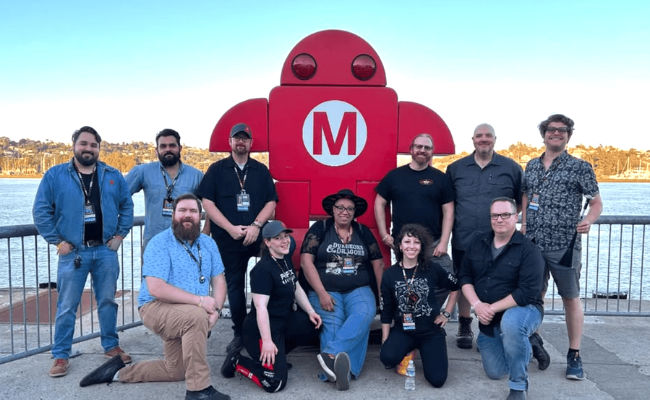
Maker Faire Bay Area, often dubbed "the Greatest Show (and Tell) on Earth," is a premier gathering for innovators, crafters, engineers, artists, and hobbyists from around the globe. It serves as a vital platform for showcasing ingenuity, fostering collaboration, and inspiring the next generation of makers. The decision to feature Jesse Velez’s "Thing" animatronic at Maker Faire Bay Area 2025 is highly significant, aligning perfectly with the event’s ethos of celebrating creativity, resourcefulness, and the tangible results of hands-on innovation.
Velez’s presentation will offer attendees an unparalleled opportunity to delve into the technical intricacies and artistic challenges behind a high-profile practical effect. It will provide a rare glimpse into the design process, the choice of materials, the integration of electronics, and the programming involved in bringing a character like "Thing" to life. For aspiring animatronics designers, robotics enthusiasts, and fans of practical effects, this will be an invaluable educational experience, demonstrating how a complex, professional-grade animatronic can be conceived, built, and deployed. The presentation is expected to draw a large crowd, highlighting the growing interest in the intersection of art, engineering, and entertainment within the maker community. It underscores Maker Faire’s role not just as a showcase for independent projects, but also as a venue where professional innovators share their groundbreaking work, inspiring countless others to pursue their own creative endeavors.

The Broader Implications: Redefining Entertainment and Fan Engagement
Jesse Velez’s work on "Thing" is more than just a clever prop; it represents a significant commentary on the future of entertainment and fan engagement. In an increasingly digital world, the "visceral thrill" of seeing something real, complex, and "alive" right in front of you holds immense power. This "tactile future" suggests that audiences crave authenticity and physical presence, even amidst hyper-realistic CGI.
The success of "Thing" demonstrates several key implications for the entertainment industry:
- Enhanced Immersion and Authenticity: Practical effects offer a tangible anchor for fantastical elements, grounding them in reality and making them feel more believable and impactful. This enhances the overall immersive experience for audiences.
- Unforgettable Fan Engagement: Live interactions with practical animatronics create unique, personal, and shareable moments that digital projections simply cannot replicate. These experiences foster deeper connections between fans and their beloved franchises.
- The Symbiotic Relationship with Digital: Velez’s work does not advocate for the abandonment of CGI but rather for a harmonious integration. Practical effects can provide the core, while CGI adds flourishes or removes visible puppeteers, creating a seamless illusion.
- Inspiration for the Next Generation: Showcasing such complex yet achievable projects inspires young engineers, artists, and makers to pursue careers in practical effects and animatronics, ensuring the continued evolution of the craft.
- Relevance in Experiential Marketing: The "Thing" animatronic proved to be an incredibly effective tool for experiential marketing, generating organic buzz and media coverage that far surpassed traditional advertising methods. This points to a future where interactive, physical elements play a larger role in promotional campaigns.
The enduring appeal of "Thing" lies in its ability to bridge the gap between fantasy and reality, inviting audiences into the magical world of Wednesday in a way that feels genuinely interactive and immediate. This project stands as a beacon for the creative potential that arises when art and engineering converge with a shared vision.
A Testament to Ingenuity: The Human Touch in a Digital World
Jesse Velez’s achievement with the "Thing" animatronic is a powerful testament to human ingenuity and the enduring allure of practical effects. In an age saturated with digital spectacles, the meticulous craftsmanship and real-world engineering behind "Thing" offer a refreshing counterpoint, reminding us of the unique magic that physical creations can bring. His work at Raptor House FX exemplifies a blend of artistic vision, technical expertise, and a profound understanding of audience psychology.
As Velez prepares to share his insights at Maker Faire Bay Area 2025, his presentation will undoubtedly serve as an inspiration for countless aspiring makers and industry professionals alike. It underscores that the future of storytelling is not solely digital but rather a rich tapestry woven from both virtual and tangible threads. The "Thing" animatronic is more than a prop; it is a symbol of the relentless creativity that brings our wildest sci-fi dreams to life, one servo and line of code at a time, proving that the human touch remains irreplaceable in a world increasingly reliant on technology. Interested readers can delve deeper into the technical specifics and witness the animatronic in action by watching the full video presentation linked here: https://youtu.be/30ROoU7dnCM. Further insights into Jesse Velez’s innovative work can often be found through his studio’s various social media channels, offering a glimpse into the ongoing evolution of practical effects and animatronics.