Achieving true precision in advanced motion control applications transcends the mere sum of individual component specifications; it hinges fundamentally on meticulous system integration. While the performance of motion systems is often initially assessed by the datasheet metrics of mechanics, motors, drives, and controls, a deeper understanding reveals that these components operate within a complex ecosystem where every interface, connection, and environmental factor can significantly impact overall accuracy, repeatability, and reliability. This final installment in a four-part series delves into the indispensable elements of system integration, underscoring why precision is never an accidental outcome but rather the product of deliberate, holistic engineering.
The journey towards high-precision motion control begins with a careful selection of components. Engineers traditionally evaluate actuators based on standard specifications such as repeatability, accuracy, and load capability. For many basic applications, this approach suffices. However, as the demands of modern industries push the boundaries towards micron and even nanometer-level precision, the relevance of isolated specifications diminishes. What becomes paramount is a comprehensive understanding of how each layer of technology—from the foundational mechanics and sophisticated motors to intelligent drives and advanced controls—interacts and contributes to the overall system performance. Previous articles in this series explored the critical, often-overlooked factors in mechanics (e.g., bearing deflection, body stiffness), the nuances of motor design and quality, and the pivotal role of drive and control features. This concluding piece synthesizes these insights, emphasizing that even the most advanced individual components will fail to deliver their full potential without expert system integration.
The Evolution of Precision Demands: A Chronology of Progress
The quest for higher precision in manufacturing and scientific research has evolved dramatically over the past few decades, driving continuous innovation in motion control. In the mid-20th century, industrial automation primarily focused on speed and power, with precision often measured in millimeters. The advent of microelectronics and computing power in the 1970s and 80s gradually introduced servo control systems, pushing accuracy into the sub-millimeter range. The 1990s witnessed a surge in demand from industries like semiconductor manufacturing, requiring micron-level positioning for wafer fabrication and inspection. This era also saw the widespread adoption of digital controls and advanced feedback mechanisms, making tighter tolerances achievable.
As the 21st century progressed, the requirements escalated further. Applications in medical device manufacturing, advanced optics, nanotechnology research, and high-throughput laboratory automation now demand precision in the hundreds or even tens of nanometers. This relentless pursuit of finer resolution and greater accuracy has exposed the limitations of traditional, component-centric design philosophies. What once seemed like minor discrepancies in mounting surfaces or electrical noise now translates into significant performance degradation at the micro and nano scales. This chronological progression highlights a fundamental shift: from simply selecting powerful or accurate components to meticulously engineering their harmonious interaction within a complex system. The challenge is no longer just what components to use, but how they are brought together.
Beyond the Datasheet: Understanding Hidden Assumptions
A recurring theme throughout the discussion of high-precision motion control is the existence of critical details that are rarely captured on standard product datasheets but can ultimately determine the success or failure of a system. These are the "hidden assumptions" upon which component specifications are based. For instance, a mechanical actuator’s published repeatability and accuracy figures typically assume an ideal mounting surface—perfectly flat, rigid, and stable, free from vibration or thermal gradients. Similarly, a motor’s performance curves often presuppose adequate airflow for cooling and a robust heat sink to dissipate thermal energy. Drives and controllers, the brain of the system, are rated for performance under the assumption of a clean, stable power supply, devoid of voltage fluctuations, electromagnetic interference (EMI), or ground loops.
When these underlying assumptions are not met during system installation and operation, the components, despite their individual merits, cannot perform to their stated capabilities. This gap between theoretical specification and real-world performance is where system integration truly demonstrates its value. It is the art and science of ensuring that the operating environment and interconnectedness of all parts uphold the conditions necessary for each component to perform optimally, thereby enabling the entire system to achieve its intended high-precision goals.
Real-World Integration Pitfalls and Their Consequences
The failure to account for these hidden assumptions often manifests as real-world integration failures, leading to diminished performance, increased downtime, and significant operational costs. Consider the integration of a precision linear motor with linear guides. This forms a three-component system where precise alignment is paramount. If the linear motor and its accompanying guides are not perfectly parallel and co-planar on their mounting surface, mechanical binding can occur. At best, this introduces uneven friction, premature wear, and increased power consumption, leading to reduced accuracy and repeatability. At worst, it can cause complete system lock-up, halting production and necessitating costly troubleshooting and repair.
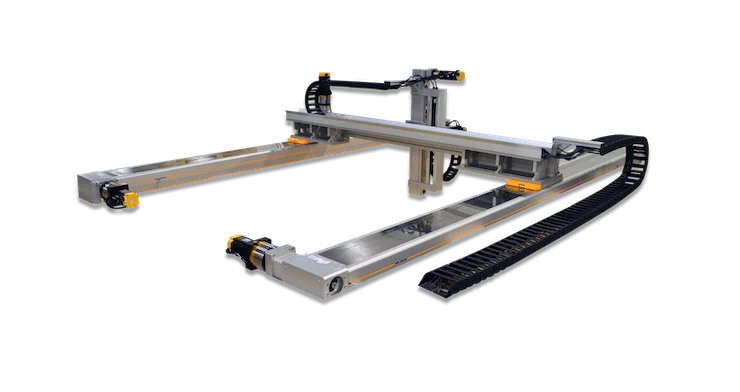
Another common scenario involves dual-axis systems, such as two long linear belt and pulley actuators operating in parallel. While individually robust, their combined performance depends critically on matching their travel lengths and maintaining consistent belt tension. If the belt tensions vary even slightly between the two actuators, the effective distance traveled per pulley revolution will differ. Over a long travel distance—say, two meters—a seemingly minor initial variance can accumulate into a significant positional error, potentially exceeding 5 millimeters, rendering the system incapable of precise coordinated movement. This issue is often exacerbated by environmental factors such as temperature fluctuations affecting belt material properties.
Electrical integration also presents numerous challenges. Controllers and drives are frequently developed and tested in controlled laboratory environments where power supplies are clean and stable. When these same systems are deployed into industrial settings, they encounter "dirty" power sources rife with voltage spikes, sags, and high-frequency noise. Without proper grounding techniques, adequate shielding for signal and power cables, and the implementation of electromagnetic compatibility (EMC) filters, these electrical disturbances can severely compromise controller stability, introduce measurement errors, and even damage sensitive electronics. The result is unpredictable system behavior, intermittent faults, and a significant reduction in overall reliability and precision.
Furthermore, thermal management is a critical yet often overlooked aspect. A system assembled and calibrated in a temperate workshop might experience significant performance degradation when deployed in a hot factory environment. Thermal expansion and contraction can directly impact mechanical alignments, causing components to shift, bearings to bind, and sensor readings to drift. This phenomenon can prevent a system from ever approaching its specified performance requirements, leading to chronic operational issues and a shortened lifespan for mechanical parts.
The Economic Imperative for Seamless Integration
The global market for motion control systems is substantial, estimated to be worth tens of billions of dollars annually, with projections for continued growth driven by increasing automation across diverse industries. Within this expansive market, the high-precision segment represents a significant and growing share, critical for sectors like semiconductor manufacturing, which alone is a multi-trillion-dollar industry, and advanced robotics, projected to reach hundreds of billions. In these high-stakes environments, the economic implications of poor system integration are profound.

The upfront investment in precision motion control components can be substantial, but this pales in comparison to the potential costs incurred from integration failures. Downtime in a semiconductor fabrication plant, for example, can cost millions of dollars per hour. In medical device manufacturing, compromised precision can lead to product recalls, regulatory non-compliance, and severe reputational damage. Even in less critical applications, reduced accuracy translates to increased scrap rates, lower throughput, and ultimately, a loss of competitive advantage.
Conversely, a robust, well-integrated system delivers tangible economic benefits. It ensures consistent product quality, maximizes operational uptime, reduces maintenance costs, and extends the lifespan of expensive equipment. The initial investment in thorough systems engineering, rigorous testing, and adherence to best practices for integration is often dwarfed by the long-term savings and increased profitability. Companies that prioritize holistic system design and integration are better positioned to innovate, meet stringent industry standards, and maintain a leading edge in competitive markets.
Strategic Integration Practices for Optimal Performance
For systems demanding precision motion control, several integration practices are not merely advisable but essential for achieving and sustaining peak performance:
-
Mounting Surface Preparation and Alignment: Actuators must be mounted to surfaces that precisely meet or exceed their assumed standards. This often involves precision machining of baseplates, flatness inspections, and the use of dowel pins. Dowel pins are crucial for ensuring repeatable assembly and disassembly, maintaining precise component alignment even after maintenance or component replacement. For multi-axis systems, the cumulative effect of mounting surface imperfections across several layers must be carefully analyzed. Specialized optical alignment tools, such as laser interferometers, are often employed to verify flatness and parallelism down to sub-micron levels.
-
Encoder Alignment and Calibration: For axes utilizing high-resolution encoders—whether linear, rotary, or ring-type—meticulous alignment is paramount. Even slight misalignments can introduce periodic errors or reduce signal quality, impacting the accuracy of position feedback. This often requires specialized fixtures, precise calibration procedures, and advanced measurement tools to ensure the encoder scale is perfectly parallel to the axis of motion and that the read head gap is within specified tolerances. For absolute encoders, the initial datum setting is equally critical.
-
Cable Management and Shielding: Cable routing is a discipline frequently underestimated. Low-power signal cables (e.g., encoder feedback, control signals) must be run separately and ideally perpendicularly to high-power cables (e.g., motor power, drive inputs). Running them in parallel over long distances in the same cable tray can induce electromagnetic interference, degrading signal integrity. Coiling excess high-power cable should also be strictly avoided, as it creates an inductor that can generate significant EMI. Proper shielding, grounding, and the use of twisted-pair cabling are fundamental to mitigate noise and ensure clean signal transmission, especially in electrically noisy industrial environments. Adherence to industrial EMC standards (e.g., IEC 61000 series) is vital.
-
Environmental Isolation and Control: Ultra-high precision systems are exquisitely sensitive to their surrounding environment. Vibration dampers, such as active or passive air-bearing isolation tables, are essential to decouple the motion system from ambient floor vibrations caused by nearby machinery or human activity. Temperature control is equally critical; temperature-controlled rooms maintain thermal stability, preventing expansion/contraction that can shift alignments. The most demanding applications, like those in metrology or nanotechnology, often require systems to be housed in dedicated cleanrooms on separate, isolated foundations to prevent external disturbances from impacting performance. Humidity control is also important for sensitive electronics and optical components.
-
Robust Power Supply and Grounding: Implementing a clean, stable power supply with proper filtering and surge protection is non-negotiable. Industrial-grade power conditioners and uninterruptible power supplies (UPS) can mitigate fluctuations. A meticulously designed grounding scheme, often involving a single-point ground reference, is crucial to prevent ground loops that can introduce noise and compromise system stability.
Industry Perspectives on Holistic Engineering
Leading automation experts and manufacturers increasingly emphasize a paradigm shift from a component-centric view to a holistic, systems-level engineering approach. Corey Foster, Director of Automation Sales & Application Engineering at Valin Corporation, succinctly captures this sentiment, highlighting that "you don’t get precision by accident." This perspective is widely echoed across the industry, with numerous white papers and conference presentations stressing the need for early and continuous collaboration among mechanical, electrical, software, and controls engineers. The consensus is that merely selecting high-specification parts is insufficient; the true differentiator lies in the expertise to integrate them flawlessly. This collaborative approach allows for potential integration challenges to be identified and addressed during the design phase, rather than becoming costly surprises during deployment.
The Broader Impact: Driving Innovation and Reliability
The meticulous integration of motion control systems has far-reaching implications beyond the immediate application. It serves as a foundational enabler for innovation across various high-tech industries. By consistently achieving and exceeding precision targets, engineers can develop new processes, create more sophisticated products, and unlock previously unattainable scientific discoveries. For instance, the ability to precisely position and manipulate objects at the nanoscale opens doors for breakthroughs in material science and biotechnology. In advanced manufacturing, highly integrated systems enable tighter tolerances for miniaturized components, leading to more compact, efficient, and powerful devices.
Furthermore, robust integration directly contributes to the long-term reliability and sustainability of industrial operations. Systems that are thoughtfully integrated are less prone to unexpected failures, require less frequent maintenance, and offer a longer operational life. This not only reduces total cost of ownership but also enhances safety in automated environments. As industries continue to automate and rely more heavily on complex machinery, the principles of expert system integration will become even more critical for ensuring operational excellence and maintaining a competitive edge in a rapidly evolving global landscape.
In conclusion, the pursuit of true precision in motion control is a multifaceted endeavor that extends far beyond the individual capabilities of its constituent parts. It demands a rigorous, systematic approach to integration, where every connection, alignment, and environmental factor is meticulously considered and managed. As motion systems continue to push the boundaries of micron-level and nanometer-level accuracy, the questions unasked during the integration process will invariably manifest as performance limitations. Therefore, success in this demanding field necessitates thinking like a systems engineer, not merely a product selector, to ensure that high-performance expectations are not just met, but consistently exceeded.