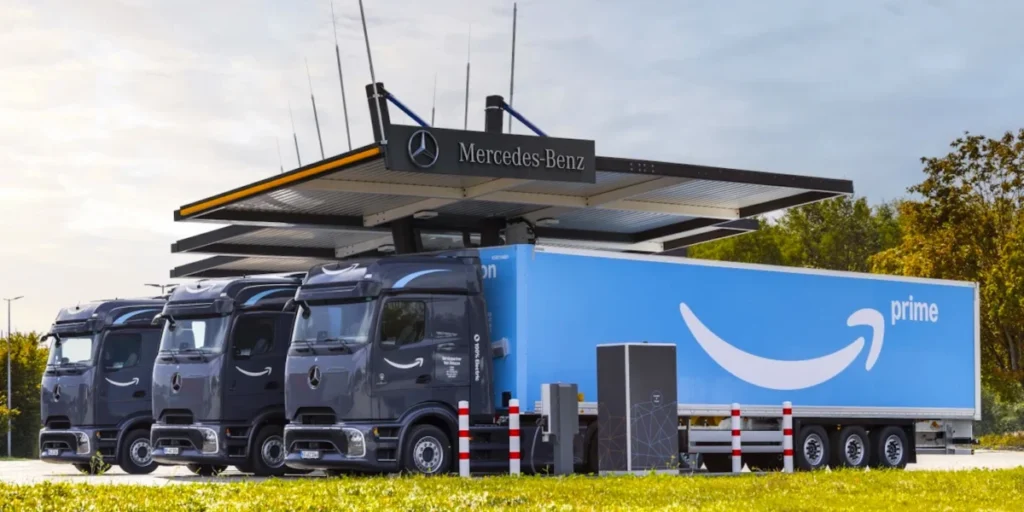
Amazon is intensifying its commitment to a sustainable future by deploying more than 50 Mercedes-Benz eActros 600 battery-electric semi-trucks on German roads, a move that represents a pivotal moment in the company’s ambitious strategy to electrify its global transportation network. This significant deployment, with the first 26 trucks already operational, underscores Amazon’s dedication to reducing its carbon footprint and transforming the logistics sector. The initiative is part of a larger order of over 200 eActros 600 units, signaling a substantial investment in electric heavy-duty transport.
The introduction of these high-performance electric trucks is being hailed as a "milestone" by Amazon’s leadership, particularly in addressing the environmental impact of long-haul and middle-mile logistics. Previously, electrification efforts in the delivery sphere primarily focused on last-mile solutions. However, the eActros 600, with its impressive range and payload capacity, now enables Amazon to extend its decarbonization goals to more extensive transport routes, connecting fulfillment centers with urban hubs and further afield.
A Strategic Rollout for Sustainable Logistics
The deployment of the Mercedes-Benz eActros 600 trucks is strategically focused on routes that maximize the vehicles’ capabilities, particularly their substantial 621 kWh battery packs, which are designed to deliver a range of approximately 500 kilometers (over 300 miles) on a single charge. These routes are critical for Amazon’s operations, involving the movement of goods between its extensive network of fulfillment centers and key urban distribution points. This "middle-mile" segment of the supply chain presents a significant opportunity for emissions reduction.

The eActros 600 is equipped with Mercedes-Benz Trucks’ proprietary electric drive axles, which contribute to a remarkable efficiency of 1.61 kWh per mile. This efficiency is achieved while carrying an average combined vehicle weight of 36 metric tons (approximately 79,400 pounds). These specifications place the eActros 600 in direct competition with the theoretical efficiency claims of other electric semi-trucks, such as the Tesla Semi, and have reportedly performed exceptionally well even in challenging real-world conditions, including German winters.
Andreas Marschner, VP of Sustainable Operations at Amazon, emphasized the significance of this deployment. "The handover of these vehicles is a milestone for the electrification of our transportation network," Marschner stated. "Electric solutions have already been widely used for some time in last-mile package delivery to customers. With the high-performance electric trucks from Mercedes-Benz Trucks, we can now make even longer transport routes between fulfillment centers and urban areas more sustainable. This is a true solution for the future."
Technical Prowess and Operational Efficiency
The Mercedes-Benz eActros 600 is engineered to meet the demanding requirements of long-distance haulage. Its robust design and advanced battery technology are central to its operational viability. The 621 kWh battery capacity provides the necessary energy reserves for extended journeys, reducing the frequency of charging stops and enhancing logistical efficiency. This capacity is a key factor in making electric trucks a viable alternative to traditional diesel-powered vehicles for freight transport.
The efficiency figures reported by Mercedes-Benz Trucks for the eActros 600, particularly the 1.61 kWh/mile rate under load, are critical data points for fleet operators. This metric translates directly into operational costs and environmental impact. For Amazon, achieving high efficiency with these heavy-duty vehicles is paramount to realizing the economic and ecological benefits of electrification. The performance of the eActros 600 in real-world conditions, including its ability to maintain efficiency during colder months, further bolsters confidence in its suitability for widespread adoption.

Stina Fagerman, President of Mercedes-Benz Trucks’ Customer Region Europe, highlighted the importance of this partnership. "The fact that Amazon relies on our vehicles underscores the confidence in our technology and also shows that the electrification of heavy-duty transport is increasingly becoming reality," Fagerman commented. "Such partnerships are crucial to further accelerate the transformation of the transport industry."
Infrastructure Development: Charging the Future
To seamlessly integrate the new electric trucks into its existing logistics infrastructure, Amazon is undertaking a significant investment in charging solutions. The company is installing hundreds of DC fast chargers across Germany. These chargers are designed to provide rapid charging capabilities, capable of replenishing the eActros 600’s batteries from 20% to 80% in just over an hour. This rapid charging infrastructure is essential for minimizing downtime and maintaining the high operational tempo required in e-commerce logistics.
The development of robust charging infrastructure is a critical enabler for the widespread adoption of electric trucks. Without sufficient and accessible charging points, the operational range and efficiency of electric fleets would be severely limited. Amazon’s proactive approach to installing these high-power chargers demonstrates a comprehensive strategy that addresses both vehicle acquisition and the necessary support systems.
Broader Economic and Environmental Impact
Amazon’s investment in the electrification and decarbonization of its transportation network in Europe extends beyond Germany. The company has committed over 1 billion euros to these efforts across the continent, with more than 400 million euros specifically allocated to its German operations. This substantial financial commitment reflects a long-term vision for sustainable logistics and a belief in the transformative potential of electric mobility.

An analysis by Frontier Economics, commissioned by Amazon, highlights the significant economic contributions of these investments in Germany. The study estimates that Amazon’s initiatives have supported over 35,000 jobs and contributed up to 3 billion euros to the German economy. This economic impact underscores the dual benefit of environmental sustainability and economic growth driven by the transition to electric vehicles.
The broader implications of this initiative are far-reaching. By deploying a significant number of electric semi-trucks, Amazon is not only reducing its own carbon footprint but also setting a precedent for the entire logistics industry. This move is expected to accelerate the adoption of electric heavy-duty vehicles by other companies, driving demand and further innovation in the sector. The increased deployment of such vehicles will contribute to improved air quality in urban areas and a reduction in noise pollution, enhancing the quality of life for communities along transport routes.
A Timeline of Electrification Efforts
Amazon’s commitment to electrifying its fleet is not a new development. The company has been steadily increasing its investment in electric vehicles over several years.
- Early Investments in Last-Mile Delivery: Amazon has been a significant investor in electric vans for last-mile deliveries. This includes substantial orders of Rivian electric delivery vans, which have been deployed globally. The company’s experience with these smaller electric vehicles has likely provided valuable insights into operational challenges and the benefits of electrification.
- Expansion into Middle-Mile Logistics: The deployment of the Mercedes-Benz eActros 600 marks a significant expansion into the middle-mile segment. This strategic shift addresses a more challenging aspect of freight transport, where the need for robust and long-range vehicles is critical.
- Partnerships and Scale: The collaboration with Mercedes-Benz Trucks is a testament to the growing maturity of the electric heavy-duty vehicle market. Amazon has also partnered with other companies, such as Einride, to scale its electric semi-truck fleet capacity, indicating a multi-pronged approach to achieving its electrification goals.
- Infrastructure Development: Concurrent with vehicle deployment, Amazon has been investing heavily in charging infrastructure. This includes the installation of thousands of charging stations at its fulfillment centers and delivery stations worldwide, ensuring that its electric fleets have the necessary support to operate efficiently.
- Global Ambitions: While the current announcement focuses on Germany, Amazon’s electrification efforts are global. The company has set ambitious targets for its entire transportation network, aiming for net-zero carbon emissions by 2040 as part of its Climate Pledge.
Facing the Challenges of Heavy-Duty Electrification
The transition to electric heavy-duty transport is not without its challenges. These include the initial high cost of electric trucks, the availability of sufficient charging infrastructure, the need for specialized maintenance and training for mechanics, and the weight of batteries which can impact payload capacity. However, advancements in battery technology, government incentives, and increasing corporate commitment are steadily overcoming these hurdles.

The eActros 600’s performance in real-world conditions, as highlighted by Mercedes-Benz Trucks, suggests that many of these challenges are being addressed. The efficiency figures, coupled with the substantial range, indicate that electric trucks are becoming increasingly practical for demanding logistics operations. Furthermore, the economic analysis showing job creation and GDP contribution demonstrates that this transition can be a net positive for economies.
The Future of Logistics and Amazon’s Role
Amazon’s aggressive pursuit of fleet electrification positions it as a leader in the transformation of the logistics industry. By investing in and deploying advanced electric vehicles like the Mercedes-Benz eActros 600, the company is not only working towards its sustainability goals but also influencing the direction of technological development and market adoption.
The success of these deployments in Germany will likely serve as a blueprint for similar initiatives in other regions where Amazon operates. As more electric trucks enter commercial service, the cumulative effect on reducing greenhouse gas emissions, improving air quality, and fostering innovation in the automotive and logistics sectors will be substantial. The ongoing evolution of battery technology, charging solutions, and vehicle design will continue to drive progress, making electric heavy-duty transport an increasingly viable and attractive option for businesses worldwide. Amazon’s commitment to this future underscores its role as a major player in shaping a more sustainable global supply chain.