The horological world is abuzz with the return of a beloved yet somewhat niche model from Tudor. The brand, currently celebrating a significant anniversary year, has unveiled the new Tudor Northflag, a watch that builds upon the legacy of its 2015 predecessor while introducing key functional and aesthetic enhancements. This latest iteration aims to capture a broader audience by integrating a highly practical dual-time complication and refining the overall wearability, signaling a continued evolution of Tudor’s utilitarian offerings.
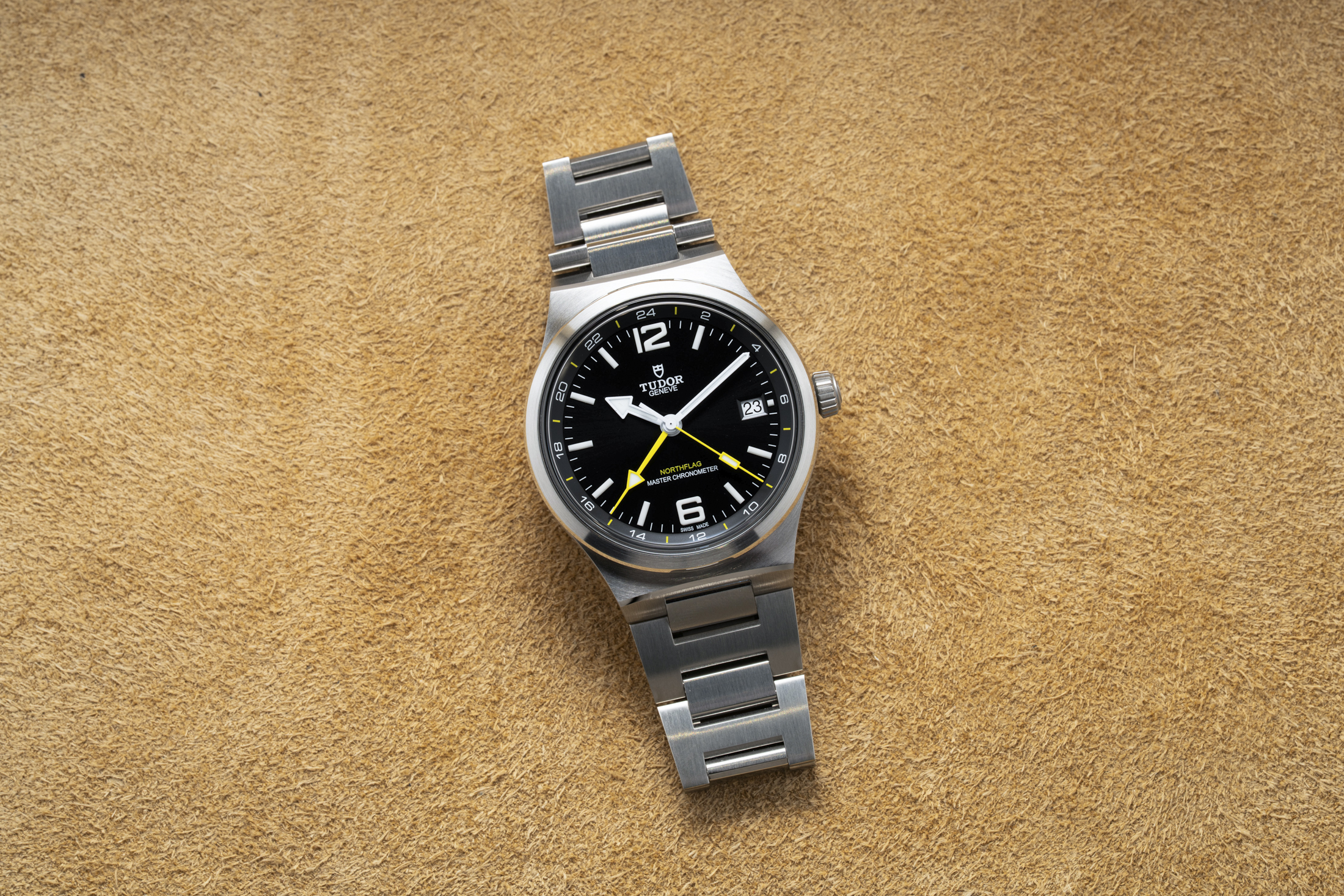
Tudor’s 2026 calendar year has been largely defined by its centenary celebrations, marking 100 years since Hans Wilsdorf’s initial steps toward establishing the brand. This landmark occasion was prominently highlighted with the release of the Tudor Monarch at Watches & Wonders 2026. While the Monarch was a successful launch, some enthusiasts who gravitate towards Tudor’s more robust and tool-oriented timepieces felt their preferences were less represented. The reintroduction of the Northflag, albeit with a new name and updated functionality, addresses this sentiment, offering a compelling option for everyday adventure and exploration.
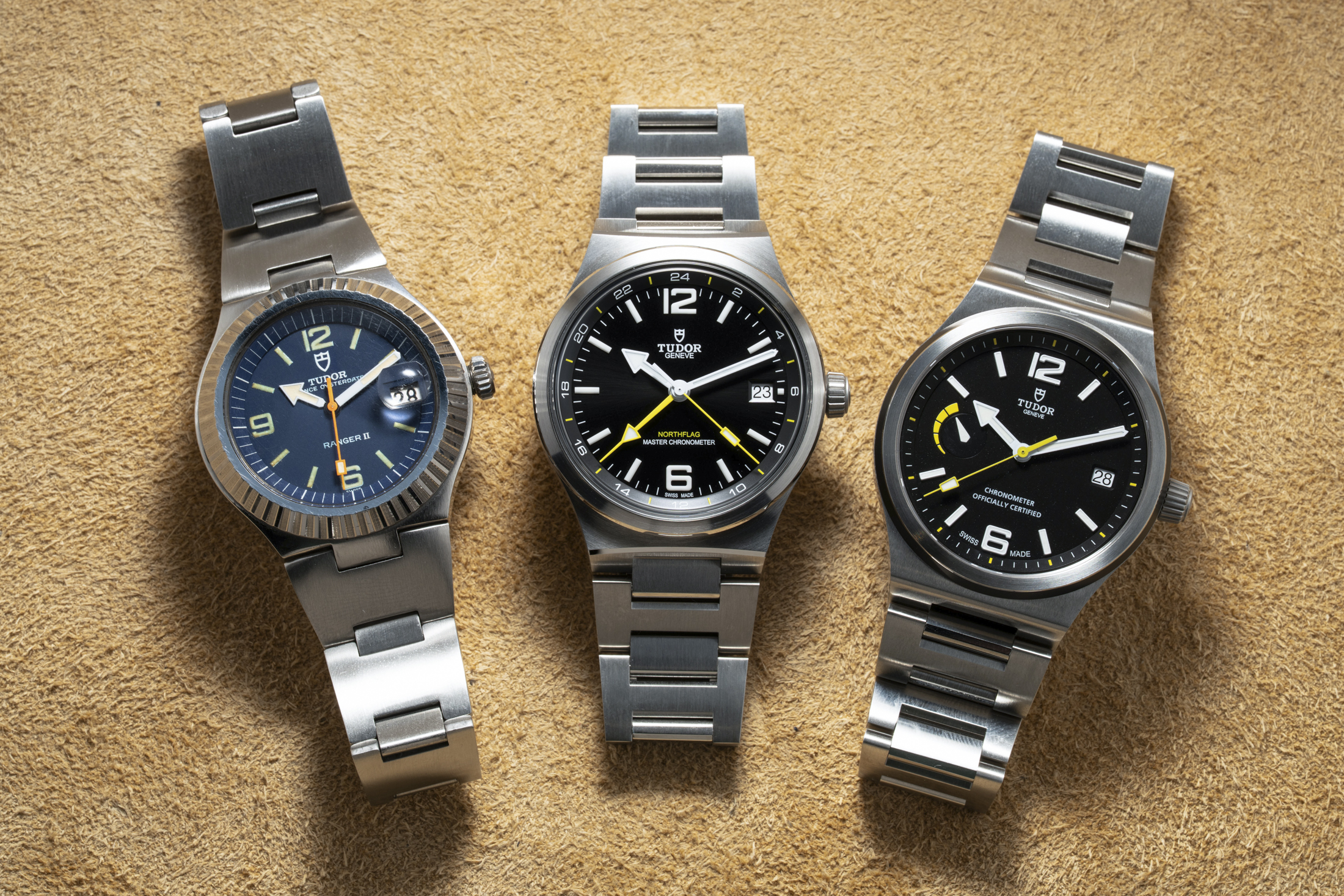
A Decade of Evolution: From North Flag to Northflag
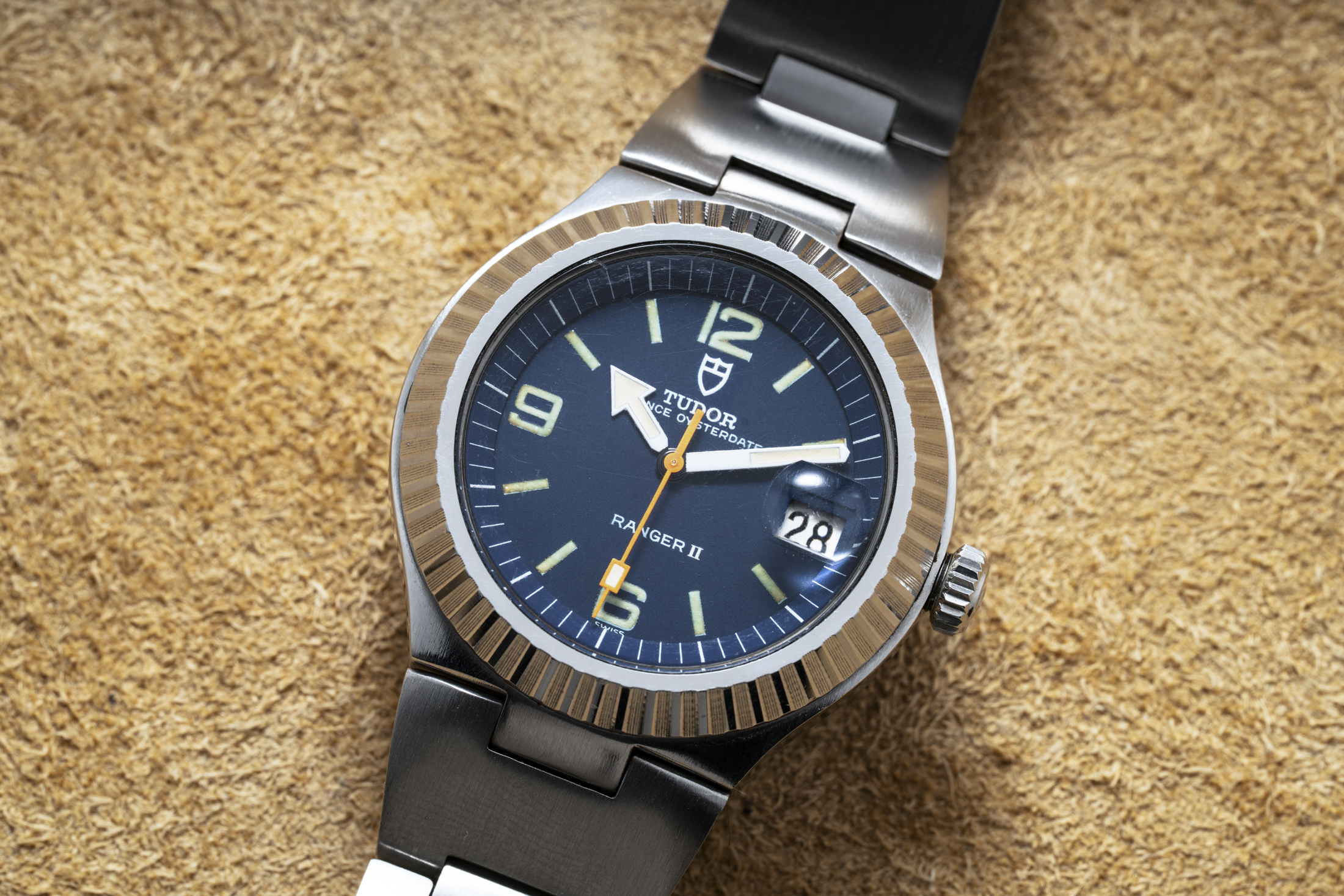
The original Tudor North Flag, launched in 2015, was a significant departure for the brand. It marked a pivotal moment as the first Tudor watch to feature an in-house movement, the caliber MT5621. This groundbreaking development was so impactful that much of the initial reception focused on the technological leap rather than the watch’s design itself. The North Flag’s distinctive features, including its power reserve indicator, black ceramic bezel, yellow accents, and integrated bracelet inspired by the Ranger II, gave it a unique character. Despite its innovative spirit and dedicated fanbase, the original North Flag did not achieve the widespread popularity of sibling models like the Black Bay or Pelagos, and it was eventually discontinued after a six-year run.
The intervening years have seen Tudor mature significantly as a brand. Milestones such as the launch of the Heritage Chrono (17 years ago), the Pelagos and Black Bay (14 years ago), its relaunch in the United States (13 years ago), and the introduction of the original North Flag (11 years ago) collectively narrate a story of growth and increasing prestige. Today’s Tudor is a well-established entity, far removed from its earlier experimental phase, and its product catalog reflects this enhanced sophistication. The new Northflag embodies this maturity, presenting a more refined, yet still robust, interpretation of its predecessor.
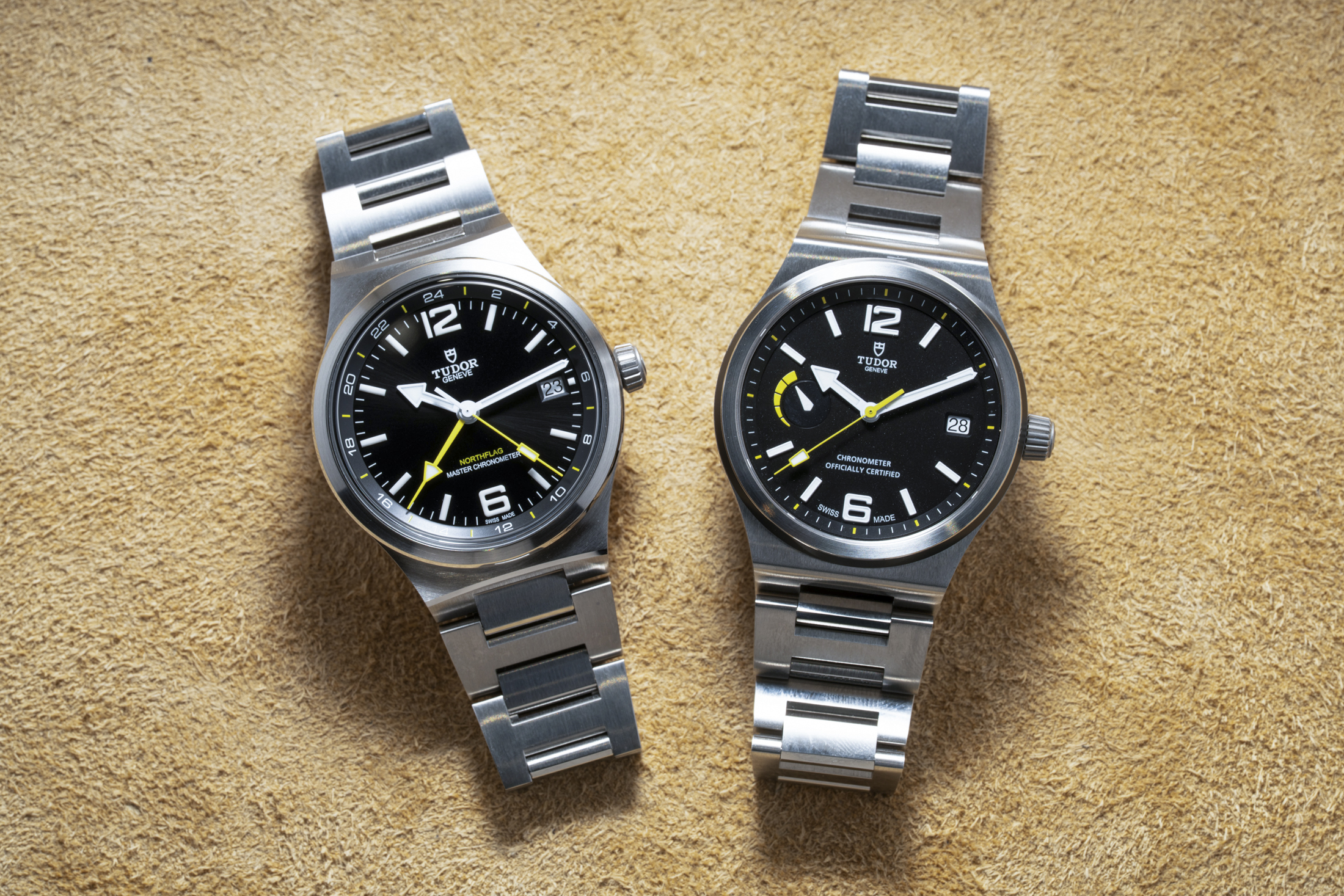
The New Northflag: Enhancements and Functionality
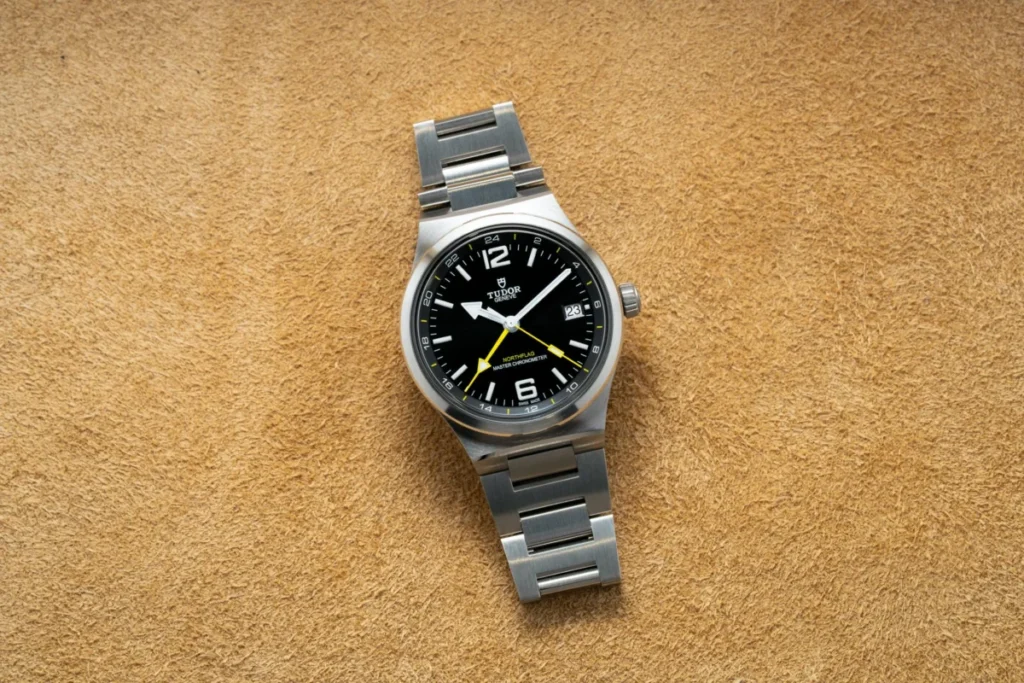
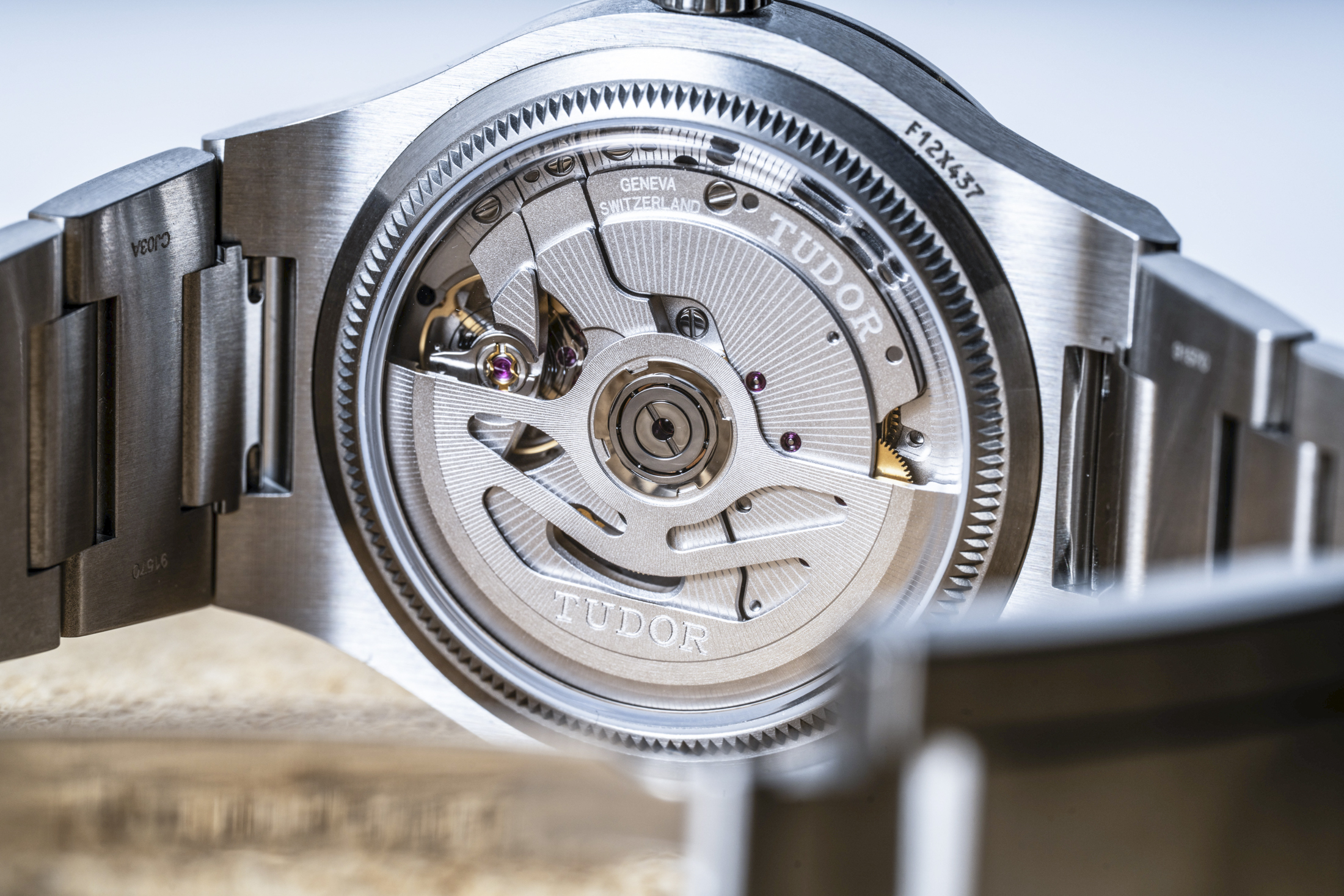
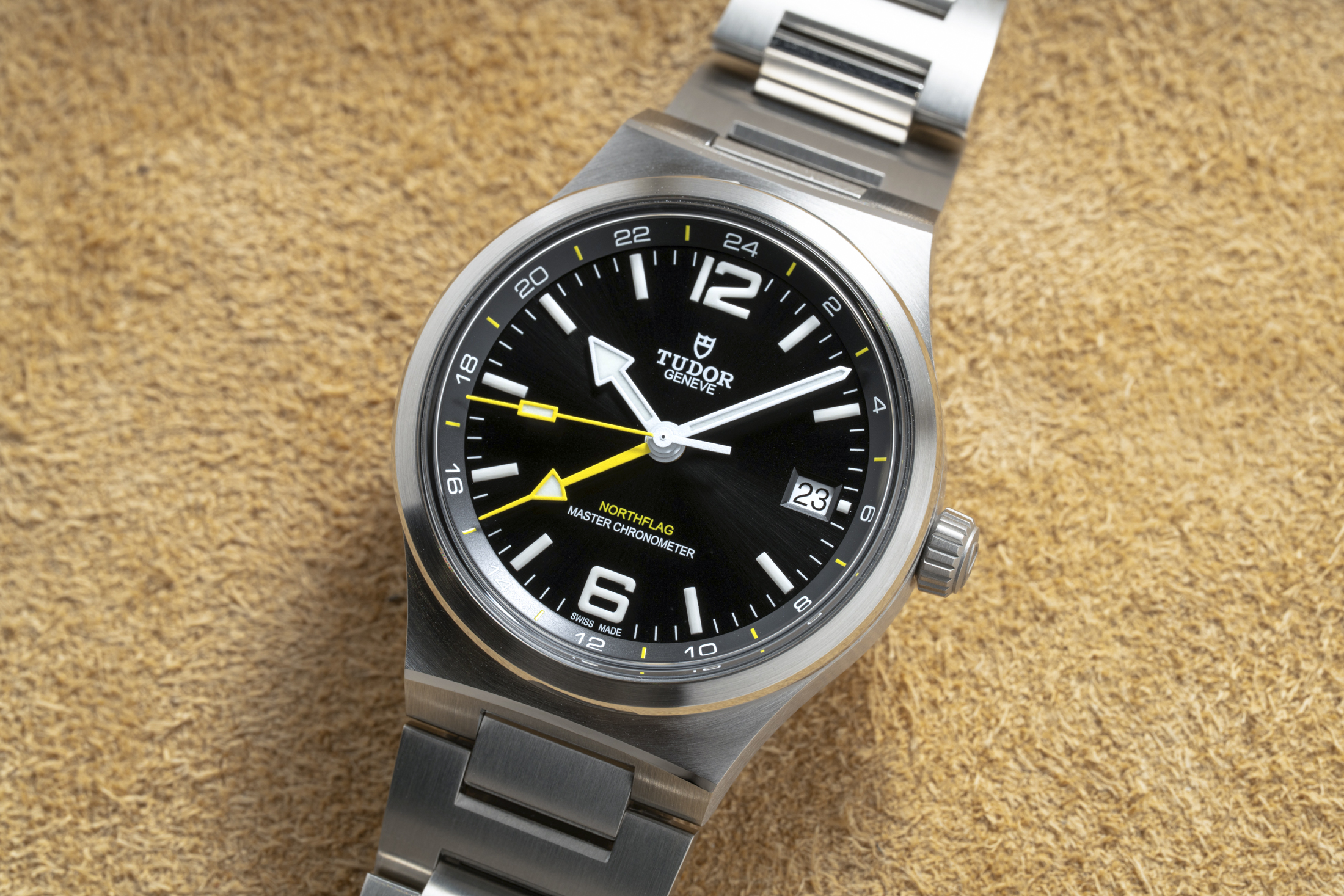
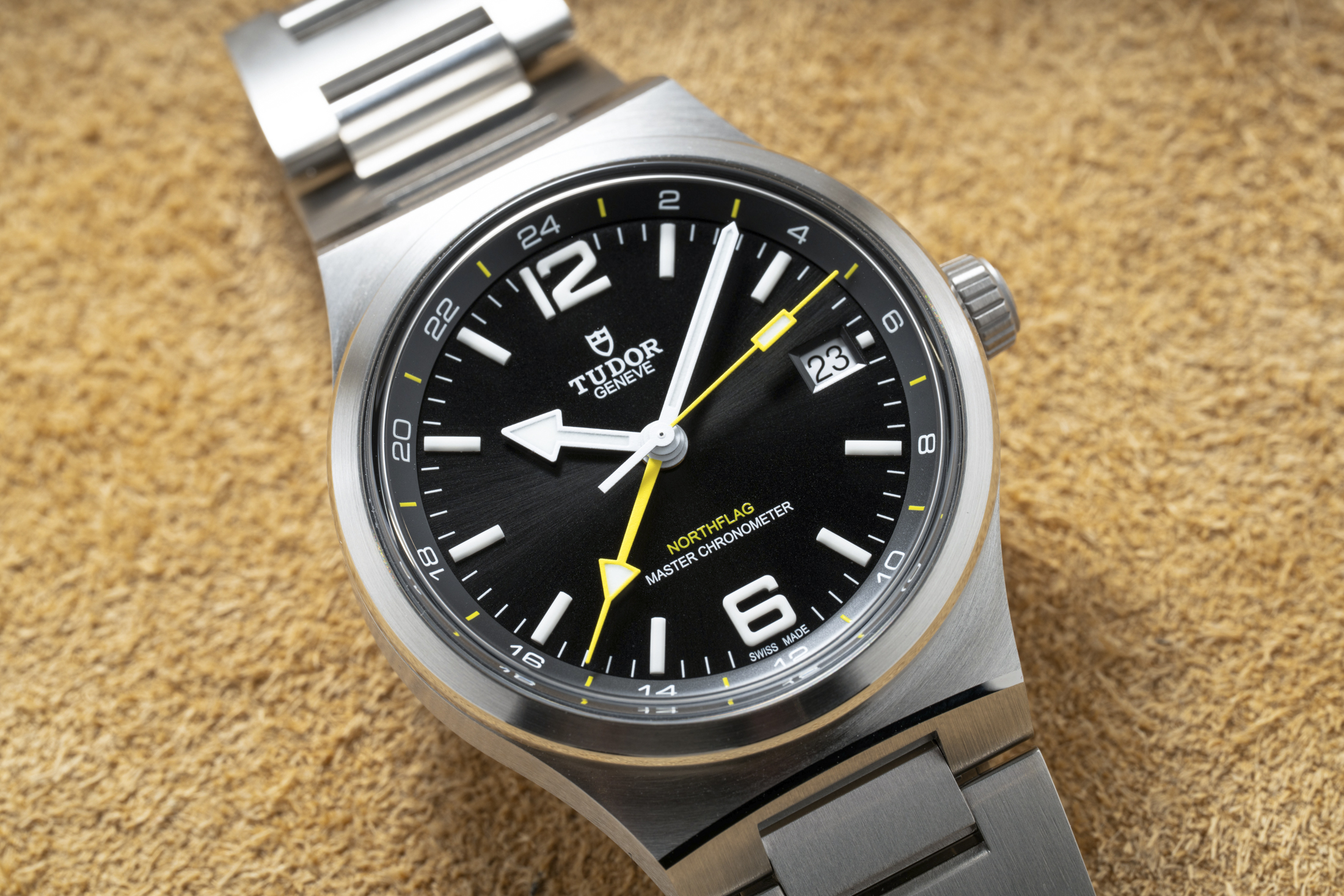
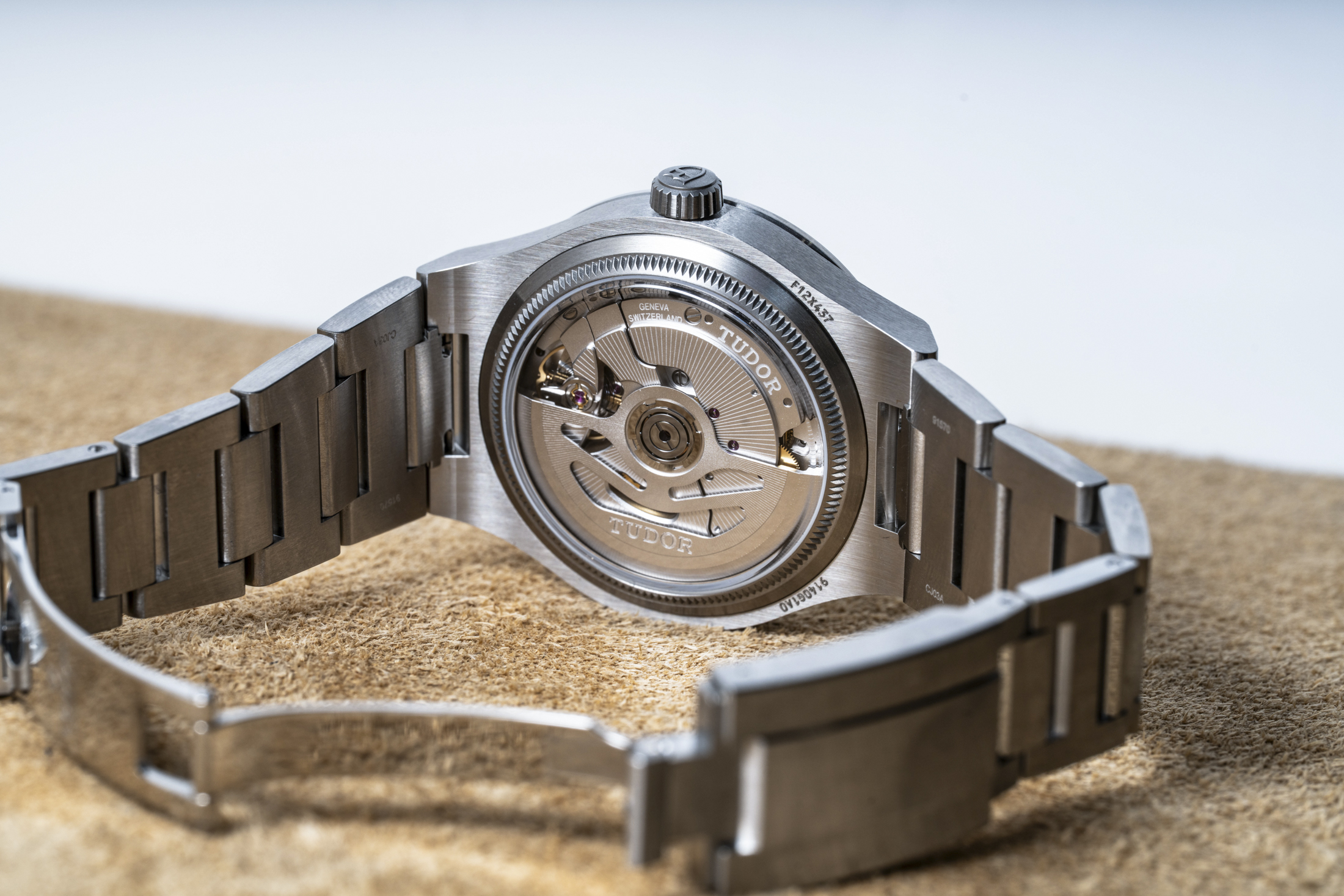
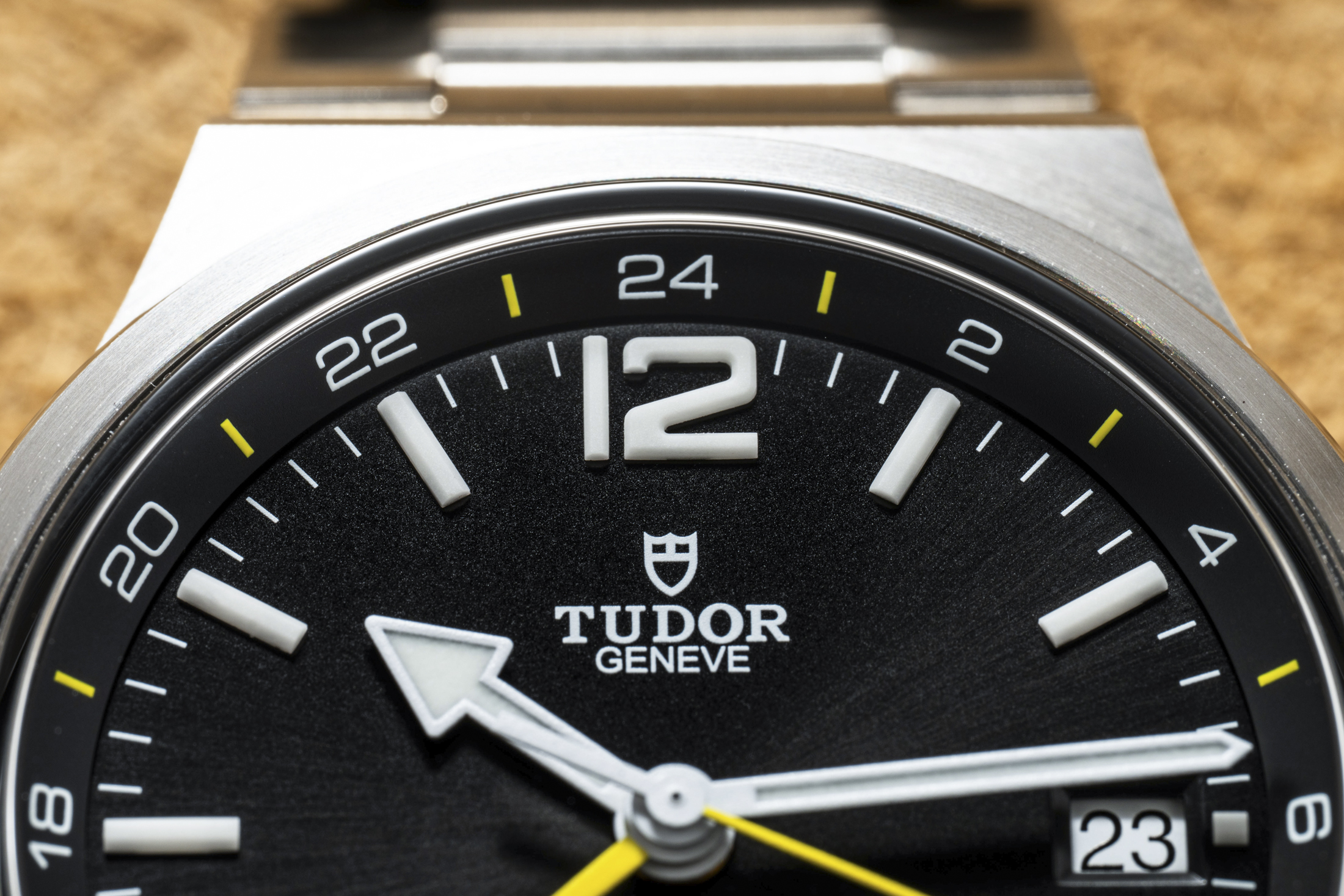
The most significant update to the Northflag is the integration of a dual-time (GMT) complication, powered by the Tudor MT5652-U movement. This METAS and COSC-certified caliber is a proven performer, known for its reliability and precision. The GMT function, indicated by a distinct yellow hand and a 24-hour bezel, offers a practical addition for travelers and those who need to track multiple time zones. This move away from the original’s power reserve indicator is a thoughtful design choice, catering to a broader appeal. Power reserve indicators, while functional, are often seen as redundant on automatic watches by many enthusiasts, and their placement on the dial can sometimes detract from the overall aesthetic. The GMT complication, conversely, carries a romantic allure, symbolizing travel and exploration.
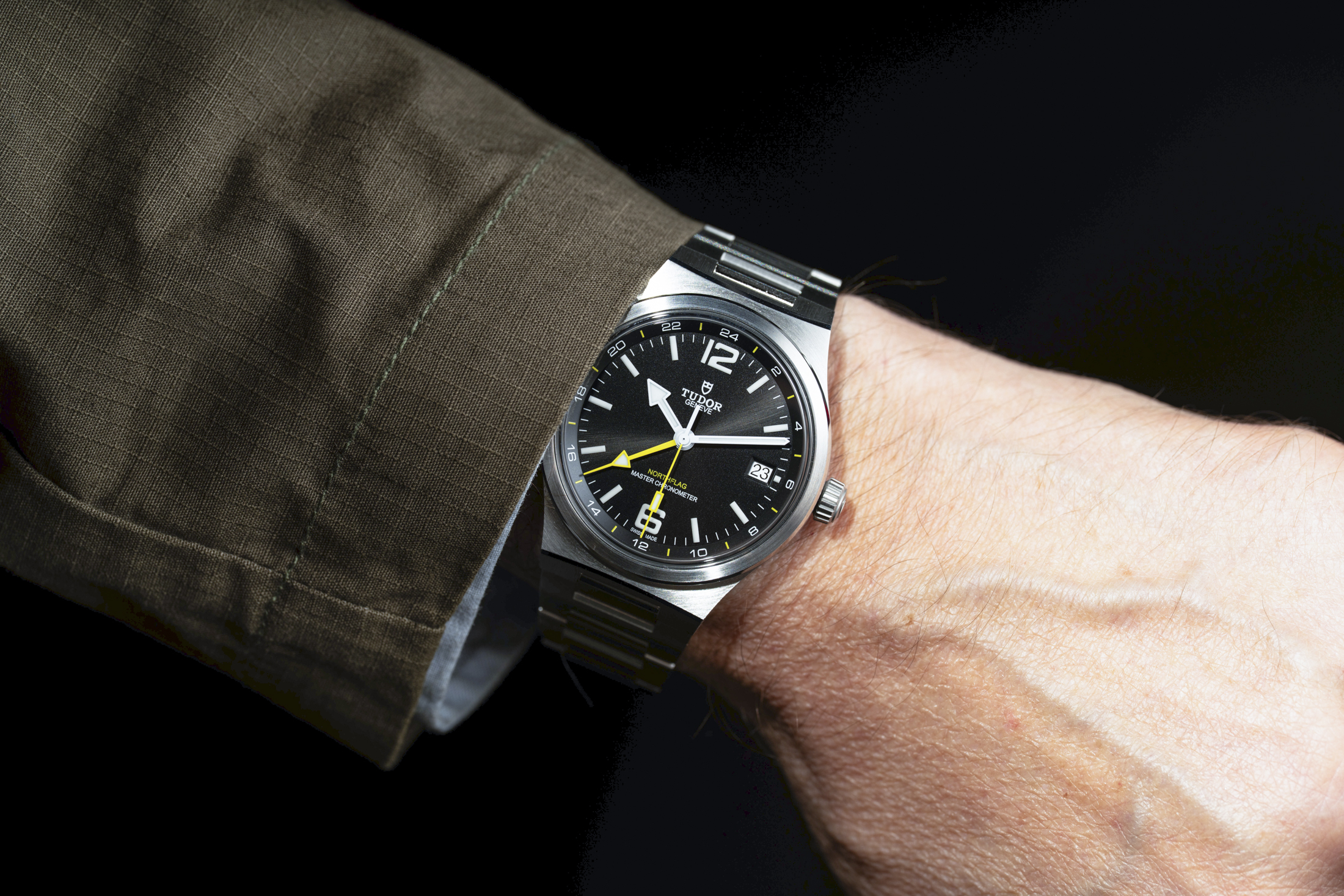
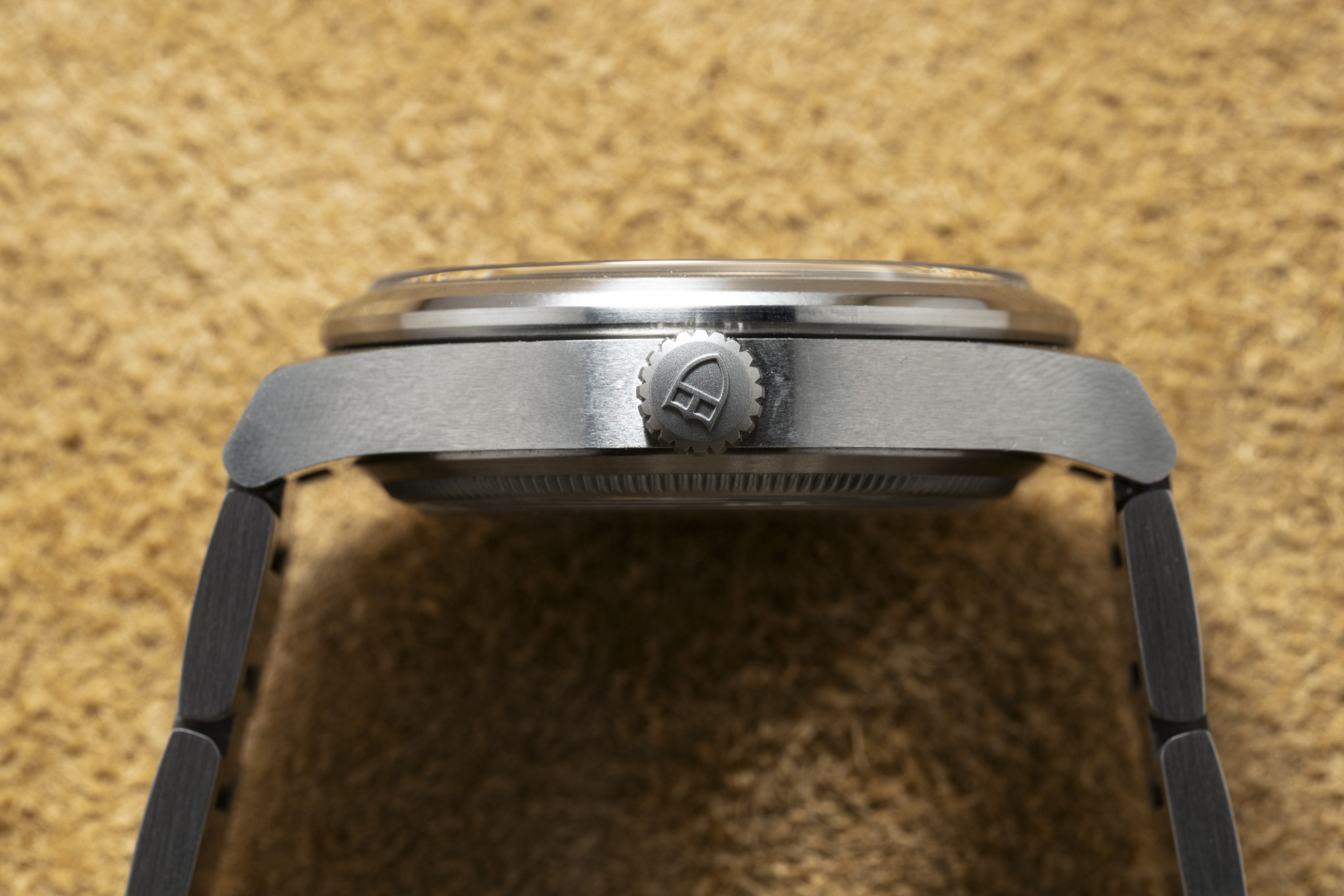
The case, while retaining its 40mm diameter in 316L stainless steel, has undergone subtle but impactful refinements. The new Northflag measures 12.7mm in thickness and has a lug-to-lug distance of 48.8mm, representing a noticeable reduction from the original’s 13.3mm thickness and 50mm lug-to-lug measurement. These adjustments contribute to a sleeker and more comfortable wearing experience, particularly on wrists around 7.5 inches. However, the fit can be subjective, with individuals having smaller wrists potentially finding it less accommodating. This underscores the importance of trying the watch on in person, a point amplified by its status as an in-store exclusive for Tudor, limiting immediate secondary market availability.
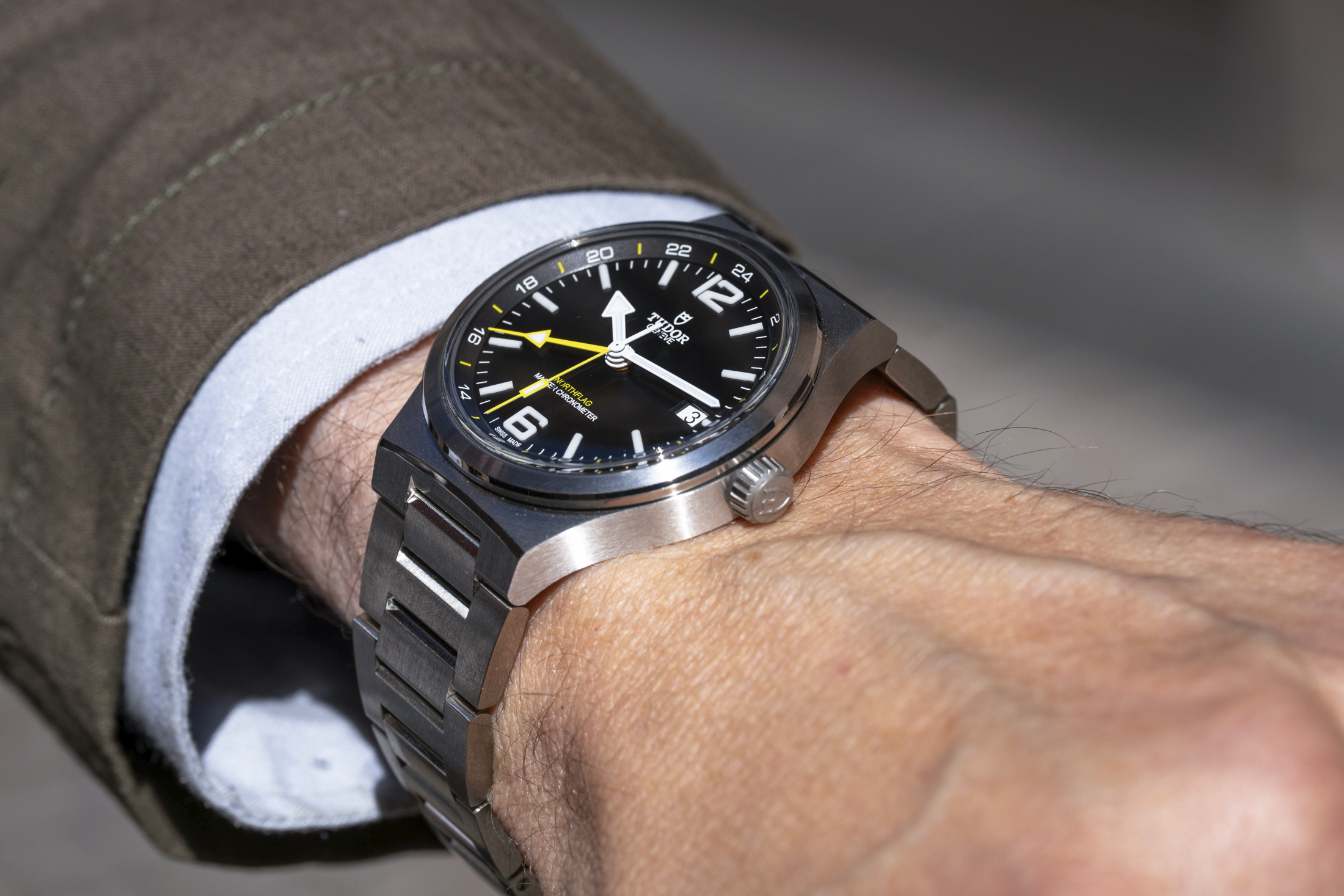
Aesthetically, the Northflag benefits from several updates designed to enhance its contemporary appeal. The dial is now a sunburst black, offering a more classically elegant finish compared to the matte dial of its predecessor. Raised luminous markers and numerals provide improved legibility and a more modern visual hierarchy. A particularly appreciated detail is the redesign of the seconds hand. It now closely mirrors the style of the Ranger II, the historical inspiration for the line, offering a subtle yet significant nod to its heritage. This design choice also helps to visually differentiate the seconds hand from the equally yellow GMT hand, mitigating potential confusion. While some might argue for different colors for these hands, the shared yellow hue reinforces the model’s distinctive palette.
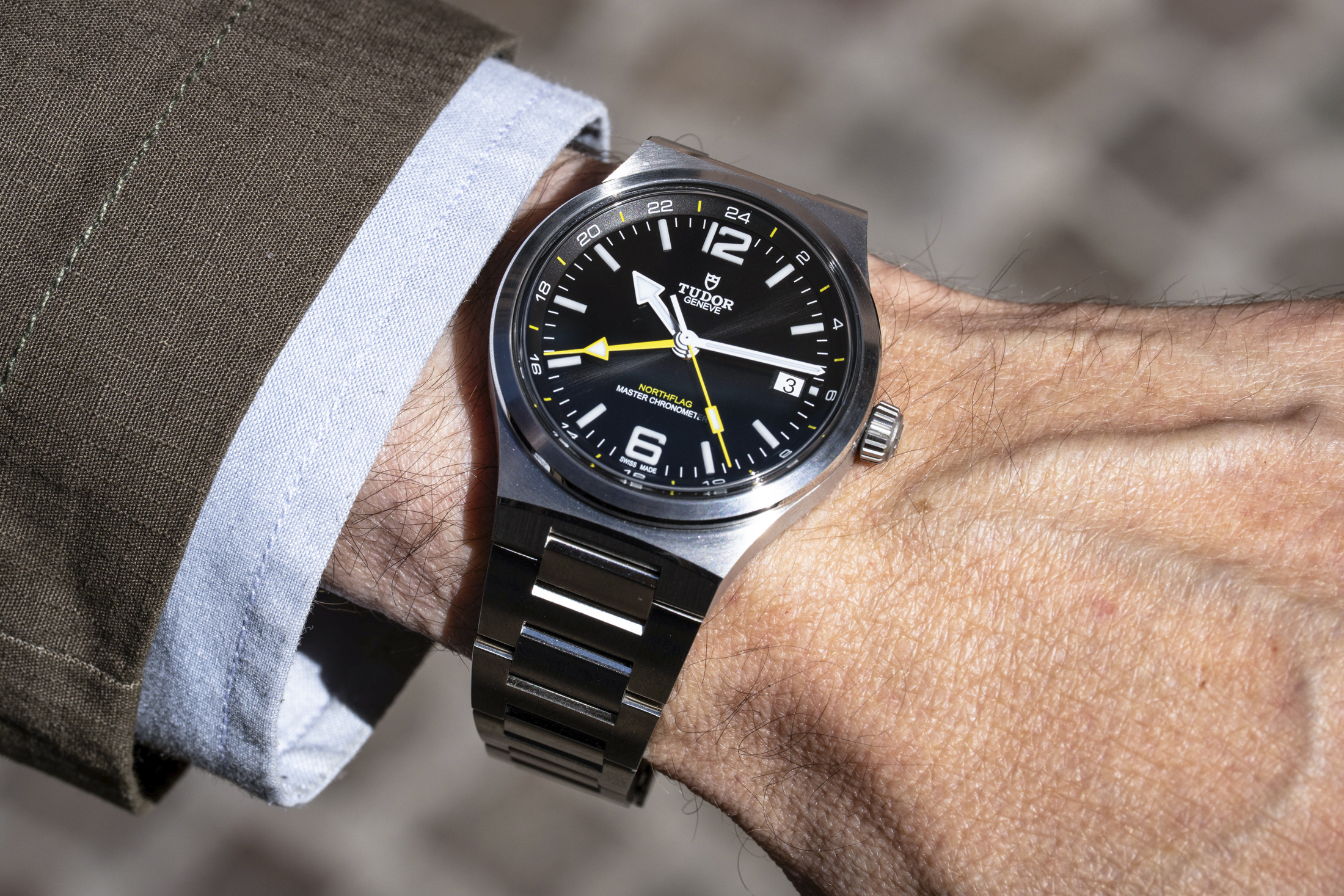
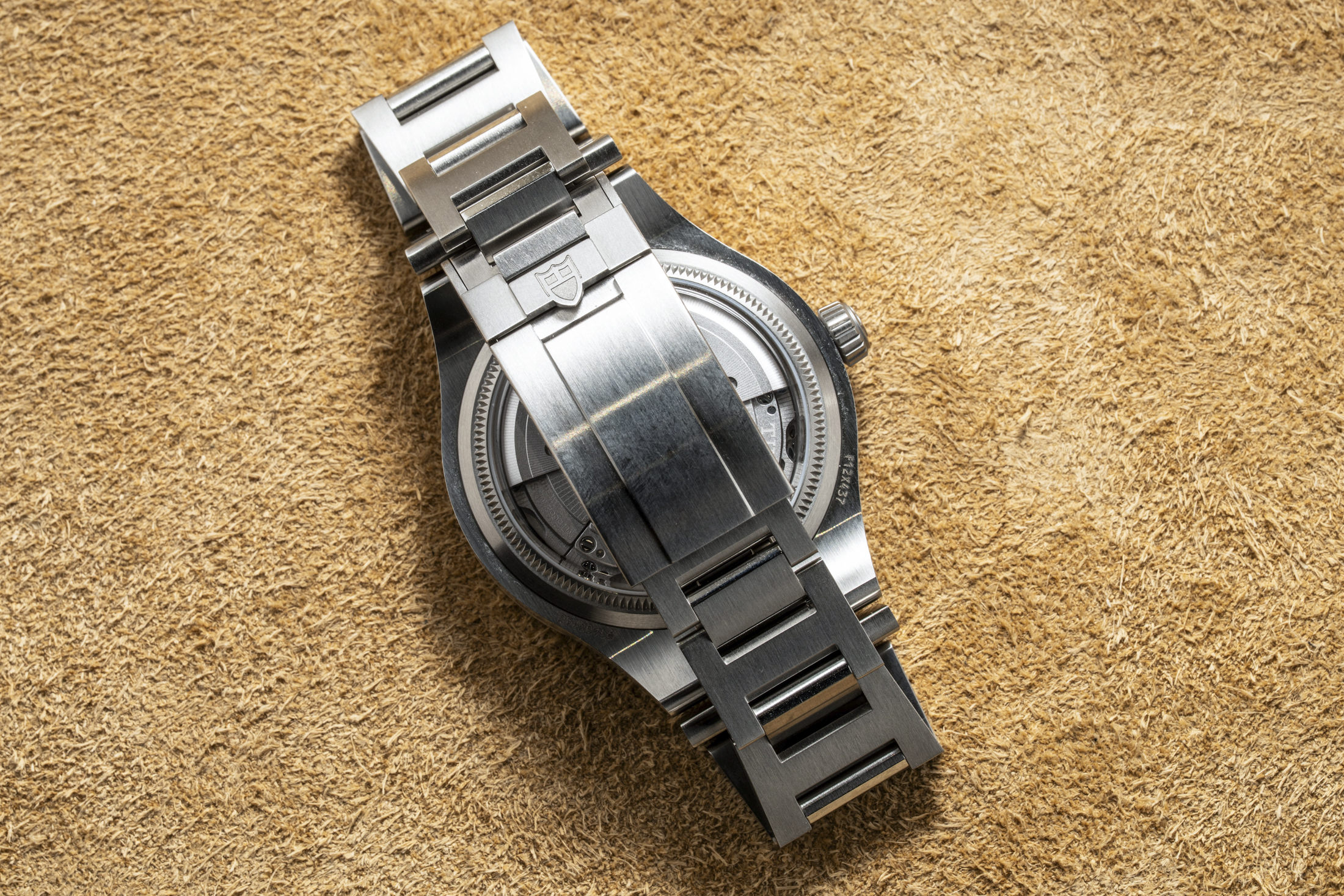
The distinctive black ceramic bezel ring, a hallmark of the original North Flag, has been replaced with a more conventional stainless steel bezel with 24-hour markings. While this might be a loss for those who cherished the original’s unique character, it aligns with a more broadly accepted aesthetic for GMT watches. The bracelet, featuring an updated H-Link design, incorporates modern quality-of-life improvements, most notably Tudor’s T-Fit system for on-the-fly micro-adjustments. This feature, introduced five years ago, significantly enhances wearability and comfort.
Despite these modernizations, certain design elements remain consistent, connecting the new Northflag to its lineage. The Explorer-style typeface for the hour markers persists, and the tapered crown, a unique feature across Tudor’s collection, adds a distinctive touch.
A Competitive Landscape: Finding its Niche
The Tudor Northflag enters a competitive market, with its most significant rival often found within Tudor’s own product line. The Black Bay Pro, though less expensive at $4,725 on a strap compared to the Northflag’s $5,525 price point, presents a comparable feature set. However, the Northflag boasts METAS certification and a slimmer profile, potentially offering a more refined wearing experience and a more distinctive bracelet. The price difference might be a factor, but the Northflag’s unique identity and the absence of an "Explorer II alternative" perception could sway buyers.
Beyond Tudor’s immediate offerings, the Breitling Chronomat GMT presents a similar functionality and size, but at a higher price point (approaching $7,000) and with a focus on highly polished finishes and often sport-team affiliations that may not appeal to all. The Oris ProPilot X Calibre 400, starting at $4,800, shares a similar utilitarian ethos and quality movement, but lacks a GMT complication, leaving a gap that the Northflag effectively fills.
Longines, a brand that has consistently delivered excellent value in the sub-$5,000 segment, also offers compelling GMT options. However, as the author notes, Longines’s current GMT offerings, while impressive, do not directly compete with the specific blend of tool-watch functionality and design language found in the Northflag. This leaves the Northflag with a relatively uncontested position within Tudor’s own catalog for those seeking this particular combination of features and heritage.
Analysis and Implications
The relaunch of the Northflag signifies more than just a product update; it represents a strategic move by Tudor to refine its identity and appeal to a wider spectrum of watch enthusiasts. By integrating a GMT complication and enhancing wearability, Tudor has transformed a somewhat polarizing niche model into a more accessible and broadly appealing timepiece. The move away from the original’s more avant-garde design elements, such as the ceramic bezel and power reserve indicator, suggests a conscious effort to balance unique character with commercial viability.
The decision to maintain a stainless steel construction, rather than opting for titanium, while potentially limiting its distinctiveness from the Black Bay Pro, reinforces its position as a more accessible and traditional tool watch. The inclusion of the T-Fit system is a testament to Tudor’s commitment to user-centric design, a feature increasingly expected in modern timepieces.
The Northflag’s success will likely hinge on its ability to carve out its own identity within Tudor’s robust lineup. While the brand has demonstrably matured, the Northflag’s journey from a bold, in-house movement showcase to a refined, multi-functional traveler’s watch reflects a broader trend in the industry towards blending heritage with contemporary functionality and market demands. The "grown-up" Northflag, as described, is poised to appeal to those seeking a capable and stylish daily wear that carries a sense of history and technological advancement, making it a significant addition to Tudor’s ever-evolving collection.