The Orange County Fair & Event Center in Costa Mesa is set to transform into a sprawling hub of innovation, creativity, and technical ingenuity as Maker Faire Orange County returns for its latest installment this weekend, September 12th and 13th. As an cornerstone of the regional "maker movement," the event serves as a massive "show and tell" for inventors, artists, and engineers, showcasing the intersection of traditional craftsmanship and cutting-edge technology. This year’s iteration continues a trajectory of significant growth, featuring an expanded roster of participants, interactive workshops, and specialized activations designed to engage a diverse demographic ranging from young students to professional engineers.
Originally conceived by the editors of Make: magazine in 2006, the Maker Faire brand has evolved from a single event in San Mateo, California, into a global phenomenon. The Orange County chapter has mirrored this expansion, transitioning from its early days as a "Mini Maker Faire" into a comprehensive regional exhibition that occupies a significant portion of the 150-acre OC Fair & Event Center. The 2026 event is structured around a "village" concept, a strategic organizational layout intended to foster deeper collaboration and networking among individuals with shared interests.

The Village Framework: Categorizing Innovation
The architectural layout of Maker Faire Orange County is intentionally designed to facilitate "collision points" between different disciplines. By grouping makers into topical villages, the event organizers encourage a cross-pollination of ideas that often leads to new collaborative ventures.
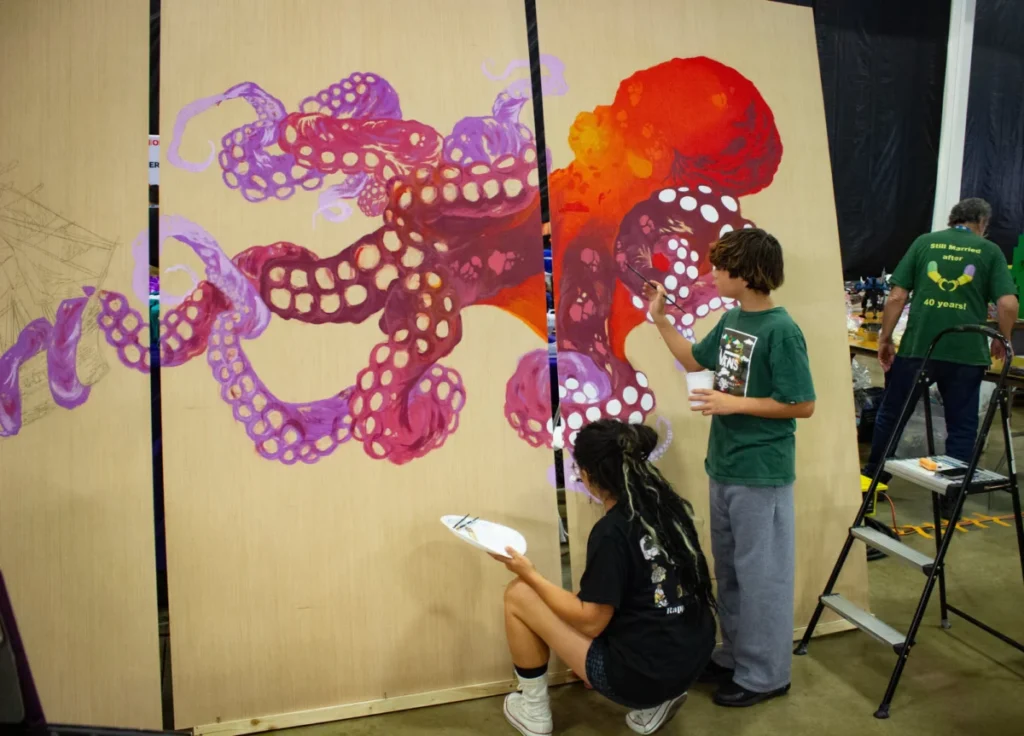
The Arts & Crafts Village is positioned adjacent to the 3D Printing Village, highlighting the modern evolution of fabrication where hand-stitched textiles and computer-generated polymers coexist. In another quadrant, the Cosplay Corner shares space with the Robotics Village, reflecting the increasing technical complexity of modern costuming, which now frequently incorporates animatronics, sensors, and programmed lighting. The Electronics Village and Makerspaces Village occupy a third sector, serving as the technical heart of the event where visitors can witness live soldering, circuit design, and the collective power of community tool-sharing.
Centrally located is the "Maker That Money" village shop. This area serves as the commercial nexus of the faire, providing a platform for independent makers to transition from hobbyists to entrepreneurs. By offering a space for creators to sell their wares, the event supports the local "creator economy," which has become a vital component of Orange County’s small business landscape.

Technical Highlights and Featured Projects
The 2026 lineup features several standout projects that exemplify the diversity of the maker community. These projects range from high-level artificial intelligence to sustainable environmental initiatives.
Expressive AI Animatronic Systems
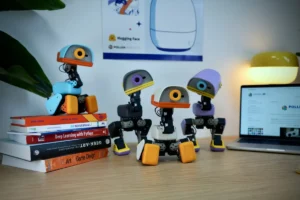
One of the most technically ambitious displays this year is a real-time expressive animatronic head. Built entirely on open-source AI frameworks, the project demonstrates how sophisticated robotics can be achieved using accessible consumer hardware. The system utilizes a standard webcam to feed data into MediaPipe and DeepFace, producing facial landmarks and a seven-class emotion signal.
The project’s lead developer has successfully mapped these signals to servo positions for the eyes, brows, and jaw using a local agent. Furthermore, the inclusion of a Facenet embedding database allows the robot to recognize and remember returning visitors, creating a personalized interaction experience. This entire pipeline—including an audio-driven lip-sync engine—is orchestrated through a Python-based Flask and SocketIO control panel. Remarkably, the developer achieved this level of sophistication with approximately $200 in hardware, emphasizing the maker movement’s goal of democratizing complex technology.

Advanced Haunt Technology and IE Haunters
Reflecting the regional passion for seasonal "haunt" culture, the IE Haunters group will showcase the technical side of professional and home-based spooky effects. Their exhibit focuses on the integration of addressable LEDs and projection mapping to create immersive environments. As the "haunt" industry in Southern California continues to grow, these makers provide a vital educational resource for individuals looking to move beyond store-bought decorations into the realm of custom-built, programmable scares.
Laser-Based Analog Communication
In the realm of physics and telecommunications, a featured project on Laser-Based Analog Free-Space Optical Communication offers a hands-on demonstration of how sound can be transmitted via light. The system uses an audio signal to modulate the intensity of a 650 nm laser. This brightness variation encodes sound information which is then transmitted across free space to a receiver.
The receiver utilizes a magnifying glass to focus the incoming laser light onto a phototransistor, which converts the light back into an electrical signal for amplification through a speaker. Visitors are invited to interact with the beam, observing how physical interruptions immediately halt the data stream, providing a tactile lesson in the properties of light and signal processing.

Circular Design and Environmental Stewardship: ReUpOurOcean
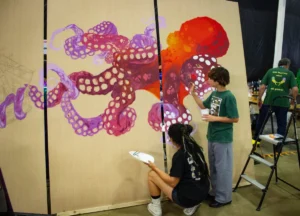
Sustainability remains a core theme of the 2026 faire, led by the ReUpOurOcean initiative. Based at AltaSea at the Port of Los Angeles, ReUp is a circular design project that focuses on material experimentation. The project transforms recovered plastics, discarded fishing gear, and marine waste into functional products such as wax combs, coasters, and bags.
By showcasing the journey from "waste" to "value," ReUpOurOcean serves as an educational bridge between environmental activism and industrial design. Their presence at Maker Faire Orange County highlights the role of makers in solving global ecological challenges through localized, creative fabrication.
Chronology and Event Logistics
The planning for an event of this magnitude typically begins six to nine months in advance, starting with a "Call for Makers" that attracts hundreds of applicants from across the Western United States.

- Setup Phase (September 10-11): Makers arrive at the OC Fair & Event Center to construct large-scale installations, calibrate delicate electronics, and organize workshop materials.
- Day One (September 12): The faire opens to the public at 10:00 AM. This day is traditionally characterized by high-energy demonstrations and the "Saturday-only" appearance of specialized makers like Joey of "Man Made," known for his "overbuilt" custom furniture and immersive space designs.
- Day Two (September 13): The event continues with a focus on deep-dive workshops and panel discussions. This allows visitors who were inspired by the first day’s exhibits to engage in hands-on learning.
- Post-Event: Many projects showcased at the faire move into the community via open-source repositories (such as GitHub) or through the establishment of new makerspace memberships.
Data and Economic Context
The impact of Maker Faire Orange County extends beyond the weekend. According to industry data, the maker movement has significantly influenced the growth of STEM (Science, Technology, Engineering, and Math) education in California. Events like these serve as informal learning environments that have been shown to increase student interest in technical careers by providing a "low-stakes" entry point into complex fields.
In terms of material costs and labor, the "Making Jewelry from Pennies" exhibit by Tamara Berg provides a fascinating statistical look at the dedication required for artisanal making. Her featured penny-based garment utilized:
- 1,060 individual pennies (minted after 1983 for their lighter zinc content).
- 4,240 hand-drilled holes.
- Over 4,100 copper jump rings.
- A final weight of 6.5 pounds.
This project underscores a common theme at the faire: the transformation of low-value, everyday objects into high-value art through intensive manual and technical labor.

Broader Impact and Implications
The continued success of Maker Faire Orange County reflects a broader societal shift toward decentralized manufacturing and the "Right to Repair." By teaching visitors how to build, fix, and modify their own technology, the faire promotes a culture of self-reliance and technical literacy.
Furthermore, the collaboration with institutions like AltaSea and local makerspaces indicates that the faire is no longer just a hobbyist convention; it is a critical node in the regional innovation ecosystem. The "villages" established at the OC Fair & Event Center serve as temporary incubators for ideas that may eventually find their way into commercial products or environmental solutions.
As the event concludes on Sunday evening, the organizers expect that thousands of visitors will have engaged with hundreds of makers, potentially sparking the next wave of regional innovation. Tickets remain available through the official Maker Faire OC website, and the community discussion continues year-round on platforms like Discord, where makers share progress on their projects and plan for future collaborations. For the residents of Orange County and the surrounding areas, this weekend represents a unique opportunity to witness the future of human creativity in a tangible, interactive format.