The intersection of engineering, software development, and aesthetic design will take center stage at the upcoming Maker Faire Bay Area 2026, held at the historic Mare Island from September 25th through 27th. As a cornerstone of the global maker movement, the event continues its tradition of showcasing the vanguard of DIY innovation, with this year’s spotlight falling heavily on the "Dark Room" in Building 101. This specialized exhibition space is dedicated to the creative application of Light Emitting Diode (LED) technology, interactive optics, and the burgeoning field of generative artificial intelligence. By isolating light-based installations from ambient sunlight, the Dark Room provides a controlled environment where makers can demonstrate the full potential of high-density luminaries and synchronized audiovisual systems.
The Evolution of the Maker Aesthetic: From Indicators to Immersive Environments
The presence of LED technology at Maker Faire has evolved significantly since the event’s inception in the mid-2000s. Initially utilized by hobbyists as simple status indicators on circuit boards, LEDs have undergone a technological revolution characterized by increased energy efficiency, reduced manufacturing costs, and the development of addressable protocols. The shift from standard LEDs to "smart" or addressable variants—such as the WS2812B (NeoPixel) and APA102 chipsets—has empowered makers to control individual pixels within a larger array. This granular control allows for the creation of complex animations, data visualizations, and interactive sculptures that were once the exclusive domain of high-budget commercial lighting firms.
In the 2026 iteration of Maker Faire Bay Area, this technological democratization is on full display. The Dark Room serves not merely as an art gallery but as a laboratory for exploring how human-computer interaction (HCI) can be facilitated through light. The exhibits featured this year represent a convergence of various disciplines, including computer science, mechanical engineering, and traditional sculpture.

Generative AI and the Visibility of "Code Slop"
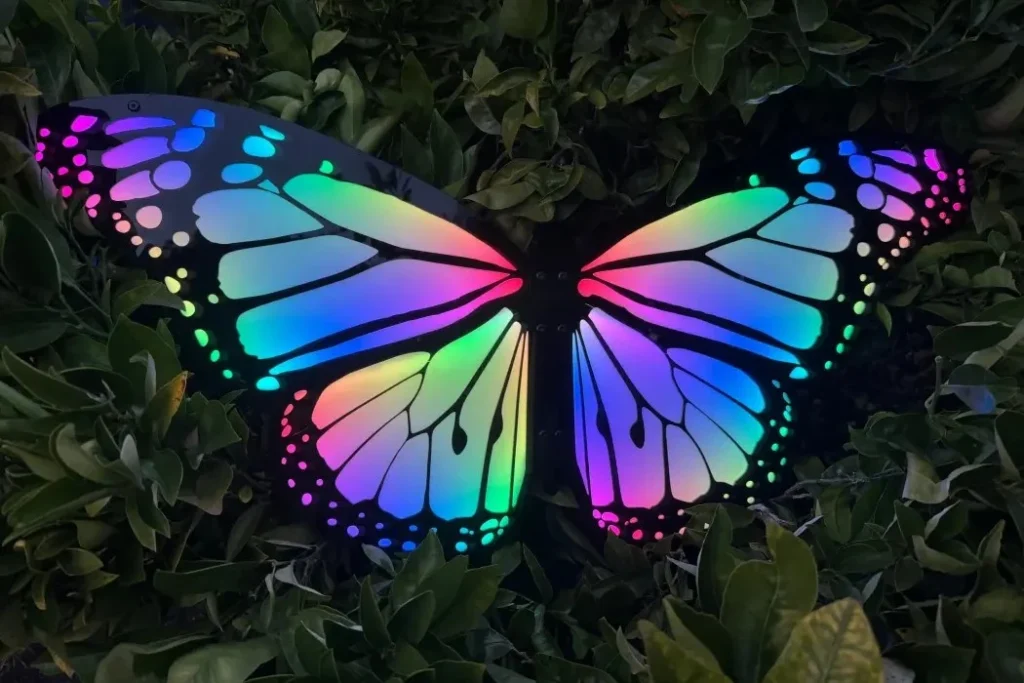
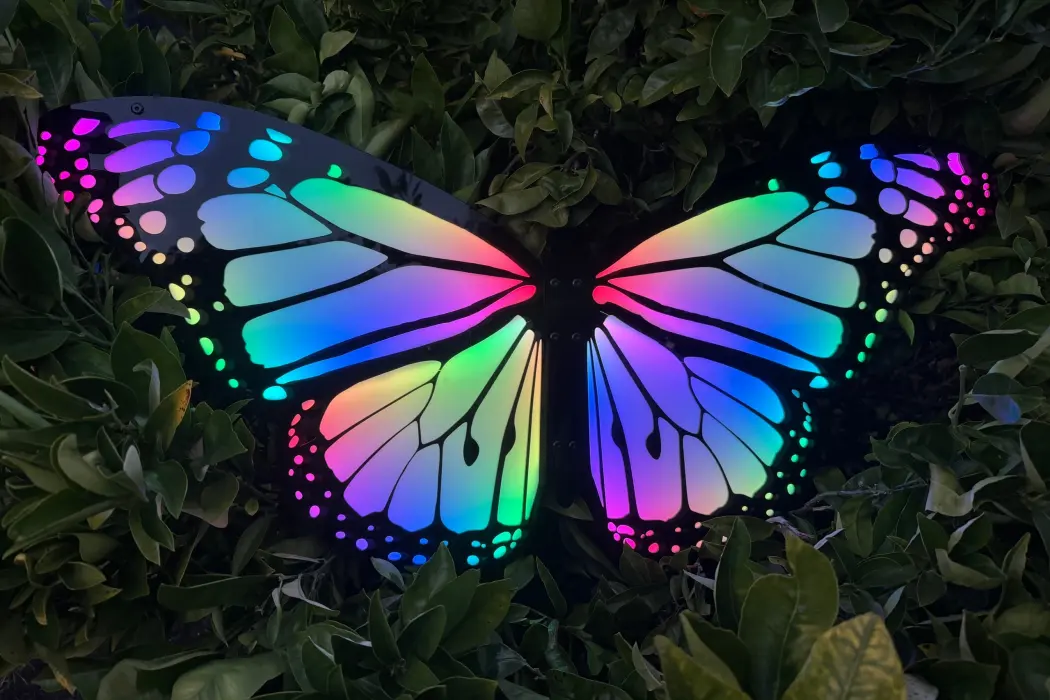
One of the most technically ambitious projects at the 2026 event is Lepidoptera Imaginaria, created by Grant Patterson. A Stanford-trained computer scientist with an extensive background in Internet of Things (IoT) systems, Patterson has designed an interactive light sculpture inspired by the migratory monarch butterfly, an endangered species that serves as a symbol of both fragility and resilience.
The installation utilizes 570 full-color LEDs and a vintage microphone interface. When a participant speaks into the microphone, a Large Language Model (LLM) processes the vocal input and generates software code in real-time. This code is immediately executed to produce unique light patterns across the butterfly’s wings. Patterson’s work provides a physical manifestation of what is often colloquially referred to as "code slop"—the rapid, iterative output of generative AI. By making the invisible process of software generation visible, the piece allows users with no programming experience to "write" software through speech.

However, the project also offers a subtle critique of modern "black box" technology. Because the underlying code is generated and executed instantly without being displayed to the user, the creator cannot easily debug, refine, or fully comprehend the logic behind the visual output. This dynamic highlights a growing tension in the maker community between the ease of AI-assisted creation and the traditional value of deep technical understanding.
Sonic Luminescence: The Intersection of Light and Sound
The 2026 Dark Room features a significant focus on synesthetic experiences, where visual stimuli are inextricably linked to auditory signals. This is achieved through the integration of custom-designed Printed Circuit Boards (PCBs) and hardware devices that synchronize LED arrays with MIDI (Musical Instrument Digital Interface) or direct audio inputs.

Night Canopy, an installation by Bay Area software engineer and DJ Jenia Varavva, exemplifies this trend. The project is a room-sized musical instrument consisting of hanging fluorescent strands that glow under ultraviolet (UV) light. Utilizing capacitive touch sensors, the strands respond to human contact by triggering sound loops and short audio samples. The reflective ceiling further amplifies the visual effect, creating an immersive environment that encourages collaborative play.
Similarly, The Morphoresonator—a nine-foot-tall chandelier—combines hand-sculpted cellophane and packing tape with a live generative music system. The sculpture functions as a "living" instrument that monitors ambient sounds, such as humming or clapping, and reflects those inputs through shifting light patterns and modified audio playback. These projects demonstrate a shift in the maker movement toward "agentic" systems—artworks that possess a degree of autonomy and respond dynamically to their environment.

Regional Innovations: The Portland-Bay Area Pipeline
The 2026 event also highlights a strong regional exchange of ideas, particularly between the maker communities of Portland, Oregon, and the San Francisco Bay Area. Several prominent makers associated with Portland’s renowned winter light art festivals have traveled to Mare Island to showcase upgraded versions of their work.
The creative partnership known as Twisty Maurice, comprising Misty Post and Therese Gietler, has introduced Oscillara, an interactive console that allows users to manipulate light ripples through proximity sensors. Their second piece, Samyra Drift, is a four-foot octopus constructed from LEDs and meticulously folded paper. The installation mimics the biological phenomenon of chromatophores—pigment-changing cells in cephalopods—through complex LED sequencing, bridging the gap between biomimicry and digital art.

International contributions further enrich the Dark Room’s technical diversity. Swedish artist Johan Fredrik Källman’s Luxtriplicata focuses on the fundamental science of optics. By using rotatable plates and glass prisms, Källman allows participants to manually refract and disperse white light into vibrant spectrums. This hands-on approach to physics education is a hallmark of the Maker Faire ethos, emphasizing "learning by doing."
The Influence of Desert Arts: From Black Rock City to Mare Island
The aesthetic and technical standards of the Dark Room are heavily influenced by the culture of Burning Man, the annual event in Nevada’s Black Rock Desert. For decades, the harsh and dark environment of the desert has served as a proving ground for large-scale LED installations and mobile "art cars."

At Maker Faire 2026, this influence is visible in Sepia Lux, a 35-foot-long animatronic inflatable cuttlefish. The project, alongside its companion Flash the Tortoise, utilizes custom-formed High-Density Polyethylene (HDPE) paneling and sophisticated lighting arrays. These mobile exhibits are not merely static displays; they are interactive platforms where visitors can control the lighting patterns using integrated musical interfaces, such as drum sets and pianos. The transition of these projects from the desert to an industrial setting like Mare Island underscores the durability and scalability of modern maker-made technology.
Technical Analysis: The Impact of Addressable Protocols and DMX
The complexity of the installations in the 2026 Dark Room is supported by a robust backbone of communication protocols. Many of the featured works, such as Sydney Parcell’s Chromolume, utilize DMX (Digital Multiplex), a standard for digital communication networks commonly used in professional stage lighting. By adopting professional-grade protocols, makers are able to integrate their custom sculptures into larger theatrical sets, allowing for seamless collaboration between lighting designers, sound engineers, and visual artists.

Furthermore, the widespread adoption of 32-bit microcontrollers, such as the ESP32 and Teensy series, has provided the computational power necessary to handle high-frame-rate LED animations and real-time 3D rendering. These controllers, often paired with creative coding frameworks like TouchDesigner or FastLED, enable the "dynamic color shifting" mentioned by event organizers as a key feature of this year’s exhibits.
Broader Implications for the Future of Creative Industries
The technologies showcased at Maker Faire Bay Area 2026 have implications far beyond the realm of hobbyist art. The techniques developed by these makers for real-time generative visuals and interactive spatial experiences are increasingly being adopted by the architectural, advertising, and entertainment industries.

- Democratization of Art: AI-driven tools like those used in Lepidoptera Imaginaria lower the barrier to entry for digital expression, allowing non-technical individuals to participate in the creation of complex systems.
- Sustainability: The continued advancement of LED technology contributes to a broader reduction in energy consumption for large-scale public art and commercial lighting.
- Educational Integration: Installations like Luxtriplicata demonstrate how interactive art can serve as an effective medium for STEM (Science, Technology, Engineering, and Mathematics) education, making abstract concepts like refraction tangible.
Event Logistics and Participation
Maker Faire Bay Area 2026 is expected to draw tens of thousands of visitors to Mare Island. Building 101, which houses the Dark Room, will be open for the duration of the event. Organizers emphasize that while the visual spectacles are a primary draw, the "Maker" aspect—the sharing of schematics, code, and assembly techniques—remains the core mission. Many of the exhibitors will be holding informal "teardown" sessions or Q&A periods to discuss the hardware and software powering their installations.
As LED technology continues to advance—with future developments in MicroLEDs and augmented reality integration on the horizon—the Dark Room at Maker Faire remains a vital window into how these tools will shape the visual landscape of the late 2020s. For those interested in the future of interactive technology, the event at Mare Island represents a critical gathering of the minds currently defining the limits of light and code. Tickets and further information regarding the schedule of workshops and presentations are available through the official Maker Faire website.