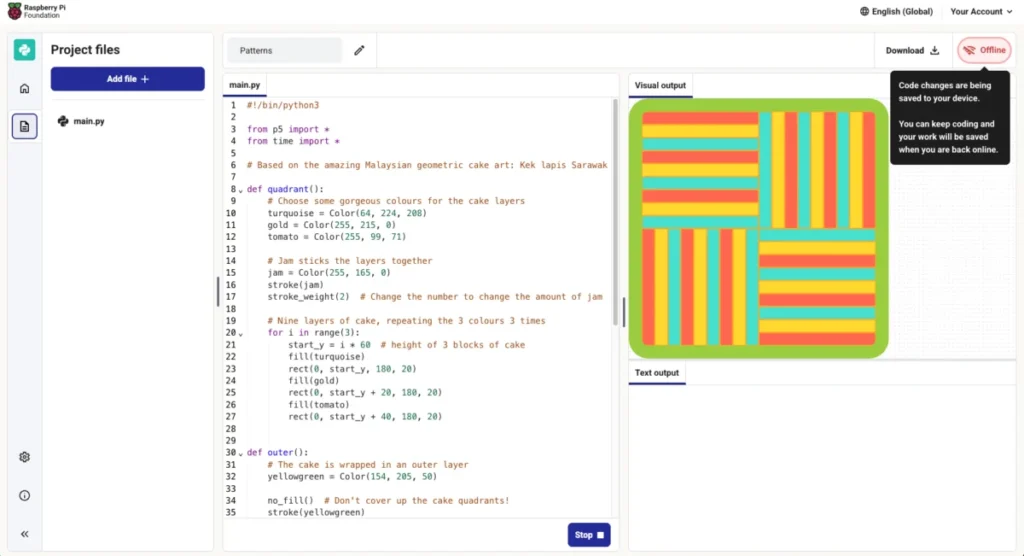
The Raspberry Pi Foundation has announced a significant technical update to its free, browser-based Code Editor, introducing robust offline functionality designed to mitigate the challenges of unstable internet connectivity in educational environments worldwide. This development ensures that learners and educators can continue to write, test, and execute code even when a network connection is interrupted or lost entirely. By leveraging advanced web technologies, the Foundation aims to eliminate one of the primary barriers to digital literacy: the requirement for a constant, high-speed internet connection, which remains a luxury in many parts of the globe.
The update comes as part of a broader strategic initiative to make computing education more inclusive. Previously, the Code Editor, while accessible through any standard web browser, relied on an active connection to maintain the state of a session. If a user experienced a network drop or accidentally refreshed their browser during a period of connectivity loss, they risked losing unsaved progress or encountering the dreaded "no internet" error page. With the new integration, the Code Editor remains functional and resilient, allowing for a seamless transition between online and offline states without disrupting the creative process.
Addressing the Global Digital Divide through Field Research
The decision to prioritize offline resilience was not an arbitrary one but the result of extensive field research conducted by the Raspberry Pi Foundation in diverse geographical and socio-economic contexts. Teams engaged with learners and educators in countries such as India, Kenya, and South Africa to better understand the practical hurdles faced in real-world classrooms. The findings highlighted a complex landscape of connectivity that extends far beyond simple "on" or "off" status.
In rural areas of these nations, internet access is often characterized by high latency, low bandwidth, and prohibitive costs. However, the research also revealed that metropolitan areas are not immune to disruption. In South Africa, for instance, the phenomenon of "load-shedding"—scheduled power outages to manage the electricity grid—frequently knocks out local Wi-Fi networks and cellular towers. Similarly, brownouts and infrastructure instability in other regions create a "patchy" internet experience that can discourage students from engaging with complex programming projects.

Even in high-income countries, the "classroom effect" can mimic these challenges. When 30 or more students simultaneously attempt to access a single school Wi-Fi access point, the resulting congestion can lead to intermittent dropouts. By making the Code Editor resilient to these fluctuations, the Raspberry Pi Foundation is addressing a universal pain point in modern education technology, ensuring that a student’s flow state is not broken by technical volatility.
Technical Architecture: The Role of Service Workers
The mechanics of this update rely on a sophisticated implementation of a "service worker," a script that a browser runs in the background, separate from the web page. Service workers act as a proxy between the web application, the browser, and the network. When a user first visits the Code Editor while online, the service worker proactively intercepts the necessary files—including the editor’s interface, the Python execution engine, and various library dependencies—and stores them in the browser’s local cache.
When the network connection fails, the service worker detects the loss and begins serving the application directly from the local cache rather than attempting to fetch data from a remote server. Because the Raspberry Pi Code Editor was designed to execute code client-side (using the user’s device hardware rather than a cloud-based server), the core functionality of the IDE remains intact. This architectural choice is critical; it means that the "Run" button continues to function, and the code continues to execute, regardless of whether the device is connected to the World Wide Web.
Furthermore, the update includes logic to automatically synchronize and refresh the cache once a stable connection is re-established. This ensures that users always have access to the latest version of the editor and its features without having to manually manage updates or worry about running outdated software versions.
Impact on Pedagogy and Classroom Management
For educators, the implications of offline resilience are profound. Teaching a room full of students becomes significantly more manageable when the instructor does not have to spend a portion of the lesson troubleshooting connection errors for individual workstations. In many global contexts, teachers have had to develop "offline workarounds," such as using local text editors that lack the specialized educational features and integrated feedback of the Raspberry Pi environment.

The new update allows for a unified teaching experience. A teacher can start a lesson while the internet is available, and if the connection drops halfway through, the lesson can proceed without the students even noticing a change in the tool’s behavior. This reliability builds confidence in both the teacher and the learner, fostering an environment where the focus remains on computational thinking rather than technical troubleshooting.
Moreover, this update aligns with the Raspberry Pi Foundation’s newly shared "Principles for Safe and Responsible Education Technology." These principles advocate for designing tools that respect the diverse needs and contexts of users, specifically stating that edtech should not assume constant internet connectivity. By embedding this philosophy into the Code Editor, the Foundation is setting a standard for how modern educational software should be built to serve the "next billion" users.
Current Limitations and Future Development
While the update significantly improves the user experience, the Foundation has been transparent about the current limitations of the offline mode. The Code Editor is not yet a "fully offline" application in the sense of a traditional software installation. Users must have an initial internet connection to load the editor and allow the service worker to cache the necessary assets.
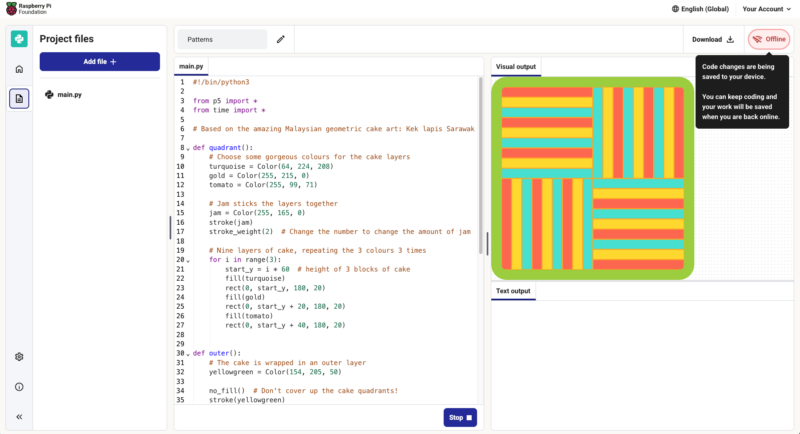
Additionally, certain cloud-dependent features remain unavailable during offline sessions. For instance, users cannot sign in or out of their Raspberry Pi accounts, nor can they save their projects to the Foundation’s cloud storage until they are back online. However, the editor does save the current project state to the device’s local storage, ensuring that a page refresh does not result in data loss. The Foundation has indicated that it will continue to iterate on these features, exploring ways to expand the scope of what can be accomplished without an active heartbeat to the server.
Chronology of Development and Strategic Support
The journey toward an offline-capable browser editor began shortly after the initial launch of the new Code Editor in 2022. Recognizing that the tool was being adopted in regions with varying infrastructure, the development team prioritized "resilience" as a core pillar of the software’s roadmap. Throughout 2023, the Foundation conducted the aforementioned international research, followed by a rigorous testing phase to ensure the service worker implementation functioned across various browsers and hardware configurations, including low-spec laptops and tablets often found in educational settings.
This work was made possible through a strategic partnership with Cisco. The funding provided by Cisco allowed the Foundation to dedicate specific engineering resources to the offline project, highlighting the role of corporate social responsibility in bridging the digital divide. Cisco’s support reflects a growing recognition among tech industry leaders that hardware availability must be matched by accessible, resilient software to truly democratize STEM education.
Broader Implications for the EdTech Industry
The Raspberry Pi Foundation’s move signals a potential shift in the broader EdTech industry. For the past decade, the trend has been toward "cloud-first" and "always-on" architectures. While these models offer benefits in terms of data synchronization and collaborative features, they inadvertently exclude millions of students living in areas with unreliable infrastructure.
By demonstrating that a complex, browser-based IDE can remain functional offline, Raspberry Pi is challenging other developers to consider "offline-first" or "offline-resilient" design patterns. This approach is not only beneficial for the Global South but also for any user in a "dead zone," such as a student on a long bus ride or a hobbyist in a remote workshop.
As the global community strives to meet the United Nations Sustainable Development Goal 4—ensuring inclusive and equitable quality education for all—innovations like the resilient Code Editor become essential. They represent a practical application of technology to solve problems created by technology itself, ensuring that the path to learning to code is not gated by the quality of a user’s internet service provider.
The Raspberry Pi Foundation continues to invite feedback from the global community to further refine the editor. As more students in diverse environments put the tool to the test, the data gathered will inform the next generation of features, potentially including expanded offline libraries and enhanced local-to-cloud synchronization. For now, the update stands as a testament to the Foundation’s commitment to making computing accessible to every young person, regardless of their location or the stability of their connection to the grid.