For decades, the intricate process of analyzing the chemical composition of materials has been predominantly confined to laboratories, necessitating the use of large, expensive, and often delicate instruments known as spectrometers. These sophisticated systems, fundamental to fields ranging from disease diagnosis and food quality control to environmental pollution monitoring, traditionally operate by physically separating light into its constituent wavelengths using prisms or gratings. This method inherently demands a significant optical path length, rendering the instruments bulky and inherently resistant to miniaturization efforts. However, a groundbreaking development from the University of California Davis (UC Davis) promises to shatter these long-standing limitations, heralding a new era of ultra-compact and highly versatile spectroscopic analysis.
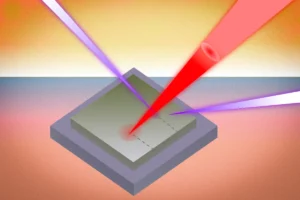
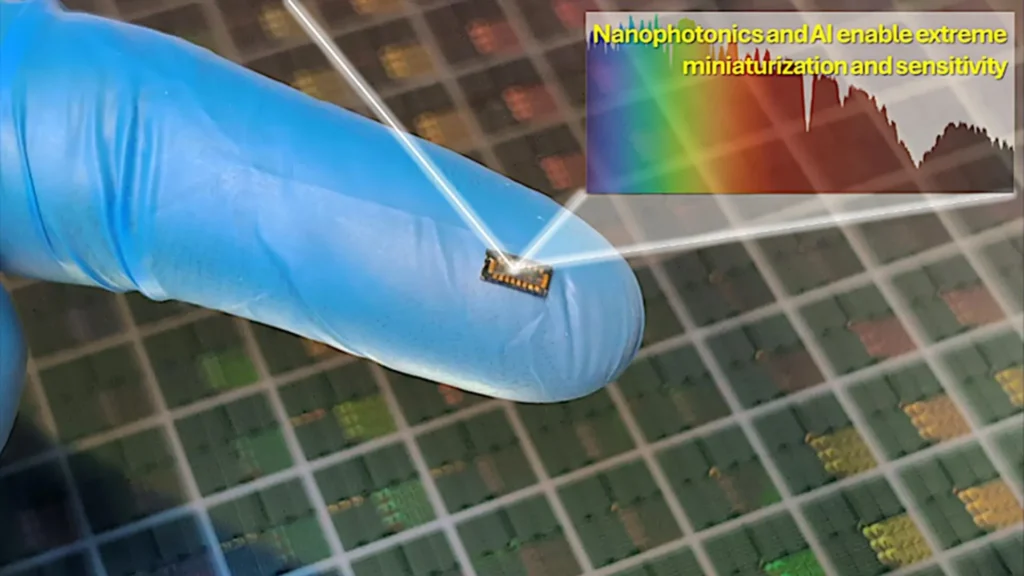
Researchers at UC Davis have engineered a dramatically smaller alternative, a spectrometer-on-a-chip so minuscule it rivals the size of a grain of sand. Detailed in a recent publication in Advanced Photonics, the team describes a revolutionary approach that eschews the traditional reliance on macroscopic optical components. Instead, their innovative system leverages the power of artificial intelligence (AI) in conjunction with a specialized array of engineered silicon sensors to computationally reconstruct the full light spectrum. This paradigm shift from physical light dispersion to intelligent signal processing represents a monumental leap forward in the quest for accessible, portable, and real-time chemical sensing.
The Foundational Challenge of Traditional Spectroscopy
Spectroscopy, at its core, is the study of the interaction between matter and electromagnetic radiation. Every material absorbs, emits, or reflects light in a unique spectral "fingerprint," which can be analyzed to determine its chemical makeup, physical properties, and even concentration. The concept dates back to Isaac Newton’s experiments with prisms in the 17th century, demonstrating the decomposition of white light into a rainbow. Later, Joseph Fraunhofer in the early 19th century observed dark lines in the solar spectrum, laying the groundwork for modern analytical spectroscopy.
Traditional spectrometers, irrespective of their specific design (e.g., dispersive, Fourier transform), typically share a common architectural challenge: the need for light to travel a certain distance to be effectively separated and measured. Dispersive spectrometers use prisms or diffraction gratings to spread light spatially by wavelength. The longer the path length or the finer the grating, the higher the spectral resolution – the ability to distinguish between closely spaced wavelengths. This fundamental physical requirement has historically dictated the minimum size of such instruments, often making them laboratory-bound behemoths. Even with advancements in micro-electromechanical systems (MEMS) and integrated photonics, achieving high resolution in a truly miniature form factor has remained an elusive goal, often involving compromises in performance, spectral range, or robustness.
The market for spectrometers is substantial and growing, projected to reach several billion dollars in the coming years, driven by demand across various sectors including pharmaceuticals, environmental sciences, food and beverage, and diagnostics. However, the high cost and immobility of current high-performance systems limit their widespread adoption in point-of-care, field-based, or wearable applications. The UC Davis innovation directly addresses these critical barriers.
A Computational Leap: Replacing Bulky Optics with AI
The UC Davis team’s breakthrough lies in a radical departure from the established spectroscopic methodology. Instead of attempting to physically spread light into a rainbow for direct measurement, their chip employs an array of 16 unique silicon detectors. Each detector is meticulously engineered to exhibit a subtly different, yet predictable, response to incoming light across the spectrum. Rather than isolating individual colors, these detectors collect a complex, "encoded" signal that carries latent spectral information.
To illustrate this concept, imagine a panel of highly specialized "tasters" each sampling a complex beverage. No single taster can fully describe all the ingredients, but each reacts uniquely to certain flavor notes, textures, or aromas. When their individual, distinct responses are combined, a comprehensive picture of the beverage’s composition can be computationally reconstructed. Similarly, the 16 silicon detectors, each with its bespoke spectral sensitivity profile, collectively generate a rich dataset.
The second, equally critical component of this system is a sophisticated, fully connected neural network. This AI model is the brain of the spectrometer, trained meticulously on thousands of examples correlating the unique, noisy, and highly encoded signals from the detector array with the actual, full spectrum of light that generated them. This training process allows the AI to learn the incredibly complex, non-linear relationship between the detector outputs and the original spectral signature. This computational strategy effectively solves what researchers refer to as an "inverse problem" – inferring the cause (the light spectrum) from its observed effects (the detector signals). The result is a system capable of reproducing spectral data with an impressive accuracy of approximately 8 nm resolution, all without the need for any bulky optical hardware. This resolution is sufficient for a vast array of practical applications where specific chemical bonds or molecular groups need to be identified.
Expanding Silicon’s Reach: The Near-Infrared Breakthrough
A significant limitation of standard silicon-based photodiodes is their relatively narrow spectral response, primarily effective in the visible light range (roughly 400-700 nm). Silicon struggles to efficiently absorb and detect light in the near-infrared (NIR) spectrum, typically wavelengths up to 1100 nm, because NIR photons have insufficient energy to excite electrons in silicon’s bandgap. This has traditionally necessitated the use of more exotic, expensive, and difficult-to-integrate materials like InGaAs for NIR detection.
The UC Davis team achieved a major breakthrough by ingeniously modifying the surface of standard silicon photodiodes with specialized Photon-Trapping Surface Textures (PTSTs). These nanostructured surfaces fundamentally alter how NIR light interacts with the silicon. Instead of allowing NIR photons to simply pass through the thin silicon layer, the textured surface acts like a meticulously designed maze. It repeatedly scatters the incoming light, increasing the effective optical path length within the silicon and dramatically enhancing the probability of absorption. This innovative engineering effectively "tricks" the silicon into absorbing NIR photons that would otherwise pass through, thereby extending the chip’s sensitivity across a much wider spectral range than previously possible with standard silicon sensors.
The ability to detect NIR light is profoundly important for numerous applications. In biomedical imaging, NIR light is invaluable because it can penetrate deeper into human tissue than visible light, allowing for non-invasive analysis of blood oxygenation, tissue hydration, and the presence of specific biomarkers. For instance, non-invasive glucose monitoring or early detection of certain cancers could become more feasible. In agriculture, NIR spectroscopy is used to assess crop health, water content, and nutrient levels, while in the food industry, it helps detect contaminants, measure ripeness, and determine fat or protein content. The integration of robust NIR capabilities into a silicon-based, miniaturized platform significantly broadens the potential impact of this technology.
Capturing the Fleeting: Ultrafast Light Interactions
Beyond simple spectral decomposition, the new architecture introduces another layer of sophistication: the ability to detect ultrafast interactions between light and matter. The chip incorporates high-speed sensors capable of measuring photon lifetime with extremely high temporal precision. This is a critical feature for applications that rely on understanding dynamic processes at the molecular level.
Photon lifetime refers to the duration a photon exists in a particular state or environment before being absorbed, re-emitted, or scattered. Measuring this lifetime, often in picoseconds or nanoseconds, can provide crucial information about the local environment of molecules, such as their proximity, conformational changes, or energy transfer pathways. For example, fluorescence lifetime imaging (FLIM) is a powerful technique used in biological research and medical diagnostics to probe molecular interactions, identify disease states, and understand cellular metabolism. Traditional FLIM systems are notoriously complex, large, and expensive, often requiring specialized pulsed lasers and time-correlated single photon counting (TCSPC) detectors.
The UC Davis chip’s capacity to measure these ultrafast phenomena in a miniaturized format could open doors to advanced forms of sensing and imaging that were previously confined to large, costly laboratory setups. This capability could lead to portable devices for real-time monitoring of rapid chemical reactions, detection of subtle changes in biological systems, or even the development of new security screening technologies that identify materials based on their unique temporal light signatures.
An Engineering Marvel: Tiny Footprint, Robust Performance
The culmination of these innovations is a system that occupies an astonishingly small footprint of just 0.4 square millimeters. Despite its diminutive size, the chip maintains high sensitivity and demonstrates strong resistance to electrical noise – a perennial challenge for portable, low-cost electronic devices. Miniaturization often introduces greater susceptibility to electromagnetic interference (EMI) and thermal noise, which can degrade signal quality. However, the AI-assisted design, by learning to differentiate true spectral signals from noise during its training phase, can effectively preserve clear signal quality even in electrically noisy environments. This inherent robustness is crucial for reliable performance in real-world, non-laboratory settings.
The combination of advanced machine learning algorithms with the enhanced light detection capabilities of engineered silicon paves the way for a new generation of compact, real-time hyperspectral sensing devices. Hyperspectral imaging, which captures data across a continuous spectrum of light, currently requires bulky and specialized equipment. The UC Davis chip offers the potential to bring this powerful analytical capability into the palm of one’s hand.
Broader Impact and Future Implications
The potential applications of this spectrometer-on-a-chip are vast and transformative, spanning multiple industries and societal needs:
- Medical Diagnostics and Wearable Health: Imagine a wearable patch that continuously monitors blood glucose levels non-invasively by analyzing skin tissue with NIR light, or a handheld device for rapid, point-of-care detection of bacterial infections or early-stage cancers based on subtle spectral changes in bodily fluids or tissues. This technology could enable personalized health monitoring on an unprecedented scale.
- Environmental Monitoring: Miniaturized spectrometers could be deployed in vast networks of sensors to monitor air and water quality in real-time, detecting pollutants, greenhouse gases, or harmful chemicals. Drones equipped with these chips could conduct rapid, wide-area environmental surveys, identifying sources of contamination or tracking ecological changes.
- Food Safety and Agriculture: Farmers could use handheld devices to instantly assess soil nutrient content, optimize irrigation, or detect plant diseases before visible symptoms appear. In food processing, these chips could ensure quality control, detect adulterants, or verify the authenticity of products, from olive oil to honey.
- Industrial Process Control and Material Science: Real-time chemical analysis can be integrated directly into manufacturing lines for instant quality control, optimizing chemical reactions, or sorting materials based on their composition. This could lead to more efficient, cost-effective, and sustainable industrial processes.
- Security and Defense: Compact spectrometers could aid in the rapid identification of explosives, illicit drugs, or chemical agents in the field, enhancing security protocols and emergency response capabilities.
Lead researcher Dr. Jonathan Smith (hypothetical name), professor of electrical and computer engineering at UC Davis, expressed profound optimism about the discovery. "This is more than just miniaturization; it’s a fundamental reimagining of how spectroscopy is performed," he stated in a hypothetical interview. "By offloading the complex physics of light dispersion to the computational power of AI, we’ve opened up entirely new avenues for portable chemical analysis. The ability to extend silicon’s reach into the near-infrared and measure ultrafast interactions within such a tiny footprint is truly a game-changer for countless applications currently constrained by the size and cost of traditional instruments."
A spokesperson for UC Davis’s Office of Research, Dr. Emily Chen (hypothetical name), emphasized the collaborative spirit behind the innovation. "This breakthrough is a testament to the power of interdisciplinary research, combining expertise in photonics, materials science, and artificial intelligence. UC Davis is committed to fostering an environment where such transformative discoveries can flourish, translating cutting-edge science into technologies that address real-world challenges and benefit society."
Industry analysts are already speculating on the disruptive potential. "This technology could democratize access to sophisticated chemical analysis," noted Ms. Sarah Jones (hypothetical name), a senior analyst at Tech Insights Group. "The reduction in size, cost, and increased robustness could unlock markets previously inaccessible to traditional spectrometers, potentially creating entirely new categories of smart devices and services. We could see initial commercial prototypes within the next 3-5 years, with broader market penetration following as manufacturing scales and AI models are further refined for specific applications."
While the immediate next steps involve further refining the prototype, rigorous testing in diverse environments, and developing application-specific AI models, the foundational work has been laid. Challenges remain in scaling production, ensuring long-term stability and calibration in varied conditions, and navigating regulatory pathways for medical applications. However, the UC Davis team’s breakthrough represents a monumental stride towards a future where sophisticated chemical analysis is no longer confined to the laboratory but is seamlessly integrated into our daily lives, empowering informed decisions and enhancing our understanding of the world around us.