Look closely at Hokusai’s The Great Wave off Kanagawa, one of Japan’s most famous works of art, and the brilliant whites seem almost painted onto the scene. Yet the white foam of the waves, the snow covering Mount Fuji, and the clouds in the sky contain no white pigment at all; their brightness comes from light scattering off the exposed fibers of the traditional washi paper. This optical phenomenon, which has captivated art historians for centuries, is now the cornerstone of a major breakthrough in material science. Researchers have successfully harnessed this "structural whiteness" to create a new generation of materials that could eliminate the need for toxic pigments and "forever chemicals" in consumer products.
The research, led by Professor Easan Sivaniah of Kyoto University’s Institute for Integrated Cell-Material Sciences (iCeMS), in collaboration with Tokyo Metropolitan University and Donghua University, represents a paradigm shift in how functional surfaces are designed. By mimicking the microscopic structures found in nature—ranging from sea spray to the protective nests of frogs—the team has developed a process called Deep Foam Photolithography (DFP). This method allows for the creation of intensely white, water-repellent materials using only light and mild solvents, bypassing the environmental and health risks associated with traditional chemical additives.
The Dual Crisis: Titanium Dioxide and PFAS
For decades, the manufacturing of white plastics, paints, and packaging has relied heavily on titanium dioxide (TiO2). As a pigment, TiO2 is prized for its high refractive index, which provides exceptional brightness and opacity. However, its safety profile has come under intense scrutiny. In 2022, the European Union officially banned titanium dioxide (E171) as a food additive due to concerns regarding its genotoxicity—the potential for the substance to damage DNA. While the ban currently focuses on ingestion, the regulatory momentum is shifting toward its use in food packaging and cosmetics, forcing industries to scramble for safer alternatives.
Simultaneously, the global manufacturing sector is facing a reckoning with per- and polyfluoroalkyl substances, better known as PFAS. These "forever chemicals" are utilized for their unique ability to repel both water and oil. They are found in everything from non-stick cookware to water-resistant textiles and grease-proof food wrappers. The primary issue with PFAS is their molecular stability; they do not break down in the environment or the human body. Linked to a variety of health issues, including hormonal disruption and increased cancer risk, PFAS are being phased out by major retailers and face stringent new regulations from the U.S. Environmental Protection Agency (EPA) and European regulatory bodies.
The challenge for scientists has been to find a way to replicate the performance of TiO2 and PFAS without their inherent toxicity. The Kyoto-led team realized that the solution lay not in finding a new chemical, but in changing the physical architecture of existing polymers.
The Science of Structural Whiteness and the Lotus Effect
To understand the innovation of Deep Foam Photolithography, one must first understand how nature produces color without pigments. Most colors in the natural world come from pigments that absorb certain wavelengths of light and reflect others. Structural color, however, arises from the physical interaction of light with microscopic structures. In the case of structural whiteness, a material contains a complex, disordered network of pores or fibers. When light hits this network, it is scattered in all directions across the entire visible spectrum, resulting in a bright white appearance to the human eye.
The researchers sought to replicate this effect within common polymers. Their DFP process begins by exposing a polymer film to specific wavelengths of light. This light acts as a surgical tool, breaking down the polymer chains into smaller molecular fragments in a controlled pattern. When the material is subsequently treated with a mild solvent, these fragments cause the polymer to swell and reorganize.
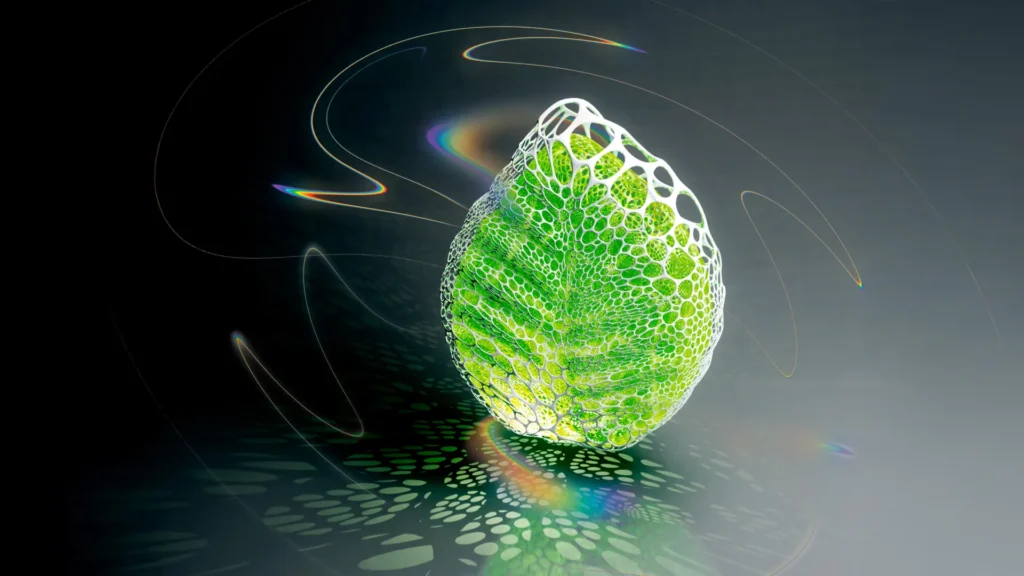
As the material expands, it forms an intricate, open-cell foam structure. This microscopic "forest" of pores is what creates the structural whiteness. Because the pores are sized specifically to interfere with visible light, the material achieves a level of brightness and opacity that rivals titanium dioxide, despite being made of a transparent or translucent base polymer.
Beyond aesthetics, this structural change also solves the PFAS problem. By creating an extremely rough, porous texture at the surface, the material mimics the "Lotus Effect." On a lotus leaf, microscopic bumps prevent water droplets from adhering to the surface, causing them to bead up and roll off. The DFP process builds this water-repellency directly into the material’s geometry. This "biomimetic" approach ensures that the material remains hydrophobic without the need for fluorinated chemical coatings.
Technical Milestones and High-Resolution Capability
One of the most significant aspects of the DFP process is its precision. While many biomimetic materials struggle to move from the laboratory to industrial application due to high costs or low resolution, the Kyoto-led team has demonstrated that DFP can achieve ultra-high resolution.
The researchers reported that their printable materials platform can achieve a resolution of 20,000 dots per inch (DPI). For context, high-quality commercial printing typically requires only 300 to 1,200 DPI. This level of precision allows for the "printing" of functional white and water-repellent patterns at a microscopic scale, opening the door for advanced applications in electronics, security printing, and specialized medical devices.
Furthermore, the process is compatible with several commercially available polymers. This is a critical factor for industrial adoption, as it means manufacturers do not need to invent entirely new supply chains or invest in proprietary specialty chemicals. The ability to use existing, low-cost polymers while achieving high-end functional results makes DFP a commercially viable alternative to traditional chemical-heavy methods.
Collaboration and Scalability: From Films to Fabrics
The development of DFP was a cross-border effort that combined expertise in polymer science, physics, and textile engineering. The partnership with researchers at Donghua University in China was particularly vital. Donghua is a global leader in textile science, and their involvement allowed the team to test the DFP process on fabrics.
The results showed that the structural whiteness and water-repellency could be integrated into textile fibers. This suggests a future where "white" clothing does not require bleaching or heavy pigmenting, and where "waterproof" garments do not shed PFAS into the water supply during washing. By building function into the fiber’s architecture, the researchers have created a more permanent and environmentally friendly solution for the garment industry.
Chronology of Development
The journey to Deep Foam Photolithography followed a logical progression of biomimetic discovery:
- Observation Phase: The team studied natural examples of structural whiteness, including the Cyphochilus beetle, which possesses one of the brightest whites in nature due to its thin, porous scales.
- Conceptualization (2018–2020): Researchers began experimenting with photolithography—a standard technique in semiconductor manufacturing—to see if it could be adapted to create porous foams rather than solid circuits.
- Refinement of the "Swell" (2021): The team identified the specific "mild solvent" treatment that would allow polymers to expand into a foam rather than simply dissolving, a breakthrough that enabled the creation of the open-cell network.
- Cross-Disciplinary Testing (2022–2023): Collaboration with Tokyo Metropolitan University and Donghua University expanded the application from rigid films to flexible fabrics and high-resolution printing.
- Final Validation (2024): The team successfully demonstrated that the DFP materials could match the opacity of TiO2-loaded plastics while maintaining superior water-repellency without PFAS.
Environmental and Industrial Implications
The implications of this technology extend far beyond the laboratory. From an environmental perspective, the reduction of mined minerals like titanium is significant. TiO2 mining and processing are energy-intensive and produce substantial waste. By replacing mineral pigments with air-filled pores, the overall weight of materials can be reduced, leading to lower transportation emissions and reduced resource consumption.
In the packaging industry, the removal of PFAS and TiO2 addresses growing consumer demand for "clean" packaging. As governments worldwide tighten regulations on plastic additives, DFP provides a pathway for companies to maintain the aesthetic and functional standards of their products while complying with new safety standards.
"A key challenge faced by biomimetic science is realizing environmentally friendly material designs inspired by nature at the scale and cost of existing materials," noted Associate Professor Taiki Yanagishima of Tokyo Metropolitan University. The DFP process appears to meet this challenge by utilizing light—an abundant and precise energy source—to reconfigure common materials.
A New Philosophy of Material Design
The success of Deep Foam Photolithography signals a move toward a "structure-first" philosophy in material science. For over a century, the solution to almost any material requirement—be it color, durability, or water resistance—was to add more chemistry. This led to the complex, often toxic "chemical soup" found in modern consumer goods.
The Kyoto University research suggests a different path. By using microscopic architecture to control how a material interacts with light and liquid, functions are built into the substance itself. This mimics the elegance of the natural world, where a single material—like the keratin in a bird’s feather or the cellulose in a leaf—can perform multiple complex roles simply by changing its shape at the nano-scale.
As the global community continues to grapple with the legacy of persistent pollutants and the health impacts of industrial additives, technologies like DFP offer more than just a replacement; they offer a fundamental redesign of our physical world. Just as Hokusai used the texture of paper to create the illusion of foam, modern science is now using the texture of polymers to create the reality of a cleaner, more sustainable future.