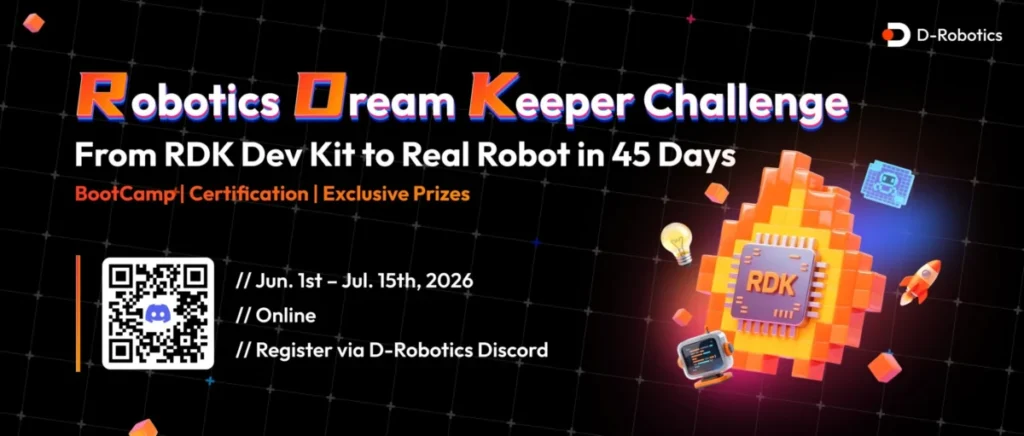
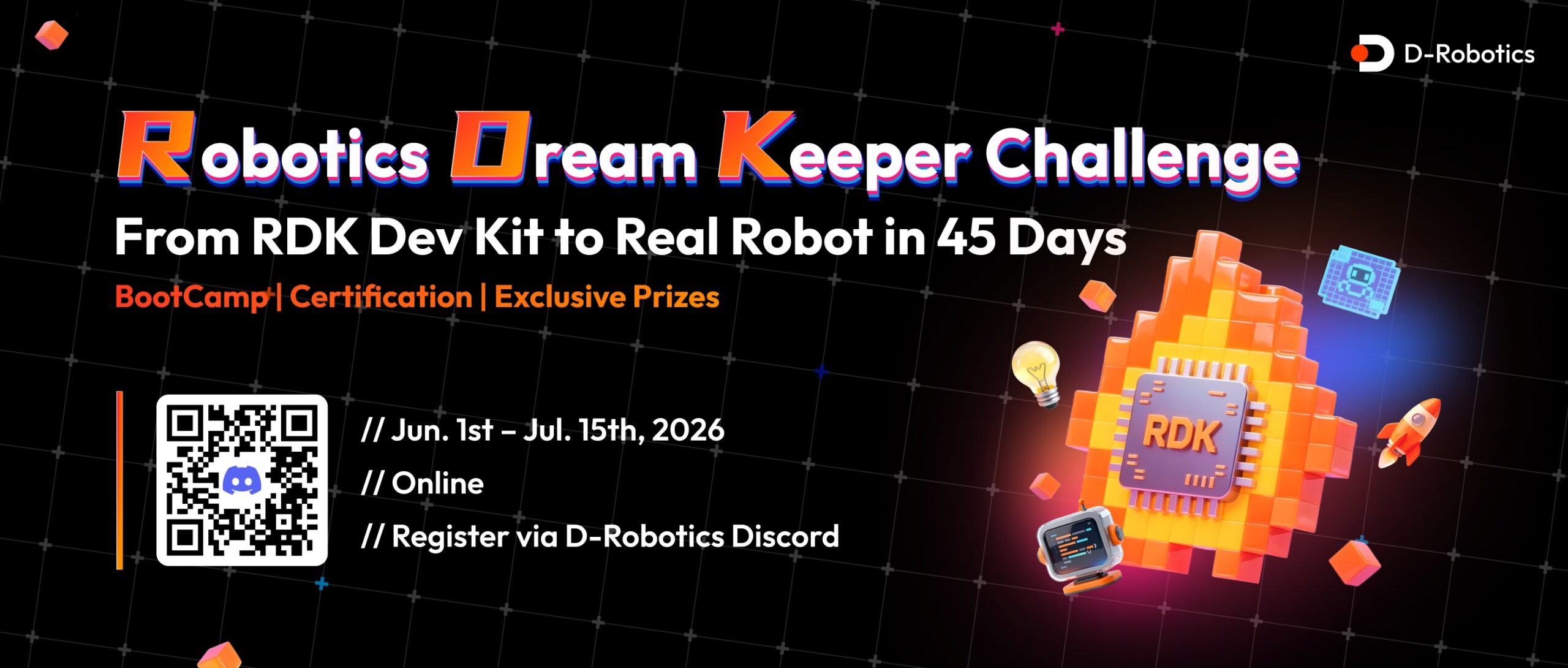
D-Robotics has officially launched the Robotics Dream Keeper Challenge (RDK Challenge), an ambitious initiative designed to lower the barriers to entry for artificial intelligence (AI) and robotics development. The program aims to empower makers, students, hobbyists, and experienced engineers to transform their innovative robot concepts into tangible realities using the RDK X5, a powerful yet accessible edge AI development board. This challenge directly addresses common frustrations in robotics development, such as complex wiring, convoluted software environments, and the perennial "where to start" dilemma, by offering a structured, community-supported pathway to success.
Addressing the Bottlenecks in Robotics Innovation
For decades, the realm of robotics, particularly intelligent autonomous systems, has often been perceived as a highly specialized field, requiring extensive knowledge in hardware design, software engineering, and AI algorithms. This complexity has frequently relegated promising ideas—from autonomous snack delivery rovers to sophisticated cat-tracking camera rigs and intuitively voice-controlled assistants—to the realm of mere thought experiments. The sheer effort involved in navigating component selection, intricate circuit design, obscure programming languages, and debugging often proves overwhelming for enthusiasts and even seasoned developers venturing into new territories.
D-Robotics recognizes these significant hurdles and has positioned the RDK Challenge as a catalyst for change. By focusing on the RDK X5, the company seeks to provide a unified, developer-friendly platform that streamlines the integration of AI capabilities directly onto devices, known as "edge AI." This approach minimizes reliance on cloud computing for real-time decision-making, offering benefits in terms of latency, privacy, and operational efficiency—critical factors for responsive robotic applications. The challenge is meticulously crafted to demystify the development process, offering a supportive environment for participants to overcome technical obstacles and focus on creative problem-solving.
The RDK X5: A New Frontier for Edge AI Robotics
At the heart of the Robotics Dream Keeper Challenge lies the RDK X5, an edge AI development board designed to deliver robust on-device AI performance within a maker-friendly ecosystem. While specific technical specifications are often detailed in dedicated datasheets, the RDK X5 is characterized by its capacity to run complex AI models efficiently at the edge. This typically implies the integration of a dedicated Neural Processing Unit (NPU) or similar AI acceleration hardware, which offloads computational tasks from the main CPU, allowing for faster inference and lower power consumption—essential for portable and autonomous robots.
The board likely supports a variety of operating systems common in embedded development, such as Linux distributions, offering developers a familiar and flexible environment. Its design emphasizes comprehensive connectivity options, including GPIO pins for interfacing with sensors and actuators, camera interfaces for computer vision tasks, and standard communication protocols (e.g., Wi-Fi, Bluetooth, Ethernet) for networking and control. The accompanying RDK Studio, a development kit, is expected to provide an integrated development environment (IDE) with tools for model deployment, debugging, and system integration, further simplifying the development pipeline. This combination of powerful hardware and intuitive software aims to provide a solid foundation for projects ranging from simple automation to sophisticated machine learning applications.

A Structured Pathway: The Three-Stage Build Journey
The RDK Challenge is structured into three progressive stages, designed to guide participants through a comprehensive development cycle over approximately 35 to 45 days. This modular approach ensures that developers, regardless of their initial skill level, can gradually build expertise and confidence.
-
Stage 1 – Ignite (5-10 Days): Powering On the Robot’s Brain
The initial "Ignite" phase is dedicated to foundational setup and familiarization. Participants begin by unboxing their RDK X5 board and performing initial power-on procedures. This stage involves basic board configuration, activating essential sensors, and deploying a simple, pre-existing AI demonstration. The objective is to establish a working environment and gain hands-on experience with the RDK X5’s core functionalities. For individuals accustomed to tasks like flashing an SD card or establishing SSH connections to single-board computers, this stage serves as a comfortable entry point, quickly transitioning them into the AI development ecosystem. The deliverables typically include documenting the setup process and successfully running a basic AI application, proving initial hardware and software integration. -
Stage 2 – Build (10-15 Days): Designing an Intelligent Robot System
Following the successful completion of the "Ignite" phase, participants advance to the "Build" stage, where the focus shifts from running demonstrations to conceptualizing and designing their unique intelligent robot system. This phase encourages creative thinking and meticulous planning. Developers are tasked with defining their project concept, outlining the desired functionalities, and architecting the AI pipeline that will drive their robot. This involves selecting appropriate sensors (e.g., cameras, microphones, depth sensors), actuators (e.g., motors, servos), and determining how the RDK X5 will process data and control hardware. Mentorship is a crucial aspect of this stage, with experienced guides providing feedback and "sanity checks" on project plans, ensuring feasibility and guiding participants away from potential pitfalls before significant development time is invested.
-
Stage 3 – Launch (20 Days): Shipping a Working, Demo-Ready AI Robot
The final "Launch" stage is the culmination of the challenge, dedicated to integrating all components and bringing the intelligent robot to life. Participants will meticulously wire up all hardware elements, write and optimize the control software, and leverage the RDK X5’s BPU (AI accelerator) for efficient inference. The goal is to produce a fully functional, demo-ready AI robot that embodies the project concept developed in Stage 2. This stage emphasizes not only technical integration but also the creation of a polished, shareable project package, complete with documentation, code, and a compelling demonstration video. Such a project serves as a valuable portfolio piece, showcasing practical skills in AI and robotics, suitable for presentations, conferences, or job interviews. The extended duration of this stage allows for iterative development, testing, and refinement, ensuring a high-quality final product. Full task guidelines and resources are made available on the D-Robotics GitHub repository, fostering transparency and accessibility.
Showcasing Innovation: Early Adopter Projects
The RDK X5 has already demonstrated its versatility through several innovative projects developed by early adopters, illustrating the board’s potential beyond traditional robotic forms. These examples serve as powerful inspiration for new participants:
- OpenDuck Mini – RDK X5: This project, spearheaded by AI Researcher and Robotics Developer Frank Fu, features a brilliant reinforcement-learning bipedal robot. The OpenDuck Mini showcases advanced capabilities in "sim-to-real" walking, a notoriously difficult challenge in robotics where behaviors learned in simulation are successfully transferred to physical hardware. This achievement highlights the RDK X5’s processing power and its suitability for complex control algorithms and real-time sensor feedback.
- An Arc Reactor That Beats With My Heart: Developed by MateoTechLab, this project pushes the boundaries of creative application. It’s a glowing, heartbeat-synchronized Arc Reactor, demonstrating the RDK X5’s capacity for interactive art installations and bio-feedback systems. This project beautifully illustrates how the board can be used for more than just mobility, integrating sensor data (like heart rate from a smartwatch) to drive dynamic visual outputs, showcasing its potential in interactive displays and experiential technology.
- Valentine’s Day AI Robot With RDK X5: Pro Know’s creation is an adorable interactive companion robot, designed with vision, touch, and sound reactions, embodying a charming personality. This project exemplifies the RDK X5’s ability to facilitate human-robot interaction, incorporating multiple sensory inputs to create an engaging and responsive AI character. Such applications hold significant promise in areas like personal assistance, entertainment, and educational robotics.
These projects underscore the RDK X5’s dual strength: robust on-device AI performance coupled with a design philosophy that remains highly maker-friendly. Live demonstrations of the RDK X5’s capabilities have also been showcased during live streams on Make: YouTube channel, further validating its performance and ease of use.

A Collaborative Ecosystem: Community and Mentorship
A cornerstone of the Robotics Dream Keeper Challenge is its emphasis on community and collaborative learning. D-Robotics has explicitly designed the program to be a supportive journey rather than a high-pressure competition, ensuring that beginners are not left behind. The challenge fosters a vibrant ecosystem through structured stages, free bootcamps, dedicated mentors, weekly events, and a wealth of open resources. This multi-faceted support system aims to liberate participants from common frustrations, allowing them to concentrate on the creative aspects of their projects.
The official Discord community for the RDK Challenge is strategically structured as a growth ecosystem, guiding members through distinct progression paths: Explorer → Builder → Creator → Core Developer. This clear pathway acknowledges that every developer starts somewhere and provides a framework for continuous learning and skill advancement. Explorers can find initial guidance, Builders receive support for their projects, Creators are recognized for their innovative contributions, and Core Developers are invited to contribute to the platform’s evolution. This tiered structure promotes peer-to-peer learning, facilitates knowledge sharing, and cultivates a sense of belonging among participants. The availability of experienced mentors provides invaluable technical assistance and guidance, helping participants navigate complex challenges and refine their designs.
Rewards, Incentives, and Future Prospects

D-Robotics has curated a comprehensive suite of rewards and incentives to acknowledge the dedication and innovation of challenge participants. These incentives are designed to motivate both novices and seasoned developers, fueling their robot dreams:
- Cash Rebate Program: Participants who successfully complete all three stages of the challenge are eligible to receive a full cash rebate on their RDK X5 and accessory kit purchases. This initiative significantly reduces the financial barrier to entry, making advanced robotics development more accessible.
- Grand Prize for Outstanding Project: The most outstanding project submitted to the challenge will be awarded a $1,000 grand prize, providing substantial recognition and financial support for truly exceptional work.
- Community Advocator Rewards: D-Robotics also values community engagement and support. Top community advocators, who actively contribute to the Discord server, provide assistance to peers, and promote the challenge, can win an extra $500 cash reward.
- Long-Term Opportunities: Beyond the immediate prizes, D-Robotics plans to unlock additional, long-term opportunities for exceptional participants. These may include potential collaboration opportunities with the D-Robotics team, featuring interviews with global developers, invitations to participate in the annual D-Robotics Developers Conference, and even a chance to win a visit to the Robot Innovation Center in Shenzhen, a global hub for hardware innovation. These opportunities underscore D-Robotics’ commitment to fostering talent and integrating successful participants into its broader innovation network.
How to Engage: Joining the Robotics Dream Keeper Challenge
Participation in the Robotics Dream Keeper Challenge is designed to be straightforward, ensuring a smooth onboarding process for all interested individuals. Prospective developers can initiate their journey by joining the vibrant D-Robotics Discord community, which serves as the central hub for interaction, support, and announcements. Following this, a quick application form needs to be submitted to formally register for the challenge. As a crucial step in the development process, participants are encouraged to download and register for RDK Studio, the integrated development environment that complements the RDK X5 hardware.
To acquire the necessary hardware, participants can purchase the RDK X5 development board and any required accessory kits directly from D-Robotics’ official partnered distributors. A comprehensive list of these distributors, along with details on available accessories, is provided on the D-Robotics website, ensuring easy access to all essential components.

This challenge represents a unique opportunity to delve into the rapidly evolving fields of modern robotics and embodied AI. With robust guidance, a supportive community, and tangible prizes, the RDK Challenge offers an unparalleled platform for innovation. Early participants will not only gain invaluable experience but also play a significant role in shaping the nascent RDK X5 community, contributing to its growth and future direction. By offering a clear path from concept to creation, D-Robotics invites aspiring and experienced makers alike to move beyond passive observation and actively contribute to the next wave of intelligent robotic systems.