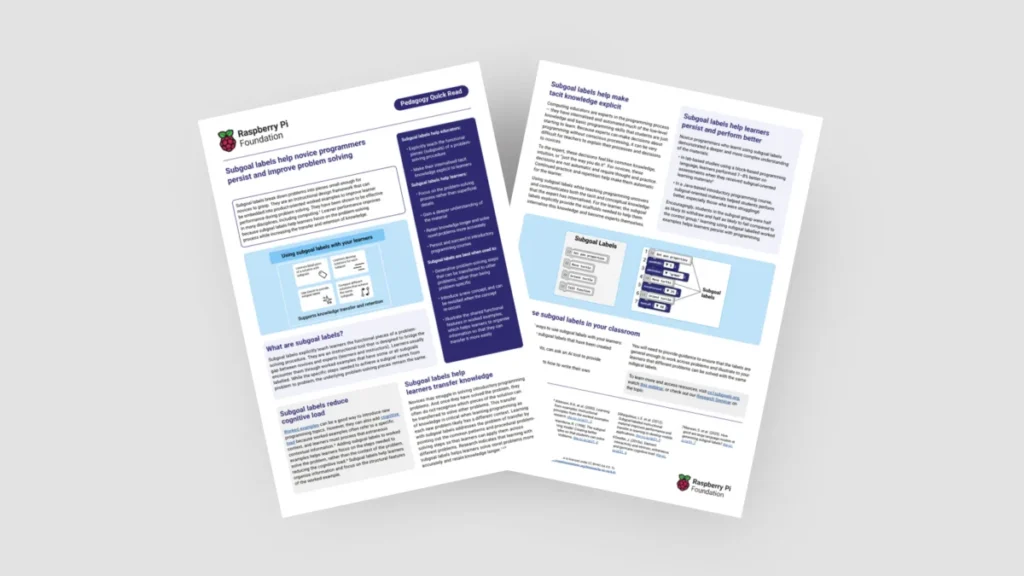
The transition from a novice learner to a proficient programmer involves more than just mastering syntax; it requires the development of mental models that allow for the decomposition of complex problems into manageable units. For experienced computing educators, the process of solving a programming problem often occurs with a level of fluency that borders on the subconscious. Years of practice have crystallized various problem-solving strategies into automatic responses, allowing experts to navigate logic, structure, and debugging with minimal cognitive strain. However, for the beginner, this same process is frequently perceived as an insurmountable wall of complexity. To address this disparity, the Raspberry Pi Foundation and other leading educational researchers are advocating for the use of "subgoal labels"—a pedagogical scaffolding technique designed to make the invisible thought processes of experts visible to learners.
The Cognitive Challenge of Learning to Code
The fundamental challenge in computer science education lies in what researchers often call the "expert-novice gap." When an expert looks at a coding prompt, such as "create a function to sort a list," they do not see a single, monolithic task. Instead, their brain automatically segments the requirement into subgoals: defining the function, identifying the sorting algorithm, implementing the comparison logic, and returning the result. This decomposition happens so rapidly that educators often forget to explicitly teach it.
For a student, however, the "blank screen syndrome" is a common psychological barrier. Without the internal framework to break down a problem, the cognitive load—the total amount of mental effort being used in the working memory—becomes too high. When cognitive load exceeds a learner’s capacity, their ability to process new information and move it into long-term memory is severely hindered. Subgoal labels serve as a structural intervention to manage this load by providing a roadmap for the problem-solving journey.
Defining Subgoal Labels as Pedagogical Scaffolding
Subgoal labels are brief, descriptive headings or instructions integrated into instructional materials, particularly within "worked examples." Unlike a simple step-by-step tutorial that tells a student exactly what to type, subgoal labels explain the purpose of a group of steps. They act as functional signposts, helping students recognize the structural components of a solution rather than just the individual lines of code.
Consider a standard introductory programming task: using a "turtle" graphics library to draw a specific geometric shape in a specific location. A traditional approach might provide the student with the finished code. A more effective approach using subgoal labels would break the worked example into discrete, labeled phases:
- Initialize the Environment: Importing the necessary libraries and creating the turtle object.
- Define Visual Properties: Setting the pen color, thickness, and starting coordinates.
- Execute the Geometric Logic: Writing the loop or sequence of movements to form the shape.
- Finalize and Clean Up: Lifting the pen and hiding the cursor to complete the drawing.
By labeling these sections, educators help students build "schemas"—organized patterns of thought or behavior that organize categories of information and the relationships among them. Once a student learns the schema for "Initialize the Environment," they can apply that same logic to different projects, whether they are drawing a square, a circle, or a complex fractal.
Theoretical Foundations: Cognitive Load and Schema Theory
The efficacy of subgoal labels is rooted in Cognitive Load Theory (CLT), pioneered by John Sweller in the 1980s. CLT suggests that since our working memory is limited, instructional design should be formatted to reduce "extraneous" cognitive load (information that does not contribute to learning) and maximize "germane" cognitive load (the mental effort devoted to processing and building schemas).
Research conducted by educational psychologists such as Richard Catrambone and Lauren Margulies has demonstrated that students who learn with subgoal labels perform significantly better on "transfer tasks"—problems that are similar but not identical to the ones they were originally taught. In one landmark study, students who used subgoal labels in a programming context were not only faster at completing tasks but were also more successful at troubleshooting errors in unfamiliar code. The labels helped them understand the why behind the code, rather than just the what.
A Chronology of Pedagogical Evolution in CS
The adoption of subgoal labels marks a significant shift in the history of computer science pedagogy.
- The Syntax Era (1970s–1990s): Early CS education focused heavily on the formal rules of languages like BASIC, Pascal, or C. The assumption was that if a student knew the syntax, they would naturally know how to program.
- The Project-Based Learning Boom (2000s): Educators shifted toward "learning by doing," encouraging students to build games or websites. While engaging, this often left novices overwhelmed by complexity.
- The Evidence-Based Revolution (2010s–Present): Drawing from the science of learning, organizations like the Raspberry Pi Foundation, Code.org, and various university research groups began implementing "scaffolded" techniques. This era emphasizes that problem-solving is a distinct skill that must be taught alongside syntax.
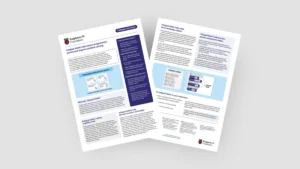
The introduction of the Raspberry Pi Foundation’s "Quick Read" on subgoal labels is the latest milestone in this chronology, providing a distilled, actionable resource for teachers to implement these decades of research in modern classrooms.
Practical Strategies for Classroom Implementation
The Raspberry Pi Foundation identifies several practical ways for educators to integrate subgoal labels without requiring a total overhaul of their existing curriculum. These methods are designed to be adaptable across different age groups and programming languages, from Scratch to Python.
1. Enhancing Worked Examples
When presenting a new concept, teachers can provide a completed script where the code is grouped and labeled. This allows students to see the "big picture" of the program’s architecture. Instead of seeing 20 lines of code, they see four logical blocks.
2. The "Faded" Scaffolding Approach
In this method, the teacher provides the subgoal labels but leaves the code blocks empty. The student’s task is to fill in the code that achieves the goal described by the label. As the student gains proficiency, the labels become broader or are removed entirely, a process known as "fading."
3. Student-Generated Labeling
Once students are familiar with the concept, the teacher can provide a functional piece of code and ask the students to add the subgoal labels themselves. This requires the student to reverse-engineer the logic and demonstrates a higher level of comprehension.
Analysis of Implications for Diversity and Retention
The implementation of subgoal labels has broader implications for the field of computer science, particularly regarding diversity and student retention. Many students, especially those from underrepresented backgrounds who may not have had early exposure to computing, often drop out of CS courses due to the high initial frustration of the "expert-novice gap." They may mistakenly believe they "lack the logic brain" for coding, when in reality, they are simply experiencing cognitive overload.
By using subgoal labels, educators can lower the barrier to entry. This structured support makes the subject more accessible and less intimidating, potentially increasing the number of students who persevere through introductory courses into advanced studies. Furthermore, this technique mimics professional software engineering practices, such as Agile development and modular programming, where large projects are broken down into "user stories" or "sprints."
Official Responses and Educator Insights
While the Raspberry Pi Foundation is a primary proponent of this specific "Quick Read" guide, the sentiment is echoed across the educational spectrum. Dr. Jane Waite, a prominent researcher in computing education, has frequently emphasized that "unplugged" activities and clear scaffolding are essential for conceptual understanding.
In response to the release of new pedagogical resources, educators in the field have noted that subgoal labels are particularly effective in remote or self-paced learning environments. In these settings, where a teacher is not always available to provide immediate feedback, the labels act as a "silent tutor," guiding the student through the logic of the problem.
The Future of Subgoal Labeling and AI Integration
As artificial intelligence (AI) becomes more prevalent in the classroom, the role of subgoal labels is expected to evolve. Large Language Models (LLMs) like ChatGPT or GitHub Copilot are excellent at generating syntax but can sometimes produce code that is difficult for a novice to understand. Educators are now exploring how to prompt AI to generate code with subgoal labels included as comments. This ensures that when a student uses AI as a tool, they are still being exposed to the structural logic of the solution, rather than just copy-pasting an opaque block of text.
The Raspberry Pi Foundation’s commitment to providing free, research-based resources like the "Subgoal Labels Pedagogy Quick Read" ensures that teachers have the tools to keep pace with these changes. By focusing on the cognitive foundations of how humans learn to solve problems, the foundation is helping to create a more resilient and capable generation of programmers.
Conclusion
The use of subgoal labels is a deceptively simple yet profoundly effective strategy in the landscape of computer science education. By acknowledging the cognitive limitations of the human brain and the vast distance between expert and novice thinking, educators can provide the necessary scaffolding to bridge that gap. As the demand for computing skills continues to grow globally, the shift toward these evidence-based pedagogical methods will be instrumental in ensuring that programming remains a skill accessible to all, not just those who can navigate the complexities of the "blank screen" on their own. The free availability of these resources signals a new era in teaching—one where the focus is as much on the process of thinking as it is on the product of coding.