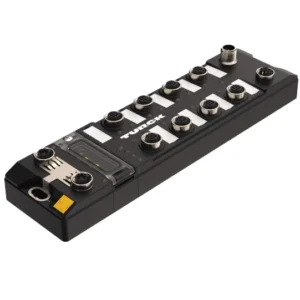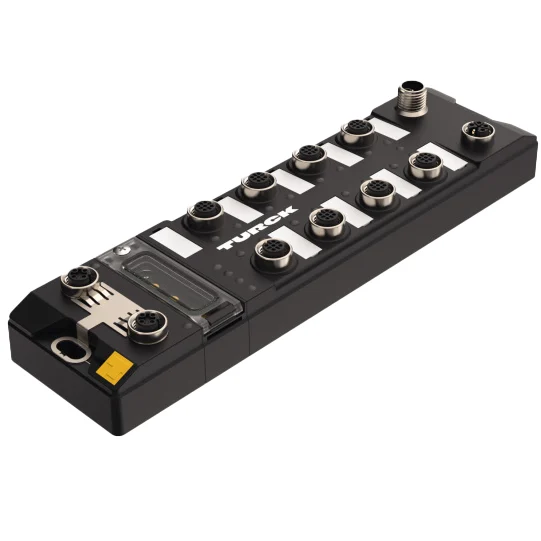
TURCK, a global leader in industrial automation, has unveiled a preview of its groundbreaking TBEN-LLH-4RMC, a compact multiprotocol Ethernet I/O module meticulously engineered for the precise control and seamless integration of conveyor roller motors. This innovative solution is specifically designed to address the demanding requirements of material handling and intralogistics applications, promising enhanced efficiency and operational flexibility. The module is slated for its official launch in the United States during the second quarter of 2026, marking a significant advancement in decentralized automation technologies.
The TBEN-LLH-4RMC is positioned as a critical component for modern conveyor systems, which are the backbone of numerous industrial operations. Its intended deployment spans across diverse sectors, including high-throughput intralogistics hubs, sophisticated packaging lines, and intricate manufacturing environments where robust motor control, system adaptability, and unwavering durability are paramount. This module represents a strategic evolution in how conveyor systems are managed, moving towards more intelligent and distributed control architectures.
Revolutionizing Decentralized Automation with Integrated Intelligence
At the core of the TBEN-LLH-4RMC’s design philosophy is the principle of decentralized automation. This approach fundamentally shifts control capabilities closer to the operational field, reducing the reliance on traditional, centralized Programmable Logic Controllers (PLCs) for every individual function. The module integrates onboard logic, a comprehensive suite of I/O functions, and a highly ruggedized housing, enabling it to execute sophisticated control tasks directly at the field level. This self-contained intelligence allows for localized decision-making, faster response times, and improved system resilience.
A primary benefit of this decentralized architecture is the substantial simplification of wiring complexities. In conventional systems, each sensor, actuator, and motor often requires extensive cabling back to a central control cabinet, leading to intricate installations, increased material costs, and extended commissioning times. By embedding control functions within the TBEN-LLH-4RMC, TURCK aims to significantly mitigate these challenges. Manufacturers and system integrators can anticipate considerable reductions in both installation and ongoing maintenance requirements, translating into lower total cost of ownership (TCO) and accelerated project timelines.
The compact form factor of the TBEN-LLH-4RMC is another critical design element. In space-constrained industrial environments, every inch counts. Its small footprint allows for flexible mounting options and seamless integration into existing conveyor frameworks without demanding extensive modifications or additional cabinet space. This design consideration underscores TURCK’s commitment to providing practical, implementable solutions that enhance rather than complicate industrial operations.
Strategic Context: The Evolving Landscape of Intralogistics and Industrial Automation
The introduction of the TBEN-LLH-4RMC comes at a pivotal moment for the global intralogistics and material handling industries. Driven by the relentless growth of e-commerce, increasing consumer expectations for rapid delivery, and persistent labor shortages, businesses are under immense pressure to optimize their internal logistics processes. Market analysis suggests that the global intralogistics market, valued at approximately $250 billion in 2023, is projected to grow at a compound annual growth rate (CAGR) of over 7% through 2030, highlighting a robust demand for advanced automation solutions.

This surge in demand fuels the adoption of Industry 4.0 principles, which emphasize connectivity, data exchange, and intelligent automation. Within this framework, industrial Ethernet plays a crucial role, providing the high-speed, deterministic communication backbone necessary for real-time control and data acquisition across complex manufacturing and logistics networks. The TBEN-LLH-4RMC’s multiprotocol compatibility—supporting leading industrial Ethernet standards like PROFINET, EtherNet/IP, and Modbus TCP—ensures its seamless integration into diverse existing infrastructures, offering unparalleled flexibility to users regardless of their preferred control system.
TURCK has long been a vanguard in the field of industrial automation, with a rich history spanning decades of innovation in sensors, fieldbus technology, and connectivity solutions. The company’s expertise in developing robust, reliable components for harsh industrial environments positions it uniquely to address the specific challenges faced by material handling operations. The TBEN-LLH-4RMC is a testament to this legacy, building upon TURCK’s foundational strengths to deliver a product that meets contemporary industrial demands.
Technical Superiority and Operational Advantages
The technical prowess of the TBEN-LLH-4RMC extends beyond its compact design and multiprotocol support. The integration of onboard logic allows for sophisticated control algorithms to be executed locally, reducing the computational load on centralized PLCs and minimizing communication latency. This capability is particularly beneficial for applications requiring precise motor synchronization, dynamic speed adjustments, or rapid error detection and recovery, ensuring smoother material flow and reducing bottlenecks.
The module’s I/O functions are tailored for conveyor applications, providing dedicated interfaces for various sensors and actuators commonly found in these systems. This specialized design ensures optimal performance and simplifies configuration, allowing for quicker deployment and commissioning. Furthermore, the rugged housing is designed to withstand the harsh conditions prevalent in industrial settings, including exposure to dust, moisture, vibration, and temperature fluctuations, ensuring long-term reliability and minimizing downtime.
By enabling field-level control of conveyor roller motors, the TBEN-LLH-4RMC empowers system designers to create highly modular and scalable conveyor lines. Individual sections of a conveyor can operate more autonomously, allowing for easier reconfiguration, expansion, or maintenance without impacting the entire system. This modularity is crucial for businesses that need to adapt quickly to changing production demands or retool their facilities efficiently.
Chronology and Anticipated Impact of the Q2 2026 U.S. Launch
The current preview phase for the TBEN-LLH-4RMC indicates that TURCK is actively engaging with potential customers and partners, gathering feedback, and demonstrating the module’s capabilities ahead of its official release. Such previews often involve participation in key industry trade shows, targeted pilot programs with strategic clients, and extensive internal testing to ensure the product meets the highest standards of performance and reliability. This proactive approach allows TURCK to fine-tune the product and build market anticipation.
The scheduled launch in the U.S. market during Q2 2026 is strategically timed. The North American market is a significant adopter of advanced automation technologies, driven by high labor costs and a strong focus on productivity and efficiency. A successful launch here could pave the way for subsequent global rollouts, establishing the TBEN-LLH-4RMC as a benchmark in conveyor control solutions. The timing also coincides with a period where many industries are accelerating their digital transformation initiatives, making the integration of smart, connected devices like the TBEN-LLH-4RMC particularly relevant.

Industry Perspectives: Insights from Stakeholders
In anticipation of its market availability, industry experts and potential users are already recognizing the transformative potential of the TBEN-LLH-4RMC.
A spokesperson from TURCK, speaking hypothetically on the innovation, articulated the company’s vision: "The TBEN-LLH-4RMC represents a significant leap forward in empowering our customers to achieve unparalleled efficiency and flexibility in their material handling operations. By integrating advanced control capabilities directly at the field level, we’re not just offering a product; we’re providing a pathway to more resilient, scalable, and intelligent intralogistics systems. Our commitment to multiprotocol support ensures that this technology can be seamlessly adopted across a wide array of existing and future industrial infrastructures, making advanced automation accessible and practical for a broader spectrum of applications."
An independent industry analyst, commenting on the market implications, might observe: "TURCK’s latest offering aligns perfectly with the overarching trends of industrial digitalization and decentralized intelligence. As manufacturers increasingly seek modular, plug-and-play solutions to combat complexity and cost, compact I/O modules with onboard logic are becoming critical enablers. The multiprotocol support is particularly vital for seamless integration into diverse existing infrastructures, reducing vendor lock-in and fostering greater interoperability. This module is poised to be a strong contender in the evolving landscape of smart factory components, offering tangible benefits in terms of installation time, maintenance, and operational agility."
Furthermore, a hypothetical system integrator or end-user could highlight the practical advantages: "For integrators like us, simplifying wiring and reducing PLC dependency directly translates to faster project completion and lower installation costs. The TBEN-LLH-4RMC’s rugged design also means less downtime for our clients, which is a huge benefit in high-throughput environments where every minute of operation counts. The ability to control individual roller motors with such precision and flexibility opens up new possibilities for optimizing material flow and adapting to diverse product types without extensive re-engineering."
Broader Implications and Future Outlook
The implications of solutions like the TBEN-LLH-4RMC extend far beyond individual conveyor systems. Its deployment contributes to several broader industry advancements:
- Enhanced Operational Efficiency: By optimizing motor control and reducing communication delays, the module can significantly improve the throughput and accuracy of material handling operations, leading to higher productivity and reduced operational costs.
- Reduced Maintenance and Downtime: The decentralized nature simplifies troubleshooting; if one module experiences an issue, it can often be isolated and replaced without affecting the entire system. The rugged design also contributes to a longer operational lifespan and fewer unscheduled stops.
- Greater Scalability and Flexibility: Businesses can easily expand or reconfigure their conveyor systems by adding or rearranging modules, adapting to changing production volumes, product variations, or facility layouts with minimal disruption.
- Cost Reduction: Beyond installation and maintenance savings, optimized motor control can lead to more energy-efficient operation of conveyor systems, contributing to lower utility bills and a reduced environmental footprint.
- Foundation for Smart Factories: The TBEN-LLH-4RMC represents another building block in the development of fully autonomous and highly optimized smart factories, where every component is connected, intelligent, and capable of contributing to real-time data analysis and predictive maintenance strategies.
In conclusion, TURCK’s preview of the TBEN-LLH-4RMC signals a significant step forward in the intelligent automation of material handling and intralogistics. By combining decentralized control, multiprotocol compatibility, and robust design, this Ethernet I/O module is set to empower manufacturers and system integrators with tools that enhance efficiency, reduce costs, and build more resilient and adaptable industrial operations. As the industry anticipates its Q2 2026 launch in the U.S., the TBEN-LLH-4RMC stands as a testament to the ongoing innovation driving the future of industrial automation.
For more information and detailed specifications as they become available, interested parties are encouraged to visit turck.us.