The global water crisis has reached a critical juncture, with recent United Nations data indicating that approximately 2.2 billion people—nearly one-quarter of the world’s population—lack access to safely managed drinking water. As climate change accelerates and traditional freshwater sources such as aquifers and glacial runoff dwindle, nations from the arid Middle East to the drought-stricken regions of California have turned to desalination as a primary solution. However, traditional desalination methods remain plagued by high energy costs and environmental degradation. A breakthrough from the University of Rochester’s Institute of Optics offers a potential paradigm shift, introducing a solar-powered desalination system that not only purifies water with unprecedented efficiency but also addresses the toxic byproduct of traditional methods by transforming waste into a source of valuable minerals like lithium.
The research, led by Chunlei Guo, a professor of optics and physics and a senior scientist at the University of Rochester’s Laboratory for Laser Energetics, centers on the use of femtosecond laser-treated "black metal" surfaces. This technology represents a significant departure from the two most common industrial methods: reverse osmosis and thermal distillation. While reverse osmosis uses high-pressure pumps to force seawater through semi-permeable membranes, and thermal distillation boils water to collect steam, both are energy-intensive and produce a concentrated, hypersaline liquid waste known as brine. When discharged back into the ocean, this brine depletes oxygen levels and creates "dead zones" for marine life. The Rochester system, conversely, is a passive solar-thermal process that generates no liquid brine, operating instead on a self-cleaning mechanism that extracts solids directly.
The Evolution of Desalination and the Brine Challenge
To understand the significance of the University of Rochester’s innovation, one must examine the current landscape of the desalination industry. Globally, there are over 20,000 desalination plants in operation, producing more than 100 billion liters of fresh water daily. However, for every liter of fresh water produced, these plants generate an average of 1.5 liters of brine. This byproduct is often treated with chemicals like chlorine and anti-scalants before being pumped back into the sea. The environmental impact is profound; the high salinity increases the density of the water, causing it to sink to the seafloor where it can suffocate benthic ecosystems.
Furthermore, the energy footprint of traditional plants is substantial. Reverse osmosis plants require approximately 3 to 10 kilowatt-hours of electricity per cubic meter of water produced. In regions where the electrical grid is powered by fossil fuels, the "solution" to water scarcity contributes directly to the carbon emissions driving the very climate changes that cause water shortages. The quest for a sustainable, low-energy alternative has led researchers toward solar-thermal evaporation, but until now, these systems have struggled with "scaling"—the accumulation of salt crusts that block evaporation and render the equipment useless within days.
Laser-Treated Surfaces and the Physics of Superwicking
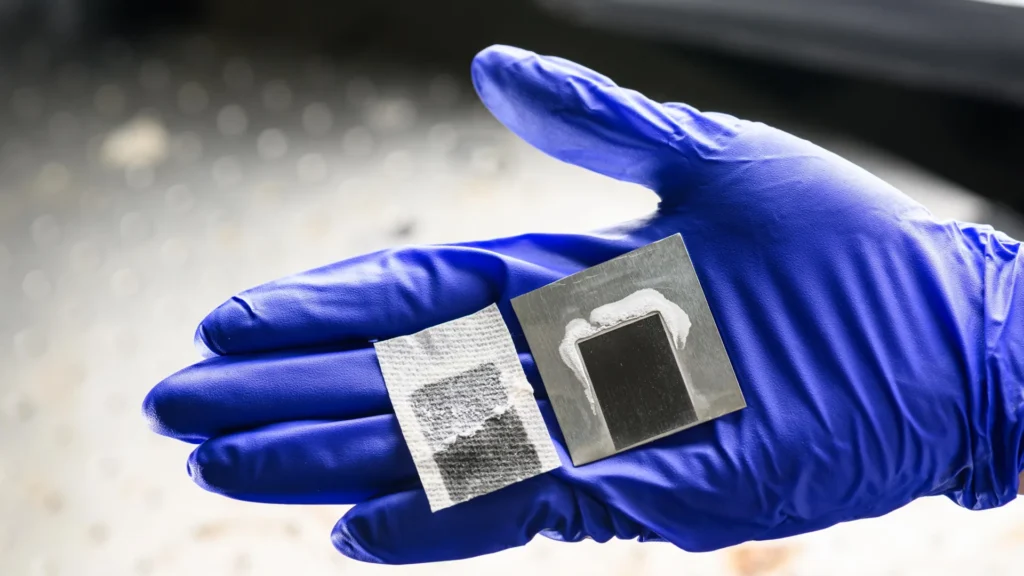
The core of Professor Guo’s technology is a panel of ordinary metal that has been transformed through the application of femtosecond lasers. A femtosecond is one quadrillionth of a second, and these ultrafast laser pulses are used to etch intricate, microscopic patterns into the metal’s surface. This process creates a "black metal" that is almost perfectly absorbent, capturing nearly 100 percent of the solar energy that hits it.
Beyond light absorption, the laser treatment alters the metal’s "wettability." Most metals are naturally hydrophobic to some degree, causing water to bead up. The Rochester team’s laser-etched structures create a "superwicking" effect. When a thin film of seawater is introduced to the panel, the microscopic grooves pull the water across the surface through capillary action, spreading it into an extremely thin layer. This thinness is vital; it allows the solar heat trapped by the black metal to evaporate the water almost instantly, far more efficiently than heating a bulk volume of liquid.
Overcoming the "Real Seawater" Hurdle via the Coffee Ring Effect
A recurring problem in desalination research is the discrepancy between laboratory results and real-world application. Many experimental systems perform well when tested with "artificial seawater"—a simple mixture of distilled water and sodium chloride (table salt). However, real ocean water from the Atlantic or Pacific is a complex chemical soup containing magnesium, calcium, potassium, and various sulfates.
"Real seawater is far more complicated," Guo noted during the presentation of the findings. While sodium chloride forms porous, easy-to-remove crystals, minerals like calcium carbonate and magnesium sulfate form hard, cement-like scales. These scales are the same materials that clog household plumbing and tea kettles, but at the scale of a desalination plant, they create an impenetrable barrier that stops the wicking process.
To solve this, the Rochester team utilized a phenomenon known as the "coffee ring effect." When a drop of coffee dries on a table, the suspended particles move toward the outer edge, leaving a dark ring. The researchers designed the microscopic grooves on their panels to harness this fluid dynamic. As the solar heat evaporates the water in the "active region" of the panel, the increasing concentration of salts creates a pressure gradient that pushes the minerals toward the "passive region"—untreated areas at the edges of the panel.
This self-cleaning mechanism ensures that the central, heat-absorbing area remains clear of salt buildup. In tests using water from the Atlantic, Pacific, and Indian Oceans, the panels maintained their efficiency indefinitely, as the salts were continuously deposited at the periphery in solid form rather than forming a crust over the evaporation surface.
From Waste to Resource: The Lithium Connection
Perhaps the most economically significant aspect of this research is the transition from brine management to mineral harvesting. By producing solid salts rather than liquid brine, the system allows for the selective recovery of valuable materials. In a secondary study published in the Journal of Materials Chemistry A, the team demonstrated that their panels could be modified to act as a mineral extraction tool.
By embedding nanoparticles of hydrogen titanate into the laser-etched grooves, the researchers were able to create a surface that selectively captures lithium ions. Lithium is a critical component in the transition to green energy, essential for the batteries that power electric vehicles and store renewable energy for the grid. Currently, lithium mining is an environmentally destructive process, often involving the evaporation of massive quantities of groundwater in regions like the "Lithium Triangle" in South America.
Using samples from the Great Salt Lake, the Rochester team successfully recovered 50 percent of the lithium present in the water. This dual-purpose approach—providing clean drinking water while simultaneously mining "white gold" for the tech industry—could provide the financial incentive needed to scale the technology globally.
Chronology of Development and Future Outlook
The development of this technology has been a multi-year effort supported by major international organizations. The timeline of the project reflects a steady progression from fundamental physics to practical engineering:
- Initial Discovery: Years of research into femtosecond laser surface processing at the Institute of Optics established the ability to create super-absorbent and superwicking materials.
- Proof of Concept: The team first demonstrated that black metal could evaporate water under solar concentration.
- Environmental Refinement: Recognizing the brine problem, the team shifted focus to solid-salt deposition and the "coffee ring" self-cleaning model.
- Mineral Integration: In 2023 and 2024, the research expanded to include nanoparticle integration for lithium recovery.
- Peer Review: The findings were recently published in Light: Science & Applications, validating the efficiency and durability of the system.
The research has received funding from the National Science Foundation (NSF), the Bill & Melinda Gates Foundation, and the Worldwide Universities Network. These partnerships suggest a dual-market strategy: the Gates Foundation’s interest points toward decentralized, low-cost water solutions for developing nations, while the NSF and university networks look toward industrial-scale applications for mineral recovery and municipal water supply.
Analysis of Global Implications
The implications of a self-cleaning, solar-powered desalination system are vast. For coastal communities in the Global South, this technology could be deployed as modular, off-grid units, providing fresh water without the need for expensive infrastructure or a stable power grid. Because the system requires no chemical pre-treatment, it lowers the barrier to entry for regions that cannot afford the complex chemical supply chains required by reverse osmosis.
From a geopolitical perspective, the ability to extract lithium from seawater could reshape global trade. Currently, lithium production is concentrated in a few nations, leading to supply chain vulnerabilities. If desalination plants become "mineral refineries," any coastal nation could theoretically develop a domestic supply of battery-grade lithium, accelerating the global transition away from internal combustion engines.
However, challenges remain. While the proof-of-concept experiments have been successful, scaling the laser-treatment process to manufacture thousands of square meters of metal panels will require significant industrial investment. The durability of the nanoparticle coatings over years of exposure to harsh maritime environments also requires further long-term testing.
Despite these hurdles, the work of Chunlei Guo and his colleagues—including Subash Singh, Ran Wei, Luheng Tang, Tainshu Xu, and Mingjiang Ma—represents a rare "win-win" in environmental engineering. By viewing the salt not as a waste product to be discarded, but as a resource to be harvested, the University of Rochester has charted a course toward a more sustainable and water-secure future. As the global population continues to grow and the climate becomes increasingly unpredictable, the ability to harness the sun to turn the sea into both a fountain and a mine may become one of the defining technologies of the 21st century.