Carbon, a pioneering additive manufacturing company, has successfully defended a pivotal European patent that safeguards its innovative dual-cure 3D printing technology. This significant victory comes after a protracted legal battle spanning several years, initiated by a competitor seeking to invalidate the patent. The European Patent Office (EPO) Board of Appeal has unequivocally upheld European Patent No. 3158400, a decision that reinforces Carbon’s intellectual property rights and its technological leadership in the advanced manufacturing sector.
The patent in question covers the fundamental methods for producing 3D printed objects utilizing materials that undergo multiple hardening mechanisms. This dual-cure approach is a cornerstone of Carbon’s technological prowess, enabling the transformation of light-cured printed parts into robust, durable products suitable for demanding end-use applications. The EPO’s ruling not only affirmed the patent’s broadest claim but also reinstated additional dependent claims that had been previously removed during earlier stages of the opposition process.
Phil DeSimone, co-founder and CEO of Carbon, expressed his company’s satisfaction with the outcome, stating, "This decision confirms the strength and validity of Carbon’s foundational dual-cure intellectual property in Europe." This affirmation is crucial for Carbon, as it solidifies the legal framework protecting a technology that has been instrumental in the company’s growth and its ability to penetrate diverse industrial markets.
The genesis of this patent traces back to Carbon’s formative years, with the initial application claiming priority to 2014. The European patent was officially granted in 2022, but its protection was soon tested. In 2023, an opposition was filed by Oxon IP B.V. on behalf of an unnamed competitor, initiating a legal challenge that would ultimately reach the EPO’s highest appellate body. The EPO’s Opposition Division, in 2025, maintained the patent in an amended form, allowing the main claim to survive but removing certain dependent claims. Both Carbon and the opposing party appealed aspects of this decision, leading to the comprehensive review by the EPO Board of Appeal on September 24, 2026. Carbon’s announcement of the successful defense followed just four days later.
The Technical Foundation of Carbon’s Dual-Cure Technology


At the heart of European Patent No. 3158400 lies Carbon’s revolutionary dual-cure 3D printing process, an integral component of its acclaimed Digital Light Synthesis (DLS) technology. This process begins with the use of light to meticulously shape a part from a liquid resin. However, for many advanced applications, the initial light curing is merely the first step. The printed part then undergoes a secondary curing process, typically involving heat, which imparts the essential mechanical properties required for its final deployment.
This sequential curing mechanism is what distinguishes Carbon’s approach. The initial light exposure defines the intricate geometry of the object, leveraging Carbon’s proprietary CLIP (Continuous Liquid Interface Production) technology, which was initially unveiled in 2015 as a groundbreaking advancement in resin 3D printing speed. The subsequent thermal curing then cross-links the polymer chains, thereby bestowing upon the material the necessary strength, durability, elasticity, and heat resistance that elevate it from a mere prototype to a production-ready component. This two-stage hardening process is what enables Carbon to deliver parts with performance characteristics suitable for demanding, real-world applications.
The impact of this dual-cure technology is evident across a wide spectrum of industries where Carbon’s additive manufacturing solutions are deployed. These include the automotive sector, where lightweight and robust components are essential; the consumer products market, demanding both aesthetic appeal and functional longevity; the dental industry, requiring high precision and biocompatibility; and the medical field, where patient-specific devices necessitate exceptional material properties.
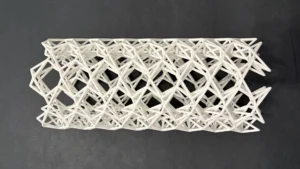
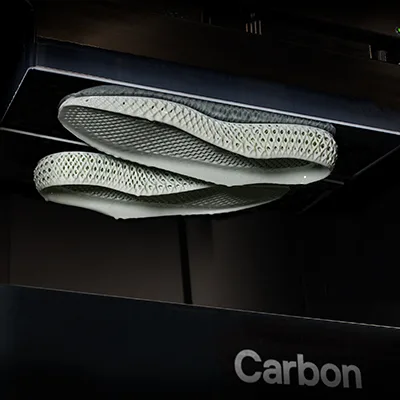
Notable applications that showcase the efficacy of this technology include the highly engineered lattice midsoles found in Adidas’s revolutionary 4D footwear line, which have seen over a million units produced on Carbon’s L1 3D printers. Furthermore, Carbon’s technology is utilized by automotive giants like Ford for producing critical components, by Specialized for crafting customized bicycle saddles, and in the creation of intricate dental models, aligner aligners, and other orthodontic appliances. In the medical arena, the technology facilitates the production of patient-specific implants and surgical guides, underscoring its versatility and the critical role of its enhanced material properties.
This foundational patent is therefore intrinsically linked to Carbon’s overarching production strategy, enabling the company to offer a compelling alternative to traditional manufacturing methods for high-performance parts. The successful defense of this patent in Europe significantly strengthens Carbon’s intellectual property portfolio and its competitive position in a rapidly evolving market.
Global Intellectual Property Footprint and Broader Litigation Landscape
Beyond its European patent holdings, Carbon maintains a robust intellectual property strategy worldwide. The company has secured over 750 granted patents and has numerous pending applications globally, encompassing a wide array of innovations in hardware, software, materials science, and manufacturing processes. This extensive patent portfolio underscores Carbon’s commitment to innovation and its proactive approach to protecting its technological advancements.
The successful defense of European Patent No. 3158400 occurs within a broader context of increasing patent disputes within the additive manufacturing industry. This trend highlights the growing commercial significance of 3D printing technologies and the corresponding efforts by companies to safeguard their investments in research and development.
Earlier in September 2026, Stratasys, a long-standing leader in 3D printing, was awarded $27.6 million by a Texas jury after a ruling that found Bambu Lab had infringed upon four of its 3D printing patents. This case exemplifies the high stakes involved in patent litigation within the sector.
In August 2026, Continuous Composites initiated legal action against Anisoprint and FibreSeek, filing a lawsuit that alleges infringement of ten patents related to continuous-fiber 3D printing technology. This dispute centers on the development and application of advanced composite materials in additive manufacturing.
Carbon itself is currently involved in another significant patent dispute in the United States, engaging with LuxCreo. These ongoing legal battles, collectively, have brought the importance and complexities of 3D printing patents into sharp focus for industry stakeholders, investors, and the broader manufacturing community.
Historical Context and Future Implications
Carbon’s journey in additive manufacturing began with the unveiling of its CLIP technology in 2015, a breakthrough designed to dramatically accelerate resin-based 3D printing. The subsequent development of the DLS process built upon this foundation, incorporating the sophisticated dual-cure mechanism that is now protected by the European patent.
It is important to note that the EPO’s decision, while a significant victory for Carbon, does not grant the company exclusive control over all dual-cure materials or manufacturing methods. Rather, it specifically protects the unique technological innovations embodied in European Patent No. 3158400 within its designated jurisdiction.
The successful defense of this patent, after more than a decade since the initial filing and several years of rigorous legal challenges and appeals, represents a critical milestone for Carbon. It not only validates the ingenuity and importance of its dual-cure technology but also provides a more secure foundation for its continued expansion and innovation in the global additive manufacturing market. The company’s ability to leverage this protected intellectual property will be instrumental in its ongoing efforts to drive the adoption of advanced 3D printing solutions across a diverse range of critical industries.