The current paradigm of space missions, where satellites are launched with a finite lifespan dictated by their onboard fuel, is undergoing a fundamental transformation. The European Space Agency (ESA) is spearheading a visionary initiative to usher in an era of sustainable space exploration and utilization, characterized by in-orbit servicing, refueling, repair, and even mission repurposing. This ambitious endeavor aims to create a robust in-space logistics infrastructure, akin to terrestrial airports and train stations, ensuring the long-term viability and efficiency of humanity’s presence in orbit.
A foundational element of this future is the establishment of open, interoperable, and modular standards that all spacecraft manufacturers can adopt. To this end, ESA, in collaboration with leading industry partners, is actively developing and testing the critical interfaces required for spacecraft to autonomously approach, recognize, and dock with one another in the vast expanse of space. Recent hardware tests conducted at ESA’s technical center, ESTEC, in the Netherlands, have marked a significant milestone in this ongoing effort. These tests evaluated a range of interfaces and technologies developed by a consortium of prominent space companies, including The Exploration Company, Sener, GMV, Almatech, Thales Alenia Space, and CDS.

Enabling Cosmic Rendezvous: The First Steps Towards In-Orbit Logistics
The initial phase of in-orbit servicing missions involves the complex maneuver of "rendezvous," where a servicing spacecraft meticulously matches its orbit to that of a target spacecraft in need of assistance. This requires incredibly precise navigation and control to bridge distances that can range from hundreds of meters down to mere centimeters. Lorenzo Pasqualetto-Cassinis, an ESA Guidance, Navigation, and Control (GNC) system engineer, elucidated the significance of this stage: "When one spacecraft approaches another in space, we call this a rendezvous. For in-space logistics missions, a space rendezvous entails a servicing spacecraft matching its orbit to that of the client – a spacecraft in need of servicing or transportation – and performing very precise maneuvers to get close."
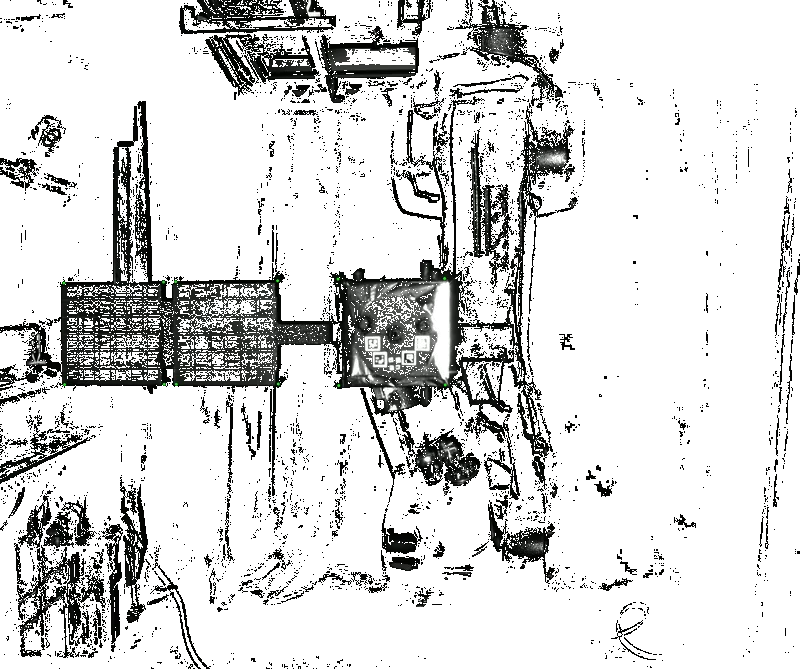
During the recent laboratory tests, two advanced camera systems were rigorously evaluated. These systems are designed to guide a servicing vehicle as it approaches its target, enabling the delicate transition from a considerable distance to close proximity, setting the stage for the subsequent docking procedure. The testing environment at ESTEC’s Guidance, Navigation, and Control Laboratory provided a realistic simulation of space conditions. Utilizing GRALS, a sophisticated system comprising two robotic arms mounted on 33-meter rails, engineers could accurately replicate the relative motion and positioning of spacecraft. One arm held the navigation unit of a servicing spacecraft, developed by The Exploration Company, while the other held a scale model of a target spacecraft, or "client," engineered by Thales Alenia Space. Both were suspended in a darkened room, illuminated by a single lamp to mimic the Sun’s illumination, a crucial factor in the visual navigation process.
The navigation system’s capability to accurately determine its position relative to the target was assessed by its ability to lock onto a series of black-and-white markers, visually akin to QR codes, strategically placed on the interface side of the target spacecraft. These markers serve as crucial visual cues for the navigation cameras, allowing the servicing spacecraft to precisely orient itself. The successful performance of these camera systems under various simulated lighting conditions, including scenarios with strong glare from reflective surfaces, is paramount for the reliability of future rendezvous operations.

Mastering the Final Centimeters: The Art of Docking in Microgravity
Following a successful rendezvous, the critical phase of docking commences. This intricate maneuver, which brings two spacecraft into a secure and functional connection, was simulated in ESA’s Orbital Robotics Laboratory. This facility, situated across the same long room housing the GRALS robotic arms, employs specialized platforms that float on an exceptionally smooth and flat floor. This setup masterfully recreates the conditions of weightless free-floating in a two-dimensional plane.
The platforms are equipped with air bearings that expel air towards the floor, generating an infinitesimally thin air gap of just a few micrometers. This frictionless environment allows the platforms and their payloads to move with remarkable freedom, mimicking the unhindered motion of spacecraft in orbit. "In this part of the testing, the servicer and client spacecraft models are each attached to one floating platform," explained Jules Noirant, an ESA automation and robotics engineer. "The servicer-simulating platform weighs around 180 kg and has an additional 20 kg weight attached on either side – that way the mass difference between the two models is similar to a real-life scenario." This careful replication of mass distribution is essential for accurately simulating the dynamics of a real docking operation.
The docking tests began with the two simulated spacecraft positioned just four centimeters apart. The servicer’s docking mechanism was designed to engage with a passive capture interface on the client spacecraft. The subsequent controlled movement brought the two platforms into close proximity, enabling the connection of vital ports. These ports are designed for essential functions such as refilling fuel tanks and establishing power and data transfer links, underscoring the logistical capabilities of this burgeoning in-orbit servicing ecosystem.

The culmination of these tests, which took place over several weeks during the summer of 2026, demonstrated the complete rendezvous, docking, and simulated servicing process within a single, integrated testing campaign. This holistic approach provides invaluable data for refining the technologies and operational procedures necessary for future space logistics.
Industry Perspective: Validating Performance for Space Operations
The insights gained from these rigorous laboratory tests are crucial for the participating industry partners as they move towards actual space deployment. Olivier Faure, Head of Future Projects and In-Orbit Services Programs at The Exploration Company, highlighted the significance of the testing: "This test allowed us to demonstrate the performances of our systems. The rendezvous must work in all conditions – in complete darkness, but also when the markers are reflecting sunlight and blinding the camera with flare. Similarly, the docking must work for multiple dynamic conditions in the last centimeters, with a range of relative positions and velocities with the target. The tests were instrumental for us to get a better understanding of how our system will perform before we test it in space."
This emphasis on performance validation under a wide spectrum of challenging conditions is a testament to the meticulous planning and execution of ESA’s research and development programs. The ability of these systems to function reliably, regardless of lighting variations or the precise relative motion of the spacecraft, is fundamental to ensuring the success of future in-orbit operations.

The InSPoC Venture: Building the Foundation for a Thriving Orbital Economy
This comprehensive testing campaign is a key component of ESA’s In-Space Proof of Concept (InSPoC) venture. The overarching goal of InSPoC is to develop and validate the interoperable interfaces that are essential for establishing thriving logistical hubs in space. The initiative is structured into four distinct themes, with InSPoC-1 specifically addressing the critical aspects of rendezvous, docking, and the transfer of fluids or gases between spacecraft.
Yann Tincelin, InSPoC Programme Manager at ESA, articulated the agency’s strategic vision: "Our objective is to collaboratively design and demonstrate the interfaces that could enable an open in-space infrastructure allowing European stakeholders to operate and provide services in the orbital economy." This vision underscores ESA’s commitment to fostering a collaborative ecosystem where European companies can develop and offer a range of in-orbit services, driving innovation and economic growth in the space sector.
Towards Sustainable Space: Addressing Space Debris and Extending Mission Lifespans
The development of in-orbit servicing capabilities is intrinsically linked to the pressing issue of space debris. Currently, satellites are launched with a predetermined amount of fuel for their mission’s duration. Upon depletion, these satellites either reenter Earth’s atmosphere and burn up or become derelict objects, contributing to the growing problem of orbital clutter. This debris poses a significant threat to operational satellites and future space missions.

The InSPoC initiative offers a dual-pronged approach to mitigating this challenge. Firstly, by enabling the repair, refueling, or repurposing of existing spacecraft, the lifespan of valuable assets can be significantly extended. This directly reduces the need for new launches and, consequently, the generation of new debris. The standardized interfaces being developed through projects like InSPoC-1 are crucial for servicing spacecraft to connect with and assist operational satellites.
Secondly, ESA is actively pursuing projects aimed at actively removing existing space debris. The Cat mission, for instance, is designed to rendezvous with and deorbit satellites equipped with compatible interfaces. By addressing both the extension of mission lifespans and the active cleanup of orbits, ESA is taking a proactive stance in ensuring the long-term sustainability of space activities. The successful demonstration of rendezvous and docking technologies is a critical step towards realizing a future where space is not only a frontier for exploration but also a sustainable domain for human endeavors. The data gathered from these tests will inform the design of future satellites and servicing vehicles, paving the way for a more responsible and efficient use of space.