The United States Department of Defense’s ambitious drive to integrate artificial intelligence (AI) into its operations, particularly within the critical domain of defense training, is ushering in an era of unprecedented opportunities alongside significant challenges. Retired Vice Adm. Sean Buck, president of the National Training & Simulation Association (NTSA), a subsidiary of the National Defense Industrial Association (NDIA), articulated this evolving landscape, emphasizing the increasing reliance on AI for both operational autonomy and complex decision-making processes. Buck’s insights, shared in an interview on the sidelines of MODSIM World, a key NTSA event focused on modeling and simulation, paint a detailed picture of the transformative impact AI is poised to have on military readiness and the broader national security training ecosystem.
Buck, who brings a distinguished 40-year career in the U.S. Navy, including pivotal roles as a naval flight officer and superintendent of the U.S. Naval Academy, now dedicates his efforts to fostering collaboration between industry, academia, and government. His position as a "convener, a collaborator and a coordinator" underscores the multifaceted nature of addressing the complexities of AI adoption in defense. The NTSA’s mission, under his leadership, is to navigate these intricate pathways, ensuring that the national security training infrastructure remains at the cutting edge of technological advancement while upholding robust ethical and operational standards.
The Power of Simulation: A Foundation for Modern Training
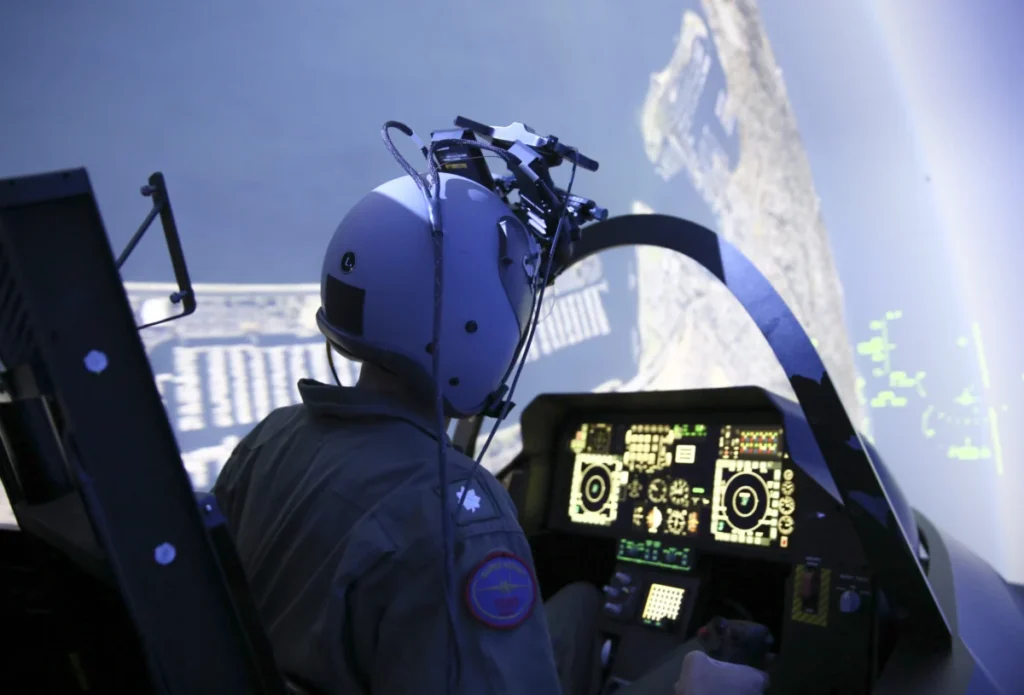
The bedrock of modern military preparedness, according to Buck, lies in the sophisticated capabilities of simulation and high-fidelity synthetic environments. These technologies offer a more efficient and demonstrably more effective means of training personnel for a vast array of tasks. "Anybody that’s doing a particular task can be [trained] through simulation and high-fidelity synthetic environments now," Buck stated, highlighting the inherent advantages. He further argued, "It’s more efficient, and – I would suggest and argue – it’s more effective."
This emphasis on simulation is not a new concept. The military has recognized its value for decades. However, the advent of immense computational power has transformed what was once a theoretical advantage into a tangible reality. "We knew this 60 or 70 years ago, but what we didn’t have then was the [necessary] compute power," Buck explained. "Now, we’re in the day and age of massive compute power, and that’s why we can create such high-fidelity, realistic synthetic environments. It’s getting better and better right in front of our eyes." This exponential growth in processing capability allows for the creation of training scenarios that are increasingly indistinguishable from real-world conditions, offering a safe and controlled environment for personnel to hone their skills and decision-making abilities. The direct correlation between computing power and the quality of the training environment is clear: "The more powerful the compute power, the better training environment that we’ll have [and] the better human being that we’ll have."
Emerging Technologies: AI as the Next Frontier
Beyond the foundational advancements in computing power, Buck identified artificial intelligence as the next transformative force shaping modeling, simulation, and training for the coming five to ten years. While enhanced computing capabilities provide the infrastructure, AI introduces a layer of intelligence and adaptability that significantly elevates training efficacy. "Now, what I see is the introduction of artificial intelligence into existing modeling and simulation. That is a game changer and where we’re really intensely focused [on] at NTSA," Buck declared. The NTSA’s strategic focus is on facilitating the integration of AI into the industry, ensuring that these advanced capabilities "complement their simulation with AI, [which] makes for a better and more realistic training environment."
This integration moves beyond simply replicating physical tasks. The impact of AI extends into the cognitive realm, a crucial aspect of modern warfare. "When I first got into the job, I thought about training a human to do a physical endeavor: Fly an airplane, shoot a gun, use a telescope. Now, what I see is we’re using simulation and AI to help with decision-making," Buck elaborated. "The cognitive aspect of training a decision-maker is a very, very powerful aspect of training." This signifies a paradigm shift, where training focuses not just on the execution of actions, but on the complex reasoning and strategic thinking required in dynamic and high-stakes environments.
Navigating the Risks of AI Integration
Despite the immense potential, Buck did not shy away from acknowledging the inherent risks associated with widespread AI adoption. The introduction of AI into defense networks necessitates a rigorous approach to governance and oversight. "I see a lot of risk," he admitted. "All of us that choose to put AI on our networks need to keep it compliant, to govern use [of it] and light off a warning signal when the bias is getting out of bounds." This highlights the critical importance of addressing potential biases embedded within AI algorithms, which could lead to flawed decision-making or inequitable outcomes.
Furthermore, a commitment to post-implementation assessment is crucial. "We also need to do an assessment after the fact that the use of it truly was beneficial," Buck emphasized. This calls for a continuous evaluation process to ensure that AI systems are not only functioning as intended but are also contributing positively to mission objectives and operational effectiveness. The responsible deployment of AI in defense hinges on a proactive strategy that anticipates potential pitfalls and establishes robust mechanisms for mitigation and continuous improvement.
The Future of Pilot Training in an Autonomous Age
The push toward greater autonomy in military vehicles, particularly aircraft, presents a unique set of challenges for pilot training. Buck expressed a measured perspective on the increasing autonomy, advocating for the continued presence of human oversight in critical decision-making loops. "For the foreseeable future, I want and hope that we keep a human in the loop of the decision-making cycle as we move every day to more autonomy," he stated. While acknowledging the pervasive nature of autonomy in vehicle operation, Buck voiced a degree of skepticism regarding its unchecked application in decision-making. "Right now, autonomy is mainly seen in the actual operation of a vehicle, but we’re seeing more and more AI being used in decision-making – and I’m a little bit skeptical on that."
The concept of "unmanned" systems, Buck pointed out, is often a misnomer. Current drone operations, for instance, rely on extensive human involvement in their development, maintenance, and deployment. "Today, a drone is not unmanned. There is a tremendous amount of infrastructure, of human beings that are flying that drone, building the drone, maintaining the drone and actually employing that drone," he explained. As technology advances, however, these systems are becoming more truly autonomous from the moment of launch. This evolution extends across various domains, including remotely piloted undersea, surface, air, and space vehicles.
The Psychological and Ethical Dimensions of Autonomous Operations
The increasing sophistication of autonomous systems raises profound questions about the human element in warfare. When operators engage adversaries from a distance, without direct physical confrontation, the psychological and emotional toll can be significant. Buck highlighted this dilemma: "We have humans that are operating those right now, and we need to listen to them to see how they’re doing emotionally, psychologically as they employ weapon systems against an adversary they don’t physically see. That’s a heck of a dilemma."
This underscores a critical imperative for evolving training methodologies. The psychological and ethical ramifications of operating increasingly autonomous systems, especially those capable of lethal force, must be a central component of future training programs. "It sounds like your answer is that training for autonomous platforms has to change to encompass different psychological and ethical dilemmas?" the interviewer asked, to which Buck unequivocally replied, "Yes, that is exactly my answer." He further elaborated on the human susceptibility to psychological and emotional factors, emphasizing the need to understand "the psychological aspects of using automation and autonomy. Where are we heading with that? Because that’s a component of training and preparation." This forward-looking perspective suggests that the future of defense training will require a holistic approach, integrating not only technical proficiency but also a deep understanding of the human-machine interface and the ethical considerations inherent in advanced autonomous operations. The NTSA, under Buck’s leadership, is thus at the forefront of a critical discussion about how to prepare military personnel for a future where AI and autonomy are not just tools, but integral partners in national security.