The Raspberry Pi Foundation has announced a significant expansion of its educational outreach through the development of a new curriculum framework and an introductory course designed to empower secondary students to master artificial intelligence (AI) and data science. As young people increasingly interact with AI systems in their daily lives, the foundation has identified a critical disconnect between student interest and the formal qualifications available within the United Kingdom’s educational system. By leveraging the existing Extended Project Qualification (EPQ) framework, the foundation aims to provide 16- to 19-year-olds with a structured, recognized pathway to explore machine learning and data analysis, ensuring that the next generation of workers is not merely consumers of technology, but informed creators and critics.
Addressing the Deficit in Formal AI Qualifications
Currently, the UK’s national curriculum lacks a dedicated, high-stakes qualification specifically tailored to technical AI skills for learners in the 14-to-19 age bracket. While Computer Science GCSEs and A-Levels touch upon foundational programming and logic, they often lack the agility to keep pace with the rapid evolution of generative AI and large-scale data modeling. This vacuum has created a challenge for schools where the pressure of high-stakes examinations often crowds out non-examined or emerging subjects.
The Raspberry Pi Foundation’s research indicates that while students are eager to experiment with AI to solve real-world problems, teachers often lack the resources or the "curriculum space" to support such investigations. To address this, the foundation has spent the past year developing a research-informed curriculum framework for data science. This framework serves as a blueprint for the foundational knowledge required to understand and develop AI models, covering everything from ethical data collection to the interpretation of algorithmic outputs.
In the long term, the foundation has been advocating for the establishment of a formal Level 3 qualification in Data Science and AI in England. However, acknowledging that the creation of new national qualifications is a multi-year bureaucratic process involving extensive regulatory hurdles, the foundation has identified the Extended Project Qualification as an immediate and effective alternative.
The Extended Project Qualification: A Flexible Gateway
The EPQ is a well-regarded qualification in England, Northern Ireland, and Wales, administered by major exam boards such as AQA, Pearson Edexcel, OCR, and others. It is currently undertaken by approximately 10% of students in post-16 education. The hallmark of the EPQ is its self-directed nature; students choose a topic of personal interest, conduct an independent investigation, and produce either a 5,000-word dissertation or an "artefact" accompanied by a shorter research report.

Because the EPQ prioritizes the process of research, planning, and evaluation over a fixed syllabus, it is uniquely suited for emerging fields like AI. The Raspberry Pi Foundation’s new initiative seeks to standardize the technical support provided to students who choose AI as their EPQ focus. By providing a structured "Data Science and AI" course, the foundation ensures that students have the technical scaffolding necessary to build a machine learning model that meets the rigorous standards of an EPQ artefact.
Structural Overview of the New Data Science and AI Course
The foundation’s upcoming course is designed as a 10-unit program, totaling approximately 20 to 30 hours of independent study. Critically, the course adopts a "no-code" approach. This strategic decision allows students to focus on the conceptual underpinnings of data science—such as bias, variance, and data cleaning—without being sidelined by the syntax of specific programming languages like Python or R.
The course is built around the recognized data science lifecycle, guiding students through several key phases:
- Problem Definition: Identifying a question that can be answered or a problem that can be solved using data.
- Data Acquisition: Understanding where data comes from and the ethical implications of its use.
- Data Exploration and Preparation: Learning how to clean datasets and identify patterns or anomalies.
- Model Building: Using tools to create machine learning models.
- Evaluation and Interpretation: Testing the accuracy of the model and reflecting on what the results actually mean in a real-world context.
This structured approach ensures that the work produced is not merely a technical exercise but a comprehensive academic project that demonstrates critical thinking, decision-making, and reflection—skills that are highly valued by both universities and employers.
Supporting Data and the Economic Context
The necessity for such an educational framework is underscored by recent economic and labor market data. According to a 2023 report by the Department for Business and Trade, the UK’s AI sector contributes more than £3.7 billion to the economy and employs over 50,000 people. Furthermore, industry projections suggest that by 2030, a significant majority of professional roles will require a baseline level of AI literacy.
Despite this demand, the "digital divide" remains a concern. Data from the Office for Students suggests that students from disadvantaged backgrounds are less likely to have access to high-level computing resources or specialized mentorship in emerging technologies. By making their course materials freely available and designing them for the EPQ—which is already integrated into the state school system—the Raspberry Pi Foundation aims to democratize access to AI education.

University admissions officers have also signaled their support for such initiatives. The EPQ is worth half an A-Level in terms of UCAS points, and many top-tier universities, including members of the Russell Group, offer reduced entry requirements for students who achieve an A or A* in their EPQ. Providing a pathway for AI-focused EPQs allows students to demonstrate their readiness for the rigors of higher education in STEM fields.
Chronology of Development and Future Roadmap
The development of the Data Science and AI framework has followed a methodical timeline designed to ensure academic rigor and practical utility:
- Early 2023: The Raspberry Pi Foundation began an international survey of data science education, analyzing how different countries integrate these concepts into secondary schooling.
- Mid-2023: Publication of the "Progression in Data Science" research report, which formed the basis for the new curriculum framework.
- 2024: Development of the 10-unit introductory course and advocacy for the Level 3 qualification in England.
- September 2026: Launch of the pilot program. Selected schools across England will test the course materials, providing feedback from both educators and students.
- 2027: Full public release. The course will be made freely available to all schools and independent learners, providing a permanent resource for AI education in the UK.
Official Responses and Educational Implications
While the UK government has expressed a desire to make the UK a "global superpower" in AI, critics have often pointed out that the educational infrastructure has lagged behind the rhetoric. Educational experts have welcomed the Raspberry Pi Foundation’s intervention as a pragmatic "bottom-up" solution to a "top-down" policy gap.
"The EPQ is the perfect vehicle for this," says one educational consultant familiar with the project. "It allows for the rapid integration of new technology into the classroom without waiting for the slow wheels of the Department for Education to turn. By the time a formal AI GCSE is written, the technology will have changed three times. The EPQ framework stays relevant because the student defines the scope."
Industry leaders have also reacted positively, noting that the "no-code" focus on the data science lifecycle mirrors the way many businesses are now approaching AI. Companies are increasingly looking for "AI-augmented" workers who understand the logic of data rather than just specialized coders.
Broader Impact and Global Significance
The implications of this initiative extend beyond the borders of the United Kingdom. As nations worldwide grapple with how to educate their youth in the age of automation, the Raspberry Pi Foundation’s model provides a template for using existing qualification frameworks to host modern technical content.
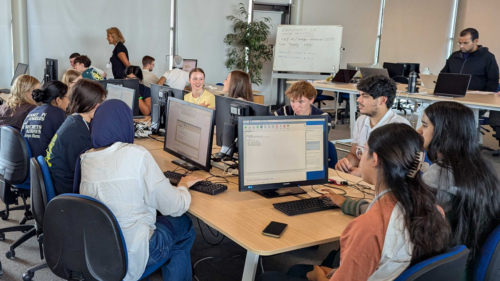
The focus on "artefact" creation—building an actual machine learning model—moves education away from rote memorization and toward project-based learning. This shift is essential for fostering innovation. When students use AI to investigate local issues—such as analyzing traffic patterns in their town or predicting environmental changes in a local park—they develop a sense of agency over the technology that defines their era.
Furthermore, the emphasis on the "data science lifecycle" prepares students for the ethical challenges of the 21st century. By learning to explore and prepare data, students become acutely aware of how bias can be baked into an AI system. This critical literacy is perhaps the most important outcome of the program, ensuring that future citizens can hold AI-driven systems accountable.
Conclusion and Next Steps
The Raspberry Pi Foundation’s commitment to supporting the EPQ route represents a vital bridge between current educational realities and future technological needs. By providing the tools, framework, and structured learning path, they are ensuring that the curiosity young people feel toward AI is converted into tangible skills and recognized academic achievement.
As the program moves toward its 2026 pilot phase, the foundation will continue to refine its materials based on the evolving landscape of AI. For schools and students in England, the message is clear: the wait for formal AI recognition is over, provided they are willing to take the lead in their own investigative journey. The 2027 free release of these materials is expected to mark a turning point in how data science is perceived and taught in British secondary education.