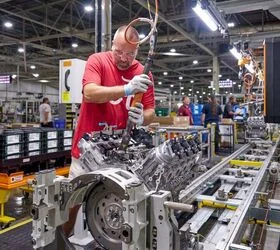
General Motors has officially pulled back the curtain on its formidable new 8.3-liter Duramax turbodiesel engine, a powerplant poised to redefine capability and performance in the heavy-duty pickup truck segment. This colossal V8 diesel, developed in Brookville, Ohio, will be the centerpiece of the refreshed 2027 Chevrolet Silverado HD and GMC Sierra HD lineups, ushering in significant upgrades designed to accommodate its sheer force. The announcement comes at a time when the automotive landscape, particularly the truck segment, is seeing intense competition and a renewed focus on raw power and towing prowess.
A New Era of Duramax Power
The introduction of the 8.3-liter Duramax marks a significant leap in GM’s diesel engine development, building upon decades of engineering and integration. Norman Peralta, executive chief engineer for Global Engine and Battery Systems, emphasized the comprehensive nature of this new powertrain. "This new diesel engine is the culmination of decades of GM diesel development and integration," Peralta stated. "From the clean-sheet architecture and combustion system to the cooling, aftertreatment, and transmission calibration, this is a powertrain built with heavy-duty purpose and pride." This suggests a holistic approach to design, aiming for optimal performance and durability from the ground up.
The new Duramax is engineered to deliver class-leading figures within the heavy-duty pickup segment. GM claims an impressive 555 horsepower and a monumental 1,230 lb-ft of torque. These numbers position the Duramax directly against, and in some metrics, ahead of its primary competitors. Ford’s 6.7-liter Power Stroke V8 turbodiesel, a formidable engine in its own right, offers up to 500 hp and 1,200 lb-ft of torque in its high-output variants, while Ram’s 6.7-liter Cummins inline-six diesel produces up to 430 hp and 1,075 lb-ft. The sheer displacement of the 8.3-liter Duramax hints at its potential for sustained power delivery and robust torque at lower RPMs, crucial for demanding towing and hauling applications.
Redefining Towing and Hauling Capabilities
Beyond raw horsepower and torque figures, the practical implications for towing and hauling are paramount for heavy-duty truck buyers. General Motors has announced that the 2027 Silverado HD and Sierra HD equipped with the new 8.3-liter Duramax will offer maximum trailering capabilities of up to 20,000 pounds for conventional towing and an astonishing 38,000 pounds for gooseneck configurations. While these figures represent a substantial improvement for GM’s HD trucks, they are designed to be highly competitive within the segment. Ford’s F-Series Super Duty trucks, for instance, can be configured to tow up to a segment-leading 40,000 pounds with gooseneck trailers. GM’s strategy appears to be focused on matching the capabilities of rivals like Ram, while providing a compelling alternative for discerning truck owners.
The significance of these towing metrics cannot be overstated. Buyers in the heavy-duty segment are typically looking for vehicles that can handle substantial loads consistently, whether for commercial purposes, agricultural use, or recreational towing of large campers or boats. The ability to tow up to 38,000 pounds places these new GM trucks firmly in the realm of what were once considered Class 8 vehicles, highlighting the ever-increasing capabilities of consumer-grade heavy-duty pickups.
Engineering for Durability and Longevity
The sheer size of the 8.3-liter Duramax is a key indicator of GM’s strategy to enhance long-term dependability. A larger displacement generally allows an engine to operate at lower stress levels under load, potentially leading to a longer service life. This is particularly relevant for diesel engines, which are often chosen for their longevity and ability to accumulate high mileage.
Internal components have been engineered for extreme durability. The engine features a compacted graphite iron (CGI) cylinder block, a material known for its strength and resistance to wear. Complementing this are a fully forged crankshaft, connecting rods, and steel pistons, all designed to withstand the immense pressures and temperatures generated within the cylinders.
Heat management is another critical area of focus. The 8.3-liter Duramax incorporates an OEM dual-stage air-to-water charge cooling system, a variable-geometry turbocharger for optimized boost delivery across the RPM range, and an upgraded engine-cooling strategy. These features are specifically designed to ensure consistent performance, even under sustained heavy loads and demanding operating conditions. This focus on thermal management is crucial for preventing overheating and maintaining engine integrity during prolonged towing or heavy hauling.
Transmission and Emissions Considerations
GM has opted to continue its long-standing partnership with Allison for its transmissions, a decision that will likely be welcomed by many truck enthusiasts. Allison transmissions have built a reputation for their robust construction and reliable performance in heavy-duty applications. The 8.3-liter Duramax will be paired with the brand’s newer 10-speed automatic transmission. While this transmission has been praised for its smooth shifts and efficiency, it has faced some criticism regarding solenoid issues and software update compatibility in earlier applications. GM’s integration and calibration efforts with this new diesel engine will be closely watched to ensure a seamless and dependable performance.
Emissions control remains a significant challenge for all diesel manufacturers. GM has stated that the exhaust aftertreatment system has been updated to "support heavy-duty performance, regeneration functionality and customer confidence over long-distance towing." The specifics of these mechanical changes are not yet fully detailed, but the emphasis on improved regeneration cycles and reliability over extended towing operations suggests a focus on addressing common diesel emissions system pain points.
For those who may prefer a gasoline powertrain, GM will also offer an updated 6.6-liter V8 gasoline engine. This option will deliver an estimated 412 horsepower and 472 lb-ft of torque, suitable for towing capacities ranging from 16,000 to 18,700 pounds when properly equipped. This provides a solid alternative for buyers whose needs do not necessitate the extreme capabilities or specific characteristics of a diesel engine.
Advancements in Ride Comfort and Handling
Beyond the powertrain, General Motors has made substantial investments in enhancing the overall driving experience of its 2027 HD trucks, particularly when under load. The focus has been on improving both comfort and control, even when towing significant payloads.
The new V8 engines, both the diesel and gasoline variants, are said to feature an "extra-meaty torque curve," contributing to a more responsive feel and easier acceleration when loaded. A new electronic brake-boost system is also being introduced, aiming to provide a more consistent and powerful braking feel, crucial for safely managing heavy loads. This system is complemented by an upgrade to larger 14.6-inch front rotors, new four-piston fixed front calipers, and enhanced rear braking hardware. These improvements are intended to reduce brake fade under strenuous conditions and improve overall pedal feel, giving drivers greater confidence.
A significant technological leap for the segment is the introduction of a rack-and-pinion Electric Power Steering (EPS) system. Traditional heavy-duty trucks have long relied on hydraulic steering systems, which, while robust, can sometimes be cumbersome and less efficient. GM claims its new EPS offers reduced kickback, which is particularly beneficial when navigating rough terrain or dealing with unpredictable road surfaces. Furthermore, the system is said to provide 30% more power assistance than current hydraulic steering gears, making it easier to maneuver heavy trucks, especially at low speeds or when stationary.
While electric power steering has sometimes been criticized in passenger cars for a perceived lack of road feel, its application in heavy-duty trucks presents a different set of priorities. The focus here is on reducing driver fatigue and improving maneuverability, rather than transmitting nuanced feedback. GM emphasizes the system’s reliability through built-in redundancy and corrosion- and impact-resistant hardware designed for the harsh environments these trucks are expected to operate in, including rough terrain, road debris, and severe-duty use.
Market Positioning and Pricing Outlook
The launch of the 2027 Chevrolet Silverado HD and GMC Sierra HD, particularly with the new 8.3-liter Duramax diesel, comes at a time of evolving market dynamics and increasing vehicle costs. The recent price increases observed in the non-HD Silverado and Sierra models suggest that buyers should anticipate a significant investment for these new heavy-duty trucks.
A base-trimmed 2026 Chevrolet Silverado 2500 WT, configured as a regular cab with a long bed and rear-wheel drive, has a starting price around $47,000. However, trucks intended for use beyond basic construction sites typically require crew cab configurations, adding considerably to the final price. It is highly probable that a 2027 model equipped with the new 8.3-liter Duramax diesel will command a premium of at least $10,000 over its gasoline-powered counterpart, pushing well into the upper echelons of consumer vehicle pricing.
The positioning of these trucks as capable of performing tasks previously reserved for commercial vehicles means they are entering a niche where buyers are often willing to pay a premium for superior capability and durability. GM’s strategy appears to be one of modernization, integrating advanced technologies and robust powertrains while reassuring customers of the trucks’ long-term reliability and performance. The success of this strategy will ultimately be determined by how well these trucks perform in real-world conditions and how they are received by a demanding customer base.
Looking Ahead: Real-World Performance and Consumer Confidence
While the specifications and engineering details paint an impressive picture, the true measure of the 8.3-liter Duramax and the updated HD trucks will be their performance and dependability over time. The automotive industry, including GM, has faced scrutiny regarding quality control in recent years. The long-term reliability of this new diesel architecture, particularly its emissions systems and the integration with the 10-speed Allison transmission, will be critical factors for consumer confidence.
The 2027 Chevrolet Silverado HD and GMC Sierra HD are slated to launch later this year. Prospective buyers will be closely watching for initial reviews, long-term durability tests, and any anecdotal evidence of performance and reliability. General Motors appears to be making a bold statement with this new Duramax engine, aiming to reclaim leadership in the heavy-duty segment by offering a blend of raw power, advanced technology, and a commitment to the rugged capabilities that define these essential workhorses.