From the imposing astronomical clocks gracing Tudor England’s royal courts to the exquisite pendant watches adorning Victorian society, timekeeping has historically served as a potent symbol of power, prestige, and remarkable technological advancement within European monarchies. This extensive exploration delves into the fascinating evolution of clocks and watches meticulously crafted for royalty, charting their transformation as intricate masterpieces that mirrored the tastes, ambitions, and innovative spirit of monarchs. Through the interwoven threads of exceptional craftsmanship, artistic expression, and profound historical significance, we uncover how these royal timepieces not only marked the passage of dynasties and empires but also became deeply embedded in the fabric of societal change.

Queen Victoria, a monarch whose reign spanned from 1837 to 1901, presided over the United Kingdom of Great Britain and Ireland and held the title of Empress of India. As the final sovereign of the House of Hanover, her era, now synonymous with the Victorian Age, witnessed unparalleled transformation and expansion, indelibly shaping Britain and the modern world. Under her stewardship, the monarchy evolved from a direct ruling power to the symbolic, ceremonial institution it remains today.
Victorian Britain stood as the "workshop of the world," a crucible where scientific inquiry, engineering prowess, and artistic ingenuity converged to define a new epoch of progress. Innovations such as the railway and telegraph, alongside the monumental achievements showcased at the Great Exhibition, pulsed at the very heart of the burgeoning empire. Horology, the science and art of timekeeping, was no exception to this surge of innovation. Britain played a commanding role, with its precision chronometers ensuring naval supremacy, while its skilled watchmakers and clockmakers established standards of craftsmanship that resonated across the European continent.

It was within this dynamic milieu of exacting science and exquisite design that Queen Victoria and her consort, Prince Albert, emerged as significant patrons. Their influence elevated timepieces from mere functional instruments to potent symbols of modernity, refinement, and imperial power. Punctuality, a virtue highly prized during the era, propelled the watch into becoming a vital accessory for both the aristocracy and the increasingly influential burgeoning middle class. Queen Victoria’s personal fascination with watches, coupled with the cherished exchange of timepieces as gifts with Prince Albert and their role as treasured family heirlooms, played a crucial role in popularizing the personal timepiece as a profound symbol of status and affection.
The Empress of an Industrial Age
Victoria’s ascension to the throne in 1837 marked the beginning of a reign that would witness the British Empire’s greatest territorial expansion and the dramatic societal upheaval brought about by the Industrial Revolution. For Queen Victoria, timekeeping transcended mere utility; it became a potent symbol of the orderly, moral society she ardently championed.

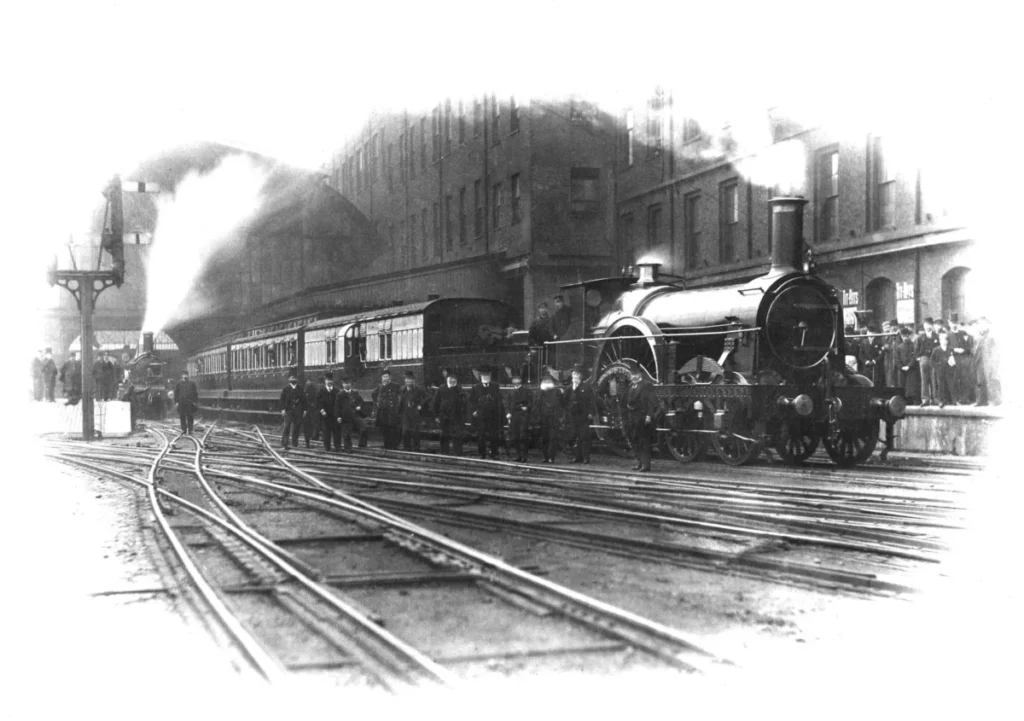
During her extensive reign, railways emerged as the paramount symbol of progress and industrial might. These transformative networks physically compressed distances and fundamentally altered the social landscape by enabling mass travel, expediting the transportation of goods, fueling the growth of cities, and ushering in a new era of leisure. Railways represented a seismic shift in modern life, fostering greater connectivity across the nation and facilitating unprecedented social and economic expansion.
Prior to the advent of railways, each town and city in Britain maintained its own distinct local time, meticulously calibrated by the position of the sun. For instance, noon in Bristol occurred approximately ten minutes later than noon in London. The burgeoning railway companies, however, faced a critical need for a single, standardized time to ensure the reliability of their timetables and, crucially, to prevent catastrophic collisions on single-track lines. Initially, each railway company adopted its own time standard, a system that quickly proved unworkable. The definitive solution was the adoption of London time, as precisely measured by the Royal Observatory at Greenwich, which became known as Greenwich Mean Time (GMT). The Great Western Railway was a pioneer in this regard, implementing a unified "Railway Time" system that commenced in 1840.

The year 1840 also heralded the introduction of the world’s first adhesive postage stamp, universally recognized as the Penny Black. This innovation democratized communication and rapidly became one of the most iconic symbols of modern mass society. The Penny Black featured a profile of Queen Victoria and offered the revolutionary service of sending a letter anywhere within Britain for a mere one penny. Its immense success transformed communication, making letter writing accessible to a broader segment of the population and establishing the Queen’s image as one of the most widely recognized emblems of the Victorian age.
The Great Exhibition of 1851: A Watershed for Watchmaking
The Great Exhibition of the Works of Industry of All Nations, held in 1851, was ostensibly a grand celebration of Victorian industrial prowess. However, for the realm of horology, it represented a more nuanced and significant moment: the public emergence of Swiss makers who, in many respects, rivaled and ultimately surpassed the traditional dominance of English watchmaking.

Patek Philippe, a name that would become synonymous with luxury horology, showcased its innovative keyless winding watches. This groundbreaking mechanism liberated watches from the cumbersome key, making them more practical and elegant, particularly for ladies’ jeweled pendant watches, which were increasingly fashionable. Concurrently, established English firms like Edward Dent & Co. exhibited their monumental precision marine and turret clocks, while Charles Frodsham & Co. presented regulators and chronometers that embodied the enduring English tradition of horological excellence.
Queen Victoria herself captured the profound significance of the Great Exhibition in her personal diary, describing its opening day on May 1, 1851, as "one of the greatest and most glorious of our lives." She noted, "The Sun shone and gleamed upon the gigantic edifice. The tremendous cheering, all this was indeed moving." The iconic structure, the Crystal Palace, a marvel of glass and iron, housed a breathtaking array of technological and artistic achievements from around the globe.

Following the exhibition, Dent & Co. went on to construct the intricate mechanism for the Great Clock of Westminster, famously known as "Big Ben," which was installed in 1859. For a horological firm, securing a royal commission or purchase was the ultimate validation of their skill and prestige. For the public, seeing an illustration of the Queen adorned with a small, enameled pendant watch, or a photograph of a royal drawing-room featuring a Dent clock on the mantelpiece, imbued these objects with desirability and fashionability. This shift marked a significant evolution, transforming the watch from a primarily male-oriented tool of navigation and scientific endeavor into an object of domestic taste and personal adornment.
The Patek Philippe Archives reveal a significant purchase by Queen Victoria: watch No. 4710, an exquisite azure-blue pendant watch lavishly adorned with diamonds. Acquired on November 30, 1851, for CHF 612.50 (an amount approximating CHF 75,000 in today’s currency), this piece had first captivated the Queen at the Great Exhibition due to its exceptional elegance.

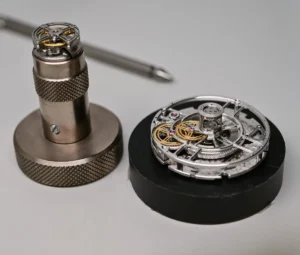
Intriguingly, this was not Queen Victoria’s inaugural Patek Philippe acquisition. Records indicate that earlier that year, on August 9th, she purchased watch No. 3218 for Prince Albert. This was a sophisticated quarter-repeating, hunting-cased pocket chronometer, costing CHF 1325 (equivalent to approximately CHF 143,000 today). While the current whereabouts of this remarkable timepiece remain unknown, extant movements from similar pocket watches crafted by Patek Philippe around that period offer a glimpse into its potential complexity and artistry.
The Great Exhibition of 1851 served as a pivotal moment, showcasing the full scope of Victorian ambition, innovative spirit, and global reach. It brought together over 100,000 exhibits from numerous countries, celebrating industrial progress, scientific breakthroughs, and artistic craftsmanship within the magnificent Crystal Palace. Beyond its immediate spectacle, the Exhibition played a crucial role in standardizing industries, inspiring further technological advancements, and bolstering Britain’s cultural confidence. The substantial profits generated, amounting to £186,000 (approximately £22.6 million today), were strategically reinvested to establish enduring institutions dedicated to science, art, and education in South Kensington – a district that became known as "Albertopolis," in honor of Prince Albert, the visionary force behind the exhibition. These funds were instrumental in the establishment of the South Kensington Museums, which would evolve into the Victoria and Albert Museum (V&A), the Science Museum, and the Natural History Museum. Furthermore, land was acquired for the construction of the Royal Albert Hall, and the proceeds supported scholarships and vital educational initiatives in the arts and sciences.

Royal Patronage and the Formalization of Horological Excellence
Following the resounding success of the Great Exhibition, Queen Victoria continued her patronage of horology, acquiring numerous clocks and watches. Her visit to Paris in 1855 led to the acquisition of at least five ornate mantel clocks from the esteemed French firm Miroy Frères. One particularly notable piece, featuring a hunting theme, was designated for Balmoral Castle in Scotland, reflecting the Queen’s appreciation for both artistry and thematic relevance.
During Queen Victoria’s reign, the modern system of awarding Royal Warrants began to mature. For a horological firm, receiving a Royal Warrant under Queen Victoria was akin to acquiring a "golden ticket." It bestowed upon the company the esteemed privilege of proudly advertising itself as "Watchmaker (or Clockmaker) to the Queen." These warrants were formalized with specific regulations governing the display of the royal coat of arms on products, labels, and shopfronts, serving as a powerful endorsement of quality and craftsmanship.

The archives of Montres Breguet reveal a significant early acquisition by the young Queen. On July 17, 1838, just a year after her accession, Queen Victoria purchased a Breguet watch, registered under number 5102. Described in the archives as "a very small and simple watch, without repeater, very thin, for a ring," this delicate timepiece exemplifies the burgeoning trend of miniaturization and elegant personal adornment in ladies’ horology.
The practice of displaying the Royal Warrant on timepieces became a hallmark of prestige. A striking example is a wall-mounted regulator clock by Charles Frodsham & Co., dating to approximately 1880. The dial of this exceptional piece prominently bears the inscription "Clock Makers to the Queen," a clear testament to the firm’s esteemed status and the trust placed in their craftsmanship by the monarch.

The Dawn of Modern Timekeeping
Queen Victoria’s reign laid the crucial groundwork for the development of the modern wristwatch and the global synchronization of time. The era’s pervasive obsession with order, efficiency, and progress fostered a wave of innovations that continue to shape the field of horology to this day. As the sovereign of a society deeply conscious of the passage of time, Victoria embodied an epoch where the mastery of time became intrinsically linked to the mastery of empire and the definition of national identity.
Under Queen Victoria’s influential reign, the watch underwent a profound transformation, evolving from a mere luxury item to an indispensable necessity. It became an intimate companion, meticulously measuring both the grand public moments of state and the private rhythms of personal life. Through her discerning patronage and her personal example, Queen Victoria played a pivotal role in ushering in an era where sophisticated timekeeping became inextricably woven into the very fabric of daily life, the engine of industry, and the grand narrative of empire.