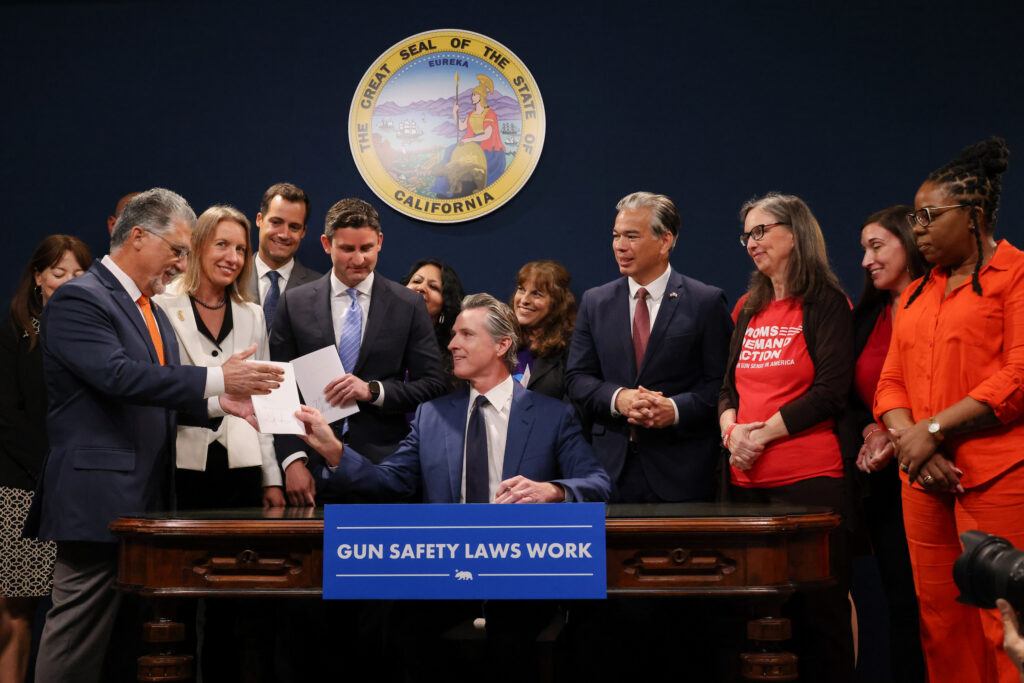
California has enacted Assembly Bill 2047 (AB 2047), the California Firearm Printing Prevention Act, a landmark piece of legislation aimed at preemptively curbing the proliferation of untraceable 3D-printed firearms and machine gun conversion devices. Signed into law by Governor Gavin Newsom on September 26, 2026, as part of a broader gun safety initiative, the bill introduces a novel regulatory framework that, while now law, does not impose immediate obligations on 3D printer manufacturers. Instead, it establishes a phased approach contingent upon the development of industry-wide standards by ASTM International. This nuanced legislation represents a significant evolution from its initial ambitious proposals, reflecting a compromise between technological feasibility and regulatory intent.
The core of AB 2047 centers on the eventual requirement for 3D printers sold in California to incorporate technology capable of identifying and blocking the printing of files deemed to produce firearms or machine gun conversion devices. This "firearm blocking technology" is defined within the law as "hardware, firmware, or other integrated technological measures" designed to halt a print job after an algorithm has evaluated the underlying digital file and determined it is not intended to create a prohibited weapon. However, the activation of this mandate is not immediate. The law creates a pathway, but its ultimate implementation hinges on a critical external factor: the establishment of a qualifying standard by ASTM International, a globally recognized organization for developing and publishing technical standards.
The legislative journey of AB 2047 highlights a considerable recalibration of its initial scope and demands. When first introduced, the bill proposed a more direct and stringent set of requirements for manufacturers. Early versions mandated that companies submit an "attestation form" for each model of 3D printer sold in California, certifying compliance with the proposed regulations. The California Department of Justice (DOJ) was slated to maintain a public registry of printers with valid attestations, and substantial civil penalties, potentially reaching $25,000 per violation, were outlined for non-compliance. These more aggressive measures were subsequently removed during the legislative process, leading to the current, more conditional enactment. The final version pivots the enforcement mechanism to rely on the development of a recognized industry standard, placing the onus on a collaborative, multi-stakeholder effort to define what constitutes technically feasible firearm-blocking technology.
A Phased Approach to Regulation: The Role of ASTM International
The current iteration of AB 2047 outlines a clear, albeit protracted, process for the potential implementation of its central provisions. The law establishes a critical deadline: if ASTM International has not published a qualifying standard for firearm-blocking technology by July 1, 2029, the California DOJ’s legal obligation to pursue this regulatory path will cease. This effectively places a five-year window for the development and adoption of an industry-wide technical benchmark.
Should ASTM International successfully develop and publish such a standard within the stipulated timeframe, the process would then proceed to the California DOJ. The department would be tasked with evaluating the published standard to determine if the proposed firearm-blocking technology is indeed technically achievable. If the DOJ makes a positive determination regarding the feasibility of the technology, California can then move forward with establishing specific requirements that manufacturers of 3D printers sold within the state would need to adhere to. This could potentially include a self-attestation or self-certification process for manufacturers, a mechanism that was considered but ultimately not mandated in the final bill, offering flexibility in how compliance is demonstrated.
Defining "Firearm Blocking Technology": A Technological Challenge
The specifics of what constitutes "firearm blocking technology" are central to the law’s future efficacy. As defined, it encompasses any integrated technological solution—whether hardware, firmware, or other sophisticated measures—designed to intercept and prevent the printing of files that could result in the creation of untraceable firearms or machine gun conversion kits. The technology would function by analyzing the digital blueprint of an object to be printed. Upon identification of a file that, when processed, is likely to produce a firearm or a device that converts a semi-automatic weapon into a machine gun, the printer would automatically cease the operation.
The critical unknown at this stage is the precise technical sophistication required for such a system. The effectiveness of the firearm blueprint detection algorithm and the accuracy with which it can distinguish between legitimate design files and those intended for illicit weapon manufacturing remain significant technical hurdles. The law anticipates that manufacturers, should the requirements eventually take effect, would need to integrate such file-screening and blocking capabilities into their printers. The exact nature of this technology, its performance benchmarks, and the criteria it must meet are all dependent on the standard that ASTM International will eventually develop.
Evolution of the Bill: Striking a Balance
The transformation of AB 2047 from its initial draft to its enacted form underscores a dynamic legislative process, characterized by debate and compromise. As initially conceived, the bill aimed for a more direct regulatory impact, seeking to immediately establish a compliance framework for 3D printer manufacturers. The inclusion of mandatory attestation forms and the threat of substantial penalties were intended to ensure swift adherence to firearm-blocking requirements. However, these more prescriptive elements faced significant pushback from various stakeholders within the 3D printing industry, who raised concerns about the feasibility and practicality of such immediate mandates.
The shift towards a standard-based approach, reliant on ASTM International, reflects a strategic move to align regulatory expectations with technological capabilities and industry consensus. This approach acknowledges that developing effective and reliable firearm-blocking technology is a complex undertaking that benefits from the collective expertise of manufacturers, engineers, and safety experts. By deferring the implementation of specific requirements until a recognized standard is established, California has sought to create a more sustainable and technically grounded regulatory environment. This also allows for potential input from a wider range of industry participants in shaping the future of 3D printer regulation.
The Disappearance of the Industrial Exemption: Broadening Scope
Another significant alteration in AB 2047 pertains to the treatment of industrial 3D printers. Earlier versions of the bill had carved out specific exemptions for printers manufactured and sold exclusively to industries such as aerospace, biomedical, automotive, chemical, and mechanical engineering, as well as to government contractors, provided these machines were not also distributed in the consumer market. This exemption was designed to avoid imposing potentially burdensome regulations on high-end, specialized industrial equipment that was not typically used for consumer-level printing.
However, this broad industrial exemption was ultimately removed from the final version of the law. This means that, should the firearm-blocking requirements become active, the mandates could extend to a wider range of industrial 3D printers. The law does retain a limited exemption for 3D printers used solely for the creation of props within the entertainment industry. Furthermore, the California DOJ retains the authority to exempt other types of printers in the future, suggesting that some level of discretionary oversight may still be applied to specific industrial applications.
The definition of a 3D printer used within AB 2047 aligns with California’s existing legal definition, classifying it as a "computer-aided manufacturing device" that produces a three-dimensional object from a digital model by layering materials. This definition, however, does not inherently draw a clear distinction between consumer desktop printers and more sophisticated professional or industrial machines. This ambiguity could lead to questions regarding the precise scope of industrial additive manufacturing (AM) systems that would fall under the purview of the law if its provisions are eventually triggered.
Implications for Manufacturers and the Future of 3D Printing
The eventual implementation of AB 2047’s core requirements would necessitate significant technological adjustments for 3D printer manufacturers selling their products in California. Companies would likely need to invest in developing or integrating sophisticated file-screening and blocking software and hardware into their printer designs. For industrial entities, the implications are more complex, potentially involving new protocols for managing print files and clarifying whether their specific machines are subject to the regulations. The precise technical specifications and compliance pathways remain subjects of future determination, contingent upon the ASTM standard and subsequent DOJ evaluations.
Proponents of AB 2047, such as Assemblymember Rebecca Bauer-Kahan, the bill’s author, view the legislation as a proactive "upstream" measure designed to address the threat of untraceable firearms at their origin. Bauer-Kahan has emphasized the goal of stopping these weapons "at the source" before they can be produced. The law is seen as a critical step in California’s ongoing efforts to enhance gun safety and prevent gun violence, aligning with the state’s established leadership in this policy arena.
Conversely, the bill has encountered criticism from segments of the 3D printing industry. Concerns have been raised regarding the technical feasibility of accurately identifying firearm-related files and the potential for such technology to inadvertently screen or restrict legitimate user designs. Industry consultant David Tobin, for instance, has questioned the reliability of such detection algorithms and voiced apprehension about the implications for user privacy and the freedom to design and create.
A National Trend: California Follows New York’s Lead
California is not charting entirely new territory in its approach to regulating 3D-printed firearms. New York enacted its own 3D printer blocking law earlier in 2026. However, like California’s AB 2047, New York’s law does not impose immediate technological requirements. Instead, it mandates a study by a state working group to assess the viability and effectiveness of such blocking technology before any mandates are put in place. This parallel approach by two prominent states suggests a growing national dialogue and legislative interest in addressing the challenges posed by emerging technologies in the context of gun control.
The next pivotal moment for California’s AB 2047 is set for July 1, 2027. By this date, the California DOJ is required to begin assessing whether ASTM International has indeed developed a qualifying industry standard. If a standard emerges and the DOJ subsequently confirms the technological feasibility of the proposed firearm-blocking solutions, California will then be positioned to formulate and implement the specific regulations that manufacturers will be required to follow. The future efficacy and impact of this pioneering legislation, therefore, remain intrinsically linked to the collaborative efforts within the global standards-setting community and the ongoing evolution of additive manufacturing technologies. The law represents a forward-looking attempt to balance innovation with public safety, a delicate equilibrium that will continue to be tested as technology advances and regulatory frameworks adapt.