The landscape of computer peripherals has undergone a radical transformation over the last decade, driven by the dual rise of the custom mechanical keyboard hobby and the democratization of high-precision 3D printing. At the intersection of these two movements lies the KeyboaStick, a mechanical joystick attachment designed by the South Korean maker known as FunOrNothing. This device, which adapts standard mechanical keyboard switches into a functioning joystick interface, represents a significant shift in how enthusiasts view the utility of their desktop setups. By replacing the traditional WASD or arrow keycaps with an articulated linkage system, the KeyboaStick converts vertical keystrokes into a centralized control point, offering a novel ergonomic solution for gaming and navigation.
The Engineering Behind the KeyboaStick
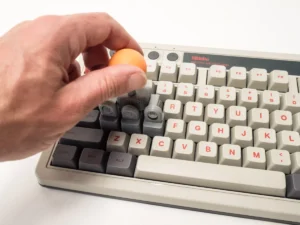
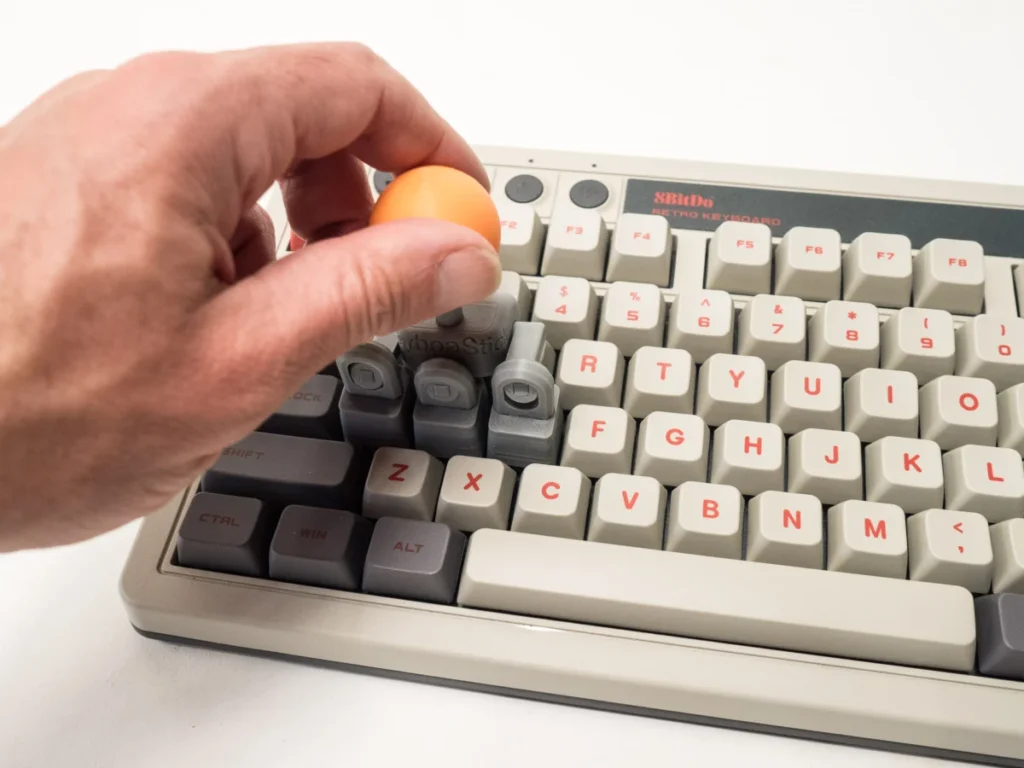
The primary appeal of the KeyboaStick is its sophisticated mechanical design, which utilizes a series of articulated linkages to translate the circular movement of a joystick into the linear actuation required by mechanical switches. Standard mechanical keyboards operate on a digital "on/off" basis, where a switch is either depressed or released. To simulate the feel of an analog joystick on such a platform, FunOrNothing engineered a system that sits atop four discrete switches—typically the WASD cluster used for movement in most PC games.
The device is largely a "print-in-place" model, a term in the 3D printing community referring to objects with moving parts that are printed as a single, pre-assembled unit. This design choice is particularly notable because it reduces the barrier to entry for users with varying levels of technical skill. According to the designer, the tolerances for the KeyboaStick were intentionally made "forgiving," allowing the model to be successfully produced on older or less-calibrated FDM (Fused Deposition Modeling) printers. This accessibility has contributed to the model’s viral success on platforms like MakerWorld, where it has become a benchmark for functional 3D-printed accessories.
Assembly of the peripheral is intentionally minimalist. Once the base linkages are printed, they are fitted with custom keycaps that snap directly onto the stems of mechanical switches—most commonly the Cherry MX style or its various clones (Gateron, Kailh, etc.). The joystick handle then connects to these linkages, creating a centralized pivot point. While the physical movement is mechanical, the input remains digital; however, the tactile experience mimics that of a traditional arcade stick or game controller, providing a hybrid experience that many users find more intuitive for specific genres of gaming.
Performance Analysis and Real-World Application
In practical testing, the KeyboaStick demonstrates a surprising level of durability and responsiveness. Journalists and makers who have integrated the device into their setups report that it performs admirably in retro gaming environments. For instance, testing conducted using classic titles like Sonic the Hedgehog 2 revealed that the joystick provides sufficient precision to navigate complex platforming levels, such as the Emerald Hill Zone. While some users noted a slight "stickiness" when attempting lateral movements—a common byproduct of FDM printing friction—the overall consensus is that the device is more than a mere novelty.

However, the limitations of the hardware are also apparent. Because the system relies on four digital switches, it cannot provide true analog input (where the distance the stick is pushed correlates to the speed of movement). In modern competitive shooters or flight simulators that require nuanced 360-degree input, the KeyboaStick functions more like a high-end D-pad. Despite this, for 2D platformers, top-down "bullet hell" shooters, and menu-heavy navigation, the device offers an ergonomic alternative to the repetitive strain sometimes associated with traditional keyboard gaming.
The "Pro" version of the KeyboaStick, released through the official RadianLab store, seeks to address some of the friction issues found in the standard DIY version. This iteration features refined pivot points and higher-quality materials, aiming for a smoother throw and more consistent return-to-center performance.
The Intellectual Property Challenge in Maker Culture
The success of the KeyboaStick has highlighted a growing issue within the maker community: the unauthorized commercialization of open-source or shared designs. Shortly after FunOrNothing uploaded the files to MakerWorld, the design began appearing on various third-party retail sites and "scrapers" that sell 3D-printed goods without the creator’s consent. This "cloning" phenomenon is a significant concern for independent designers who rely on platforms like Etsy to monetize their intellectual property.
To combat this, the designer established an official partnership with the RadianLab Etsy store. This storefront serves as the authorized distributor for those who do not own a 3D printer but wish to purchase a high-quality, finished version of the joystick. The price point for these units typically ranges from $0 (for those downloading and printing the files themselves) to approximately $17 for a fully assembled, professionally printed "Pro" model. This tiered pricing model reflects the modern "freemium" approach to hardware design: the knowledge is shared freely with the community, while the premium, finished product is sold to support the ongoing work of the creator.
Contextualizing the Mechanical Keyboard Boom
The KeyboaStick arrives at a time when the mechanical keyboard market is valued at over $1.3 billion globally, with a projected compound annual growth rate (CAGR) of 6.2% through 2030. What was once a niche interest for programmers and data entry clerks has evolved into a massive industry centered on customization, aesthetics, and tactile feedback.
The "artisan keycap" subculture is a major driver of this growth. Enthusiasts often spend hundreds of dollars on individual, hand-crafted keycaps made from resin, metal, or wood. The KeyboaStick takes this trend a step further by offering functional utility rather than just visual flair. It fits into a broader category of "keyboard mods" that include internal foam dampening, lubricated switches, and custom "knob" controllers for volume and media editing. By transforming the most-used keys on the board into a joystick, FunOrNothing has tapped into the desire for a "personalized workspace" that adapts to the user’s specific hobbies.

Chronology of Development
The development of the KeyboaStick followed a trajectory common to many successful maker projects:
- Conceptualization (Late 2023): FunOrNothing began experimenting with articulated joints to solve the "WASD fatigue" associated with long gaming sessions.
- Initial Release (Early 2024): The first version was uploaded to MakerWorld, specifically optimized for Bambu Lab printers but compatible with most FDM setups.
- Community Iteration: Feedback from the maker community led to the "Arrow Key" version, allowing users to install the stick on the right side of the keyboard for non-gaming tasks or for left-handed users.
- Commercial Expansion: Following the rise of unauthorized clones, the official RadianLab partnership was launched to provide a "Gold Standard" version of the hardware.
- The Pro Iteration: The most recent update involved a total redesign of the linkage housing to improve the "Pro" model’s durability, specifically targeting the issue of the joystick head detaching during high-intensity use.
Broader Implications for the Future of DIY Hardware
The KeyboaStick is more than just a gaming accessory; it is a case study in the future of consumer-grade additive manufacturing. It proves that functional, complex mechanical assemblies can be designed by individuals and distributed globally at almost zero cost. As 3D printing technology continues to advance—moving toward faster print speeds and stronger composite materials like carbon-fiber-infused filaments—the line between "DIY" and "Professional" hardware will continue to blur.
For the gaming industry, the KeyboaStick suggests a demand for modularity. While major manufacturers like Razer or Corsair offer fixed-feature boards, the success of the KeyboaStick indicates that users want the ability to fundamentally change the physical interface of their devices depending on the task at hand.
In conclusion, while the KeyboaStick might be blamed for a "Game Over" in a difficult level of Sonic the Hedgehog, its contribution to the maker movement is undeniably a "Level Up." It represents a successful marriage of engineering, community sharing, and ergonomic exploration, proving that even the most standard piece of office equipment—the keyboard—still has room for radical reinvention. Whether as a free download for a hobbyist or a $17 purchase for a gamer, the KeyboaStick is a testament to the power of independent innovation in the digital age.