The fundamental understanding of the physical universe rests upon two pillars that, despite their individual success, remain stubbornly incompatible: Albert Einstein’s general relativity and the principles of quantum mechanics. While general relativity provides a masterful description of gravity and the large-scale structure of the cosmos—stars, galaxies, and the expansion of the universe—quantum mechanics governs the subatomic realm, where particles exist in states of probability and entanglement. For decades, the "holy grail" of modern physics has been the discovery of a unified theory of quantum gravity. However, a groundbreaking study published in npj Quantum Information by an international team of researchers suggests that the path to proving gravity’s quantum nature is more complex than previously believed, introducing a new concept known as the "Relativity of Spacetime Superpositions."
The research, led by Associate Professor Joshua Foo of Kyushu University’s Institute for Advanced Study, alongside collaborators from the University of Waterloo and Stockholm University, identifies a critical ambiguity in how experimental data regarding gravity is interpreted. Their findings suggest that many physical scenarios previously thought to require a "quantum" description of gravity can actually be explained using classical gravity, provided the quantum particles involved are handled through a specific theoretical lens. This discovery does not disprove the existence of quantum gravity, but it provides a necessary filter for future experiments, ensuring that scientists can distinguish between genuine quantum gravitational effects and classical phenomena mimicking them.
The Century-Old Conflict Between Relativity and Quantum Mechanics
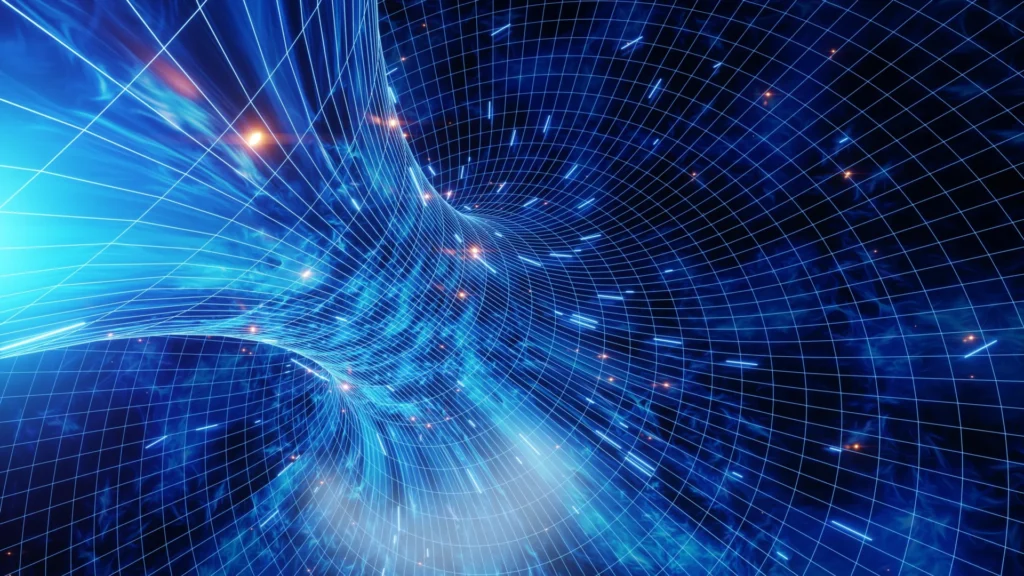
To understand the significance of the new framework, one must first look at the historical tension between the two dominant theories of physics. Einstein’s general relativity, finalized in 1915, revolutionized the concept of gravity. Instead of viewing gravity as a mysterious force acting at a distance, Einstein proposed that gravity is the result of the curvature of spacetime. In this model, massive objects like the Sun warp the fabric of space and time, much like a bowling ball sitting on a trampoline, causing other objects to follow curved paths.
Conversely, quantum mechanics, which emerged in the early 20th century through the work of Max Planck, Niels Bohr, and Werner Heisenberg, operates on the principle of superposition. This principle allows a particle, such as an electron or an atom, to exist in multiple states or locations simultaneously until it is measured. This "fuzziness" of the quantum world is diametrically opposed to the smooth, deterministic geometry of Einstein’s spacetime.
The central challenge of quantum gravity is determining what happens to the fabric of spacetime when it interacts with an object in a quantum superposition. If a massive object is in two places at once, does the gravitational field it produces also exist in a superposition of two different geometries? Most physicists assume the answer is yes, but verifying this experimentally has proven to be one of the most difficult tasks in the history of science.
The Discovery: Relativity of Spacetime Superpositions
The research team from Kyushu, Waterloo, and Stockholm has introduced a theoretical framework that complicates the search for experimental proof. Their work demonstrates that a "quantum superposition of gravity" is not an absolute state but can be relative to the observer’s perspective.
The researchers developed mathematical models showing that many experimental signatures currently being pursued as evidence for quantum gravity can be reinterpreted. In these scenarios, while the particles themselves remain in a quantum state, they can be described as moving through a single, classical, and non-quantum gravitational field. This "Relativity of Spacetime Superpositions" suggests that what looks like a quantum fluctuation of space and time from one perspective might look like ordinary particle motion from another.
"One interpretation describes gravity as being in a quantum superposition, while the other describes quantum particles moving in an ordinary gravitational field," explained Associate Professor Joshua Foo. This duality means that some experiments designed to detect the "quantumness" of gravity might inadvertently be measuring standard quantum mechanics in a classical gravitational environment.
To illustrate this, the researchers use the analogy of cartography. Different map projections, such as the Mercator or the Gall-Peters, can represent the same physical terrain in vastly different ways. While the maps look different, the underlying reality—the Earth’s surface—remains the same. Similarly, the team found that certain physical setups can be described using either quantum gravity or classical gravity plus quantum particles, depending on the "projection" or theoretical framework applied.
A Chronology of the Quest for Quantum Gravity
The search for a unified theory has undergone several distinct phases over the last century, setting the stage for this new discovery:
- 1915–1930s: Einstein perfects General Relativity. Simultaneously, the foundations of Quantum Mechanics are laid. Einstein himself remains skeptical of the probabilistic nature of quantum theory, famously stating, "God does not play dice."
- 1960s–1970s: Physicists like Stephen Hawking and Roger Penrose begin exploring the boundaries where the two theories meet, such as black holes and the Big Bang. Hawking discovers "Hawking Radiation," suggesting that black holes are not entirely black but emit radiation due to quantum effects at the event horizon.
- 1980s–1990s: String Theory and Loop Quantum Gravity emerge as the two primary candidates for a "Theory of Everything." String Theory proposes that all particles are actually tiny, vibrating strings, while Loop Quantum Gravity suggests that space itself is made of discrete loops.
- 2010s–Present: Technology reaches a point where "table-top" quantum gravity experiments become feasible. Proposals such as the Bose-Marletto-Vedral (BMV) experiment suggest using the entanglement of two massive particles to prove that the gravitational field connecting them must be quantum.
- 2024: The Kyushu-Waterloo-Stockholm study introduces the "Relativity of Spacetime Superpositions," providing a necessary reality check for the interpretation of these modern experiments.
Supporting Data and the Ambiguity of Signatures
The researchers’ findings highlight an "ambiguity in experimental signatures." In the realm of experimental physics, a "signature" is a specific piece of data that proves a theory. For quantum gravity, a sought-after signature is the "entanglement mediated by gravity." If two masses become entangled (their quantum states become linked) solely through their gravitational attraction, many argue this proves gravity is a quantum mediator.
However, the new study suggests that even these types of interactions might require more scrutiny. The framework indicates that if the motion of particles is represented with specific quantum states, the resulting data might fit a classical description of gravity just as well as a quantum one.
This distinction is not merely academic; it has profound implications for the allocation of resources in the scientific community. Building experiments to detect quantum gravity is extraordinarily expensive and requires near-perfect vacuum conditions and temperatures close to absolute zero to prevent "decoherence"—the loss of quantum states due to environmental interference. By refining the theoretical roadmap, this research ensures that future high-cost experiments are targeting signatures that are uniquely quantum.
Official Responses and Scientific Implications
The scientific community has reacted to the paper with a mixture of caution and intrigue. Magdalena Zych, a co-author from Stockholm University, emphasized that the work is a tool for refinement rather than a dismissal of quantum gravity research.
"Our work does not tell us that such experiments rule out quantum gravity," Zych stated. "Rather, it helps us identify which experimental signatures would genuinely require a quantum description of gravity and which ones could arise from more familiar physics. That distinction is crucial for designing future experiments."
By providing a way to "subtract" effects that can be explained by classical gravity, the researchers have essentially given experimentalists a clearer lens. If an experiment yields a result that cannot be explained away by the "Relativity of Spacetime Superpositions," it would constitute much stronger, perhaps even irrefutable, evidence for a quantum theory of gravity.
Broader Impact: From Pure Theory to Practical Technology
While the study of quantum gravity may seem removed from daily life, history suggests that fundamental shifts in our understanding of the universe eventually lead to transformative technology.
- Quantum Mechanics led to the development of the transistor, the laser, and the MRI machine.
- General Relativity is essential for the accuracy of Global Positioning Systems (GPS). Without relativistic corrections, GPS coordinates would drift by several kilometers every day.
A successful theory of quantum gravity could eventually pave the way for technologies currently relegated to science fiction, such as stable wormholes, advanced propulsion systems that manipulate spacetime, or a deeper understanding of the "singularities" at the centers of black holes.
In the immediate term, the framework developed by Foo, Zych, and their colleagues provides a more rigorous foundation for the field of quantum information science. As researchers work to build more stable quantum computers and communication networks, understanding how these systems interact with the Earth’s gravitational field becomes increasingly important.
Conclusion: Narrowing the Search for the Ultimate Truth
The quest to unite Einstein’s gravity with quantum mechanics remains the most significant unfinished business in physics. The work of the Kyushu, Waterloo, and Stockholm teams represents a pivotal moment in this journey. By identifying the "Relativity of Spacetime Superpositions," they have warned the scientific community that the universe may be more deceptive than it appears.
"Understanding how gravity and quantum mechanics fit together is one of the greatest challenges in physics," concluded Joshua Foo. "Before we can test gravity’s quantum nature, we first need to know what evidence would prove that we’ve found it. Our work helps clarify that question."
As experimentalists prepare the next generation of sensors and interferometers to probe the fabric of reality, they now have a clearer roadmap. The search for quantum gravity continues, but with a newfound precision that brings the scientific community one step closer to understanding the true nature of the cosmos.