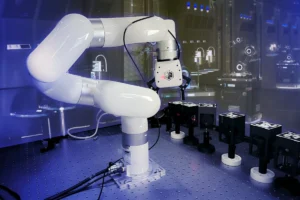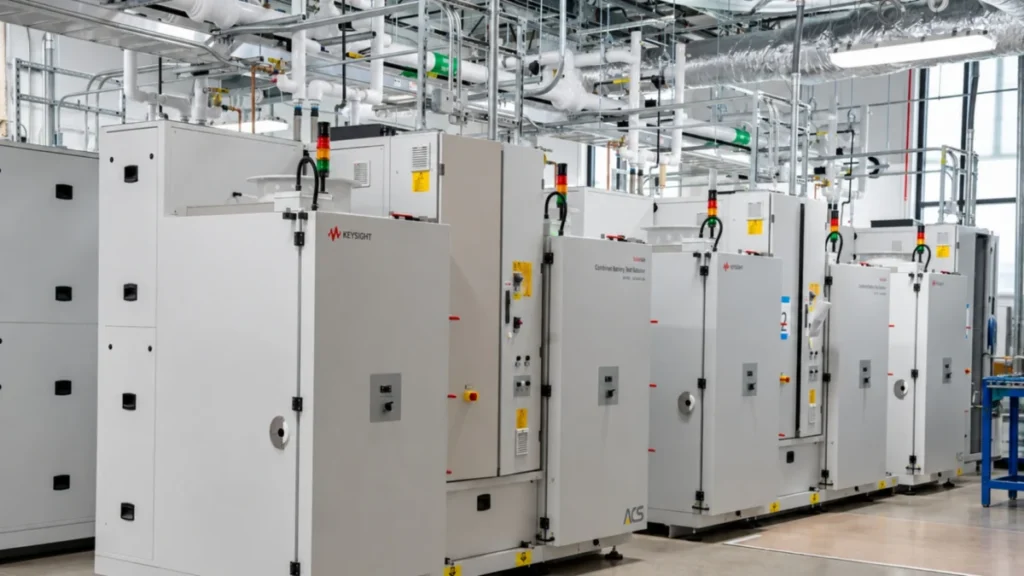
Toyota has officially opened its state-of-the-art, nearly $50 million battery research center in Saline, Michigan, marking a significant milestone in the automaker’s global electrification strategy and its commitment to North American innovation. The expansive 30,000-square-foot facility, officially named the Toyota Battery Center of North America, is poised to become the company’s central hub for battery development, evaluation, and testing across the continent. This strategic investment underscores Toyota’s dedication to advancing a diverse range of electrified vehicles, encompassing battery electric (BEV), hybrid electric (HEV), plug-in hybrid electric (PHEV), and hydrogen fuel cell electric (FCEV) powertrains.
The newly commissioned center is designed to address the entire battery life cycle, from the initial stages of raw material assessment and fundamental research to advanced vehicle applications and end-of-life recycling processes. This comprehensive approach reflects an integrated strategy aimed at optimizing battery performance, durability, and sustainability for the unique demands of the North American market. By bringing these critical research and development capabilities closer to its manufacturing and customer base, Toyota aims to accelerate innovation, enhance product quality, and respond more swiftly to evolving market needs and technological advancements.
A Strategic Investment in North American Innovation
The establishment of the Toyota Battery Center of North America represents a culmination of Toyota’s long-term vision for localized research and development. The initial plans for this significant investment were first announced in 2023, with Toyota articulating its intention to strengthen its capacity for evaluating batteries specifically tailored for vehicles manufactured and sold within North America. At the time, the company highlighted the imperative to test battery performance, quality, and durability against the specific climatic conditions, driving habits, and regulatory requirements prevalent across the region. This localized focus is critical for ensuring that Toyota’s electrified offerings meet and exceed consumer expectations while complying with regional environmental and safety standards.
The center’s strategic location in Michigan, a historical heartland of automotive innovation, also plays a pivotal role. Michigan offers a rich ecosystem of automotive talent, established supply chains, and a robust academic infrastructure, making it an ideal choice for such a specialized facility. The facility’s operations will directly support Toyota’s broader North American manufacturing network, including critical collaboration with Toyota Battery Manufacturing North Carolina, a massive $13.9 billion investment announced in phases since 2021 that is set to become a cornerstone of Toyota’s battery production in the U.S. Furthermore, the Saline center will work in concert with various vehicle manufacturing plants across the continent, ensuring seamless integration of battery technology into production lines.
Chronology of Toyota’s North American Battery Ambitions
Toyota’s journey towards establishing this leading-edge battery research facility spans several years, reflecting a phased and deliberate approach to strengthening its North American electrification footprint. The commitment to invest in Michigan’s research and development operations was first publicly outlined more than three years ago, signaling an early recognition of the need for expanded local battery evaluation capabilities to support increasing electrified vehicle production in the region. The specific details regarding the nearly $50 million dedicated to the Saline battery center were then articulated in 2023, solidifying the project’s scope and objectives.
This timeline is intertwined with Toyota’s broader investment landscape in North America. For instance, the multi-billion-dollar Toyota Battery Manufacturing North Carolina facility, located in Liberty, North Carolina, has been progressively expanded with additional investment commitments, culminating in a total planned investment of $13.9 billion and the creation of over 5,000 jobs by 2025. This plant is envisioned to produce both lithium-ion batteries for hybrid electric vehicles and advanced batteries for battery electric vehicles. The Michigan research center will serve as a crucial R&D arm, feeding directly into the production processes and technological advancements at the North Carolina plant, thereby creating a symbiotic relationship between research, development, and manufacturing. This integrated strategy aims to localize not just the assembly of electrified vehicles, but also the critical components and intellectual property that drive them.
Accelerating Regional Development and Adaptation
A primary driver behind the creation of the Toyota Battery Center of North America is the imperative to shorten the feedback loop between vehicle production, real-world field data, and engineering teams. By bringing more battery testing and development capabilities to North America, Toyota engineers will be empowered to identify and address potential battery issues much closer to where vehicles are being manufactured and utilized. This geographical proximity allows for faster diagnosis, more accurate problem-solving, and ultimately, the deployment of more robust and reliable battery solutions.
Jordan Choby, Group Vice President of Powertrain at Toyota, emphasized this critical advantage, stating, "For Toyota customers, this facility means Toyota engineers can detect and resolve field concerns faster and closer to the source. It also means we can develop longer-lasting batteries designed to perform in the conditions American drivers face every day." This statement underscores the center’s role in tailoring battery technologies to specific North American environmental factors, such as extreme temperatures, varying road conditions, and diverse driving cycles, which can significantly impact battery longevity and performance. The ability to simulate and test these real-world scenarios locally is invaluable for optimizing battery design and ensuring customer satisfaction.
The Broader Electrified Landscape and Toyota’s Multi-Pathway Approach
Unlike many industry players that have focused almost exclusively on battery electric vehicles (BEVs), Toyota has long advocated for a "multi-pathway" approach to electrification. This strategy acknowledges the diverse needs of consumers, varying infrastructure readiness across regions, and the different stages of technological maturity for various powertrain solutions. The Toyota Battery Center of North America is a direct embodiment of this philosophy, supporting the development of batteries for a wide spectrum of electrified vehicles, not just BEVs.
Toyota has been a pioneer in hybrid technology for over two decades, having introduced the Prius in 1997. As of early 2024, Toyota has sold over 25 million electrified vehicles globally, with hybrids constituting a significant majority of this figure. While the market for pure BEVs is rapidly expanding, with global BEV sales exceeding 10 million units in 2023, Toyota maintains that hybrids, plug-in hybrids, and even hydrogen fuel cell vehicles have crucial roles to play in the transition to a carbon-neutral society.
The center’s mandate to support BEVs, HEVs, PHEVs, and FCEVs allows Toyota to develop a nuanced understanding of battery requirements for each application. For instance, HEVs often require batteries capable of frequent, rapid charging and discharging cycles, whereas BEVs demand high energy density for extended range. FCEVs, while not storing energy in the same way as traditional batteries, still utilize smaller buffer batteries that require specific characteristics for power management. By researching across these diverse applications, Toyota aims to optimize battery chemistry, packaging, and management systems for maximum efficiency and performance across its entire electrified lineup. This contrasts with an EV-only battery laboratory, providing Toyota with a broader base for technological exploration and adaptation.
Fostering Talent and Collaboration: The Academic Dimension
Beyond its internal research and development functions, the Toyota Battery Center of North America is designed to play a significant role in broader academic and industrial collaboration. Toyota plans to provide research access through the University of Michigan Electric Vehicle Center, an initiative in which Toyota is a founding member. This partnership will allow external research partners to leverage the facility’s cutting-edge battery testing and evaluation capabilities, fostering an environment of shared knowledge and accelerated innovation.
The collaboration with the University of Michigan is particularly impactful for talent development. Michigan, with its strong engineering schools and deep roots in the automotive industry, is a fertile ground for cultivating future battery engineers and technicians. By offering hands-on experience and research opportunities at a world-class facility, Toyota aims to contribute to the training of a highly skilled workforce essential for the continued growth of the electrified vehicle sector in the United States. This symbiotic relationship between industry and academia ensures that research remains grounded in practical application while pushing the boundaries of scientific discovery. Such partnerships are vital for sustaining long-term technological leadership and addressing the complex challenges of battery development, from materials science to manufacturing processes.
Economic Impact and Michigan’s Automotive Future
The investment in the Saline facility further solidifies Michigan’s position as a leading hub for automotive research and development, particularly in the burgeoning field of electrification. While specific job creation numbers for this research center were not explicitly detailed in the initial announcements, such specialized facilities typically generate high-skill jobs for engineers, scientists, and technicians. These positions not only contribute directly to the local economy but also attract and retain top talent within the state, reinforcing Michigan’s competitive edge in the global automotive industry.
The presence of advanced R&D centers like Toyota’s Battery Center helps to create a ripple effect, stimulating investment in related industries, fostering innovation among local suppliers, and strengthening the overall economic resilience of the region. As the automotive industry continues its transformative shift towards electrification, facilities like this are crucial for ensuring that Michigan remains at the forefront of technological advancement and manufacturing excellence. The collaboration with the University of Michigan also ensures a continuous pipeline of skilled labor, critical for the long-term health and growth of the state’s automotive sector.
Global Context and Supply Chain Resilience
The decision to localize battery R&D in North America is also a strategic move to enhance supply chain resilience and reduce reliance on overseas operations for critical technological advancements. In an era marked by global supply chain disruptions and increasing geopolitical complexities, developing robust local capabilities for battery research, testing, and eventual production becomes paramount. This allows Toyota to better manage risks, respond more flexibly to market changes, and ensure the consistent quality of its battery components for North American-produced vehicles.
Furthermore, by developing and evaluating batteries specifically for the North American market, Toyota can optimize performance for regional conditions, thereby reducing the need for extensive re-engineering or adaptation of technologies developed in other parts of the world. This localization strategy is part of a broader trend among global automakers to regionalize their R&D and manufacturing footprints, aiming for greater efficiency, adaptability, and responsiveness to specific market demands.
Beyond Initial Breakthroughs: A Foundation for Future Innovation
It is important to note that Toyota has not, at the opening of this facility, announced a specific new battery chemistry, a dramatic range improvement, or a groundbreaking performance breakthrough directly stemming from the center. Instead, the facility itself represents a foundational investment – a critical piece of infrastructure that will enable sustained, iterative improvements and the evaluation of future technologies. The center provides the essential testing and development capabilities that the automaker will leverage to enhance battery durability, validate novel battery chemistries, and support its rapidly expanding North American electrified-vehicle operations.
This emphasis on infrastructure over immediate breakthroughs highlights a pragmatic approach to battery development. The journey to next-generation batteries, such as solid-state technology, is complex and requires extensive testing, validation, and refinement. The Saline center is designed to be a long-term asset, facilitating the continuous evolution of battery technology, ensuring that Toyota remains competitive and innovative in the fast-paced electrification landscape. It is a commitment to the process of innovation, rather than a single endpoint.
Sustainability at the Core: From Raw Materials to Recycling
The comprehensive life-cycle approach to battery development at the Toyota Battery Center of North America also carries significant environmental implications. By focusing on raw materials, Toyota can research more sustainable sourcing practices and explore alternatives that reduce environmental impact. Optimizing battery performance and durability directly translates to a longer operational life for batteries, reducing the frequency of replacement and minimizing waste.
Crucially, the center’s mandate extends to battery recycling. As the volume of electrified vehicles on the road increases, so too will the need for efficient and environmentally responsible methods to recycle spent batteries. Research into advanced recycling techniques can help recover valuable materials, reduce reliance on new mining, and mitigate the environmental footprint of battery production. This closed-loop approach aligns with Toyota’s broader sustainability goals and its commitment to contributing to a circular economy.
Looking Ahead: The Road to Advanced Battery Technologies
The establishment of the Toyota Battery Center of North America positions the company strongly for the future of battery technology. While lithium-ion batteries currently dominate the market, significant research is ongoing into next-generation technologies like solid-state batteries, which promise higher energy density, faster charging times, and improved safety. Toyota has been a leading patent holder in solid-state battery technology and views it as a critical component of its future electrification strategy. The Saline facility will undoubtedly play a vital role in the testing and validation of these advanced chemistries, helping to bridge the gap between laboratory prototypes and mass-produced vehicle applications.
In conclusion, Toyota’s nearly $50 million investment in the Toyota Battery Center of North America is a powerful statement of its long-term commitment to electrification, localized innovation, and a multi-pathway approach to sustainable mobility. The facility is not merely a research lab; it is a strategic hub that will accelerate product development, foster academic collaboration, strengthen regional supply chains, and ultimately contribute to a more electrified and environmentally conscious automotive future for North America.