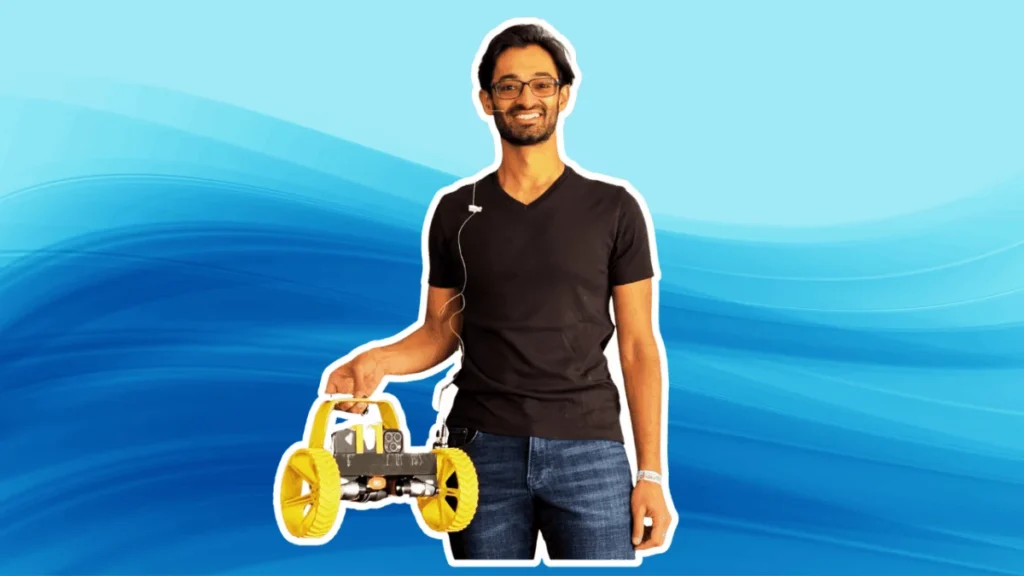
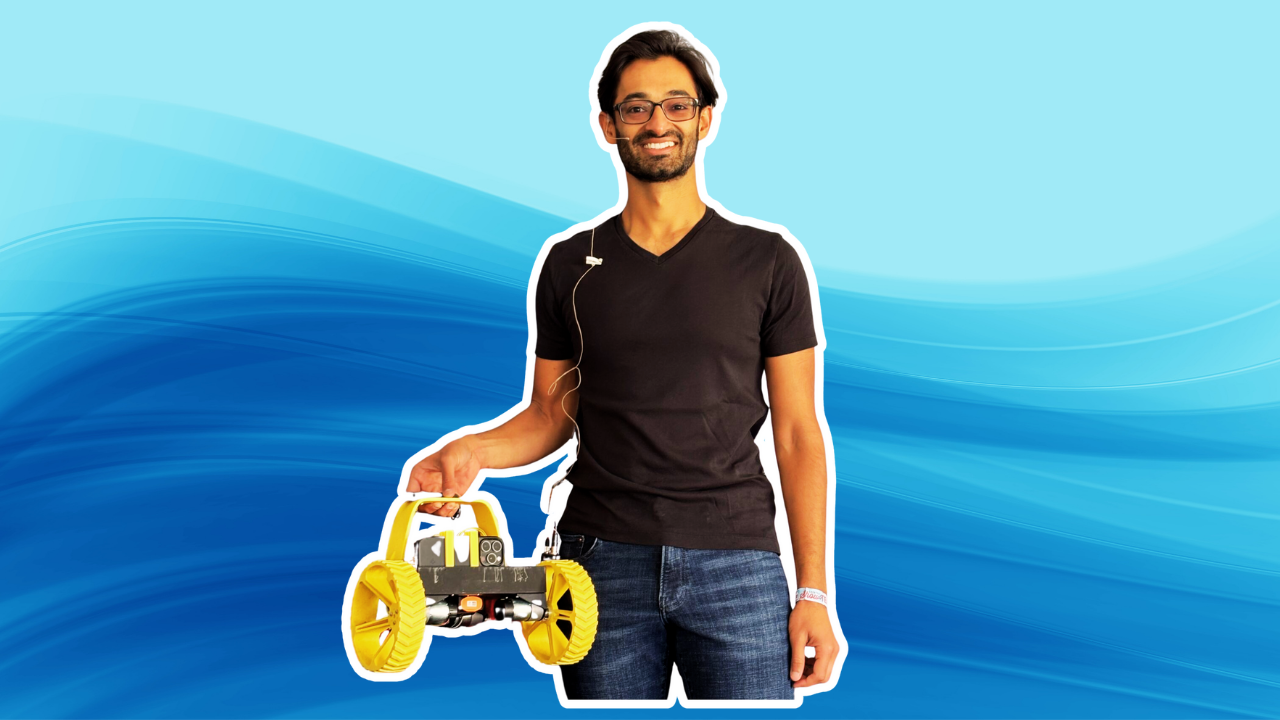
At the recent Maker Faire Bay Area, an annual convergence of ingenuity and innovation, attendees were presented with a compelling demonstration of grassroots robotics development. Maker Survy captivated the audience by chronicling his meticulous journey from a conceptual aspiration to an operational autonomous robot capable of navigating complex outdoor environments and identifying objects. His presentation underscored a fundamental principle often championed within the maker community: that sophisticated technological achievements do not necessitate vast resources or specialized laboratories, but rather a commitment to iterative design, persistent problem-solving, and the courage to simply begin.
The Genesis of an Idea: Embracing the "Maker" Ethos
The Maker Faire Bay Area, historically recognized as the flagship event of the global Maker Faire movement, serves as a vital platform for showcasing individual creativity and fostering a culture of do-it-yourself (DIY) innovation. Founded by Make: magazine in 2006, these fairs celebrate the convergence of art, science, and engineering, drawing hundreds of thousands of participants globally each year. It is within this vibrant ecosystem that Survy’s project found its ideal stage, embodying the very spirit of accessible technology and hands-on learning that defines the movement. His initial, seemingly abstract ambition – "I want to build an autonomous robot" – exemplifies the spark of curiosity that drives countless makers worldwide. This aspiration, while broad, provided the necessary impetus for a practical, step-by-step development process, moving from theoretical possibility to tangible reality.
The core message Survy conveyed was one of empowerment: that the perceived barriers to entry in fields like robotics are often surmountable through resourcefulness and a systematic approach. His project demystifies the complex world of autonomous systems, making it relatable and attainable for aspiring engineers, hobbyists, and students. By demonstrating that high-tech outcomes can emerge from humble origins, Survy’s work resonates deeply with the Maker Faire’s mission to inspire, educate, and connect a global community of innovators.
From Humble Beginnings: The Shoebox Prototype
Every complex system, regardless of its ultimate sophistication, must start at its most rudimentary form. For Survy, this crucial first step was a shoe box, unadorned yet pregnant with potential, mounted on basic motors and wheels. This initial prototype, far from being impressive in its capabilities, served a singularly important function: to validate the most fundamental concept of mobility. It wasn’t about navigating intricate paths or identifying objects; it was about proving that a physical object, built from readily available components, could move under its own power. This stage is paramount in engineering and design, allowing creators to test core mechanics and identify immediate, foundational challenges without investing heavily in advanced components prematurely.
This minimalist approach aligns with established principles of rapid prototyping, where the goal is to create a functional, albeit crude, version of a product as quickly and cheaply as possible. This "Minimum Viable Product" (MVP) philosophy, widely adopted in software development and hardware engineering, enables early testing and feedback, drastically reducing the risk of investing significant time and resources into a flawed foundational design. Survy’s choice of a shoebox was not merely a matter of convenience but a deliberate design decision to strip away complexity and focus solely on the locomotion aspect. This phase, often overlooked in the rush to achieve advanced functionality, proved critical for establishing a stable base upon which subsequent layers of complexity could be built. It also underscored a valuable lesson for all aspiring innovators: the journey to advanced robotics begins not with advanced components, but with foundational principles.
The Iterative Loop: Engineering Through Experimentation
The narrative of Survy’s robot truly comes alive in its embrace of the iterative development cycle, a cornerstone of effective engineering and problem-solving. This process, characterized by continuous testing, identification of flaws, implementation of solutions, and subsequent re-testing, forms the bedrock of innovation across diverse industries. Survy’s journey was not a linear progression from concept to perfection but a dynamic, cyclical process where each perceived "failure" was reframed as a valuable learning opportunity, directly informing the next design modification. This approach can be summarized as:
- Identify a problem or a desired capability: The robot needs to do X.
- Design a solution: How can X be achieved?
- Build/Implement the solution: Construct the hardware or write the software.
- Test: Does the solution work as intended?
- Analyze results and identify new problems/improvements: What went wrong? What can be done better?
- Repeat: Go back to step 1 with the new insights.
This methodical, feedback-driven loop is a hallmark of successful engineering. Major technology companies, from SpaceX to Apple, rely on rigorous iterative testing to refine their products, often conducting thousands of prototypes before a final design is approved. For Survy, this meant that the robot’s capabilities expanded organically, each addition a direct response to a real-world limitation encountered during testing. For instance, the initial shoebox, while mobile, lacked awareness of its surroundings. This immediately prompted the question: how can the robot understand its environment? The answer initiated the integration of sensors.
Integrating Intelligence: The Role of Raspberry Pi and Sensors
To address the robot’s nascent "blindness," Survy strategically integrated an array of sensors. These devices act as the robot’s sensory organs, collecting data about its immediate environment. Common examples include ultrasonic sensors for distance measurement, infrared sensors for obstacle detection, and gyroscopes/accelerometers for orientation and movement tracking. The specific types of sensors chosen would have been dictated by the desired functionalities—for instance, navigating a park requires knowing proximity to objects like trees or benches, and understanding terrain changes.
Processing this influx of sensory data required a dedicated "brain." Survy opted for a Raspberry Pi, a credit-card-sized single-board computer that has revolutionized accessible computing and embedded systems development. The Raspberry Pi’s low cost, compact size, energy efficiency, and robust processing power make it an ideal choice for DIY robotics projects. It can run a full operating system (typically a Linux distribution), enabling complex computations, decision-making algorithms, and control over various hardware components. The Raspberry Pi would have been programmed to interpret the sensor data, translating raw input into actionable information—e.g., "obstacle detected 30cm ahead to the left." This integration transformed the simple mobile platform into a system capable of rudimentary environmental awareness.

The Smartphone as a Powerhouse: Vision and Navigation
The leap from basic obstacle avoidance to sophisticated outdoor navigation and object identification required a significant upgrade in processing power and sensor capabilities. This is where the ubiquitous smartphone entered the picture, serving as the robot’s advanced sensory and computational hub. Modern smartphones are veritable marvels of miniaturized technology, packed with an astonishing array of sensors (GPS, accelerometers, gyroscopes, magnetometers, barometers), high-resolution cameras, powerful multi-core processors, and robust wireless communication modules (Wi-Fi, Bluetooth, cellular).
Survy ingeniously leveraged these inherent capabilities, transforming a common consumer device into a sophisticated robotic component. The smartphone’s integrated GPS module provided precise location data, crucial for outdoor navigation and mapping. Its high-definition camera became the robot’s "eyes," feeding real-time visual information to the system. With the aid of computer vision libraries and machine learning models (often run directly on the smartphone or offloaded to the Raspberry Pi), the robot could then analyze these images to identify specific objects—be it a tree, a bench, or even a person—and understand the nature of its surroundings. Furthermore, the smartphone’s processing power could handle complex algorithms for path planning, object tracking, and even rudimentary artificial intelligence tasks, significantly enhancing the robot’s autonomy and decision-making capabilities in a dynamic outdoor environment. This creative integration highlighted the immense, often untapped, potential of consumer electronics in advanced DIY projects.
Autonomy Achieved: The Final Robot in Action
The culmination of Survy’s diligent iterative process was a fully functional autonomous robot, a sophisticated synthesis of hardware and software, ready to tackle the complexities of the real world. The final iteration moved beyond basic movement and obstacle avoidance, demonstrating true autonomy in an outdoor setting. This involved not just reacting to immediate surroundings but also understanding its position in a larger environment, planning routes, and executing tasks based on its "understanding" of the world.
Navigating outdoors presents a unique set of challenges that significantly exceed those found in controlled indoor environments. Factors such as varying light conditions (sunlight, shadows), uneven terrain, unexpected obstacles (e.g., a sudden pedestrian or animal), GPS signal fluctuations, and the sheer unpredictability of natural environments demand robust perception, sophisticated decision-making algorithms, and resilient hardware. Survy’s robot, through its integrated GPS for global positioning, camera vision for local obstacle detection and object recognition, and the computational power of the Raspberry Pi and smartphone, demonstrated its ability to address these challenges. It could autonomously follow a pre-defined path, detect and avoid unforeseen obstacles, and identify specific targets within a park setting. This thrilling payoff was not merely a demonstration of technical prowess but a testament to the power of methodical, persistent innovation.
Broader Implications: Democratizing Robotics and Inspiring Innovation
Survy’s project, showcased at the Maker Faire Bay Area, carries significant implications for the broader fields of robotics, education, and technological accessibility. It stands as a powerful exemplar of the democratization of technology, demonstrating that the tools and knowledge required to build advanced robotic systems are no longer exclusive to well-funded research institutions or large corporations. The availability of affordable single-board computers like the Raspberry Pi, open-source software libraries for computer vision and machine learning, and the repurposing of powerful consumer devices like smartphones have dramatically lowered the barrier to entry for aspiring roboticists.

Experts in STEM (Science, Technology, Engineering, and Mathematics) education frequently highlight the critical role of such hands-on, project-based learning experiences. A spokesperson for a leading educational technology non-profit, who wished to remain anonymous to speak freely, commented, "Projects like Survy’s are invaluable. They demystify complex engineering concepts and turn abstract ideas into tangible, solvable problems. This approach is far more engaging and effective for fostering critical thinking and problem-solving skills than purely theoretical instruction." By engaging directly with the challenges of design, fabrication, programming, and testing, individuals develop a deeper understanding of engineering principles and cultivate a resilient mindset essential for innovation.
The project also serves as a potent source of inspiration for countless individuals who may feel intimidated by the perceived complexity of robotics. It validates the idea that starting small, embracing imperfections, and learning from every iteration is not just acceptable but is, in fact, the most effective path to achieving complex goals. This philosophy is crucial for nurturing the next generation of innovators, encouraging them to move beyond passive consumption of technology towards active creation.
The Future of DIY Robotics
The trajectory exemplified by Survy’s robot points towards an exciting future for DIY robotics. As hardware becomes even more powerful and miniaturized, and as open-source software communities continue to expand, the capabilities of home-built robots will only grow. We can anticipate an increase in community-driven innovation leading to new applications in areas such as:
- Personal Automation: Robots assisting with household chores, gardening, or providing companionship.
- Environmental Monitoring: Low-cost autonomous platforms for collecting data on air quality, water conditions, or wildlife.
- Education and Research: Affordable tools for students and independent researchers to experiment with advanced robotics concepts.
- Accessibility Solutions: Custom-built robots tailored to assist individuals with specific needs or disabilities.
The ongoing trend of makers leveraging readily available resources and open-source tools will continue to push the boundaries of what is possible, fostering a decentralized ecosystem of innovation that can respond rapidly to new challenges and opportunities.
Conclusion: The Power of Persistent Creation
Survy’s journey, from a rudimentary shoebox to a sophisticated autonomous robot, stands as a compelling narrative of perseverance, ingenuity, and the transformative power of the iterative design process. His presentation at Maker Faire Bay Area was more than just a showcase of a finished product; it was a masterclass in the engineering mindset, demonstrating how vague ideas can be systematically refined into functional, impactful machines. It is a powerful reminder that the most significant technological advancements often stem not from a flash of perfect inspiration, but from the disciplined application of "test, fix, iterate." For anyone aspiring to build, create, or innovate, Survy’s story offers a clear and encouraging message: the path to autonomy, whether for a robot or a maker, begins with the simple, yet profound, act of starting.