The modern classroom is currently navigating a quiet but profound transformation. In a typical secondary school setting, a student—perhaps a sixteen-year-old named Alex—confronts a complex homework assignment on the Industrial Revolution. Instead of spending an hour synthesizing notes and drafting an original essay, Alex opens a generative artificial intelligence (AI) chatbot. A brief, two-sentence prompt yields a structured, grammatically flawless 500-word response in less than thirty seconds. With a few minor adjustments to the vocabulary, the work is submitted. This phenomenon, which was once considered a fringe case of academic dishonesty, is rapidly becoming a standardized behavior among the global youth population.
Recent data highlights the scale of this shift. Reports from major educational markets, including the United States and the United Kingdom, indicate that over 50% of teenagers now utilize AI tools to assist with their schoolwork. More alarmingly, approximately 10% of students admit to using chatbots to complete the vast majority, if not all, of their assignments. A 2026 study by the Pew Research Center documented the testimony of a 17-year-old student who claimed to rely on chatbots for "everything from homework to life decisions." Similarly, a 2024 report from the Harvard Graduate School of Education (GSE) found that teenagers are increasingly open about using AI to bypass the cognitive demands of essays and book reports. This trend has sparked an urgent debate among educators and neuroscientists: when the technology does the work, what happens to the learning?
The Rise of Cognitive Offloading and the Educational Response
The primary concern among researchers is the concept of "cognitive offloading"—the process of using external tools to reduce the mental effort required for a task. While offloading is a natural human tendency, its uncritical application in an educational context threatens to weaken higher-order thinking skills. Skills such as complex problem-solving, critical analysis, and creative synthesis are developed through a process known as "productive struggle." When a student bypasses this struggle by outsourcing their thinking to a Large Language Model (LLM), they may inadvertently stall their own cognitive development.
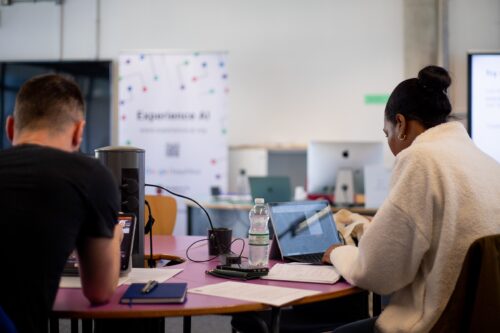
In response to these emerging challenges, the Raspberry Pi Foundation and Google DeepMind have announced a strategic partnership to launch a new unit of research-informed lessons specifically designed to address the use of LLMs. Integrated into the broader "Experience AI" initiative, this curriculum moves beyond the technical mechanics of AI. Instead, it focuses on helping learners understand the underlying architecture of LLMs, evaluate their outputs critically, and utilize them as strategic partners in learning rather than replacements for thought.
The unit is tailored for students aged 13 to 16, a critical developmental window where metacognitive skills—the ability to think about one’s own thinking—are being refined. By drawing on extensive research from Google DeepMind’s Learning team, the curriculum aims to preserve learner agency. It provides a framework for "scaffolding" around AI use, ensuring that the technology supports the student’s journey toward mastery rather than providing a shortcut that circumvents it.
A Chronology of AI Integration in Schools
The trajectory of AI in education has moved with unprecedented speed. In November 2022, the public release of ChatGPT triggered an initial wave of panic among school districts, leading many to implement outright bans on the technology. However, by mid-2023, the narrative began to shift as educators realized that bans were unenforceable and that students needed to be prepared for an AI-integrated workforce.
By 2024, organizations like the Raspberry Pi Foundation began developing foundational AI literacy resources. The latest collaboration with Google DeepMind represents the next phase of this evolution: moving from "AI awareness" to "strategic AI utilization." This chronology reflects a broader realization in the pedagogical community that the goal is no longer to keep AI out of the classroom, but to ensure that the "thinking" remains the responsibility of the human student.

Research-Informed Pedagogies: Feedback Literacy
The "Using LLMs strategically for learning" unit is built upon several key pillars of learning science, most notably "feedback literacy." In a traditional sense, feedback literacy is the ability of a learner to actively interpret and apply information to improve their performance. In the context of AI, it involves shifting the student from a passive recipient of a chatbot’s answer to an active judge of its quality.
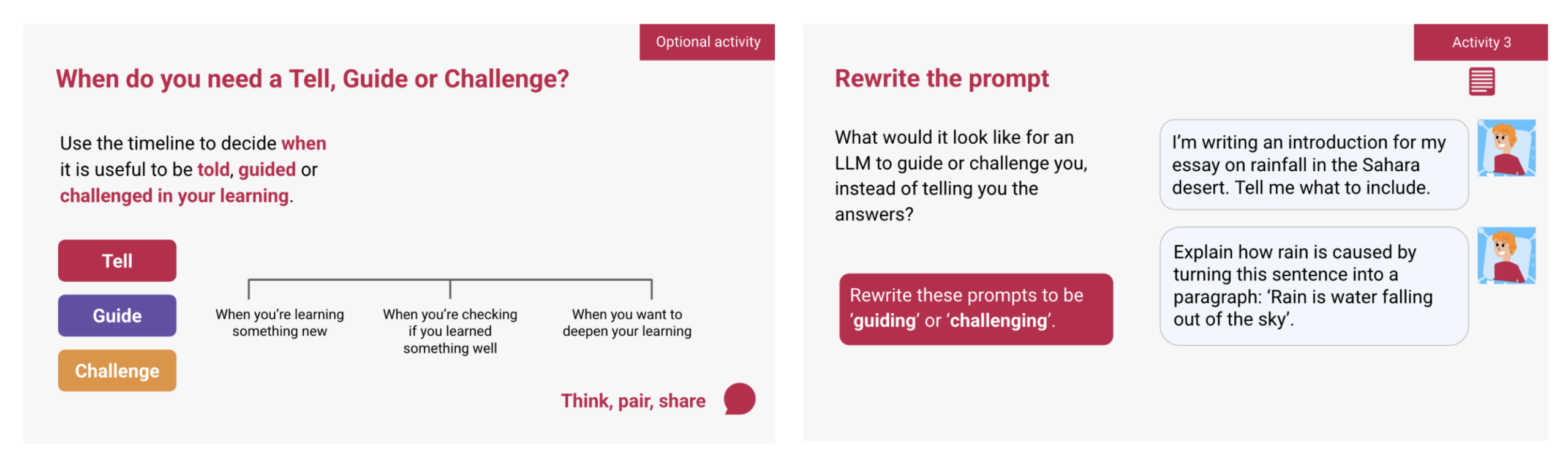
The curriculum introduces students to three distinct types of feedback:
- Tell: The AI provides the direct answer or completes the task entirely.
- Guide: The AI provides hints, frameworks, or step-by-step instructions to help the student find the answer themselves.
- Challenge: The AI acts as a Socratic tutor, questioning the student’s logic or providing counter-arguments to deepen their understanding.
Research suggests that deep, durable learning requires a strategic blend of these types, yet LLMs default almost exclusively to the "Tell" format. The new lessons teach students how to recognize this default and use advanced prompting techniques to force the AI into "Guide" or "Challenge" modes. This ensures that the student remains the primary driver of the cognitive process.
Strategic Prompting and Platform-Agnostic Skills
A significant portion of the new curriculum is dedicated to "learning-centered prompt engineering." Unlike many commercial courses that focus on specific shortcuts or acronym-based frameworks, the Raspberry Pi and Google DeepMind approach is platform-agnostic and logic-based. This ensures that the skills students learn will remain relevant as AI models evolve and change.
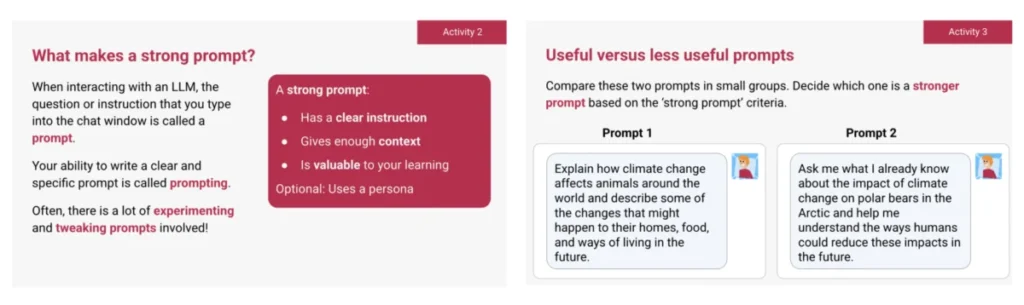
The lessons avoid the use of ephemeral acronyms, focusing instead on the underlying logic of communication with an LLM. Students are taught to provide context, define the AI’s persona (e.g., "Act as a tutor, not an essay writer"), and set constraints that prevent the AI from simply giving away the answer. By mastering these techniques, students transition from being "prompt users" to "prompt architects," a skill set that is increasingly cited as a requirement for future-ready careers.
Addressing the Data "Black Box" and Bias
One of the most persistent misconceptions among young people is the belief that LLMs are sophisticated search engines that provide objective, factual truths. According to the 2026 Pew Research data, a significant majority of teens view AI outputs as inherently accurate. To combat this, the "Experience AI" unit includes activities that pull back the curtain on how these models are trained.
Students explore the origins of training data, discovering that LLMs are built on massive datasets scraped from the internet, including social media platforms like Reddit and Facebook. Through classroom discussions, learners are encouraged to question the quality, factuality, and neutrality of these sources. This naturally leads to an investigation of cultural bias. Students are prompted to consider whose voices, languages, and perspectives are over-represented in AI models and whose are marginalized. This critical evaluation is essential for developing "AI skepticism," a vital component of modern digital citizenship.
Global Implementation and Stakeholder Reactions
The development of these resources was not an isolated effort. The Raspberry Pi Foundation collaborated with educators across a diverse range of geographies, including South Africa, Nigeria, Kenya, India, and the United Kingdom. This global pilot program ensured that the curriculum was adaptable to different cultural contexts and varying levels of technological infrastructure.
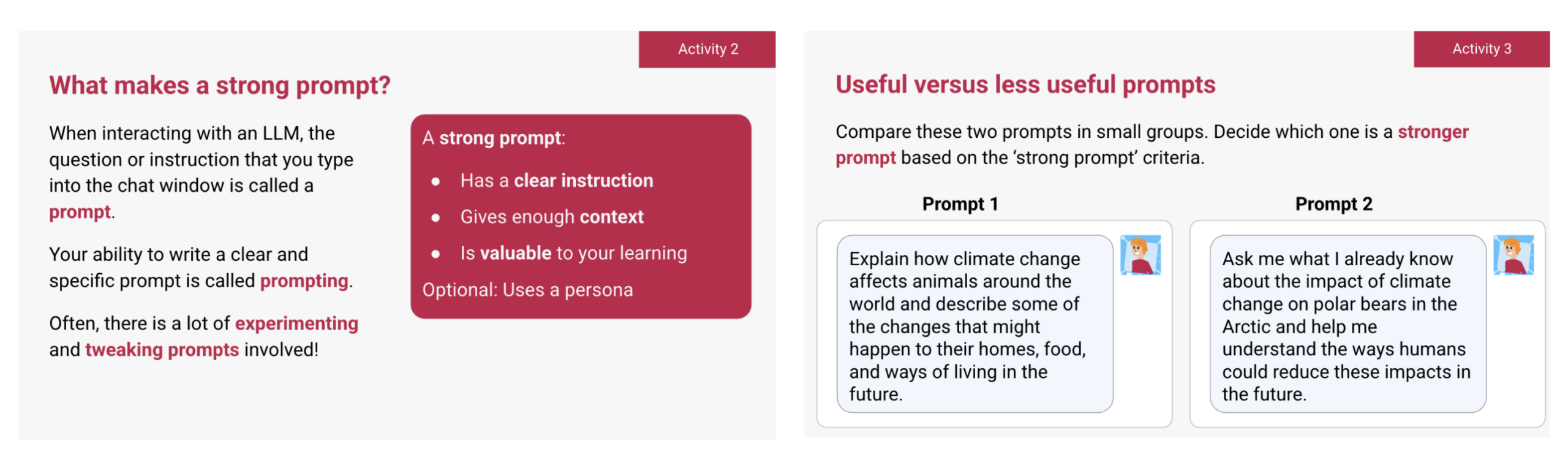
Educators involved in the pilot have expressed a mixture of relief and enthusiasm. "We can no longer ignore the presence of these tools," said one computer science teacher involved in the UK trials. "What this unit does is give us a structured way to talk about the ‘why’ and ‘how’ of AI, rather than just the ‘what.’ It empowers students to take ownership of their education again."
Industry experts have also weighed in, noting the alignment between this curriculum and the skills demanded by the modern economy. Reports from the World Economic Forum have consistently highlighted that as routine cognitive tasks are automated, "human-centric" skills—such as critical thinking, collaboration, and ethical judgment—become more valuable. The "Experience AI" unit directly addresses this by forcing students to reflect on which skills they want to build and how AI might either support or hinder that development.
Broader Impact and the Future of Thinking
The ultimate goal of the "Using LLMs strategically for learning" unit is to ensure that the generation currently entering the workforce does not lose the ability to think independently. The curriculum serves as a reminder that the person who does the thinking is the one who gets the learning. If a student uses AI to bypass the thinking process, they are not just "cheating" on an assignment; they are depriving themselves of the neural development required for future success.
As AI tools become more seamlessly integrated into productivity software and mobile devices, the temptation for "Alex" to take the path of least resistance will only grow. However, by equipping students with the tools to pause, rewrite their prompts, and evaluate AI outputs, the Raspberry Pi Foundation and Google DeepMind are providing a necessary counterweight to the trend of cognitive offloading.
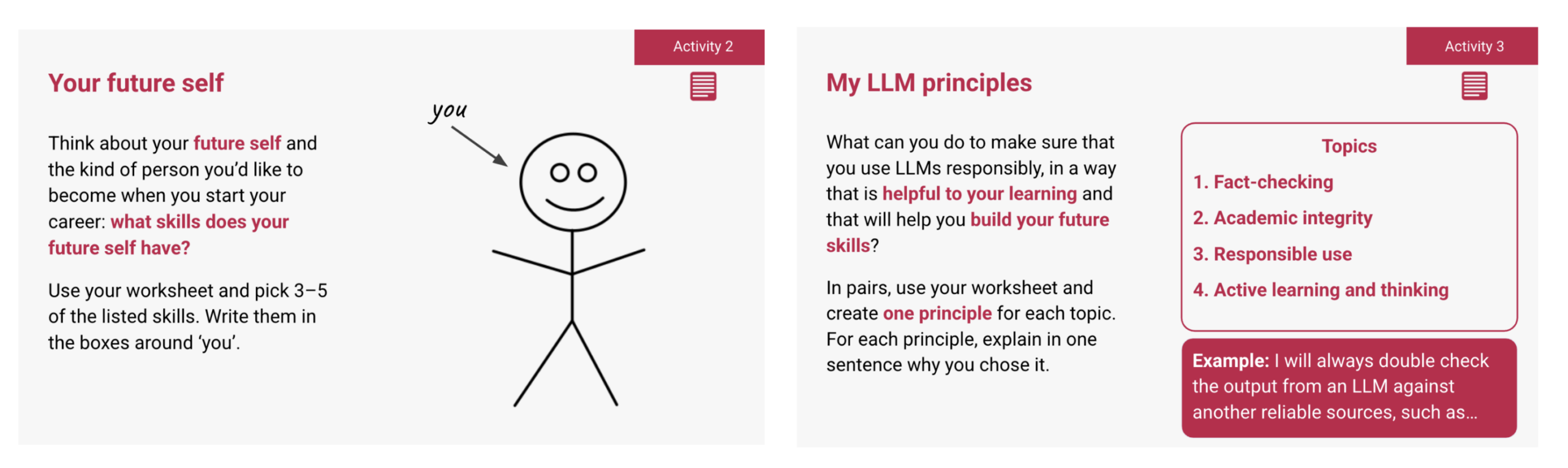
The future of education in the age of AI is not about a return to pen and paper, nor is it about the total surrender of the curriculum to algorithms. It is about a new form of "augmented intelligence" where the human remains the strategist and the machine remains the tool. As the unit concludes, the most important skill for the 21st century is not knowing how to use an AI, but knowing when to use it—and knowing how to keep thinking when the machine is turned off.