EAST PALO ALTO, CA – Feather Robotics Inc., a burgeoning tech startup, has officially introduced a groundbreaking humanoid robot priced at less than $30,000, signaling a potential paradigm shift in the accessibility of advanced robotic platforms. This strategic move by Feather Robotics seeks to democratize the development of physical AI applications by offering an open hardware platform at an unprecedented cost, challenging the prevailing trend of vertically integrated humanoid robot solutions.
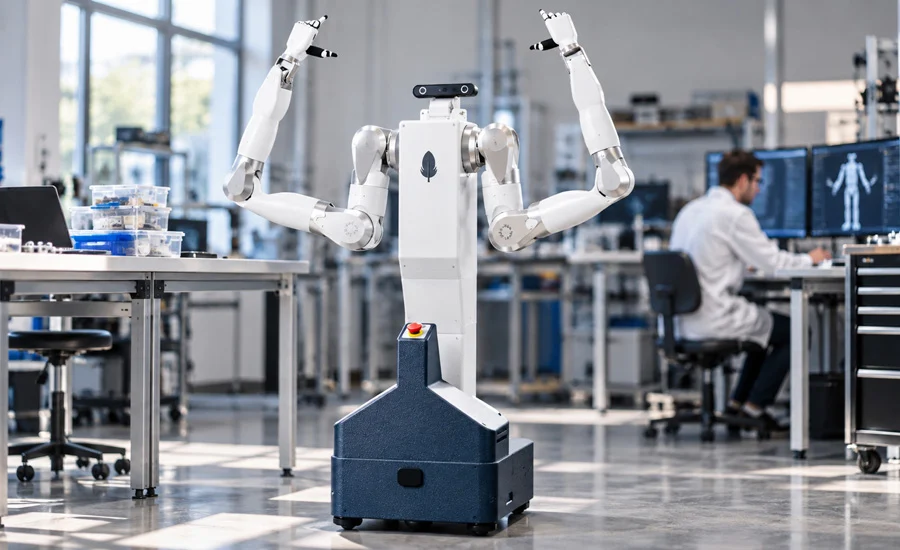
The newly launched Feather robot is engineered as a mobile, two-armed humanoid, specifically designed to serve as an open platform for the burgeoning field of physical AI. Its design emphasizes versatility and developer-friendliness, aiming to provide researchers, startups, and enterprises with a robust yet affordable base for innovation. At its core, the Feather robot is a testament to the company’s vision of fostering a broad ecosystem for intelligent robotic systems, akin to the impact of the Android operating system on mobile computing.
Detailed Hardware Specifications for Versatile Operations
Central to the Feather robot’s utility are its dual arms, each boasting seven degrees of freedom. This extensive articulation allows for a wide range of movements, mimicking human dexterity to a significant extent. The robot offers a vertical reach of 600 millimeters and an impressive horizontal reach of 1 meter, enabling it to interact with objects across various heights and distances within a typical human workspace. Each arm is rated for a payload of 4 pounds, suitable for handling a multitude of tools and objects in light industrial or service tasks. For more demanding applications, the arms can manage a peak payload of 15 pounds, providing a margin for dynamic operations or temporary heavy lifting.
Flexibility in manipulation is further enhanced by the interchangeable end-effectors. Developers can equip each arm with either human-like hands for intricate tasks requiring fine motor skills and tactile feedback, or traditional parallel-jaw grippers for robust object manipulation. This field-swappable design ensures that the robot can be rapidly adapted to different operational requirements, minimizing downtime and maximizing utility across diverse applications from manufacturing assembly to logistics and research.
The robot’s mobility is facilitated by a sophisticated wheeled base, engineered for omnidirectional movement. This allows the Feather robot to traverse its environment without the need for traditional turning maneuvers, enabling highly agile navigation in confined or complex spaces. With a maximum speed of 1.3 meters per second, it can efficiently move between workstations or navigate dynamic environments. Its compact footprint, measuring 500 by 510 millimeters, is a critical design feature, ensuring the robot can seamlessly pass through standard doorways and operate effectively in human-centric infrastructures. Fully configured, the robot maintains a manageable weight of 105 kilograms, balancing stability with maneuverability.
Intuitive Interface and Extended Operational Endurance
User interaction and control are streamlined through a 10-inch touch-screen display integrated directly into the robot’s body. This intuitive interface simplifies setup, monitoring, and real-time control, making the robot accessible even to users without extensive robotics expertise. Beyond visual interaction, the Feather robot incorporates a four-microphone array coupled with a speaker, enabling natural language conversations with users. This conversational capability hints at future applications where robots can respond to verbal commands, provide status updates, or engage in collaborative tasks with human counterparts, pushing the boundaries of human-robot interaction.
Powering this advanced platform are a pair of hot-swappable 25 amp-hour batteries. This dual-battery system not only provides a substantial 10 hours of operating time on a single charge but also ensures continuous operation by allowing batteries to be exchanged without powering down the robot. Such a feature is crucial for industrial and commercial applications where uninterrupted workflow is paramount, minimizing idle time and maximizing productivity.
The Open SDK: Fueling Physical AI Innovation
A cornerstone of Feather Robotics’ strategy is its commitment to an open ecosystem. The robot comes equipped with an open Software Development Kit (SDK), specifically designed to facilitate the creation and deployment of physical AI applications. This open approach is intended to lower the barrier to entry for developers, allowing them to focus on algorithm development and application logic rather than proprietary hardware integration challenges. The SDK empowers engineers to transition rapidly from a trained AI model to physical deployment on the robot, often within a matter of weeks, significantly accelerating the pace of innovation in physical AI.
Hoa Mai, CEO and co-founder of Feather Robotics, articulated the driving force behind the company’s inception: "My background is in building embodied AI systems, and I’m on a mission to solve physical AI. But when I looked for a hardware platform to build on top of, none of the options had the unit economics, reliability and support logistics that I needed to succeed as an independent developer." He emphasized, "That’s why I built Feather—to give every team, no matter their size, the infrastructure to scale physical AI." Mai’s ambition is for the Feather robot to become the "Android of robotics," a universal hardware platform that fosters a vibrant and diverse software ecosystem.
Navigating the Humanoid Robot Landscape: A Distinct Approach
Feather Robotics’ strategy sharply contrasts with several prominent players in the burgeoning humanoid robot market. Companies such as Figure, Tesla (with its Optimus robot), Unitree, Agibot, and 1X are pursuing a vertically integrated model, developing both the humanoid body (hardware) and the underlying AI foundation models in tandem. While this approach allows for deep optimization between hardware and software, it often results in higher costs, proprietary systems, and a more closed development environment.
Feather Robotics, conversely, focuses solely on providing the advanced humanoid body as a robust and affordable platform. This "hardware-as-a-service" philosophy encourages customers to leverage AI models from a variety of leading providers, including Nvidia, Skild, and Physical Intelligence. By decoupling the hardware from the AI model, Feather empowers developers with unparalleled flexibility and choice, allowing them to select the best-in-class AI for their specific applications without being locked into a single vendor’s ecosystem. This open architecture is anticipated to foster rapid experimentation and deployment of diverse AI capabilities, from advanced perception and manipulation to complex decision-making in real-world scenarios.
The Democratization of Robotics and Physical AI
The starting price of $29,990 for the Feather robot is a significant disruption in a market where humanoid robots typically cost hundreds of thousands, if not millions, of dollars. This aggressive pricing strategy positions Feather Robotics to democratize access to advanced robotics for a much broader audience. Small and medium-sized enterprises (SMEs), academic institutions, independent developers, and research labs, previously constrained by exorbitant hardware costs, can now afford to acquire and experiment with humanoid platforms.
This affordability is crucial for accelerating the development of "physical AI," a field that focuses on equipping robots with intelligence that allows them to interact with and understand the physical world in complex ways, akin to human capabilities. Historically, the high cost and complexity of robotic hardware have been major impediments to physical AI research and deployment. By lowering this barrier, Feather Robotics is poised to catalyze a new wave of innovation, potentially leading to breakthroughs in areas such as general-purpose manipulation, dexterous assembly, nuanced human-robot collaboration, and adaptable service robotics.
Market Implications and Broader Impact
The introduction of an affordable, open-platform humanoid robot carries profound implications for several industries. In manufacturing, it could enable a new generation of flexible automation, allowing factories to deploy humanoid robots for tasks that are currently too complex or varied for traditional industrial robots, or too mundane and repetitive for human workers. The ability to swap end-effectors and integrate diverse AI models means these robots could transition seamlessly between assembly, inspection, and logistics tasks.
For logistics and warehousing, humanoid robots like Feather could address labor shortages and enhance efficiency by performing tasks such as picking, packing, and sorting in environments designed for humans. In healthcare, they could assist with mundane tasks, support patient care, or aid in laboratory operations, freeing up human staff for more critical duties. The service industry, from hospitality to retail, also stands to benefit from adaptable humanoid robots that can interact with customers, manage inventory, or perform cleaning tasks.
Beyond industrial applications, the Feather robot is likely to become a staple in academic and research settings. Universities and AI labs can now afford to equip their facilities with multiple humanoid platforms, fostering collaborative research and accelerating the training of future robotics engineers and AI specialists. This accessibility will not only drive scientific discovery but also contribute to building a skilled workforce capable of harnessing the full potential of physical AI.
The Road Ahead: Challenges and Opportunities
While the potential is vast, Feather Robotics will face challenges inherent in pioneering a new market segment. Widespread adoption will depend on the robustness of the open SDK, the ease of integration with third-party AI models, and the reliability of the hardware in diverse real-world conditions. Building a strong developer community will be paramount to the success of the "Android of robotics" vision, requiring continuous support, clear documentation, and opportunities for collaboration.
However, the opportunities are equally significant. As the global humanoid robot market is projected to grow substantially, potentially reaching tens of billions of dollars within the next decade, Feather Robotics is strategically positioned to capture a significant share by providing the foundational hardware layer. The company’s focus on unit economics and an open ecosystem could transform the landscape of robotics development, shifting it from a niche, high-cost domain to a more accessible and innovative field. By empowering a diverse array of developers to "scale physical AI," Feather Robotics Inc. is not just launching a robot; it is laying the groundwork for a more intelligent and automated future.