PharmaTher is spearheading a significant shift in pharmaceutical production with the launch of its M3DICINES National Network Program, a groundbreaking initiative aimed at establishing a distributed network of facilities capable of 3D printing medicines closer to the point of need. This ambitious program, initially focusing on U.S. compounding pharmacies, signals a move beyond the traditional centralized manufacturing model and envisions a future where pharmaceutical production is more agile, responsive, and personalized. The company’s strategy leverages the unique capabilities of 3D printing to address limitations in current drug manufacturing and supply chains, positioning itself at the forefront of a burgeoning sector of pharmaceutical innovation.
The core of PharmaTher’s strategy lies in decentralizing the manufacturing process. Instead of relying solely on large, centralized plants to produce vast quantities of standardized medications, the M3DICINES National Network Program proposes to distribute validated drug formulations and precise digital manufacturing instructions to a network of qualified sites. These sites will be equipped with specialized pharmaceutical 3D printing systems, allowing for the localized production of medicines. This approach promises to enhance efficiency, reduce lead times, and cater to a wider range of patient needs, particularly for medications that are currently challenging to produce in conventional large-scale settings.
From Individual Printers to a Collaborative Manufacturing Ecosystem
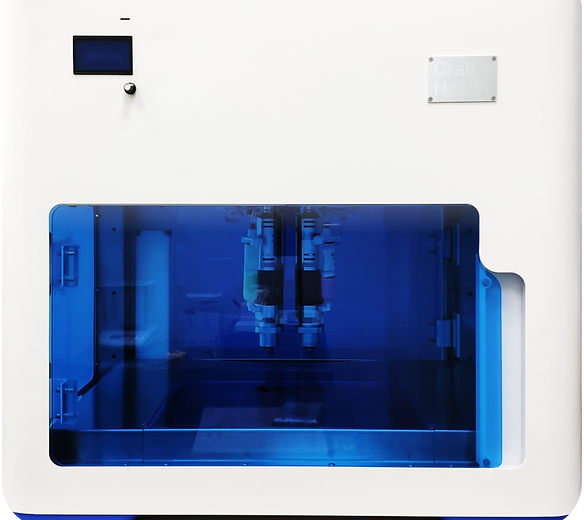
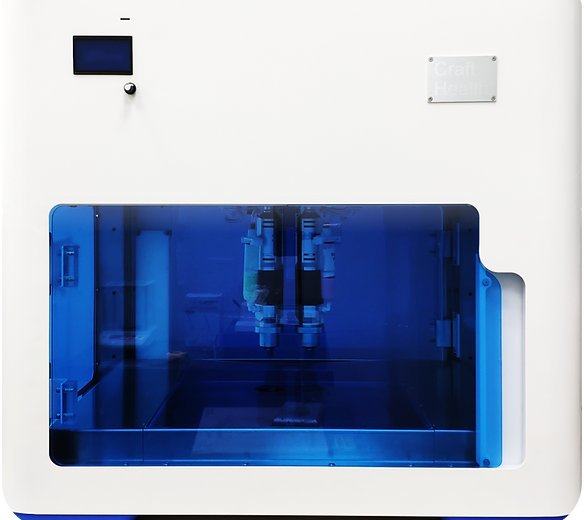
At the heart of this distributed network is the CraftMake pharmaceutical 3D printer, developed by Craft Health. PharmaTher has secured exclusive North American distribution rights for this advanced technology, which includes the CraftMake printer itself, alongside the CraftControl software, specialized CraftBlends printable materials, and associated consumables and services. This exclusive partnership, formalized on October 1st, empowers PharmaTher to deploy this cutting-edge printing platform across its envisioned network.
The company has set an aggressive target of placing up to 50 CraftMake systems within the next 12 months. Key to the program’s initial rollout is the establishment of a U.S. Center of Excellence, which will be housed at PD Labs, a prominent U.S. 503A compounding pharmacy. This facility will play a crucial role in validating formulations, qualifying network sites, and providing training and support. Additionally, an unnamed Good Manufacturing Practice (GMP) contract manufacturer is slated for early installation, indicating PharmaTher’s commitment to integrating its network within existing pharmaceutical manufacturing infrastructure.
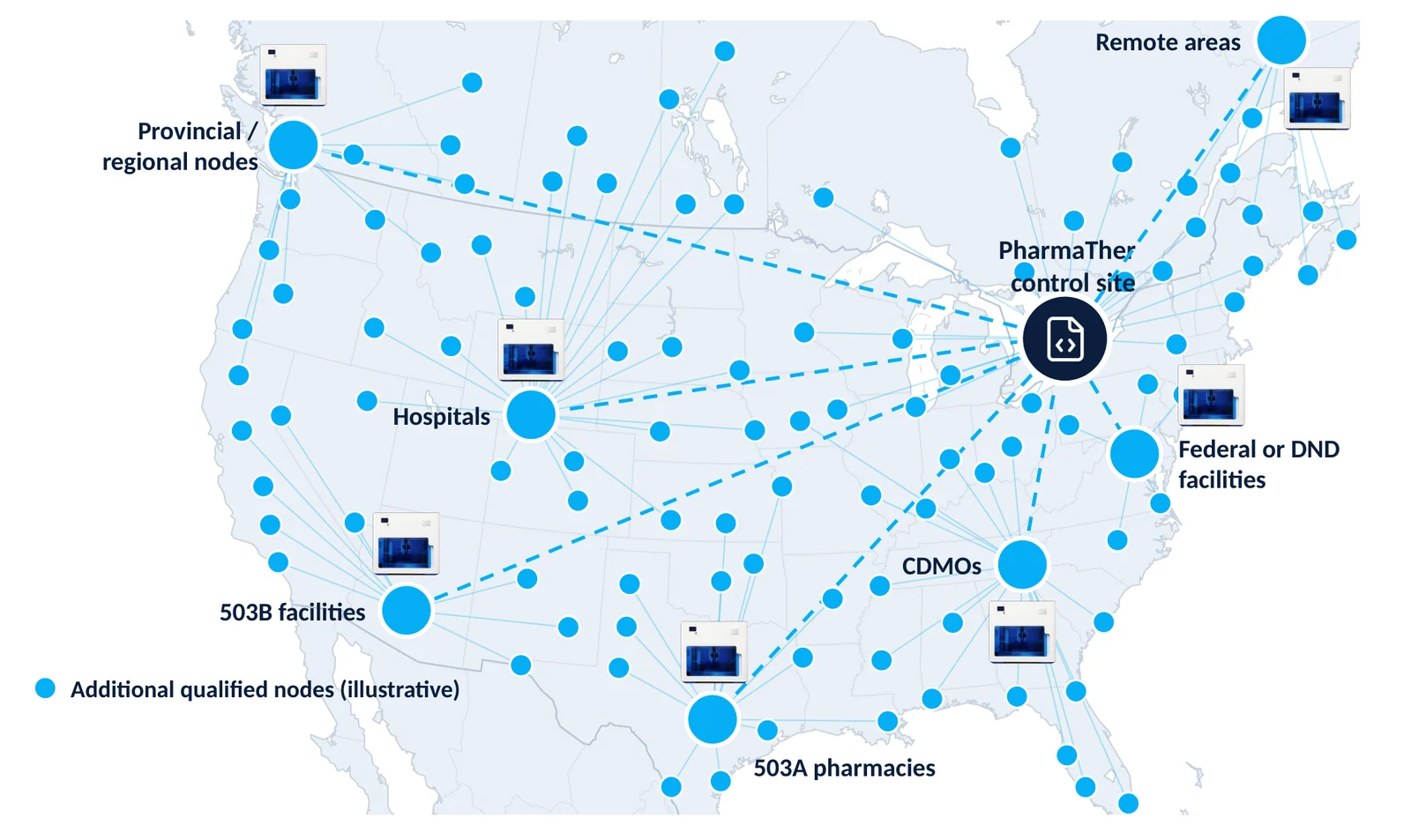
The operational model for the M3DICINES National Network is designed for scalability and flexibility. PharmaTher and its network partners will collaboratively develop and rigorously validate each drug formulation and its corresponding digital manufacturing blueprint. Once a formulation is approved, participating sites will install and qualify a CraftMake system. Following comprehensive training, these sites will then be authorized to produce the designated medicines locally. This network infrastructure is envisioned to support not only PharmaTher’s proprietary products but also a range of collaborative ventures, including research projects and the critical supply of medications for clinical trials. This strategic deployment positions each printer not merely as an isolated device but as an integral component of a cohesive, digitally-enabled pharmaceutical manufacturing system.
Addressing the Nuances of Modern Drug Demand
The rationale behind PharmaTher’s distributed manufacturing model is deeply rooted in the evolving landscape of pharmaceutical needs. Traditional pharmaceutical manufacturing facilities are optimized for high-volume production of a single, standardized drug product. This model encounters significant challenges when dealing with specific market demands, such as personalized dosages tailored to individual patients, the production of small batches for rare diseases, or the manufacturing of medications with limited commercial demand.
PharmaTher’s 3D printing approach offers a viable solution for these niche markets. The CraftMake system’s ability to print different dosages of the same medication on demand is a key differentiator. Furthermore, the system operates at room temperature and does not require heat or UV light during the printing process, making it compatible with a broader range of temperature-sensitive active pharmaceutical ingredients (APIs). This capability is particularly advantageous for complex or delicate drug compounds. Each printed dose is also accompanied by a digital batch record, ensuring traceability and regulatory compliance.
The ultimate goal is to streamline the drug development and production lifecycle. By developing a drug formulation and its digital recipe once, PharmaTher aims to enable its reproducible manufacturing at various qualified locations. This approach significantly reduces the logistical and economic barriers associated with establishing dedicated traditional production lines for smaller batch sizes, thereby making a wider array of medications more accessible.
Regulatory Scrutiny and Evolving Frameworks for Distributed Manufacturing
PharmaTher’s initiative arrives at a pivotal moment, as regulatory bodies, including the U.S. Food and Drug Administration (FDA), are increasingly examining the potential of distributed pharmaceutical manufacturing. In July 2026, the FDA proposed new regulations designed to provide a framework for overseeing distributed drug manufacturing operations. The core concept involves a central hub coordinating production across multiple smaller manufacturing sites situated in diverse geographic locations.
Historically, each of these distributed sites would typically require separate registration with the FDA. The proposed regulations aim to simplify this process, allowing certain networks to register as a single operational entity. The FDA has articulated that this regulatory streamlining could facilitate the expansion or relocation of manufacturing sites and, importantly, bolster domestic drug production capacity within the United States.
While PharmaTher’s current network plan primarily targets 503A compounding pharmacies, which operate under distinct regulatory pathways and produce compounded drugs that are not FDA-approved, the FDA’s forward-looking proposal underscores a broader governmental interest in distributed manufacturing models. This regulatory evolution signals an openness to exploring innovative approaches to drug production that leverage networks of smaller, geographically dispersed facilities, potentially enhancing supply chain resilience and accessibility.
Fortifying Supply Chains Against Shortages and National Emergencies
Beyond addressing market inefficiencies and patient-specific needs, the M3DICINES National Network Program is designed to play a critical role in emergency preparedness. PharmaTher envisions utilizing its 3D printing sites to produce essential medicines locally in scenarios where supply chains are disrupted or demand experiences a sudden, substantial surge. The company has indicated that qualified CraftMake locations could serve as integral components of a planned National Emergency Preparedness Node Network. In times of crisis, validated digital recipes could be rapidly disseminated to these sites, enabling the on-demand local production of necessary medications. PharmaTher emphasizes that this concept is intended to complement, rather than replace, existing national stockpiles of critical pharmaceuticals.
Over the next year, PharmaTher plans to conduct pilot programs to test the functionality and resilience of this emergency preparedness network. Concurrently, the company intends to pursue contracts with U.S. and Canadian government agencies to integrate its capabilities into national emergency response strategies, although no formal agreements have been announced to date.
Currently, a significant portion of the M3DICINES National Network remains in the planning and development phase. While PharmaTher has set a target for 50 printer placements, the actual installation and qualification of these sites are ongoing processes. Each facility must undergo a rigorous vetting and approval procedure before it can officially join the network. Should PharmaTher achieve its ambitious placement goals, the initiative has the potential to establish a robust network of dozens of sites across the United States, all leveraging the same 3D printing platform to ensure local, responsive, and adaptable medicine production. This forward-thinking approach could fundamentally reshape pharmaceutical logistics and preparedness in the years to come.