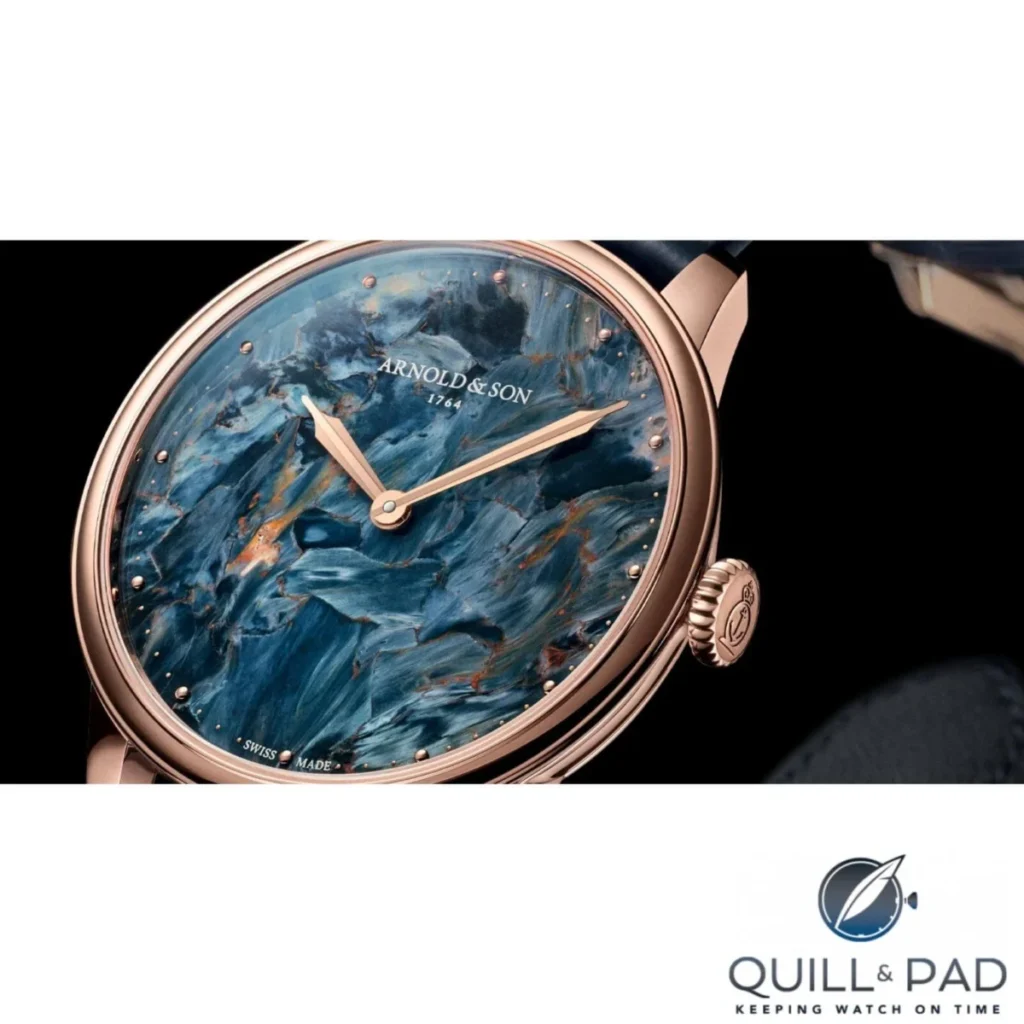
The art of watchmaking is intrinsically linked to the pursuit of seemingly insurmountable challenges. Beyond the intricate dance of gears and springs that define a movement’s complexity, horological artisans have long dedicated themselves to transforming timepieces into miniature canvases of decorative artistry. Among these endeavors, the creation of dials from precious and rare stones stands out as a testament to both technical mastery and aesthetic vision. Watches adorned with such natural wonders have historically been, and remain, exceptionally rare, embodying a unique intersection of geology and haute horlogerie.
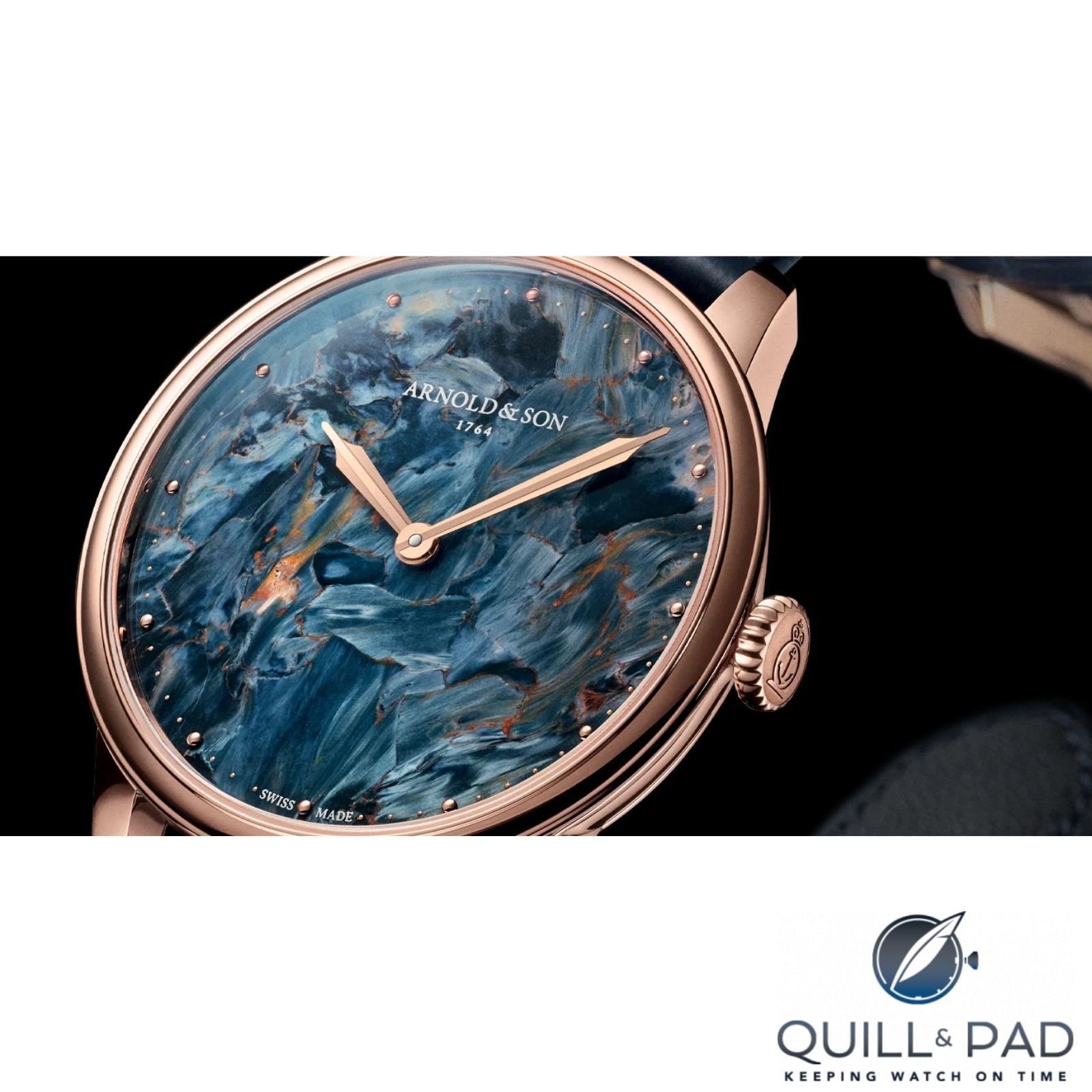
The genesis of this sophisticated decorative technique can be traced back to the Italian Renaissance, where master artisans developed the Florentine mosaic. This meticulous craft involved the precise arrangement of small, colored stone plates to recreate elaborate, multicolored paintings. Known as pietra dura—meaning "hard stone"—this art form eventually found its way into the realm of watchmaking, likely in the 19th century. Historical accounts often cite esteemed French firms like Breguet and Leroy, alongside other now less recognized names, as pioneers in this niche. During the late 19th and early 20th centuries, Vacheron & Constantin collaborated with the Parisian jeweler Ferdinand Verger to produce pocket watches featuring exquisite pietra dura dials. A significant evolution of this technique occurred in 1966 when Piaget reimagined it in a more streamlined form, typically utilizing a single, thin slab of a chosen decorative stone for the entire dial, or occasionally, a combination of two distinct stones for the central and outer portions.
The Golden Age of Stone Dials: 1970s and 1980s
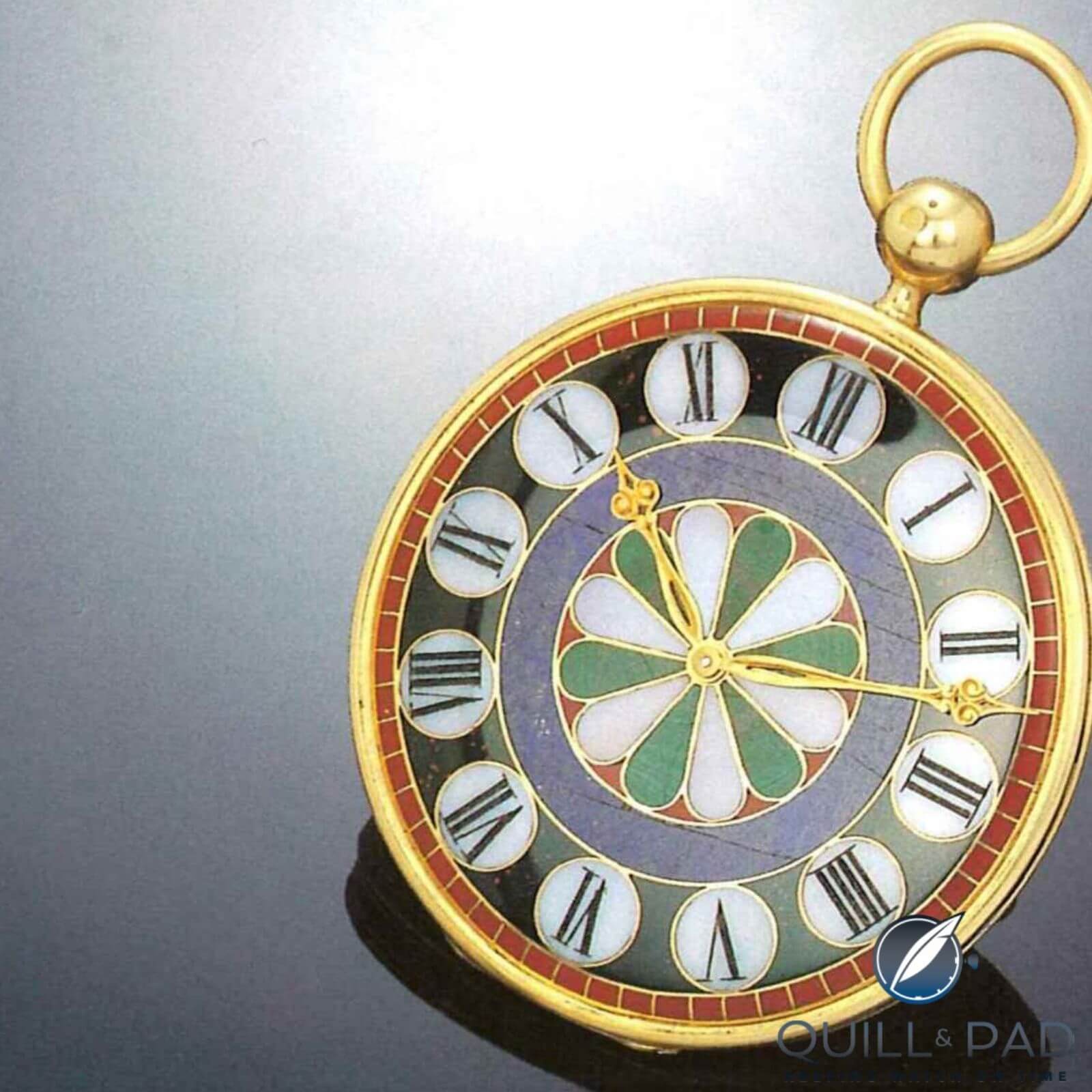
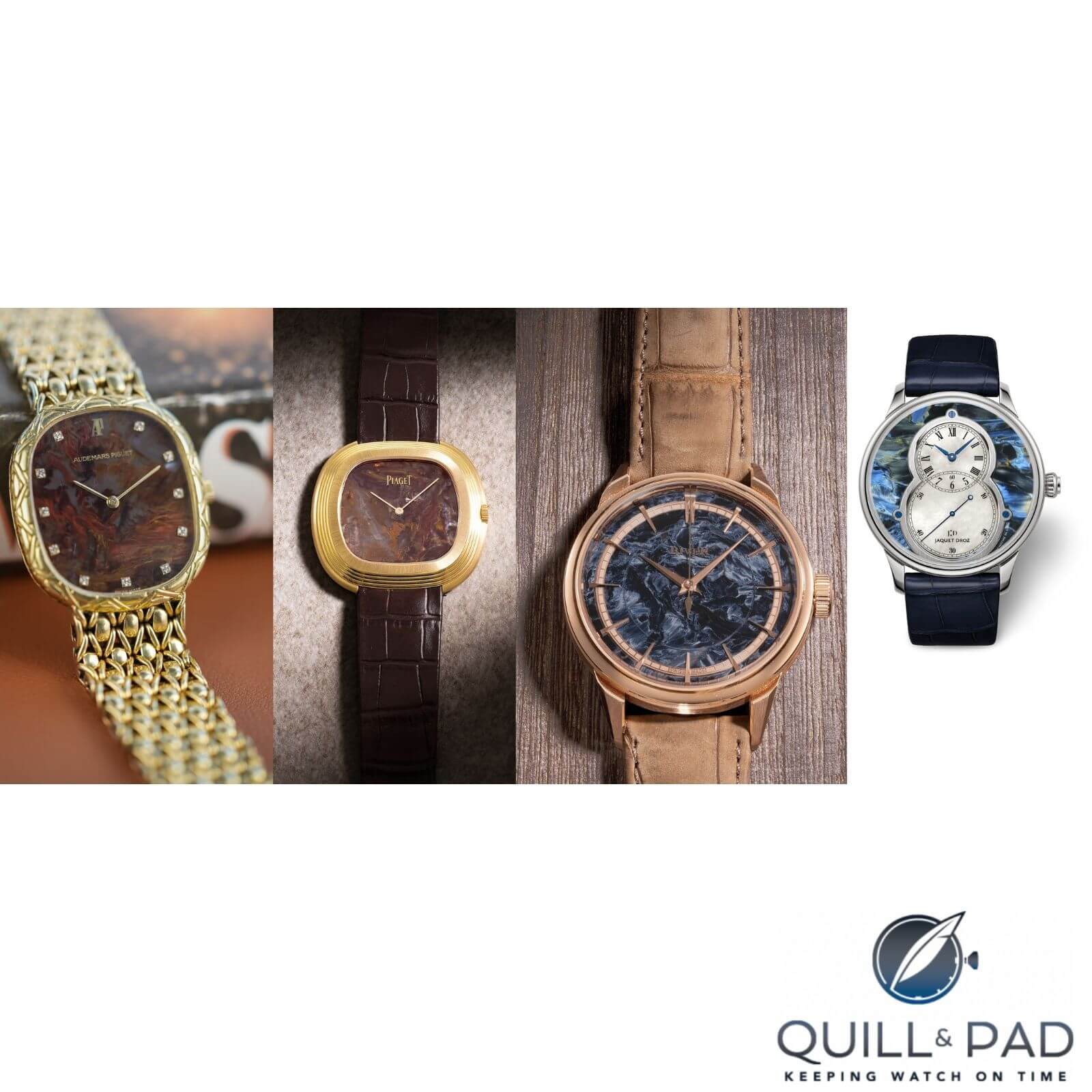
Stone dials experienced their zenith of popularity on wristwatches during the 1970s and 1980s. This era coincided with the maturation of thin movement technology, both mechanical and quartz, which allowed for the creation of more slender and elegant watch cases. This development was particularly conducive to showcasing the artistic potential of stone dials, often found gracing luxurious gold dress watches. Watchmakers frequently turned to a variety of semi-precious and precious stones, including agate, jasper, jadeite, lapis lazuli, malachite, onyx, opal, tiger’s eye, hawk’s eye, and turquoise. While not strictly minerals, materials such as aventurine, coral, mother-of-pearl, and even meteorite were also commonly employed to create captivating dial aesthetics. Leading watch brands, including Rolex, Patek Philippe, Vacheron Constantin, Audemars Piguet, and notably Piaget—a brand synonymous with the modern revival of this technique—actively participated in this decorative genre.
The Challenges of Crafting Stone Dials
The inherent nature of working with natural stones presented significant technical hurdles. The fragility and often imperfect monolithic structure of raw materials meant a high rate of attrition during the intricate processes of sawing, polishing, and drilling. Creating the precise openings for hand pinions and any applied hour markers demanded exceptional skill and patience, as a single misstep could render a valuable stone unusable. Consequently, the cost of producing a stone dial, and by extension the entire watch, was considerably elevated. The production of hardstone dials has always been characterized by scarcity, and their inherent fragility further contributes to the diminishing number of surviving examples over time.
Pietersite: A Rare Gem Takes Center Stage
Among the pantheon of rare stone-dial watches, those featuring pietersite stand out for their exceptional scarcity and dramatic beauty. Pietersite is a unique form of chalcedony, distinguished by its chaotic coloration, intricate structure, and unpredictable fibrous texture. When polished, this stone appears almost alive, shifting and shimmering with changes in viewing angle and light. Often described as a dynamic fusion of hawk’s eye and tiger’s eye, its texture and predominant gray-blue hue evoke the imagery of stormy skies or a tempestuous sea, earning it the evocative moniker "Storm Stone." The name perfectly encapsulates its visual character. Pietersite dials exhibit a breathtaking spectrum of hues, ranging from light grays to deep, dark gray-blues and reddish-brown tones. The interplay of red, brown, gold, and silver-blue accents seems to possess an internal luminescence, appearing to move and shimmer beneath the polished surface rather than remaining static.
The use of pietersite in watchmaking is a relatively recent development. Discovered in Namibia in 1962 by mineral dealer Sidney Pieters, its ornamental applications, particularly in watch dials, emerged in the 1970s. Piaget is believed to have been among the first to utilize this stone, potentially with reference 9791. Later, Audemars Piguet featured pietersite on references such as the 4647 (late 1980s) and the Royal Oak Ref. 14587 (1994). The emergence of new sources of high-quality pietersite specimens suitable for watch dials in the 2010s led to a resurgence of these captivating timepieces. Piaget further solidified its reputation in this domain by presenting a unique Black Tie Vintage watch with a pietersite dial for the Only Watch 2017 charity auction. Jaquet Droz preceded them by introducing the Grande Seconde Pietersite a year earlier and subsequently launched two tourbillon models featuring dials made from two distinct types of pietersite: the Grande Seconde Tourbillon Blue Pietersite and the Grande Seconde Tourbillon Red Pietersite.
A New Wave of Pietersite Timepieces
In 2025, a notable surge of interest in watches featuring pietersite dials emerged, with several brands embracing this exotic mineral. Among these were Biver with the Automatique Atelier Series Pietersite, Baltic with the Prismic Stone Dial Pietersite (a design echoing the aesthetic of 1930s Patek Philippe Calatrava Ref. 96), Atelier Wen with the Millésime 2025 Perception, and Sartory-Billard with the SB04-E Pietersite Platinum.
The year 2026 marked a significant moment at Watches and Wonders, where Arnold & Son unveiled two distinct HM Pietersite models, one in stainless steel and another in red gold. This unveiling highlighted a potential underestimation of demand for watches featuring exotic stone dials. Initially announced as limited editions of 18 pieces for the steel and 8 for the gold, the production numbers were later adjusted to 28 steel and 18 gold pieces, respectively. Intriguingly, at the time of this report, the caseback engravings on the brand’s website still reflected the original, lower limitations. This suggests a potentially stronger market appetite for stone-dial watches than often perceived, indicating that their production might be more than just a public relations strategy.
A Closer Look at the Arnold & Son HM Pietersite
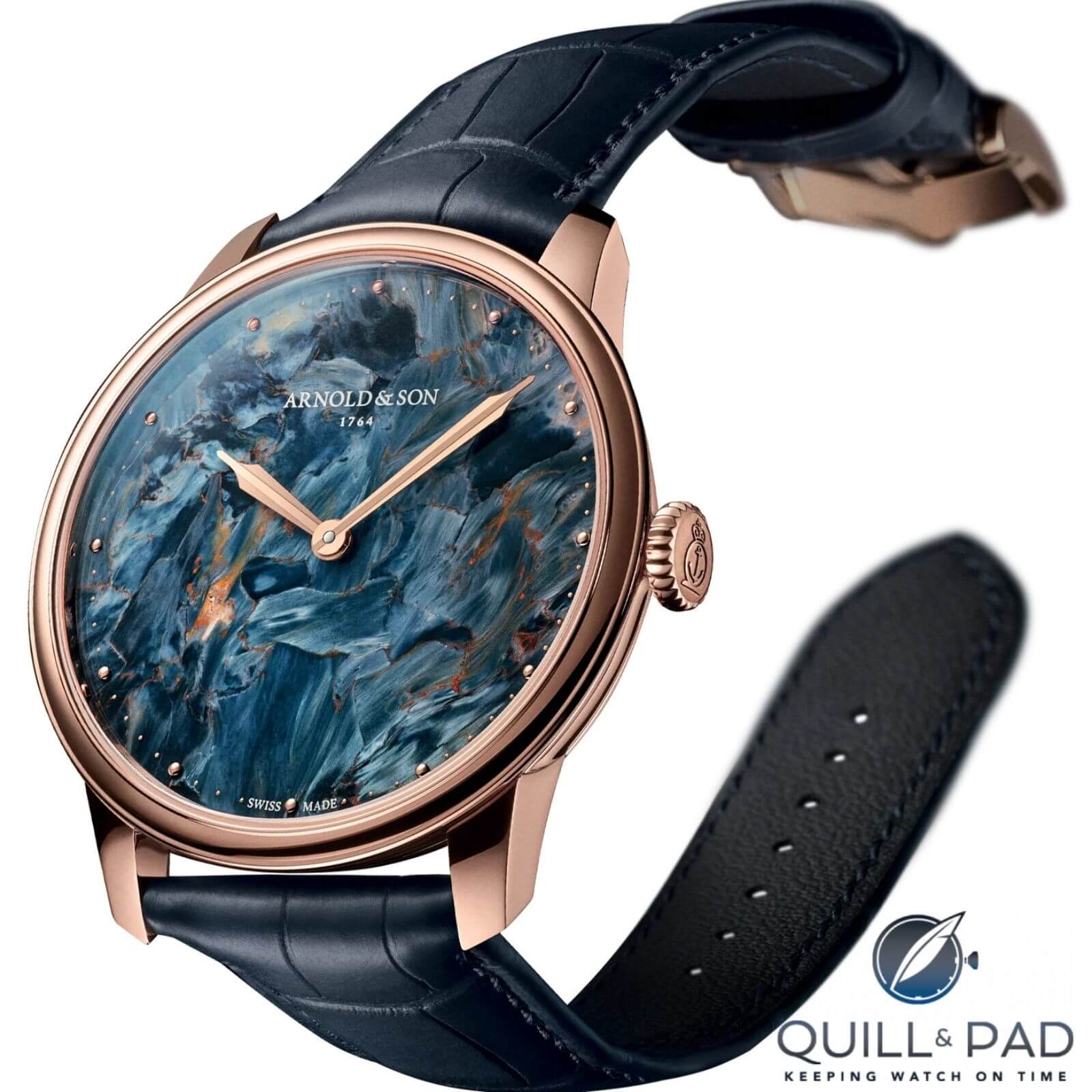
The Arnold & Son HM Pietersite embodies a classic dress-watch aesthetic, adhering to modern trends with a case diameter of 39.5 mm, placing it comfortably under the 40 mm mark. Its elegance is further defined by its slim profile, measuring a mere 7.82 mm in thickness—an exceptional achievement for a modern mechanical watch, offering an aspect ratio of over 5:1, which contributes significantly to its comfortable wearability. The brand’s prowess in achieving such refined proportions, especially with the added complexity of stone dials, is noteworthy, particularly given their expertise with ultra-thin tourbillons.
A distinctive design choice is the domed sapphire crystal, a departure from the typically flat crystals found on thin watches. This gently curved surface, treated with anti-reflective coatings on both sides, enhances the visual appeal of the pietersite dial, creating an almost seamless transition between the dial and the observer’s eye, as if the crystal itself disappears.
The inherent uniqueness of natural materials means that no two pietersite dials are identical. The stone’s swirling patterns, a product of nature’s random artistry, ensure that each dial is a one-of-a-kind masterpiece. This chaotic texture provides a continuously engaging visual experience, akin to observing a flickering flame, flowing water, or drifting clouds—a timeless source of fascination. Arnold & Son sources its pietersite from Namibia, the very region where it was first discovered, underscoring the mineral’s provenance.
To maximize the impact of the pietersite dial, Arnold & Son adopted a minimalist approach to dial design, featuring applied "pearl" indices. These small, polished hemispherical metal elements, with larger ones marking the hours and smaller ones the minutes, subtly evoke the styling of early 20th-century pocket watches. Far from detracting from the stone, these indices act as refined design accents, adding a touch of technical sophistication. This detail aligns with Arnold & Son’s heritage of technical excellence, even as the modern company has no direct historical lineage to John Arnold’s original firm. The applied indices are meticulously matched to the case material, a hallmark of thoughtful design.
The Engineering Behind the Elegance: Caliber A&S1001
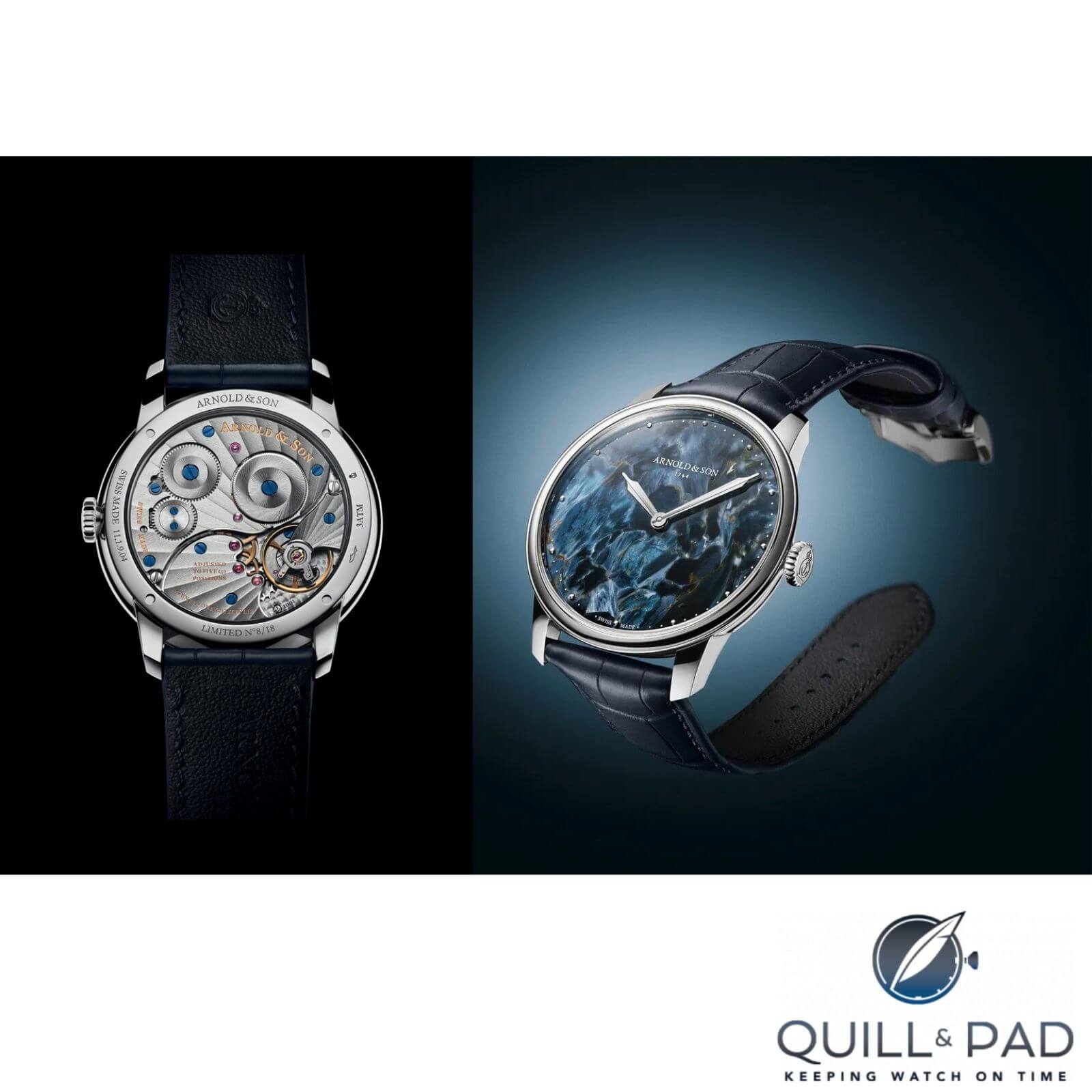
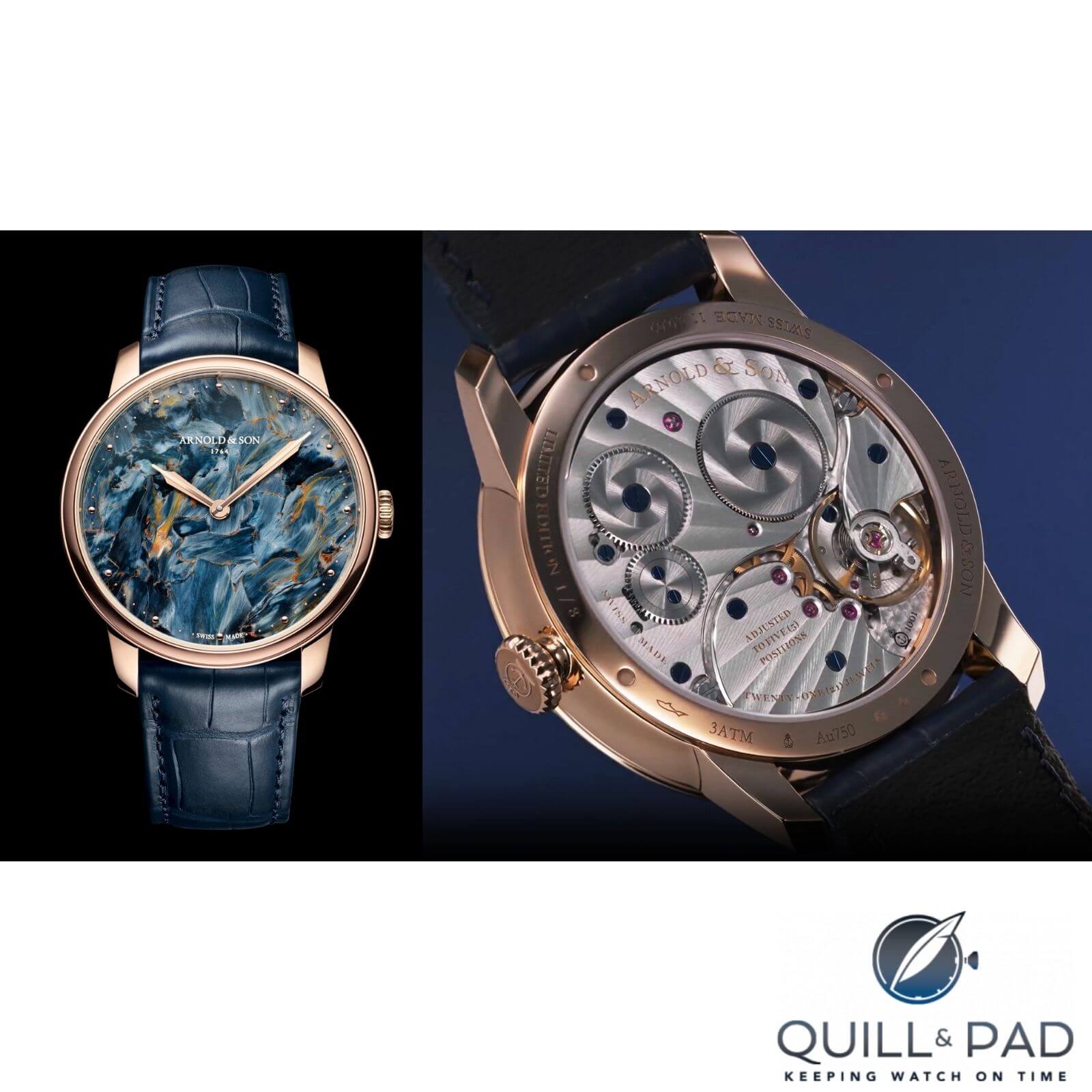
In contrast to the decorative focus of many vintage stone-dial timepieces from the 1970s and 1980s, the Arnold & Son HM Pietersite offers a compelling showcase of modern watchmaking. The sapphire caseback provides an unobstructed view of the exclusive Caliber A&S1001, an ultra-thin, hand-wound movement produced by Arnold & Son’s sister company, La Joux-Perret. This movement, measuring a mere 2.7 mm thick, is equipped with twin barrels that deliver an impressive 90-hour power reserve, a remarkable feat for such a slender caliber.
This sophisticated movement architecture not only enables the watch’s exceptional 5:1 aspect ratio but also allows for a generous 30 mm diameter for the movement itself. This larger diameter accommodates the twin barrels and contributes to the movement’s strong visual presence when viewed from the rear. Arnold & Son and La Joux-Perret have masterfully utilized this spatial advantage. The movement’s bridges feature contours reminiscent of fine, slim pocket watch calibers from the early to mid-20th century. This historical nod is further enhanced by meticulously finished components, including snail-brushed winding wheels, an abundance of blued screws, and gilded engravings. The traditional perlage on the mainplate is complemented by radial Côtes de Genève on the bridges, radiating from the balance shaft. This intricate finishing creates a compelling fusion of tradition and subtle avant-garde design, perfectly suited for a contemporary dress watch.
Quick Facts: Arnold & Son HM Pietersite
Models and Maker:
The collection includes the HM Steel Pietersite, reference 1LCDS.Z02A.C1506S, and the HM Red Gold Pietersite, reference 1LCDR.Z01A.C1506A, both by Arnold & Son.
Edition:
Limited production runs consist of 28 pieces in stainless steel and 18 pieces in 18k red gold.
Case:
Crafted from polished stainless steel or 18k red gold, the case features a domed sapphire crystal with dual-sided anti-reflective coating. A sapphire case back, also with anti-reflective treatment, reveals the movement. The winding crown is positioned at 3 o’clock, and the watch offers water resistance up to 30 meters.
Case Dimensions:
The case measures 39.5 mm in diameter and has a thickness of 7.82 mm.
Dial:
The dials are fashioned from Namibian pietersite, featuring a pietra dura finish. They are adorned with semi-spherical applied indices and polished and brushed plume-style hour and minute hands.
Movement:
The manufacture hand-wound caliber A&S1001 operates at a frequency of 3 Hz (21,600 vph) and provides a power reserve of 90 hours. It comprises 21 jewels, measures 30 mm in diameter, and has a thickness of 2.70 mm.
Strap and Buckle:
Both models are fitted with dark blue alligator leather straps, secured by a pin buckle crafted from either stainless steel or 18k red gold, matching the respective case material.
All images, unless otherwise noted, are courtesy of Arnold & Son.