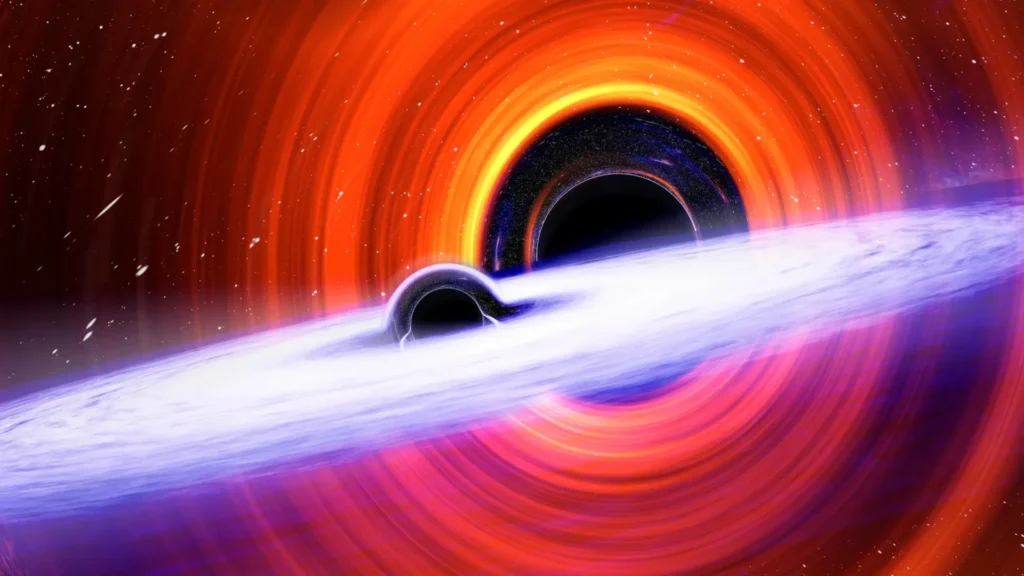
The search for the fundamental building blocks of the cosmos has taken a significant leap forward as researchers at the University of Miami provide new evidence linking ancient, "primordial" black holes to the elusive substance known as dark matter. For decades, the existence of black holes formed moments after the Big Bang has remained a tantalizing theoretical possibility. However, a recent and unusual gravitational wave signal detected by the Laser Interferometer Gravitational-Wave Observatory (LIGO) has provided the most compelling evidence yet that these objects are not merely mathematical constructs, but physical realities that could solve the greatest mystery in modern astrophysics.
The Discovery of a Subsolar Mystery
The current scientific fervor centers on a detection made late last year during LIGO’s latest observing run. Gravitational waves—ripples in the fabric of spacetime caused by the acceleration of massive objects—are typically produced by the collision of black holes or neutron stars. Most black holes identified by astronomers are "stellar-mass" black holes, which form when a massive star exhausts its fuel and collapses under its own gravity. Because of the physics of stellar evolution, these objects have a minimum mass; it is physically impossible for a standard star to collapse into a black hole that weighs less than about 2.5 to 3 times the mass of our Sun.
However, in November, the international LVK (LIGO-Virgo-KAGRA) collaboration issued an automated alert for a merger event involving at least one object with a mass significantly lower than that of the Sun. This "subsolar mass" candidate immediately drew the attention of the global physics community. If the object is indeed a black hole with a mass smaller than the Sun, it cannot have been formed by a star. This leaves only one viable explanation: it is a primordial black hole (PBH), created by the extreme pressure and density fluctuations of the universe during its first trillionth of a second.
Insights from the University of Miami
Nico Cappelluti, an associate professor in the University of Miami’s Department of Physics, and Ph.D. student Alberto Magaraggia have been at the forefront of analyzing the implications of this signal. Their research, recently published in The Astrophysical Journal, suggests that the most plausible explanation for the LIGO signal is the detection of a primordial black hole.
"We believe our study will aid in confirming that they actually do exist," said Cappelluti. The team’s work involved complex statistical modeling to determine the probability of such an event. By estimating the potential density of primordial black holes scattered throughout the universe, they calculated how frequently LIGO should expect to see them. Their results indicated that the rarity of the November signal is perfectly consistent with the predicted abundance of primordial black holes.
According to Magaraggia, the findings are encouraging because they align with the "needle in a haystack" nature of the search. "We predict that subsolar black holes like the one LIGO may have observed should indeed be rare, consistent with how infrequently such events have been seen so far," he noted. This consistency provides a bridge between theoretical predictions and empirical observation, suggesting that we are finally looking at the "missing link" of cosmic evolution.
The Dark Matter Connection
The confirmation of primordial black holes would do more than just add a new category to the astronomical catalog; it could solve the dark matter problem. Dark matter is an invisible, non-reflective substance that does not emit light or energy, yet it exerts a massive gravitational pull. It accounts for approximately 85 percent of all matter in the universe and is the "glue" that prevents galaxies from flying apart.
For years, the leading candidates for dark matter were WIMPs (Weakly Interacting Massive Particles). However, decades of experiments using deep-underground detectors have failed to find any evidence of these particles. This has led many scientists to reconsider "MACHO" (Massive Compact Halo Object) theories, which suggest dark matter is made of dense, macroscopic objects like black holes.
Cappelluti’s research indicates that if primordial black holes exist in the quantities suggested by their models, they could account for a significant portion, or perhaps even all, of the universe’s dark matter. Because these black holes formed before the first atoms even existed, they would be distributed throughout space in a way that matches the observed gravitational effects attributed to dark matter.
A Chronology of Primordial Black Hole Theory
The concept of primordial black holes is not new, but it has evolved through several distinct eras of scientific thought:
- 1966 – The Soviet Proposal: Scientists Yakov Zeldovich and Igor Novikov first theorized that the early universe was dense enough that high-density regions could spontaneously collapse into black holes, regardless of stellar processes.
- 1971 – The Hawking Expansion: Legendary physicist Stephen Hawking refined the theory, suggesting these black holes could be as small as a grain of sand or as large as a mountain, yet contain billions of tons of mass. Hawking also proposed that these objects could be the source of dark matter.
- 2015 – The LIGO Revolution: The first direct detection of gravitational waves (GW150914) proved that black holes merge and emit detectable energy. This opened a new "window" into the universe, allowing scientists to "hear" events they could not see with telescopes.
- 2023/2024 – The Subsolar Candidate: The detection of a potential subsolar mass object provided the first empirical hint that non-stellar black holes exist in the modern universe.
The Physics of the Early Universe
To understand why primordial black holes are so unique, one must look back at the conditions of the Big Bang. In the first fraction of a second, the universe underwent a period of rapid expansion called inflation. During this time, tiny quantum fluctuations were stretched to cosmic scales. In areas where the density was slightly higher than average, gravity could overcome the outward expansion, causing that pocket of space to collapse into a black hole.
Unlike stellar black holes, which are limited by the mass of the parent star, primordial black holes could theoretically be any size. Some theories suggest they could be "micro" black holes that have since evaporated due to Hawking radiation, while others suggest they could be the "seeds" that grew into the supermassive black holes found at the centers of galaxies like our own Milky Way.
Challenges and Scientific Skepticism
Despite the excitement, the scientific community remains cautious. Detecting a subsolar mass object is extremely difficult because the signal is often faint and can be confused with "glitches" or terrestrial noise in the LIGO detectors. LIGO is so sensitive that it can detect a change in distance equivalent to one-thousandth the width of a proton over a four-kilometer distance; consequently, even a truck driving nearby or a seismic shift can create a false positive.
Skeptics argue that until multiple signals of this nature are confirmed across different observatories, we cannot definitively claim the discovery of a primordial black hole. There is also the possibility that the object is a "strange star" or a neutron star with an unusual composition, though current models of nuclear physics make a subsolar neutron star unlikely.
"LIGO picked up what is very strong evidence that these types of black holes exist," Cappelluti admitted. "But we’ll need to detect another such signal or even several others to get the smoking-gun confirmation that they are real."
The Future of Gravitational Wave Astronomy
The next decade promises to be a golden age for this field. The LVK collaboration, which includes detectors in Washington, Louisiana, Italy (Virgo), and Japan (KAGRA), is currently undergoing upgrades to increase sensitivity. These improvements will allow the network to peer deeper into space and detect even fainter mergers.
Beyond the current ground-based detectors, two major projects are on the horizon:
- LISA (Laser Interferometer Space Antenna): Scheduled for launch by the European Space Agency in 2035, LISA will consist of three spacecraft flying in a triangular formation millions of kilometers apart. By operating in the vacuum of space, LISA will be able to detect low-frequency gravitational waves that are invisible to LIGO, potentially capturing the "hum" of primordial black holes from the very beginning of time.
- Cosmic Explorer: A planned next-generation ground detector in the United States, Cosmic Explorer will feature arms ten times longer than LIGO’s. It is expected to be sensitive enough to detect every black hole merger in the observable universe, reaching back to the "Cosmic Dawn" when the first stars began to shine.
Implications for Modern Science
The confirmation of primordial black holes would represent a paradigm shift in our understanding of physics. It would provide a direct link between the physics of the incredibly small (quantum mechanics) and the physics of the incredibly large (general relativity).
Furthermore, if primordial black holes are dark matter, it would mean that the "missing" 85 percent of the universe is not made of exotic new particles that we have yet to discover, but of ancient gravity wells that have been hiding in plain sight since the dawn of time.
For the team at the University of Miami and their colleagues worldwide, the goal is now clear: continue the watch. As LIGO and its successors scan the heavens, the next ripple in spacetime may finally provide the definitive proof that the universe’s oldest secrets are written in the language of gravity. "What is clear," Cappelluti concluded, "is that they cannot be excluded as being real." For now, the scientific world waits for the next "chirp" from the deep past.