The National Science Foundation (NSF) has officially announced a five-year renewal of the Institute for Artificial Intelligence and Fundamental Interactions (IAIFI), an MIT-led research hub that has become a cornerstone of the United States’ strategy to merge computational intelligence with the physical sciences. This renewal includes a significant budgetary increase, elevating the institute’s annual funding from $4 million to $4.98 million. The decision marks the beginning of a second phase for the IAIFI, which was established in 2020 to explore the "virtuous cycle" between artificial intelligence and the laws of the universe. Over the next five years, the institute will expand its collaborative network, which currently integrates the intellectual resources of MIT, Harvard University, Northeastern University, Tufts University, and Boston University.
The IAIFI was launched as part of a broader federal initiative—the National Artificial Intelligence Research Institutes program—designed to ensure that the United States remains at the forefront of AI innovation. While many AI institutes focus on commercial applications or social media algorithms, the IAIFI’s mandate is uniquely scientific. It operates on the dual premise that AI can provide the computational power necessary to solve the most complex equations in physics, while the rigorous principles of physics can provide a framework to make AI systems more reliable, interpretable, and efficient.
A Five-Year Chronology of Interdisciplinary Progress
The journey of the IAIFI began in the summer of 2020, amidst a global shift toward digitized research and a growing recognition that traditional scientific methods were reaching their limits in the face of massive data sets. Since its inception, the institute has functioned as a bridge between the Laboratory of Nuclear Science at MIT and various departments of physics, statistics, and computer science across the Greater Boston area.
In its first two years (2020–2022), the IAIFI focused on building a community from the ground up. This involved establishing the IAIFI Postdoctoral Fellows program, which sought to recruit researchers who did not fit neatly into a single academic box. By 2021, the institute had helped facilitate a new interdisciplinary PhD program at MIT focusing on physics, statistics, and data science. This program has since awarded 20 doctoral degrees, signaling the birth of a new academic sub-discipline.
Between 2023 and 2024, the institute’s research outputs began to manifest in major experimental breakthroughs. AI tools developed within the IAIFI were integrated into the operations of the Large Hadron Collider (LHC) at CERN and the Laser Interferometer Gravitational-Wave Observatory (LIGO). These real-world applications proved that the theoretical "virtuous cycle" was not just a conceptual goal but a functional reality. The 2024 renewal by the NSF serves as a validation of this track record, providing the financial runway to push into even more ambitious territory through 2029.
Advancing the Frontiers of Particle and Nuclear Physics
One of the most immediate impacts of the IAIFI’s work has been felt in the realm of high-energy particle physics. The Large Hadron Collider generates a volume of data so vast—often referred to as a "firehose"—that it is impossible for humans or even standard computers to store and analyze every event. IAIFI researchers have developed machine learning techniques capable of processing this data in real-time. By training neural networks to recognize the signatures of rare subatomic particles, the institute has enabled physicists to filter out "noise" and focus on the data most likely to reveal new physics beyond the Standard Model.
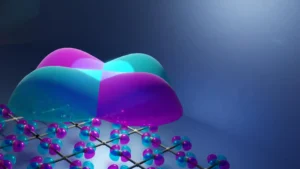
In the field of nuclear physics, the IAIFI has tackled the problem of lattice quantum chromodynamics (QCD). Studying the interactions of quarks and gluons—the fundamental building blocks of protons and neutrons—requires immense computational resources. Traditionally, these calculations could take months of supercomputer time. IAIFI researchers have introduced AI-based generative models that can simulate these interactions from first principles. This approach not only speeds up the discovery process but also allows scientists to model conditions that are difficult to replicate in a laboratory, such as the interiors of neutron stars.
Enhancing Astrophysics and Gravitational Wave Detection
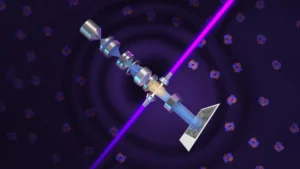
The institute’s influence extends into the cosmos through its contributions to astrophysics. The MIT-led LIGO experiment, which detects ripples in spacetime known as gravitational waves, relies on extreme sensitivity to identify signals from colliding black holes or neutron stars millions of light-years away. Machine learning algorithms developed by IAIFI members have significantly improved LIGO’s ability to distinguish these faint signals from terrestrial vibrations and instrumental noise.
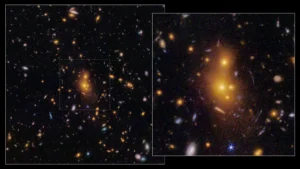
Furthermore, AI is being used to map the distribution of dark matter and to analyze the data from deep-space telescopes. By automating the identification of cosmic phenomena, the IAIFI is helping astronomers process the deluges of data expected from the next generation of observatories, such as the Vera C. Rubin Observatory.
Physics-Informed AI: Solving the Black Box Problem
Perhaps the most significant contribution of the IAIFI to the broader world of technology is its work on "physics-informed" AI. A common criticism of modern AI systems, particularly deep learning models, is that they are "black boxes"—their internal logic is often opaque, and they can produce "hallucinations" or incorrect results because they do not understand the fundamental constraints of reality.
IAIFI researchers are working to change this by embedding physical laws directly into the architecture of neural networks. By enforcing principles such as the conservation of energy, momentum, and rotational symmetry within the algorithms, they have created AI systems that are inherently more reliable. These "principled" models require significantly less training data because they already "know" the rules of the physical world. This has massive implications for fields outside of physics, including medical imaging, autonomous vehicle safety, and climate modeling, where accuracy and interpretability are non-negotiable.
Cultivating the Centaur Scientist
Central to the IAIFI’s mission is the development of human capital. The institute has coined the term "centaur scientists" to describe a new generation of researchers who are equally proficient in high-level physics and advanced machine learning. The IAIFI Postdoctoral Fellows program is the primary engine for this cultural shift. Fellows are paired with mentors from different disciplines, forcing a cross-pollination of ideas that rarely happens in traditional academic silos.
The success of this model is evidenced by the career trajectories of the program’s alumni. Of the eight fellows who have completed the program, three have secured competitive faculty positions, while others have moved into leadership roles in the private sector. This movement of talent ensures that the methodologies developed at the IAIFI are disseminated throughout the broader scientific and industrial ecosystem.
The demand for this specialized training is high. For the upcoming 2026 PhD Summer School, the institute received nearly 600 applications for only 100 in-person spots. This 6-to-1 ratio highlights the growing recognition among young scientists that AI proficiency is no longer an optional skill, but a foundational requirement for modern research.
Institutional Collaboration and Public Engagement
The IAIFI’s structure as a multi-institutional hub allows it to leverage the unique strengths of various universities. While MIT serves as the host through its Laboratory of Nuclear Science, the participation of Harvard, Northeastern, Tufts, and Boston University creates a dense network of expertise. This collaboration is managed by a steering committee that includes prominent figures such as Director Jesse Thaler and Interim Director Mike Williams, along with a diverse group of experts in astrophysics, computing, and statistics.
Beyond the laboratory, the IAIFI is committed to public science education. Through partnerships with the MIT Museum and the Museum of Science in Boston, the institute translates complex concepts of AI and physics into accessible exhibits and public talks. By hosting hackathons and releasing free educational content through MITx, the IAIFI is democratizing access to the tools of the "centaur scientist," ensuring that the next generation of innovators can come from any background.
Broader Implications and the Future of Discovery
The renewal of the IAIFI comes at a pivotal moment in the history of science. As the limits of Moore’s Law challenge traditional computing, and as scientific datasets grow to petabyte scales, the integration of AI is no longer a luxury—it is a necessity. The NSF’s increased investment suggests a federal confidence that the "physics of AI" will be a major driver of economic and scientific competitiveness in the coming decades.
Looking ahead to the next five years, the IAIFI aims to move beyond merely applying AI to existing problems. The goal is to use physics to fundamentally rethink how AI works. If the first phase of the institute was about proving that the two fields could talk to each other, the second phase is about building a unified language.
As Jesse Thaler, the institute’s director, noted, the foundation has been laid. The next era of the IAIFI will be defined by an entrepreneurial spirit and a "centaur" workforce that views the boundaries between disciplines not as barriers, but as the most fertile ground for discovery. With nearly $5 million in annual support and a growing community of the world’s brightest minds, the IAIFI is poised to redefine what it means to observe, understand, and simulate the universe.