A groundbreaking study from the University of Pennsylvania has fundamentally reshaped scientific understanding of foams, those ubiquitous materials found in everything from soap suds and shaving cream to whipped toppings and crucial food emulsions like mayonnaise. For decades, the scientific community largely held that foams, at their microscopic level, behaved much like glass – their tiny, constituent components were believed to be locked into disordered, yet essentially fixed, positions once formed. This long-standing view posited a static internal structure, offering a seemingly straightforward explanation for their macroscopic stability. However, new research now emphatically challenges this entrenched perspective, revealing a hidden world of constant internal motion within foams and, even more remarkably, uncovering a profound mathematical resemblance between this motion and the sophisticated algorithms that power modern artificial intelligence systems, specifically deep learning.
This startling discovery, published in the esteemed Proceedings of the National Academy of Sciences, suggests a potential universal organizing principle at play across vastly different domains: the physical world, biological systems, and advanced computation. The implications are far-reaching, promising to guide the development of a new generation of adaptive materials capable of responding and reorganizing themselves in real-time. Furthermore, it could offer unprecedented insights into the dynamic nature of living structures, such as the intricate internal scaffolding of cells, which must continually adapt and restructure to maintain life.
Rethinking the Nature of Foams: Beyond Static Stability
Foams are a fascinating class of materials, often categorized as "two-phase" systems, meaning they consist of bubbles or gas pockets suspended within a liquid or solid matrix. Their presence in daily life is pervasive, from the froth on a cappuccino to the lightweight structure of insulation materials. Industrially, foams are critical in fields ranging from food processing and cosmetics to construction and firefighting. Their apparent stability at the human scale – holding shape, bouncing back after compression – has long led scientists to model them as static structures at a microscopic level, where individual bubbles eventually settle into energy-minimizing positions. This "glass-like" analogy implied that once a foam formed, its internal architecture, while disordered, became essentially frozen in place.
Scientists have historically leveraged foams as ideal model systems for studying other dense and dynamic materials, precisely because they are relatively easy to create and observe, yet exhibit complex mechanical behaviors. This makes them particularly useful for understanding systems where particles are densely packed but still retain some degree of movement, including the intricate world of living cells and granular materials. The traditional theoretical framework, which has dominated for decades, treated individual foam bubbles as analogous to rocks rolling down an energy landscape. In this model, bubbles would naturally gravitate towards positions of lower potential energy, much like a boulder coming to rest at the bottom of a valley. Once settled, these bubbles were expected to remain stationary, contributing to the overall perceived stability of the foam.
The Unsettling Anomaly: Bubbles That Never Halt
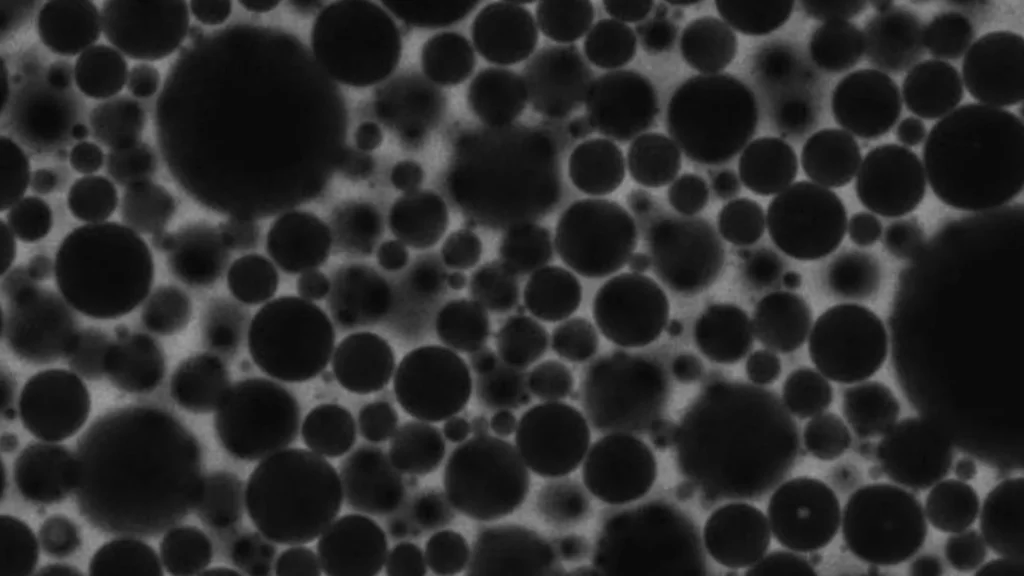
The new research, spearheaded by engineers at the University of Pennsylvania, employed advanced computer simulations to meticulously track the movement of individual bubbles within a wet foam. The results were unequivocally contrary to established theory. Instead of gradually becoming stationary and locking into fixed positions, the simulations revealed that the bubbles were in constant, restless motion, perpetually wandering through a multitude of possible arrangements. This ceaseless internal activity contradicted the long-held belief in a static, glass-like internal structure.
John C. Crocker, Professor in Chemical and Biomolecular Engineering (CBE) and co-senior author of the paper, articulated the profound nature of this finding: "Foams constantly reorganize themselves. It’s striking that foams and modern AI systems appear to follow the same mathematical principles. Understanding why that happens is still an open question, but it could reshape how we think about adaptive materials and even living systems." This statement underscores not only the challenge to traditional physics but also the astonishing interdisciplinary bridge the research has constructed.
A Decades-Old Mismatch Finds its Explanation in AI
The seeds of this paradigm shift were sown much earlier. Professor Crocker revealed that signs of a mismatch between theoretical predictions and actual foam behavior began to surface nearly two decades ago. Researchers had observed discrepancies in real foam data that simply did not align with the established "energy landscape" model, which predicted eventual stasis. However, at that time, the scientific community lacked the appropriate mathematical tools to adequately describe and explain the complex, persistent dynamics they were witnessing.
"When we actually looked at the data, the behavior of foams didn’t match what the theory predicted," Crocker noted, recalling the long-standing puzzle. "We started seeing these discrepancies nearly 20 years ago, but we didn’t yet have the mathematical tools to describe what was really happening." This highlights a critical aspect of scientific progress: sometimes, observations outpace theoretical frameworks, waiting for the advent of new conceptual tools to unlock their true meaning. The solution to this enduring puzzle, it turns out, lay unexpectedly in the realm of artificial intelligence.
The Unexpected Connection: Deep Learning’s Mathematical Blueprint
To understand the profound connection, it’s essential to briefly delve into the mechanics of deep learning. Modern artificial intelligence systems, particularly those employing deep learning architectures, learn by continuously adjusting a vast number of numerical parameters during their training phase. These parameters collectively define what an AI system "knows" and how it processes information. Early approaches in AI sought to push these systems towards a single, optimal solution – a configuration of parameters that perfectly matched their training data, akin to finding the absolute deepest valley in a complex energy landscape.
However, over time, researchers in AI made a crucial realization: excessively optimizing for a single, deepest solution often led to "overfitting." Systems that fit their training data too precisely became fragile, performing poorly when presented with new, unseen information. This phenomenon highlighted the importance of generalization – the ability of an AI model to perform well on diverse, novel data.
Deep learning systems predominantly rely on optimization methods rooted in a mathematical technique known as gradient descent. These methods iteratively guide a system towards configurations that progressively reduce error, step by step, conceptually navigating a complex, high-dimensional landscape. The pivotal insight in modern deep learning, as articulated by Robert Riggleman, Professor in CBE and co-senior author of the paper, was the understanding that "The key insight was realizing that you don’t actually want to push the system into the deepest possible valley. Keeping it in flatter parts of the landscape, where lots of solutions perform similarly well, turns out to be what allows these models to generalize." This means that instead of settling into a single, highly specific optimal state, successful AI models maintain a degree of flexibility, exploring a broader region of "good enough" solutions that enables them to adapt to new information.
Foam and AI: Unveiling a Shared Mathematical Language
When the University of Pennsylvania team re-examined their foam data through this lens – the perspective gleaned from advanced deep learning optimization – the striking similarity became unequivocally clear. The foam bubbles, rather than settling into deep, stable, singular positions as traditional physics predicted, were in fact continuously moving and reorganizing themselves within broad, "flatter" regions of their configurational landscape. In these regions, many different arrangements of bubbles are energetically similar and equally viable. This ongoing, dynamic motion, never truly settling into a fixed state, closely mirrors how modern AI systems operate during their learning processes. The very same mathematical principles that underpin and explain the success of deep learning in achieving generalization also accurately capture the heretofore unexplained persistent dynamics of foams.
This revelation is more than just a coincidence; it points to a deeper, shared mathematical structure governing complex, adaptive systems, irrespective of whether they are physical, biological, or computational. It suggests that "learning," in a broad mathematical sense, might be a fundamental organizing principle that transcends disciplinary boundaries.
Broader Implications and Future Horizons
The findings from this Penn Engineering research raise a multitude of new and profound questions in a field many believed was already exhaustively understood. This alone, the researchers suggest, may be one of the study’s most significant contributions. By demonstrating that foam bubbles are not static, glass-like entities but rather dynamic systems that continuously reorganize in ways mathematically analogous to learning algorithms, the research compels scientists across various disciplines to fundamentally rethink how other complex, dynamic systems might behave.
The implications are particularly profound for materials science. The discovery opens avenues for designing and creating genuinely adaptive materials – materials that can self-organize, self-repair, or change their properties in response to environmental stimuli, much like biological systems. Imagine a material that can dynamically adjust its internal structure to optimize its strength, flexibility, or thermal properties in real-time, or a self-healing material that intelligently reorganizes its components to repair damage without external intervention. This could revolutionize industries from aerospace to biomedical engineering.
Beyond materials, the research also promises to shed new light on the intricate mechanisms of living systems. Professor Crocker’s team is already turning its attention back to a system that initially sparked his interest in foams: the cytoskeleton. This microscopic framework within cells is crucial for maintaining cell shape, enabling movement, and facilitating cell division. Like foam, the cytoskeleton is a dynamic structure that must continually reorganize and adapt while meticulously preserving its overall integrity and function. Understanding its dynamics through the lens of deep learning mathematics could unlock new insights into cellular mechanics, disease progression, and the very adaptability of life itself.
"Why the mathematics of deep learning accurately characterizes foams is a fascinating question," Crocker reiterated, emphasizing the profound intellectual challenge and opportunity. "It hints that these tools may be useful far outside of their original context, opening the door to entirely new lines of inquiry." This statement encapsulates the interdisciplinary power of the discovery, suggesting that a mathematical framework developed for artificial intelligence might hold the key to understanding fundamental aspects of the physical and biological worlds.
The study not only provides a sophisticated explanation for a long-standing anomaly in soft matter physics but also establishes an unexpected intellectual bridge between the seemingly disparate fields of materials science and artificial intelligence. This convergence points towards a future where insights from one domain can rapidly accelerate understanding and innovation in another, fostering a more holistic and integrated scientific approach to the complex, adaptive systems that define our world.
This pioneering research was conducted at the University of Pennsylvania School of Engineering and Applied Science. It received vital financial support from the National Science Foundation Division of Materials Research, under grant numbers 1609525 and 1720530, underscoring the importance of foundational scientific funding in enabling such transformative discoveries. The collaborative effort also included significant contributions from additional co-authors, Amruthesh Thirumalaiswamy and Clary Rodríguez-Cruz, highlighting the team-oriented nature of modern scientific breakthroughs.