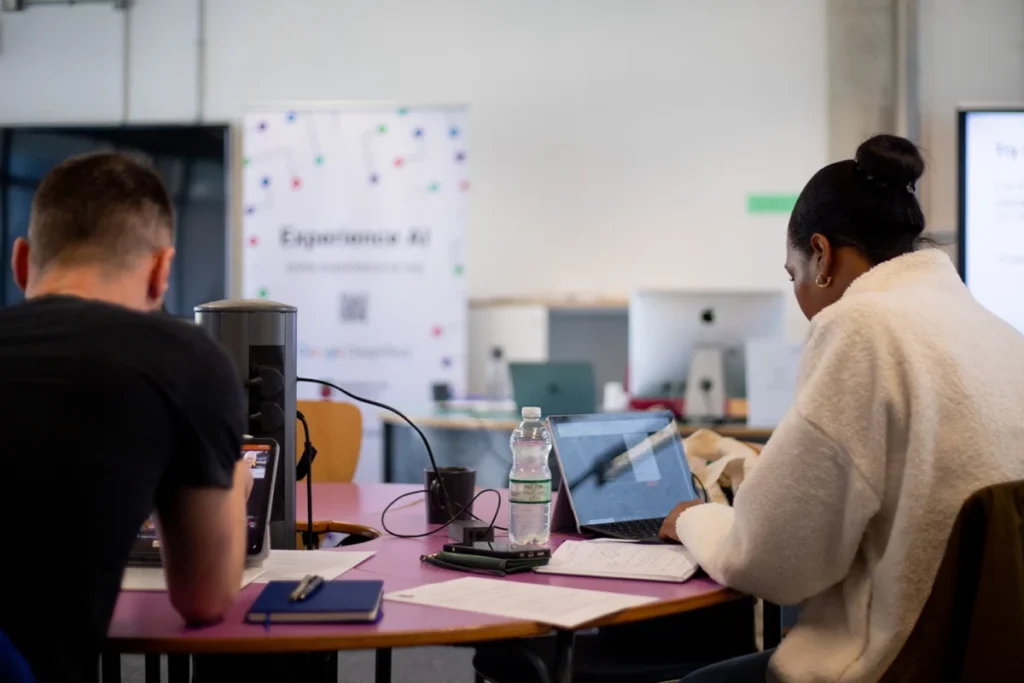
The rapid evolution of artificial intelligence has created an urgent global need for comprehensive digital literacy, yet the benefits of this technological revolution often remain concentrated in English-speaking regions. To address this disparity, the Raspberry Pi Foundation, in a strategic collaboration with Google DeepMind, has expanded its "Experience AI" program to provide high-quality, localized educational resources to millions of young people worldwide. A cornerstone of this initiative is the commitment to dismantling the barrier between "big" and "small" languages, a mission recently highlighted by the successful localization of the program for the Croatian educational market. By partnering with local experts and prioritizing cultural relevance over mere translation, the Foundation is ensuring that students in 38 countries can engage with AI critically and responsibly in their native tongues.
The Global Mission of Experience AI
Experience AI was launched as a collaborative response to the growing influence of machine learning and generative models on daily life. As these technologies move from experimental labs into classrooms, workplaces, and social spheres, the Raspberry Pi Foundation identified a significant gap in how young people understand the systems shaping their world. The program provides teachers with ready-to-use lesson plans, slide decks, and interactive activities designed to demystify the mechanics of AI.
To date, the program has established a presence in over 38 countries, with resources translated into more than 19 languages. The scale of this operation reflects a broader understanding of the "digital divide." While early computer science education focused on coding and hardware, the current era demands a nuanced understanding of data ethics, algorithmic bias, and the social implications of automated decision-making. By making these resources free and accessible, the Foundation aims to reach millions of students, particularly those in underserved communities where English proficiency might otherwise act as a gatekeeper to high-tech careers.
Navigating the Linguistic Hierarchy: Big vs. Small Languages
In the world of international software development and educational publishing, a pragmatic but exclusionary hierarchy often dictates resource allocation. Languages such as English, Spanish, Mandarin, and French are categorized as "big languages" due to their massive speaker bases and commercial viability. Conversely, languages like Croatian—spoken by approximately four million people—are frequently labeled "small languages."
This classification has profound implications for educational equity. When a language is deemed "small," it is often bypassed by major tech firms during the initial rollout of new tools. This forces native speakers to rely on English interfaces, creating a cycle where technical terminology is never developed in the local language. Over time, this can lead to a "linguistic brain drain," where students feel that high-level science and technology are subjects that only happen in English, alienating those who are not fluent in a second language.
The Raspberry Pi Foundation’s localization team has challenged this paradigm. By treating Croatian not as a "small" market but as a distinct linguistic identity, the Foundation has moved toward a model of "digital sovereignty." This approach recognizes that for a student to truly grasp complex concepts like neural networks or data sets, the cognitive load must be focused on the subject matter, not on translating a foreign language in their head.
The Challenge of Technical Translation in Emerging Fields
Translating emerging technology terms is rarely a one-to-one mapping exercise. For the Croatian localization of Experience AI, the project team faced significant hurdles regarding the standardization of terms that have only recently entered the global lexicon. In many instances, Croatian educators and IT professionals have used English loanwords for decades because official translations did not exist or were not adopted by the community.
A primary example is the term "AI" itself. The localization team engaged in extensive debates over whether to retain the English abbreviation "AI" (Artificial Intelligence) or adopt the Croatian "UI" (umjetna inteligencija). While "AI" is ubiquitous in global media, "UI" aligns with the grammatical and structural norms of the Croatian language. The team also had to consider phonetics: how should these abbreviations be pronounced in a classroom setting?
Furthermore, the team addressed common computing terms that have long been "Anglicized" in the Balkans. For years, Croatian users have used English terms for "copy/paste" or "offline," because early operating systems were not translated. The Experience AI project sought to reclaim these terms. For instance, "offline activity" was transitioned to "aktivnost bez računala" (activity without a computer). This change is more than semantic; it makes the concept of "unplugged" learning more intuitive for students who may not have a background in English-centric computing.
Strategic Partnership with Suradnici u učenju
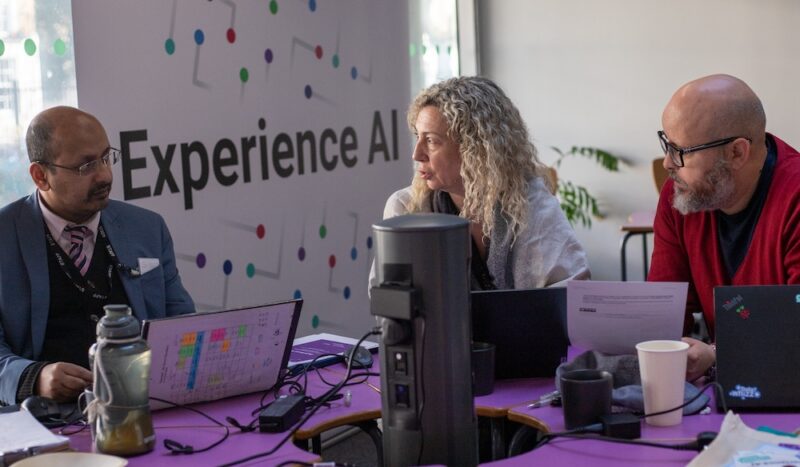
The success of the Croatian localization was made possible through a deep-tier partnership with the local organization Suradnici u učenju (Partners in Learning). This group provided the essential "in-country" expertise required to ensure the materials were not just linguistically accurate but also pedagogically sound within the context of the Croatian school system.
Lidija Kralj, a representative from Suradnici u učenju and a prominent educator, emphasized that the project required a multidisciplinary approach. The translation process involved Informatics subject experts working alongside Croatian language specialists, both of whom had active classroom experience. This ensured that the terminology used in the Experience AI resources aligned with the existing national curricula and textbooks.
"It was our responsibility as educators to use Croatian terms where they already exist," Kralj stated. She noted that the combination of a subject expert, a language expert, and a Raspberry Pi Foundation localization coordinator created a "triangulation of expertise" that resulted in resources that feel natural and "classroom-ready." Initial feedback from Croatian teachers who participated in the first Experience AI training sessions indicates a high level of appreciation for materials that do not feel like clunky, automated translations.
Chronology of the Experience AI Global Rollout
The evolution of Experience AI reflects a rapid response to the "AI boom" that began in late 2022. The timeline of the program illustrates the Foundation’s commitment to speed and scale:
- Early 2023: The Raspberry Pi Foundation and Google DeepMind officially launch Experience AI, initially focusing on English-language resources for secondary schools.
- Mid-2023: The program expands to include primary school resources and begins its first phase of international partnerships in Europe and Asia.
- Late 2023: The Foundation identifies the need for deep localization, moving beyond simple translation to "cultural adaptation." Partnerships are signed with organizations in over 30 countries.
- Early 2024: The Croatian localization project begins, involving months of linguistic debate and pedagogical alignment.
- May 2024: The fully localized Croatian resources are officially released online, accompanied by teacher training workshops led by Suradnici u učenju.
- Present: The program continues to expand, with new modules being developed to cover generative AI and ethical considerations in automated systems.
Data and Impact: The Digital Literacy Divide
Supporting data highlights why such localized efforts are critical. According to recent UNESCO reports on digital education, students who learn complex STEM subjects in their native language show a 20-30% higher retention rate compared to those learning in a secondary language. Furthermore, a 2023 survey of European educators found that 65% of teachers felt "unprepared" to teach AI, with "lack of localized materials" cited as a top three barrier in non-English speaking countries.
By providing these materials for free, the Raspberry Pi Foundation is addressing an economic barrier as well. Commercial AI curriculum can cost schools thousands of dollars in licensing fees—a cost that is often prohibitive for public schools in countries with smaller economies. The Experience AI program levels the playing field, ensuring that a student in Zagreb or Split has access to the same high-caliber information as a student in London or Silicon Valley.
Broader Implications and the Future of AI Education
The work being done in Croatia serves as a blueprint for other "small language" regions. The Raspberry Pi Foundation has demonstrated that localization is not merely about changing words; it is about respecting the cultural and educational infrastructure of a nation. This approach fosters a sense of ownership among local teachers, who are more likely to adopt and champion tools that feel native to their environment.
Looking ahead, the implications of this project extend into the realm of AI ethics. If AI literacy is only available in English, the global conversation about AI safety, bias, and regulation will be dominated by English-speaking perspectives. By empowering Croatian, Uzbek, or Vietnamese speakers to understand AI in their own languages, the Foundation is helping to cultivate a more diverse global community of thinkers who can contribute to the ethical development of these technologies.
The Experience AI program’s website now serves as a global hub for these efforts, offering a glimpse into a future where technology is a universal language, but education remains personal and local. As the Foundation continues to expand its network of partners, the goal remains clear: to ensure that no young person, regardless of the language they speak, is left behind in the age of artificial intelligence.