The Proba-3 mission’s Coronagraph spacecraft and its primary scientific instrument, ASPIICS, are now in excellent health and poised to resume their groundbreaking routine formation flying operations, promising further spectacular artificial solar eclipses. This announcement marks a significant triumph for the European Space Agency (ESA) and its international partners, who have worked tirelessly to overcome a complex anomaly that temporarily interrupted communications and operations in February 2026. The successful recovery underscores the resilience of the mission and the dedication of the scientific and engineering teams involved.
A Month of Uncertainty and Relentless Effort
The critical juncture for the Proba-3 mission occurred in February 2026 when an unforeseen anomaly aboard the Coronagraph spacecraft led to a complete loss of contact with ground control. This event triggered an intense period of around-the-clock work for the mission team, comprising operators, engineers, and industry partners. Their efforts were focused on diagnosing the issue, devising solutions, and meticulously testing recovery procedures to restore communication and salvage the ambitious scientific objectives of Proba-3.
The silence from the Coronagraph spacecraft, which lasted for approximately a month, was a period of profound concern. Damien Galano, Proba-3 Mission Manager, recalled the immense relief felt by the entire team upon receiving the first faint signal from the spacecraft. "When we received the first signal from the Coronagraph spacecraft after a month of silence, everyone was so relieved," Galano stated. "But we knew then that the work was not over yet – we still had no idea how a month without energy affected the spacecraft, or if we will be able to resume the mission at all."
Even for an event as rare as a spacecraft seemingly emerging from an extended period of inactivity, a rigorous and systematic recovery procedure was in place. This involved a detailed checklist of tasks, meticulously executed by experienced operators to ascertain the spacecraft’s condition and its potential for future operations.

System Diagnostics and Critical Operations Restored
Following the re-establishment of communication, the recovery phase focused on a comprehensive system-by-system health check. "One by one, we have checked the status of each of the spacecraft’s subsystems," Galano explained. "We have also been able to successfully perform the operations that proved critical in February. Back then, it triggered the unfortunate chain reaction that led to loss of connection with the spacecraft, but after patching the root cause in the software, we were confident that this activity will cause no further issues."
This detailed diagnostic process confirmed that all critical systems were functioning as intended. The team’s ability to successfully re-execute the very operations that had inadvertently led to the anomaly’s onset, now with a patched software root cause, provided a crucial validation of the recovery strategy. This demonstrated not only the technical prowess of the team but also their deep understanding of the spacecraft’s complex architecture.
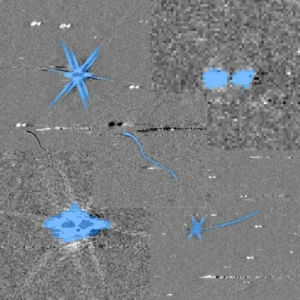
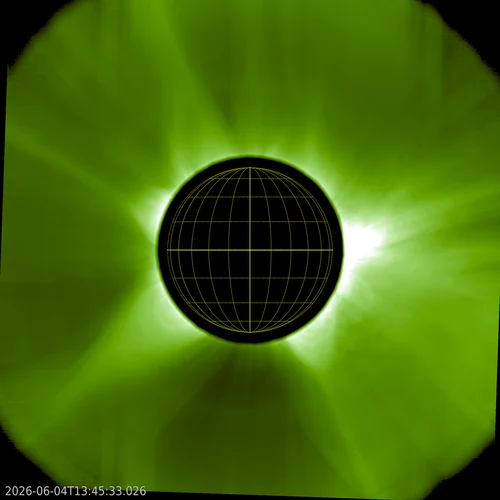
The ASPIICS (Association for the Study of the Physics of the Sun with an Imaging Coronagraph) instrument, the heart of Proba-3’s solar observation capabilities, has also been thoroughly assessed. Andrei Zhukov, the principal investigator for ASPIICS at the Royal Observatory of Belgium, expressed his satisfaction with its status. "After performing very careful checks of the ASPIICS coronagraph instrument, I’m very happy to confirm that it’s healthy and fully functional," Zhukov reported. "Last week’s formation flight allowed us to capture new images of the corona, and they look as spectacular as the ones taken before the incident occurred."
Resumption of Formation Flying and Scientific Breakthroughs
The confirmation of full operational readiness culminated in the successful execution of the first formation flying maneuvers since the anomaly. This critical step, which involves precisely positioning the Coronagraph spacecraft and its companion Occulter spacecraft at a specific distance to create an artificial solar eclipse, was performed last week.
"Last week, we performed the first formation flight since the anomaly, and we can now say with confidence that all systems are working as they should," confirmed Galano. "With the Coronagraph spacecraft successfully recovered, the mission can now resume its routine operations."

The ability to resume these precise formation flights is paramount to Proba-3’s scientific mission. By precisely blocking the Sun’s blindingly bright disk, the mission’s instruments can observe the faint outer atmosphere, known as the corona, in unprecedented detail. This has already led to significant scientific discoveries.
Early Scientific Findings Hint at Faster Solar Wind
Even before the recent anomaly, Proba-3 had begun to yield remarkable scientific insights. Initial data analysis has already challenged existing models of solar wind propagation. Preliminary findings suggest that structures within the inner solar corona can travel at speeds three to four times faster than previously understood. This discovery, published recently, highlights the mission’s potential to revolutionize our understanding of space weather and the Sun’s dynamic influence on the solar system.
"Our first results are very promising, and I can’t wait to see the future science that Proba-3 has in store for us," added Zhukov, expressing his optimism about the ongoing scientific exploration. The implications of faster-than-expected solar wind could range from improved space weather forecasting, crucial for protecting satellites and critical infrastructure on Earth, to a deeper comprehension of the fundamental processes driving solar activity.
A Testament to Collaboration and Engineering Excellence
The successful recovery of the Proba-3 mission is a powerful testament to the collaborative spirit and exceptional engineering expertise within ESA and its partner organizations. The dedication and ingenuity displayed by the teams involved in overcoming such a complex technical challenge have been widely lauded.
"It has been inspiring and fascinating to witness the team’s energy and commitment in investigating the issue and recovering the system," Galano remarked. "For some of us, it has also been one of the most intense and exhilarating periods of our professional lives." This sentiment reflects the high stakes and the profound sense of accomplishment derived from restoring a vital scientific endeavor.

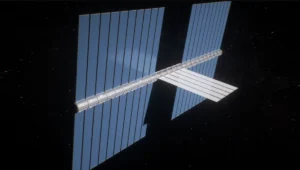
The Proba-3 mission, launched in December 2023, is designed to study the solar corona by creating a precise artificial eclipse. This is achieved through the coordinated flight of two spacecraft: the Coronagraph, equipped with the ASPIICS instrument, and the Occulter, which flies in precise formation to block the Sun. The mission’s unique approach allows for continuous observation of the corona without the limitations of ground-based eclipses or the need for the spacecraft to align perfectly with a natural solar eclipse event.
Looking Ahead: Unveiling Solar Mysteries
With the Coronagraph spacecraft fully recovered and ASPIICS operational, Proba-3 is now set to continue its vital work of unraveling the mysteries of the Sun’s corona. The mission’s ability to generate artificial eclipses offers a unique and consistent platform for observing this dynamic region of space. Scientists anticipate that future data from Proba-3 will provide unprecedented insights into the acceleration mechanisms of the solar wind, the structure of coronal magnetic fields, and the processes that lead to solar flares and coronal mass ejections.
The challenges overcome by the Proba-3 mission team serve as a powerful reminder of the inherent risks and rewards of space exploration. The successful recovery not only ensures the continuation of groundbreaking scientific research but also reinforces the capabilities of ESA and its partners in managing complex in-orbit operations and overcoming unforeseen technical hurdles. As Proba-3 resumes its scientific observations, the world looks forward to more breathtaking images and transformative discoveries from the heart of our solar system.