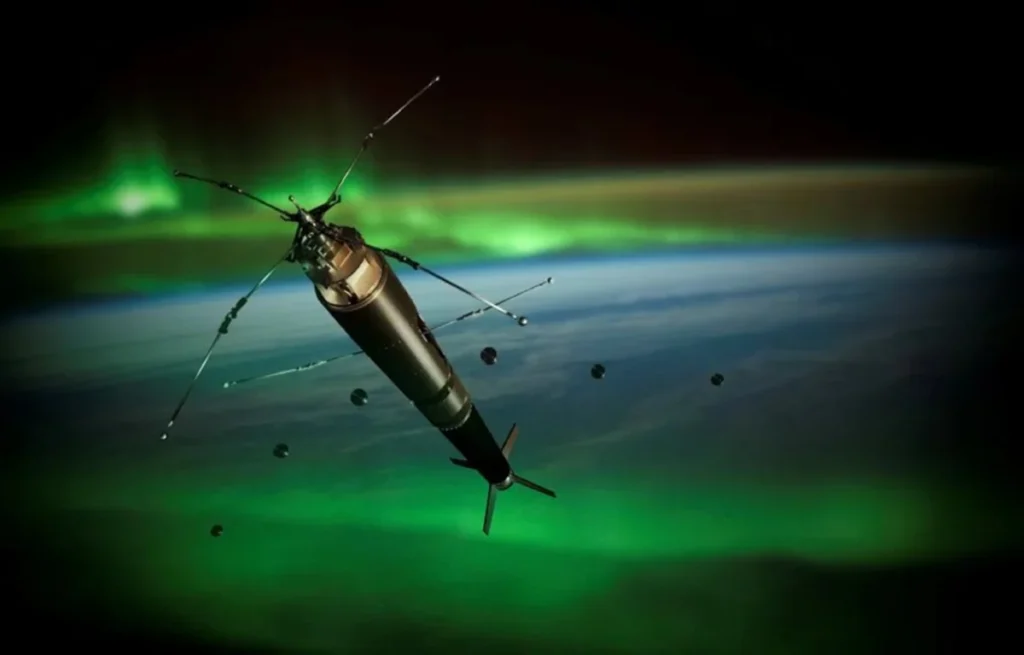
Norway’s 4DSpace-Daedalus mission, a cutting-edge endeavor in space weather research, represents the latest triumph bolstered by Prodex, a pivotal European Space Agency (ESA) programme. This initiative is instrumental in empowering highly skilled research institutes across Europe to actively participate in and contribute to ambitious European space science activities and missions. The success of 4DSpace-Daedalus, launched on March 11, 2026, from Norway’s Andøya Space Centre, underscores Prodex’s crucial role in fostering scientific innovation and technological advancement within the European space sector.
The Programme for the Development of Scientific Experiments, more commonly known as Prodex, currently manages a vast portfolio of over 400 contracts. These agreements span collaborations with a diverse array of institutes and industrial partners, solidifying its position as a cornerstone of European space research. Michel Lazerges, Head of the Prodex Office at ESA, highlighted the programme’s expansive reach, stating, "Prodex supports the industrial development of highly sophisticated scientific instruments and experiments in science, Earth observation, and microgravity domains for ESA Science missions such as Smile, Plato, Comet Interceptor, Envision, LISA, ExoMars, New Athena, and Arrakihs, as well as non-ESA missions like CLPS, Solar-C, and Polar-2. We are also actively developing instrumentation and experiments for the International Space Station." This broad scope demonstrates Prodex’s commitment to supporting a wide spectrum of scientific inquiry and technological exploration in space.

A significant indicator of Prodex’s growing importance and the confidence placed in its mission came at the ESA Ministerial Council 2025. During this pivotal meeting, 17 ESA Member States collectively pledged a substantial €327.52 million to this optional programme. This commitment represents a remarkable 38% increase compared to the funding secured at the previous Ministerial Council in 2022, signaling a strong endorsement of Prodex’s efficacy and its strategic value to European space capabilities. Such a significant financial commitment not only validates the programme’s past successes but also provides a robust foundation for future endeavors, enabling greater investment in cutting-edge research and development.
A Catalyst for Scientific Instrumentation and European Collaboration
Prodex serves as a vital springboard for the development of scientific instrumentation and experiments, directly contributing to the success of numerous ESA missions and activities. Its core function is to bridge the gap between scientific ambition and technological realization, providing the necessary financial and programmatic support for European institutes to design, build, and test state-of-the-art space hardware. This strategic approach allows nations to leverage their existing scientific expertise, foster crucial industrial and institutional partnerships, and ultimately enhance their competitiveness within the global space domain. The programme’s success is not merely measured by the number of contracts it manages but by the tangible scientific advancements and technological innovations it helps to bring to fruition.
Spotlight on Recent Prodex-Supported Successes
The impact of Prodex is vividly illustrated through a series of recent and upcoming mission successes, each showcasing the diverse capabilities and collaborative spirit it fosters across Europe.

Norway’s 4DSpace-Daedalus Mission: Unraveling Space Weather Mysteries
The successful launch of the 4DSpace-Daedalus (ICI-5b) sounding rocket on March 11, 2026, from Norway’s Andøya Space Centre, marked a significant milestone in space weather research. Coordinated by the University of Oslo and partly funded by Prodex, this mission deployed a 12-meter-long rocket equipped with advanced instruments and releasable subpayloads into an auroral substorm. The primary objective was to collect comprehensive data on turbulence within highly charged plasma and the neutral regions of the upper atmosphere.
The data gathered by 4DSpace-Daedalus is expected to provide invaluable insights into fundamental processes governing energy transfer and couplings within the upper polar atmosphere. This research is critical for improving our understanding of space weather phenomena, which can have significant impacts on satellite operations, communication systems, and even power grids on Earth. The mission’s success is a testament to Norway’s growing expertise in space science and Prodex’s ability to support specialized, high-impact research at a national level. The analysis of this data is already underway, with initial findings anticipated to be presented at upcoming international scientific conferences.
Poland and Estonia’s Contributions to the Comet Interceptor Mission
The ambitious Comet Interceptor mission, designed to be the first spacecraft to rendezvous with an interstellar comet, is also benefiting significantly from Prodex support. Poland’s Space Research Centre Polish Academy of Science (Centrum Badań Kosmicznych PAN) has developed the DFP-B2 instrument, while Estonia’s Tartu University has contributed the Optical Periscopic Imager for Comets (OPIC) instrument. These two instruments are among the first to be delivered to the prime contractor for Probe B2 of the Comet Interceptor spacecraft, underscoring the early and crucial role of Prodex-funded development.
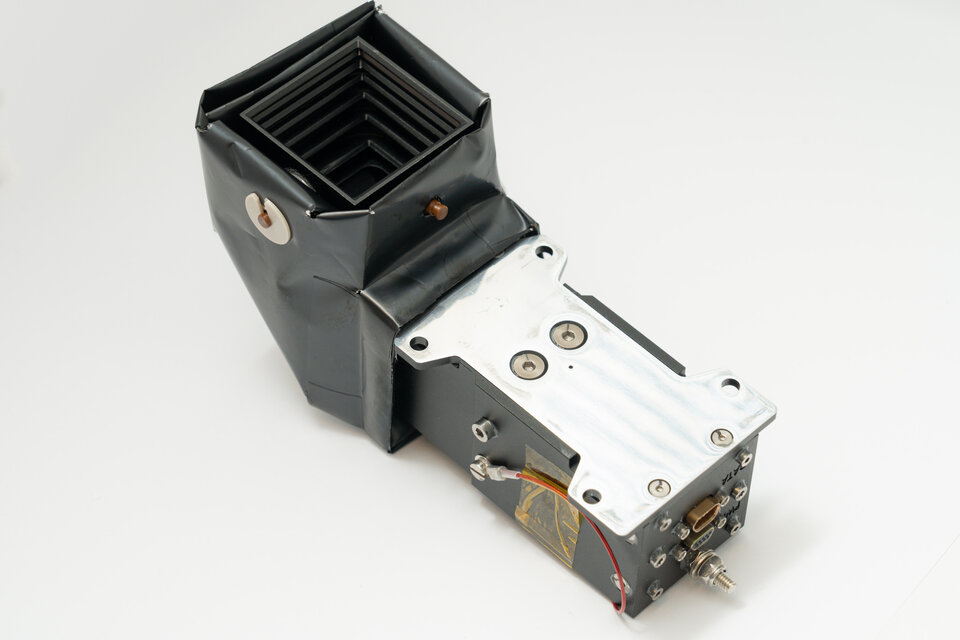
OPIC, in particular, represents a pioneering achievement for Estonia in the field of space instrumentation. Its development through Prodex has not only advanced Estonia’s capabilities in space science but also positioned the country as a key player in international space missions. The successful integration of these instruments onto the Comet Interceptor probe is a critical step towards achieving the mission’s groundbreaking scientific objectives.
Expanding European Expertise for Comet Interceptor
Further enhancing the scientific payload of the Comet Interceptor mission, instruments developed in Switzerland, Belgium, and Poland are slated for delivery in 2026. These include the MANiaC instrument, the CoCa instrument, the RMA instrument, and the DFP-A instrument, all of which have received support from Prodex. This multi-national collaboration, facilitated by Prodex, highlights the programme’s ability to foster cross-border partnerships and leverage specialized expertise from various European nations. The collective contribution of these instruments will provide a comprehensive suite of tools for studying the composition and behavior of a pristine comet.
Belgium’s Infrared Spectrometer for the EnVision Mission
Prodex plays a substantial role in ESA’s EnVision mission to Venus, a key initiative aimed at understanding the planet’s geological history and atmospheric composition. Prodex has funded 16 contracts specifically for the development of the VenSpec-H infrared spectrometer. This instrument is designed to meticulously study the atmospheric composition of Venus, a critical step in unraveling the planet’s evolutionary path and its potential implications for understanding planetary atmospheres in general. The development of VenSpec-H exemplifies Prodex’s commitment to supporting missions that explore our solar system and contribute to fundamental planetary science.

SMILE Mission: Advancing Space Weather Understanding
ESA’s Solar wind Magnetosphere Ionosphere Link Explorer (SMILE) mission, launched on May 19, 2026, is another significant undertaking that has benefited from Prodex support. SMILE is dedicated to improving our understanding of space weather and solar storms, phenomena that can pose risks to technological infrastructure on Earth and in space. Several of the key instruments aboard the SMILE spacecraft were developed with the crucial assistance of the Prodex programme. The mission’s success in providing new data on the interaction between the solar wind and Earth’s magnetosphere is expected to lead to more accurate space weather forecasting and improved mitigation strategies.
Prodex: Celebrating Four Decades of Innovation and Collaboration
This year marks a significant milestone for the Prodex programme, as it celebrates its 40th anniversary since its founding in 1986. To commemorate this occasion, a three-day international event is scheduled to take place in Switzerland. This celebration will bring together delegations and representatives from all 21 Prodex participating states: Austria, Belgium, Switzerland, the Czech Republic, Denmark, Estonia, Spain, Finland, Greece, Hungary, Ireland, the Netherlands, Norway, Poland, Portugal, Romania, and Slovenia. Approximately 200 participants are expected to attend, reflecting the programme’s broad and enduring international reach.
The anniversary event will serve as a platform to reflect on Prodex’s historical achievements, acknowledge the contributions of its member states and industrial partners, and chart a course for its future endeavors. It will also be an opportunity to highlight the programme’s critical role in fostering scientific excellence, driving technological innovation, and strengthening European cooperation in space exploration. The sustained growth in funding and the continued success of diverse missions underscore Prodex’s indispensable contribution to ESA’s scientific and exploration objectives, solidifying its legacy as a vital engine for European space ambition. The programme’s enduring success is a testament to its adaptive nature and its consistent ability to meet the evolving needs of the scientific community and the space industry.