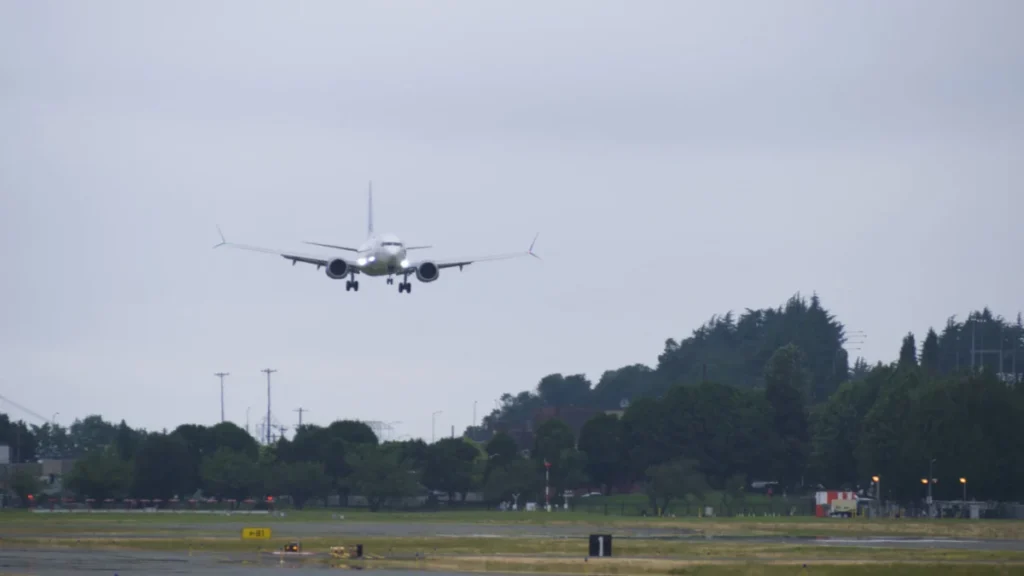
Boeing has successfully concluded flight testing for both the smallest and largest configurations of its 737 MAX family, signaling a significant stride toward Federal Aviation Administration (FAA) type certification for these pivotal aircraft. According to Boeing’s chief executive officer, the company anticipates receiving this crucial regulatory approval "very soon." This milestone marks a critical juncture for the aircraft manufacturer, which has navigated a complex and extended certification process for these models, influenced by past challenges and evolving regulatory landscapes.
Kelly Ortberg, speaking during a Tuesday morning earnings call, emphasized the importance of completing certification work on development programs. "Completing the certification work on our development programs is one of our biggest goals," Ortberg stated, underscoring the strategic imperative of bringing these new variants to market. The company’s projections indicate that the 737-7 variant will achieve certification first, followed by the larger 737-10. This sequential approach to certification is a common practice, allowing regulatory bodies to focus their resources and for manufacturers to address any findings on one model before proceeding to the next.
A Tuesday news release from Boeing confirmed that both aircraft "remain on the path toward certification in 2026." This projection, when coupled with Ortberg’s statement about deliveries, suggests that the initial regulatory hurdles are expected to be cleared within the next year, enabling the commencement of customer deliveries in 2027. This timeline represents a crucial turning point for Boeing, aiming to expand the 737 MAX portfolio and meet the diverse needs of its airline customers for shorter and longer-range operations.
The protracted nature of the certification process for these specific 737 MAX variants is intrinsically linked to the broader history of the 737 MAX program. Following the tragic fatal crashes of two 737 MAX 8 aircraft operated by Lion Air in October 2018 and Ethiopian Airlines in March 2019, the entire 737 MAX fleet was grounded globally for nearly two years. This period of intense scrutiny led to significant design updates, rigorous re-examinations of the aircraft’s safety systems, and an elevated level of regulatory oversight from aviation authorities worldwide, including the FAA. The subsequent recertification of the 737 MAX 8 and 737 MAX 9 models set a precedent for the certification requirements of any new variants.
A Timeline of Development and Certification
The journey for the 737-7 and 737-10 has been considerably longer than initially anticipated. When flight testing for the 737-7 commenced in 2018, Boeing had projected FAA certification and the first deliveries to occur in 2019. This initial timeline was disrupted by the aforementioned 737 MAX crashes and the subsequent grounding, which necessitated a comprehensive reassessment of the aircraft’s design and safety features.
Similarly, the 737-10, the largest variant in the MAX family, began its flight testing phase in June 2021. At that time, Boeing was targeting an entry into service in 2023. The extended flight testing and certification period for both models reflects the increased diligence and the complexity of meeting enhanced regulatory standards.
Rigorous Testing Regimen for Certification
Boeing’s commitment to ensuring the safety and airworthiness of the 737-7 and 737-10 is underscored by the extensive testing conducted. The manufacturer reported that three MAX 10 test aircraft have collectively completed an impressive 976 flights, accumulating over 2,060 flight hours. In addition to airborne testing, approximately 1,040 hours of ground testing were performed. This comprehensive testing regime is designed to validate every aspect of the aircraft’s performance, systems, and operational capabilities under a wide range of conditions.
A key focus of these recent tests was the validation of an updated Engine Anti-Ice (EAI) system. Boeing plans to incorporate this refined EAI system into the production of all future 737 MAX models. Furthermore, the company intends to retrofit this updated system across its entire in-service fleet of 737 MAX aircraft. This proactive approach to system enhancement highlights Boeing’s dedication to continuous improvement in aircraft safety and reliability, even for existing models.
Progress and Remaining Milestones
While flight testing for the 737-10 is now complete, the certification process is not entirely finished. The release indicated that remaining work on the 737-10 includes crucial development assurance reviews and system safety assessments. These reviews are reportedly 60% and 32% complete, respectively. These stages are critical for the FAA to confirm that all design and operational aspects meet stringent safety standards. The progress on these assessments suggests that the final phases of certification are well underway.
Strategic Implications and Resource Allocation
The completion of flight testing for these 737 MAX variants has significant strategic implications for Boeing. Ortberg noted that by successfully wrapping up these extensive testing campaigns, the company can now redirect resources to accelerate progress on other key programs. Specifically, he highlighted the opportunity to "apply some resources to speed up the completion of the 777 program." The 777 program, which includes the upcoming 777X widebody jet, is also a critical element of Boeing’s product portfolio and its future growth strategy. The news that the 777 program is on track to begin deliveries in 2027, aligning with the projected delivery timeline for the 737 MAX variants, indicates a synchronized push to bring new aircraft to market.
The 737 MAX Family: A Deeper Dive
The 737 MAX family represents Boeing’s latest generation of the highly successful 737 narrow-body airliner, designed to offer enhanced fuel efficiency, reduced emissions, and improved passenger comfort compared to its predecessors. The various models within the family cater to different market segments:
- 737-7: This is the shortest variant, intended to replace older models like the 737-700 and compete in the segment typically served by aircraft like the Airbus A220 and Embraer E2 family. Its focus is on offering efficient operations for shorter routes and point-to-point services.
- 737-8: This is the most established variant of the MAX family, having been the first to enter service and the one involved in the earlier fatal accidents. It is a direct competitor to the Airbus A320neo.
- 737-9: An extended-range version of the 737-8, offering higher passenger capacity.
- 737-10: The longest variant, designed to be Boeing’s answer to the Airbus A321neo, a highly popular aircraft in the "middle of the market" segment. The 737-10 aims to provide maximum passenger capacity and range for a narrow-body aircraft, making it attractive for airlines looking to optimize capacity on busy routes.
The certification of the -7 and -10 variants is crucial for Boeing to offer a complete suite of MAX aircraft that can compete across the entire narrow-body market. The -7 addresses the needs of airlines seeking smaller, more efficient aircraft for thinner routes or specific market niches, while the -10 is essential for competing directly with the highly successful A321neo in the lucrative single-aisle segment.
Market Context and Competitive Landscape
The aviation industry is in a phase of recovery and growth following the COVID-19 pandemic. Airlines are actively looking to modernize their fleets with more fuel-efficient aircraft to reduce operating costs and meet environmental sustainability goals. The 737 MAX family, with its fuel-saving capabilities, is a key part of this modernization effort.
However, Boeing faces intense competition from its European rival, Airbus. The A320neo family, particularly the A321neo variants, has garnered significant orders and has established a strong market presence. The successful certification and delivery of the 737-10 are therefore critical for Boeing to regain market share and offer a compelling alternative to the A321neo. Similarly, the 737-7’s entry into service will allow Boeing to compete more effectively in the smaller narrow-body segment.
Regulatory Scrutiny and Future Outlook
The FAA’s oversight of aircraft certification has been heightened since the 737 MAX tragedies. This has led to a more rigorous and often protracted approval process for new aircraft and significant design changes. While this can be a source of frustration for manufacturers, it ultimately aims to enhance aviation safety. The successful certification of the 737-7 and 737-10 will be seen as a testament to Boeing’s ability to meet these stringent requirements and a positive indicator for the future of the 737 MAX program.
The expected deliveries of the 737-7 and 737-10 in 2027 will be closely watched by the industry. These aircraft are expected to be delivered to airlines that have existing orders for these variants, contributing to the ongoing expansion and modernization of global fleets. The successful integration of these new models into airline operations will be the ultimate measure of their success.
In conclusion, the completion of flight testing for the 737-7 and 737-10 represents a significant milestone for Boeing. With FAA type certification anticipated "very soon" and deliveries slated for 2027, these aircraft are poised to bolster Boeing’s narrow-body offerings and strengthen its competitive position in the global aerospace market. The journey has been long and arduous, marked by lessons learned from past challenges, but the path forward appears clearer, with the company focusing on bringing these vital aircraft to its customers and continuing to advance its broader product development initiatives.