In an era defined by the dual crises of mounting plastic pollution and the urgent need for decarbonized energy, a joint research team from the UCLA Samueli School of Engineering and Ewha Womans University in South Korea has unveiled a transformative chemical process. This innovation, recently detailed in the Proceedings of the National Academy of Sciences (PNAS), utilizes a method known as alkaline thermal treatment (ATT) to convert a mixture of the world’s most common plastics directly into high-purity hydrogen fuel. Crucially, the process operates at significantly lower temperatures than traditional methods and captures carbon in a solid mineral form, preventing it from entering the atmosphere as a greenhouse gas.
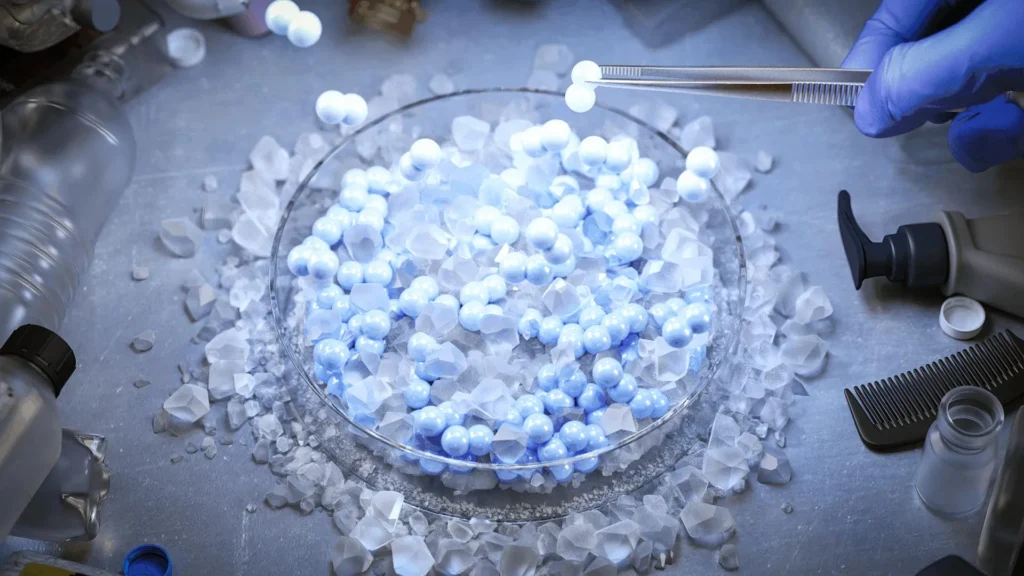
The global community currently faces a staggering waste management challenge. Since the mass production of plastics began in the mid-20th century, billions of metric tons have been generated. However, the infrastructure for managing this waste has failed to keep pace with production. According to current environmental data, only about 9% of all plastic ever produced has been recycled. The vast majority—approximately 79%—resides in landfills or the natural environment, where it can take centuries to decompose, often breaking down into harmful microplastics that infiltrate the food chain. The remaining 12% is typically incinerated, a process that provides energy but releases massive quantities of carbon dioxide and other toxic pollutants into the air.
The Technological Breakthrough: Alkaline Thermal Treatment
The research, co-led by Ah-Hyung "Alissa" Park, the Ronald and Valerie Sugar Dean of UCLA Samueli, and Woo-Jae Kim, a professor of chemical engineering and materials science at Ewha Womans University, represents a paradigm shift in how "unrecyclable" waste is viewed. By focusing on alkaline thermal treatment, the team has found a way to bypass the most expensive and labor-intensive aspect of modern recycling: sorting.
Conventional mechanical recycling requires a pristine stream of a single type of plastic. If a batch of polyethylene terephthalate (PET) is contaminated with even a small amount of polyvinyl chloride (PVC) or polypropylene (PP), the resulting recycled material may be structurally compromised and unusable. This necessity for purity has historically made recycling economically unviable for many municipalities. The ATT method developed by the UCLA and Ewha team, however, thrives on a mixture of PET, PE, and PP—the three types of plastic that dominate the global waste stream, found in everything from beverage bottles and grocery bags to automotive components and food packaging.
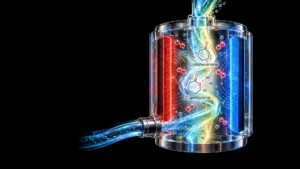
In the ATT process, plastic waste is placed into a reactor with sodium hydroxide (lye). When heat is applied, the sodium hydroxide acts as a catalyst and a reactant, triggering a series of chemical breakdowns that strip hydrogen atoms from the polymer chains. The result is a gas stream that is more than 90% pure hydrogen, a critical fuel source for the burgeoning "hydrogen economy" aimed at powering heavy industry, shipping, and long-haul trucking without carbon emissions.
Overcoming the Resilience of Polyethylene and Polypropylene
One of the primary hurdles in chemical recycling is the inherent stability of certain plastics. While PET contains oxygen atoms that make it more susceptible to chemical breakdown, polyethylene (PE) and polypropylene (PP) are composed entirely of carbon-hydrogen bonds. These bonds are notoriously difficult to break, earning these materials the reputation of being "inert" or chemically resistant.
To address this, the researchers introduced a crucial preliminary step: thermal oxidation pretreatment. Before the plastics undergo the main alkaline reaction, they are briefly heated in the presence of air at relatively mild temperatures. This process introduces oxygen-containing functional groups into the long, stubborn polymer chains of PE and PP. These "reactive sites" act like chemical handles, allowing the subsequent sodium hydroxide treatment to latch on and break the molecules apart efficiently.
This two-stage approach—activation followed by alkaline treatment—ensures that even the most resistant plastics contribute to the hydrogen yield. In laboratory tests, the team demonstrated that the combined process effectively decomposed all three plastic types simultaneously, producing a consistent and high-quality hydrogen output without the need for prior separation.
A Carbon-Negative Potential: Sequestration via Mineralization
Perhaps the most significant environmental advantage of this process is its approach to carbon management. In traditional gasification—a process that uses temperatures often exceeding 1,000 degrees Celsius to turn waste into syngas—the carbon in the plastic is frequently converted into carbon dioxide (CO2). Unless expensive carbon capture and storage (CCS) technology is added, this CO2 is vented into the atmosphere, contributing to global warming.
The ATT process operates at temperatures 300 to 400 degrees Celsius lower than traditional gasification, which inherently reduces the energy input required. More importantly, the chemical environment within the reactor prevents the formation of CO2 gas. Instead, the sodium hydroxide reacts with the carbon from the plastics to form sodium carbonate, a solid salt.
Analysis conducted by the research team revealed that more than 75% of the carbon originally found in the plastic waste was successfully trapped in these solid carbonate compounds or liquid organic residues. Less than 13% of the carbon escaped into the gas phase, and the amount of CO2 released during the actual reaction was negligible. This solid sodium carbonate can be further processed into calcium carbonate (limestone), a stable mineral used extensively in the construction industry for cement and concrete. By turning plastic waste into building materials, the process effectively sequesters carbon for decades or even centuries.
Chronology of Development and Collaborative Research
The journey to this breakthrough began not with plastic, but with biomass. In 2020, Professors Park and Kim published research in Nature Communications demonstrating that ATT could be used to produce hydrogen from seaweed and other organic matter in a carbon-neutral fashion. The success of that project laid the groundwork for the current study, as the researchers realized the same chemical principles could be applied to synthetic polymers.
The adaptation of the ATT process for plastics required a multi-institutional effort. The research was supported by the National Research Foundation of Korea and involved a diverse team of scientists, including:
- Jieun Park, Hyerin Seo, and Jiwon Lee (Ewha Womans University)
- Hyunah Kim (Korea Aerospace University)
- Hyung-Kyu Lim (Kangwon National University)
- Wonho Jung (Sogang University)
Over the past two years, the team refined the thermal oxidation pretreatment and optimized the reactor conditions to handle the unique thermal properties of mixed plastics. The successful conversion of a heterogeneous mixture of PET, PE, and PP marks the culmination of this phase of research, proving that "dirty" plastic waste can be a high-value feedstock for clean energy.
Comparative Analysis: ATT vs. Alternative Recycling Methods
To understand the impact of this technology, it must be compared to other emerging low-temperature hydrogen production methods.
- Solar-driven Photoreforming: This method uses sunlight and catalysts to break down plastic. While environmentally friendly, it is currently limited to oxygen-containing plastics like PET and often requires the plastic to be dissolved in harsh solvents. It struggles with the high-volume PE and PP streams.
- Electrochemical Conversion: This involves using electricity to drive the breakdown of plastics. Like photoreforming, it is highly sensitive to the chemical structure of the plastic and is difficult to scale for mixed, post-consumer waste.
- High-Temperature Gasification: While it can handle mixed waste, its energy intensity is massive, and its carbon footprint is high unless coupled with complex gas-separation technologies.
The ATT method stands out because it solves the "trinity" of recycling problems: it accepts mixed feedstocks, it operates at moderate energy levels, and it integrates carbon capture directly into the primary reaction.
Broader Implications for the Global Economy
The implications of this technology extend far beyond the laboratory. If scaled, the ATT process could serve as a bridge between the waste management industry and the energy sector. "We are solving two urgent global problems at the same time," noted Dean Ah-Hyung Park. "Plastic waste is accumulating at alarming rates, and clean hydrogen is essential for decarbonizing energy. This technology tackles both of these challenges in a creative and scalable way."
From an economic perspective, the ability to process mixed plastics significantly lowers the barrier to entry for commercial recycling. The high cost of manual and automated sorting is a major reason why many plastic products are currently deemed "unrecyclable." By removing this step, the UCLA/Ewha process could make chemical recycling profitable even in regions with less sophisticated waste-collection infrastructure.
Furthermore, the production of "green" or "blue" hydrogen is currently expensive. If hydrogen can be produced from waste—a feedstock that cities often pay to get rid of—the price of clean hydrogen fuel could drop precipitously, accelerating the transition away from fossil fuels in the transportation and manufacturing sectors.
Future Outlook and Path to Commercialization
Despite the promising results, the researchers emphasize that more work is needed before the ATT process appears in municipal waste plants. The next phase of research will focus on scaling the reactor size and testing the process with actual post-consumer waste, which often contains non-plastic contaminants like paper labels, food residue, and metal foils.
"By reducing the sorting costs and process complexity that have been major barriers to commercialization, this technology has the potential to become a next-generation core technology," said Professor Woo-Jae Kim. The team is also looking into the economic feasibility of the sodium hydroxide recovery cycle, ensuring that the chemicals used in the process can be recycled themselves to minimize environmental impact.
As the world seeks a "circular economy"—one where waste is eliminated and resources are continually reused—technologies like alkaline thermal treatment provide a blueprint for a sustainable future. By viewing a discarded plastic bag not as a pollutant, but as a reservoir of hydrogen and stable minerals, this research offers a pragmatic and scientifically rigorous path toward a cleaner planet.