The global energy landscape is undergoing an unprecedented transformation, driven by imperatives of decarbonization, energy security, and burgeoning demand from electrification and advanced technologies like artificial intelligence. This dynamic shift encompasses a broad spectrum of energy generation, storage, transmission, and consumption methods, ranging from conventional power systems to rapidly evolving renewables, advanced nuclear technologies, and cutting-edge energy storage solutions. Recent developments highlight a global race for technological supremacy and sustainable energy independence, marked by significant investments and groundbreaking innovations worldwide.
The Nuclear Resurgence: A Cornerstone of Future Energy Security
Nuclear power is re-emerging as a critical component of global energy strategies, valued for its low-carbon profile and consistent baseload generation. Nations are accelerating investments in both traditional and advanced nuclear technologies to meet climate targets and ensure energy resilience.
China has notably demonstrated its commitment to nuclear expansion with a substantial $25 billion investment, initiating four new nuclear power projects. This move is part of a broader national strategy to diversify its energy mix and reduce reliance on fossil fuels, aiming for significant capacity additions in the coming years. This expansion underscores China’s role as a leading developer and deployer of nuclear technology, pushing the boundaries of scale and efficiency.
In the United States, significant strides are being made in advanced reactor designs. The deployment of a first-of-its-kind 100 MW sodium-cooled Small Modular Reactor (SMR) is gaining momentum, signaling a future where compact, modular reactors can offer flexible, scalable, and safer nuclear power solutions for diverse applications. Concurrently, a US laboratory has successfully validated a nuclear microreactor through a zero-power criticality test, a crucial step towards proving the operational safety and feasibility of these miniature reactors. The US Air Force has also selected the gas-cooled KRONOS microreactor, highlighting the military’s interest in securing energy resilience for its bases, particularly in remote or critical operational areas where traditional grid infrastructure may be vulnerable. These microreactors offer the promise of distributed power generation, enhancing grid stability and energy independence.
Beyond new reactor designs, innovations in nuclear plant operations are also taking center stage. A new platform combining sensor data and plant history is being developed to enable faster nuclear alarm responses, significantly improving operational safety and efficiency. This integration of artificial intelligence and advanced analytics into existing infrastructure demonstrates a proactive approach to maintaining the highest safety standards while optimizing performance.
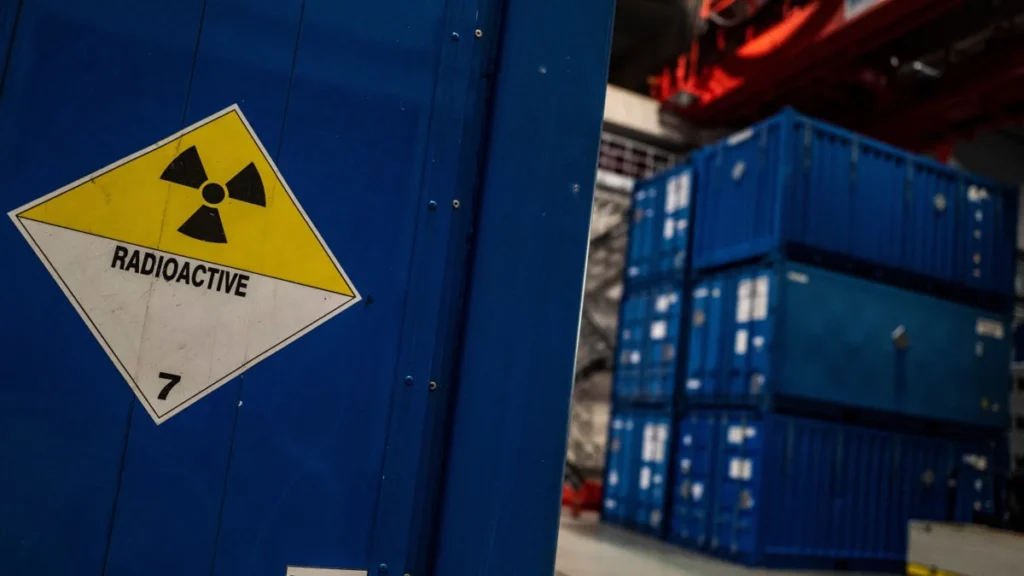
Globally, the nuclear sector continues to innovate across various fronts. China has successfully tested its first megawatt-class helium turbine for nuclear microreactors, a technological leap that could enhance the efficiency and versatility of high-temperature gas-cooled reactors. Meanwhile, Russia’s Akademik Lomonosov, the world’s only floating nuclear power plant, recently passed a global safety audit, validating the safety and operational integrity of this unique energy solution, which offers power generation capabilities for remote coastal regions or offshore industrial applications. The United States is also actively modernizing its nuclear fuel cycle, selecting potential host states for innovation campuses aimed at advancing technologies for spent fuel management, waste reduction, and the production of new nuclear fuels, thereby closing the fuel cycle and enhancing sustainability.
A novel and intriguing application of nuclear power is the planned construction of the "world’s first" nuclear-powered AI factory, a collaboration between Crusoe and Aalo Atomics. This initiative highlights the increasing energy demands of advanced computing and artificial intelligence, positioning nuclear energy as a clean and reliable power source for energy-intensive data centers and industrial operations.
Renewable Energy and Grid Modernization: Scaling Up Sustainable Power
Renewable energy sources continue their rapid deployment and technological advancement, forming an indispensable part of the global energy transition. Solar and wind power, in particular, are seeing continuous innovations aimed at improving efficiency, reducing costs, and enhancing resilience.
In solar technology, Chinese researchers have achieved a breakthrough with a new tandem solar cell that boasts an impressive 29.71% efficiency, utilizing sulfur-based innovation. This development pushes the boundaries of photovoltaic performance, promising more electricity generation from smaller footprints and potentially accelerating the global adoption of solar power.
Offshore wind power, a rapidly expanding segment of renewable energy, is also benefiting from engineering advancements. Research into cable-stay reinforcement could significantly improve the seismic resilience of offshore wind turbines, making them more robust against natural disasters and expanding their deployability in seismically active regions.
The increasing penetration of intermittent renewable sources necessitates robust grid infrastructure and advanced storage solutions. The development of a new Ohio data center that will generate all its own power through a 350 MW microgrid exemplifies the trend towards localized, resilient energy systems. Such microgrids can operate independently or in conjunction with the main grid, offering enhanced reliability and reducing strain on centralized infrastructure.
Advancements in Energy Storage and Critical Materials: Fueling the Electric Revolution
The transition to a decarbonized economy is heavily reliant on breakthroughs in energy storage and the secure supply of critical materials. Electric vehicles (EVs) are a primary driver for these innovations, pushing battery technology to new frontiers.

China has showcased remarkable progress in EV battery technology, testing an ultra-fast battery that charges to 70% in just 3 minutes and 41 seconds. This achievement addresses one of the major barriers to widespread EV adoption—charging time—and could revolutionize the electric vehicle market, making EVs more convenient and competitive with gasoline-powered cars.
Beyond conventional battery materials, researchers are exploring innovative methods for producing essential components. A groundbreaking 932°F molten salt process has been developed to turn thin air into solid graphite, a key component for EV battery anodes. This technology promises to create a sustainable and potentially inexhaustible source of graphite, reducing reliance on traditional mining and bolstering supply chain security.
The supply chain for critical minerals, particularly rare earth elements essential for many high-tech applications, including EVs and defense technologies, remains a global concern. To reduce reliance on dominant suppliers like China, a US startup is turning mining waste into defense minerals, an initiative that has received funding to scale up its operations. This effort addresses both environmental concerns by repurposing waste and strategic national security interests by securing domestic sources of vital materials. In a similar vein, a $104 million heavy rare earth expansion in Utah targets the production of materials sufficient for six million EVs annually, further strengthening domestic supply chains and supporting the rapid growth of the electric vehicle industry.
Frontiers of Energy Innovation: Fusion and Carbon Capture
Looking further into the future, energy research continues to push the boundaries of what is possible, with significant efforts directed towards fusion energy and carbon capture technologies.
Fusion energy, often described as the holy grail of clean power, aims to harness the same process that powers the sun. The world’s largest tokamak, ITER (International Thermonuclear Experimental Reactor), recently installed its 1,100-ton core module, a monumental step in the construction of this experimental reactor designed to confine fusion plasma. Concurrently, a US lab has entered a new deal to test nuclear fusion reactor components for extreme environments, crucial for developing materials that can withstand the intense conditions within a fusion reactor. These developments underscore the global collaborative effort and significant investment in realizing the long-term potential of fusion as a virtually limitless, clean energy source.
Carbon capture technologies are also advancing rapidly, offering a pathway to decarbonize industries that cannot easily switch to renewable electricity. A "US neighbor" (likely Canada) has switched on the world’s first carbon capture system specifically designed for gas turbines. This innovation represents a significant step towards mitigating emissions from natural gas power plants, a vital bridge fuel in many energy transitions. Furthermore, a company named Convertus has secured $135 million to build its planned next-generation waste-to-fuel plant, transforming food waste into biofuels. This addresses both waste management challenges and the demand for renewable transportation fuels.
Addressing Energy Demand and Infrastructure Resilience
The accelerating pace of technological development and global population growth is placing unprecedented demands on energy infrastructure. Electrification of transport and industry, coupled with the exponential energy requirements of data centers and AI workloads, necessitates continuous upgrades and innovative solutions for energy delivery and management.
These pressures highlight the importance of developing resilient, redundant, and intelligently managed energy systems. The focus is not solely on increasing generation capacity but also on optimizing how energy is moved, stored, and consumed. Software-driven solutions are increasingly vital for monitoring and managing complex grids, ensuring reliability and efficiency as systems become more interconnected and distributed. The concept of "energy systems defined by constraints" remains paramount, with power density, intermittency, materials availability, land use, safety, and cost all shaping deployment strategies.
Economic and Geopolitical Implications
The global energy transformation has profound economic and geopolitical implications. Nations investing heavily in advanced energy technologies stand to gain economic advantages through innovation, job creation, and export opportunities. Conversely, reliance on foreign sources for critical energy technologies or materials can pose significant geopolitical risks and vulnerabilities. The race for technological leadership in areas like advanced nuclear reactors, high-efficiency solar cells, and next-generation batteries is as much about economic competitiveness as it is about energy independence.
Furthermore, the shift away from traditional fossil fuels is reshaping global energy markets and international relations, creating new alliances and competitive dynamics. The emphasis on localized and resilient energy solutions, such as microgrids and domestic critical mineral processing, reflects a broader trend towards enhanced national energy security and reduced supply chain fragility.
Challenges and Outlook
Despite the rapid advancements, the global energy transition is not without its challenges. Permitting delays, supply chain disruptions, high upfront costs, and the long build times associated with large-scale energy projects remain significant hurdles. Intermittency issues inherent in many renewable sources require sophisticated grid integration strategies and substantial investment in energy storage. The focus, therefore, must remain on engineering decisions that ensure new systems are not only technically viable but also reliable, scalable, and affordable over the long term.
The energy future will not be a singular, uniform transition but rather a series of overlapping and uneven changes. Success will depend on the deployment of enduring systems—technologies that can consistently, safely, and economically deliver power for decades, moving beyond pilot projects and subsidies to operate at scale. The ongoing commitment to research, development, and strategic investment across conventional, renewable, nuclear, and emerging energy technologies underscores a global recognition that a robust, sustainable, and secure energy future is fundamental to human progress.