Researchers at the Massachusetts Institute of Technology (MIT) have unveiled a groundbreaking advancement in maritime technology, demonstrating that the strategic attachment of wedge-shaped vortex generators to a ship’s hull can achieve significant reductions in drag. This innovation, detailed in a paper presented at the Society of Naval Architects and Marine Engineers (SNAME) 2025 Maritime Convention in Norfolk, Virginia, promises to slash fuel consumption by up to 7.5 percent, directly translating to substantial reductions in operational expenses and, critically, a notable decrease in harmful emissions. The findings represent a vital step forward in the global effort to decarbonize the shipping industry, an area facing mounting pressure to meet ambitious environmental targets.
A Critical Juncture for Maritime Decarbonization
The International Maritime Organization (IMO) has set a formidable goal: to reduce the carbon intensity of international shipping by at least 40 percent by 2030, measured against 2008 levels. This ambitious objective underscores the urgency for innovative solutions that can be integrated into existing fleets and new vessel designs. Achieving such a significant reduction necessitates a multifaceted approach, encompassing not only the redesign of fundamental ship components like hulls, propellers, and engines but also the adoption of novel fuels and optimized operational strategies. The MIT research directly addresses this need by offering a practical, retrofittable technology that can contribute significantly to drag reduction, a primary driver of fuel consumption in maritime transport.
The research paper, titled "Net Drag Reduction in High Block Coefficient Ships and Vehicles Using Vortex Generators," was presented by a collaborative team of researchers from MIT. The core of their investigation focused on optimizing the design and placement of these vortex generators to maximize their effectiveness. The team included José del Águila Ferrandis, Jack Kimmeth, and Michael Triantafyllou from MIT Sea Grant and the Department of Mechanical Engineering, alongside Alfonso Parra Rubio and Neil Gershenfeld from the Center for Bits and Atoms. Their work leveraged a sophisticated blend of computational fluid dynamics (CFD) for initial modeling and parametric trend analysis, coupled with experimental validation using rapid prototyping and advanced AI optimization methods to pinpoint the ideal shape and size of the vortex generators.
The Science Behind the Savings: How Vortex Generators Work
At its core, the technology works by manipulating the flow of water around the ship’s hull. As a vessel moves through the water, the flow can become turbulent, especially in the aft sections of hulls with high block coefficients (a measure of a ship’s fullness and displacement). This turbulent separation of flow leads to increased drag, requiring more power to maintain speed and thus consuming more fuel.
The wedge-shaped vortex generators, when strategically placed, introduce small, controlled vortices into the boundary layer of the water flow. These vortices energize the flow, re-energizing the fluid near the hull surface and delaying the separation of the turbulent boundary layer. By keeping the flow attached to the hull for longer, the vortex generators effectively smooth the water’s path, reduce the size of the wake (the disturbed water trailing behind the ship), and minimize the low-pressure area that contributes to drag. This smoother flow also positively impacts the performance of the propeller and rudder, allowing them to operate more efficiently in a more uniform flow regime.
Michael Triantafyllou, a professor of mechanical engineering and director of MIT Sea Grant, emphasized the novelty of their findings: "We document for the first time experimentally a reduction in fuel required by ships using vortex generators, relatively small structures in the shape of a wedge attached at a specific point of the ship’s hull." This experimental validation is crucial, moving the concept from theoretical possibility to proven efficacy in a real-world maritime context.
A Journey from Aircraft Wings to Ocean Vessels
The concept of vortex generators is not entirely new. They have been a staple in aeronautical engineering for decades, primarily employed on aircraft wings to maintain lift and prevent stalling at lower speeds or higher angles of attack. Their application in maritime settings, particularly for drag reduction on commercial vessels, represents a significant evolutionary step. While smaller boats and specialized vessels might have seen limited use of similar devices, this research marks the first comprehensive study demonstrating their substantial benefits for large, commercial ships.
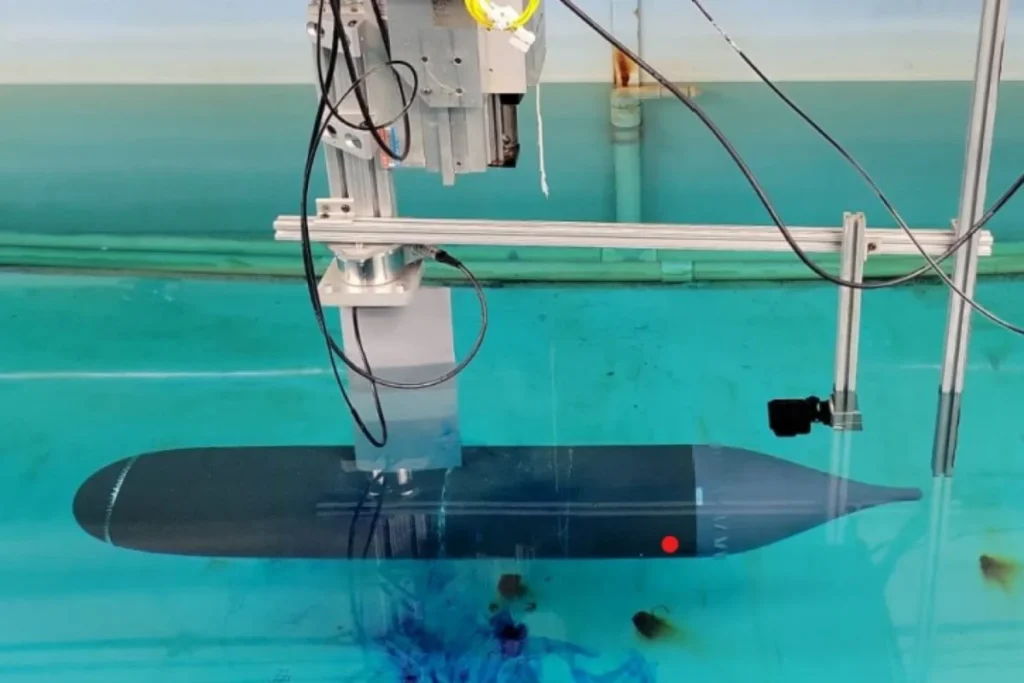
The MIT team’s methodology involved an iterative process of discovery. They began with extensive CFD simulations to establish parametric trends, allowing them to understand how different shapes, sizes, and placements of vortex generators would affect the flow dynamics. This computational groundwork enabled them to narrow down the possibilities. Subsequently, they employed rapid prototyping to create scale models of various hull configurations. These models were then subjected to rigorous experimental testing.
Key to their success was the comparison of different vortex generator designs. Scale models of an axisymmetric hull were tested with a bare tail, a tail augmented with delta-wing vortex generators, and a tail fitted with the optimized wedge-shaped vortex generators. The results clearly indicated that the wedge configuration was the most effective in achieving the desired drag reduction. Flow visualization techniques were instrumental in observing the physical mechanisms at play, confirming that the wedge generators successfully delayed turbulent flow separation and promoted smoother water flow.
Modular Design and Broad Applicability
A significant advantage of the wedge vortex generators is their modularity and adaptability. The researchers envision these devices being integrated into a wide array of hull forms, including those of bulk carriers and tankers, which often have high block coefficients and consequently experience substantial drag. Furthermore, these vortex generators are designed to be synergistic with existing maritime technologies. They can complement, or even potentially replace, devices like pre-swirl stators, which are fixed fins mounted ahead of propellers to impart a rotational motion to the water flow, thereby improving propeller efficiency. By working in concert, or offering a more efficient alternative, the vortex generators can enhance the overall performance of a ship’s propulsion system.
The potential economic impact is substantial. The researchers provided an illustrative example: fitting these vortex generators onto a 300-meter Newcastlemax bulk carrier operating at 14.5 knots on a cross-Pacific route. Their calculations suggest that such an installation could lead to a significant reduction in emissions and, more tangibly for operators, an estimated annual fuel saving of approximately $750,000. This figure, extrapolated across a global fleet, highlights the immense financial and environmental benefits of widespread adoption.
Collaboration and Future Trajectories
This pivotal research was made possible through the support of the CBA Consortium, with valuable collaboration from Oldendorff Carriers, a global operator managing a fleet of approximately 700 bulk carriers. This industry partnership underscores the practical relevance and immediate applicability of the MIT team’s findings. Working closely with industry leaders ensures that the developed technologies are not only scientifically sound but also economically viable and readily implementable within the existing maritime infrastructure.
Building upon this success, an extension of this research is currently being supported by the MIT Maritime Consortium. This consortium, established in 2025, is a testament to MIT’s commitment to addressing critical challenges in the modernization of the commercial fleet. Led by MIT professors Themis Sapsis and Fotini Christia, the Maritime Consortium fosters interdisciplinary research and collaboration across academia, industry, and regulatory agencies. Its aim is to bridge existing gaps in knowledge and technology, driving innovation that can transform the maritime sector towards greater sustainability and efficiency. The continued exploration of vortex generators, alongside other advanced propulsion and hull technologies, will be a key focus of the consortium’s efforts.
The implications of this research extend beyond mere fuel savings. Reduced fuel consumption directly translates to lower greenhouse gas emissions, a critical factor in mitigating climate change. By decreasing the amount of fuel burned, ships will emit less carbon dioxide (CO2), sulfur oxides (SOx), and nitrogen oxides (NOx), contributing to improved air quality in port cities and along shipping lanes. This technological leap offers a tangible pathway for the maritime industry to meet its decarbonization commitments and to operate more responsibly in an increasingly environmentally conscious world. The successful demonstration of wedge-shaped vortex generators represents a significant stride towards a cleaner, more efficient future for global shipping.