WASHINGTON D.C. – The U.S. Federal Communications Commission (FCC) has initiated a significant escalation in the ongoing technology and trade dispute with China, implementing new mandates that restrict the import of a specific category of advanced robotic machines and related equipment. The directive, rooted in national security concerns, marks a pivotal moment in the U.S. strategy to de-risk its supply chains and mitigate potential vulnerabilities within critical infrastructure.
The core of the FCC’s mandate targets "foreign-produced advanced robotic devices," explicitly naming humanoid and quadruped robots, alongside connected power inverters, as subject to these new import restrictions. While the FCC’s official statement avoids explicitly naming China, the context and the strong reaction from Beijing leave little doubt regarding the primary target of these measures. Reuters, citing sources familiar with the directive, confirmed the scope of these restrictions, underscoring their direct impact on Chinese manufacturers.
The Regulatory Mandate: A Deep Dive into National Security
The FCC’s rationale for these sweeping restrictions is firmly anchored in national security. The commission asserts that "all foreign-produced advanced robotic devices pose an unacceptable risk to the national security of the United States and to the safety and security of U.S. persons." This declaration necessitates their inclusion on the FCC’s "Covered List," a designation that triggers specific prohibitions on their importation and use within U.S. borders. The only potential exemption to this blanket ban would be a specific determination from the Department of War (now known as the Department of Defense) that a given device, or class of devices, does not pose such risks.
The interagency group that advised the FCC identified two primary unacceptable risks:
- Supply Chain Vulnerability: The potential for disruption to U.S. economic and national security due to reliance on foreign-produced robotic devices. This encompasses concerns over manufacturing provenance, potential for backdoors, or the ability of foreign adversaries to control or disable these devices, thereby impacting critical sectors from manufacturing to defense.
- Cybersecurity Risk: The threat posed to critical infrastructure, and by extension, the safety and security of U.S. persons, through potential cyber exploitation of these devices. Modern robots are increasingly connected, capable of collecting vast amounts of data, and often integrated into sensitive operational networks. A compromised robotic system could provide an entry point for espionage, sabotage, or widespread disruption.
These concerns are not merely theoretical. Advanced robots, especially humanoids and quadrupeds, are designed for complex interactions within diverse environments, from factory floors to logistical hubs, and potentially even public spaces or sensitive government facilities. Their integrated sensors (cameras, microphones, LiDAR, tactile sensors) can gather extensive environmental data, while their network connectivity makes them potential conduits for data exfiltration or remote manipulation. Connected power inverters, crucial components in renewable energy systems and industrial power management, could likewise be exploited to destabilize energy grids or disrupt industrial processes.
A Broader Geopolitical Chessboard: U.S.-China Tech Rivalry
This latest FCC action is not an isolated incident but rather a significant development in a protracted and intensifying technological and economic rivalry between the United States and China. Over the past decade, the relationship has shifted from one primarily characterized by economic partnership to one increasingly defined by strategic competition across multiple domains, particularly in advanced technologies.
Historical Context and Precedents: The U.S. government has progressively tightened restrictions on Chinese technology companies, citing concerns ranging from intellectual property theft to data privacy and national security.
- Huawei and ZTE: Beginning in the late 2010s, telecommunications giants Huawei and ZTE were placed on the Commerce Department’s Entity List, effectively barring U.S. companies from supplying them with technology without special licenses. The U.S. argued that Huawei’s equipment could be used by the Chinese government for espionage, a claim vehemently denied by the company.
- TikTok: The popular short-video app TikTok, owned by China’s ByteDance, has faced repeated threats of bans or forced divestment in the U.S. due to concerns over user data security and potential Chinese government access.
- Semiconductors: The most comprehensive restrictions came with the CHIPS and Science Act of 2022 and subsequent export controls on advanced semiconductors and chip-making equipment. These measures aim to cripple China’s ability to develop advanced computing and AI capabilities, deemed critical for future economic and military power.
- The "Clean Network" Initiative: Launched under the previous administration, the "Clean Network" initiative sought to secure U.S. telecommunications infrastructure from what it termed "untrusted" vendors, a clear reference to Chinese firms. The current FCC mandate on robotics aligns perfectly with the spirit of this initiative, expanding the scope of "untrusted" technology beyond telecommunications to advanced automation.
The rationale underpinning these cumulative actions often revolves around China’s "military-civil fusion" strategy, which seeks to leverage civilian technological advancements for military purposes. U.S. policymakers fear that Chinese companies, regardless of their private ownership claims, could be compelled by Beijing to assist in intelligence gathering or disruptive activities.

Economic Landscape and Industry Impact
The global robotics market is booming, projected to reach hundreds of billions of dollars in the coming years, driven by advancements in AI, machine learning, and automation. China has rapidly emerged as a dominant player in this space, both as the world’s largest consumer of industrial robots and as a burgeoning innovator and producer. Chinese manufacturers have made significant strides in collaborative robots (cobots), humanoid robots, and six-axis industrial arms, often offering cost-effective alternatives to Western and Japanese counterparts.
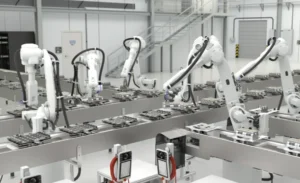
The recent Automate trade show in Chicago served as a testament to China’s growing presence in the global robotics industry. A wide array of Chinese manufacturers prominently displayed their latest innovations, including collaborative robots, sophisticated humanoids, and essential components like motors and sensors. Unitree Robotics, a Chinese firm specializing in quadruped and humanoid robots, even garnered mainstream attention with its dancing humanoids appearing as an act on NBC’s "America’s Got Talent" TV show, showcasing the increasing sophistication and public visibility of Chinese robotics.
The FCC’s new restrictions will undoubtedly disrupt this growing presence. For U.S. businesses, particularly those in manufacturing, logistics, and research, the mandate could introduce new complexities. Companies that have integrated Chinese-made robots into their operations or were considering them for future automation projects will now need to seek alternative suppliers, potentially leading to increased costs, delays in implementation, and a narrower range of available technologies. While fostering domestic production and allied sourcing is a stated goal, the immediate impact could be felt through market disruptions.
Statements and Reactions
The immediate reaction from China’s Ministry of Commerce was swift and condemnatory. While the FCC’s announcement did not explicitly name China, the ministry stated that the announcement was "discriminatory and suppressive against Chinese companies and products." This response is consistent with Beijing’s stance on previous U.S. restrictions, which it often characterizes as protectionist measures disguised as national security concerns, aimed at stifling China’s technological advancement.
In the United States, the move has been met with support from advocates for domestic manufacturing and supply chain resilience. Scott Paul, president of the Alliance for American Manufacturing, articulated this sentiment, stating, "It makes no sense to depend on a foreign adversary for the technology that permeates our lives and our nation’s security." He emphasized that the FCC’s action arrives as the U.S. stands on the cusp of a rapid technological evolution, a period that demands the nation leverage its capabilities to cultivate secure robotics and artificial intelligence supply chains domestically.
Industry stakeholders within the U.S. are expected to react with a mix of support and apprehension. While many acknowledge the long-term strategic imperative of securing critical supply chains, the immediate operational challenges of re-sourcing or investing in new, often more expensive, alternatives cannot be overlooked. American robotics companies, on the other hand, may see this as an opportunity to expand their market share and accelerate domestic innovation, backed by government policy.
Analysis of Implications and the Path Forward
The FCC’s restrictions on foreign-produced advanced robotic devices represent a significant step towards accelerating the technological decoupling between the U.S. and China. This move is poised to have multifaceted implications:
- Accelerated Supply Chain Diversification: The mandate will undoubtedly push U.S. companies to "de-risk" their supply chains, moving away from Chinese-made components and systems towards domestic or "friend-shored" alternatives. This could stimulate investment in U.S. robotics manufacturing and R&D, fostering a more resilient, albeit potentially more expensive, domestic ecosystem.
- Bifurcation of Global Robotics Market: The global robotics market may increasingly bifurcate, with distinct U.S.-aligned and China-aligned supply chains and technological standards emerging. This could complicate international collaboration and lead to less interoperability across global industrial automation systems.
- Innovation and Competition: While restrictions might temporarily limit access to certain cost-effective solutions, they could also spur greater innovation within the U.S. and allied nations, driving competition in advanced robotics. However, it also risks isolating U.S. companies from a major global market and potentially hindering their ability to leverage the full spectrum of global innovation.
- Enhanced Cybersecurity Posture: By proactively addressing perceived vulnerabilities in robotic devices, the U.S. aims to bolster the cybersecurity of its critical infrastructure. This focus will likely lead to more stringent security requirements for all robotic systems deployed in sensitive environments, regardless of their origin.
- Broader Policy Outlook: This FCC action signals a likely expansion of U.S. technology restrictions beyond telecommunications and semiconductors to other emerging and critical technologies. Robotics, artificial intelligence, biotechnology, and quantum computing are all areas where the U.S. is seeking to maintain a strategic advantage and mitigate perceived risks from geopolitical rivals. The "Department of War" clause in the FCC’s statement also underscores a growing integration of defense and national security considerations into civilian technology policy.
In conclusion, the FCC’s new mandate on advanced robotic devices is more than just a trade dispute over machines; it is a strategic maneuver within a larger geopolitical contest. It reflects a deepening commitment by the U.S. to secure its technological future and critical infrastructure against perceived threats, even if it means navigating short-term economic disruptions and further fragmenting global supply chains. The long-term implications for the global robotics industry, international trade, and the trajectory of technological innovation will be profound and far-reaching.