The National Academy of Sciences (NAS) has announced the election of 120 new members and 25 international members for the year 2026, marking a significant milestone for the American scientific community. Among the newly elected cohort are six distinguished faculty members from the Massachusetts Institute of Technology (MIT), alongside ten alumni who have demonstrated exceptional leadership in their respective fields. This election serves as a formal recognition of their original research and enduring contributions to the global body of knowledge, reinforcing MIT’s position as a premier hub for scientific innovation and policy influence.
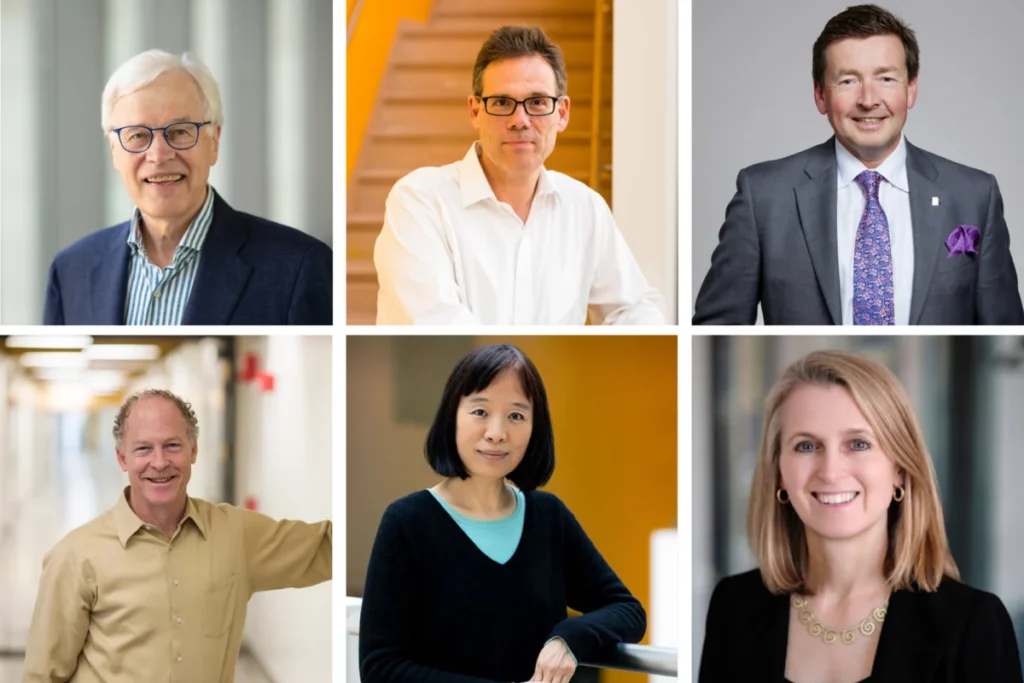
The faculty members honored in this cycle represent a diverse array of disciplines, ranging from economic theory and neuroscience to mechanical engineering and chemistry. The newly elected professors include Bengt Holmström, Michale Fee, Gareth McKinley, Keith Nelson, Fan Wang, and Catherine Wolfram. Their induction into the NAS is not merely a personal achievement but a reflection of the institutional rigor that defines the MIT academic experience.
A Tradition of Excellence: The Significance of NAS Membership
Membership in the National Academy of Sciences is widely regarded as one of the highest honors a scientist can achieve. Established in 1863 through a congressional charter signed by President Abraham Lincoln, the NAS was created to provide independent, objective advice to the nation on matters related to science and technology. Over the past 160 years, the Academy has evolved into a cornerstone of the American scientific enterprise.
Operating as a private, nonprofit institution, the NAS works in tandem with the National Academy of Engineering (NAE) and the National Academy of Medicine (NAM). Together, these organizations—collectively known as the National Academies of Sciences, Engineering, and Medicine—address complex problems and inform public policy decisions through rigorous, evidence-based reports. The 2026 election brings the total number of active members to approximately 2,400, highlighting the exclusive nature of this body.
The election process is notoriously rigorous. Candidates are nominated by current members and undergo an extensive vetting process that culminates in a final ballot during the Academy’s annual meeting. The criteria for election focus on the candidate’s "distinguished and continuing achievements in original research," a standard that ensures only those at the absolute vanguard of their fields are admitted.
Profiles of the Newly Elected MIT Faculty
Bengt Holmström: Architect of Modern Contract Theory
Bengt Holmström, the Paul A. Samuelson Professor of Economics, emeritus, stands as a titan in the field of economic sciences. Holmström’s career has been defined by his foundational research on the theory of contracting and incentives. In 2016, his work was globally recognized when he received the Sveriges Riksbank Prize in Economic Sciences in Memory of Alfred Nobel, which he shared with Oliver Hart.
Holmström’s contributions have fundamentally altered how economists understand the "theory of the firm." His work explores how contracts can be designed to motivate individuals and manage risk, particularly in environments where information is asymmetric. His research has had profound implications for corporate governance, executive compensation, and the management of liquidity during financial crises. Beyond the Nobel Prize, Holmström has been honored with the Stephen A. Ross Prize in Financial Economics and is a member of several international academies, including the Royal Swedish Academy of Sciences.
Michale S. Fee: Unlocking the Mysteries of Neural Sequences
Michale S. Fee, the Glen V. and Phyllis F. Dorflinger Professor of Neuroscience and head of the MIT Department of Brain and Cognitive Sciences, focuses on the biological basis of learning. His research utilizes the zebra finch as a model system to investigate how the brain generates complex sequential behaviors. By studying birdsong, Fee explores how young birds learn through trial and error—a process strikingly similar to how human infants learn to babble and eventually speak.
Fee’s work extends into the realm of clinical medicine. The neural circuits he studies in songbirds are analogous to the human brain circuits that are disrupted in neurodegenerative conditions such as Parkinson’s and Huntington’s diseases. By mapping these pathways, Fee’s lab provides critical insights that may one day lead to the development of novel treatments for these debilitating disorders.
Gareth H. McKinley: Advancing the Science of Complex Fluids
Gareth H. McKinley, the School of Engineering Professor of Teaching Innovation, is a world-renowned expert in rheology—the study of the flow of matter. His research focuses on non-Newtonian fluid dynamics, which involves materials that do not follow simple laws of viscosity, such as surfactants, polymers, and biomaterials.
McKinley’s contributions are both theoretical and practical. His group has developed innovative instrumentation and analysis techniques, such as broad-band "chirp" rheometry, which are now standard tools in both industrial and academic laboratories. His work is essential for the manufacturing of consumer products, foods, and advanced materials. McKinley’s election to the NAS follows a long list of honors, including election to the National Academy of Engineering and the Royal Society of London.
Keith A. Nelson: Controlling Matter with Light
Keith A. Nelson, the Haslam and Dewey Professor of Chemistry, has spent his career at the intersection of chemistry and physics. His research group focuses on the time-resolved optical study of collective transformations in condensed matter. By using ultra-fast pulses of light in the terahertz, optical, and X-ray spectral ranges, Nelson can observe and even control the motion of atoms and molecules in real-time.
This ability to drive modes of motion within solids allows researchers to manipulate the properties of materials with unprecedented precision. Nelson’s work has been recognized with the Frank Isakson Prize for Optical Effects in Solids and the William F. Meggers Award, marking him as a leader in the field of physical chemistry.
Fan Wang: Mapping the Brain-Body Connection
Fan Wang, a professor of Brain and Cognitive Sciences and investigator at the McGovern Institute, investigates the intricate neural circuits that govern the interaction between the brain and the body. Her research is particularly notable for its discovery of specific neuron populations that can suppress pain without affecting other sensations—a breakthrough that has significant implications for the future of anesthesia and pain management.
Wang’s lab utilizes cutting-edge tools like optogenetics and in vivo imaging to study how the brain regulates autonomic functions such as heart rate and anxiety. Her findings suggest that emotion, physiology, and consciousness are more deeply interconnected than previously understood, offering new pathways for treating anxiety disorders and chronic pain.
Catherine D. Wolfram: The Intersection of Economics and Climate Policy
Catherine D. Wolfram, the William Barton Rogers Professor in Energy, brings an applied economics perspective to the NAS. Her research focuses on energy markets, rural electrification in the developing world, and the impact of environmental regulations. Wolfram’s work is highly relevant to current global challenges, particularly as nations navigate the transition to renewable energy.
Wolfram has a distinguished record of public service, having served as the deputy assistant secretary for climate and energy economics at the U.S. Treasury. Her current projects involve carbon border adjustment mechanisms and the economic impact of oil market sanctions. Her expertise is vital for shaping policies that balance economic growth with environmental sustainability.
Celebrating MIT Alumni Achievements
In addition to the faculty, ten MIT alumni were elected to the Academy, representing a broad spectrum of scientific inquiry. These individuals have taken the foundational knowledge gained at MIT and applied it to solve some of the world’s most pressing problems.
The elected alumni include:
- Christopher J. Chang PhD ’02: A leader in bioinorganic chemistry and imaging.
- Cynthia J. Ebinger SM ’86, PhD ’88: An expert in the evolution of rift zones and plate tectonics.
- Andrew Gelman ’85, ’86: A statistician renowned for his work on Bayesian inference and political science.
- Richard L. Greene ’60: A physicist specializing in high-temperature superconductivity.
- Chuan He PhD ’00: A pioneer in the field of RNA epigenetics.
- Pardis C. Sabeti ’97: A geneticist known for her work on infectious diseases and the human genome.
- Robert J. Shiller SM ’68, PhD ’72: A Nobel laureate in economics recognized for his work on asset pricing and market volatility.
- Daniel M. Sigman PhD ’97: A geoscientist studying the history of the ocean’s nitrogen cycle.
- Eero Simoncelli SM ’88, PhD ’93: A computational neuroscientist focusing on visual perception.
- Salil P. Vadhan PhD ’99: A computer scientist making significant contributions to complexity theory and cryptography.
Chronology and Evolution of the National Academy of Sciences
The election of the 2026 class occurs at a time when the role of science in society is under intense scrutiny. To understand the weight of this election, one must look at the timeline of the Academy’s influence:
- 1863: President Lincoln signs the NAS charter during the Civil War, recognizing the need for scientific expertise in governance.
- 1916: The National Research Council (NRC) is established to involve the broader scientific community in the NAS’s work.
- 1964 & 1970: The National Academy of Engineering and the National Academy of Medicine are established, respectively.
- 20th Century: NAS members lead the charge in the Manhattan Project, the Space Race, and the Human Genome Project.
- 21st Century: The Academy focuses on climate change, artificial intelligence, and global pandemic preparedness.
Analysis: The Impact on Public Policy and Scientific Progress
The election of these sixteen individuals from the MIT community is more than an academic formality; it has tangible implications for the future of federal policy. NAS members are frequently called upon to serve on committees that produce influential reports for Congress and executive agencies.
For instance, the expertise of Catherine Wolfram will likely be leveraged in future discussions regarding international climate coalitions and trade-related carbon taxes. Similarly, the neurological insights of Michale Fee and Fan Wang will inform the National Institutes of Health (NIH) on funding priorities for brain research.
The interdisciplinary nature of the 2026 cohort also reflects a shift in modern science. The boundaries between chemistry, biology, and engineering are increasingly blurred. Researchers like Gareth McKinley and Keith Nelson are bridging the gap between fundamental physics and industrial application, ensuring that scientific discoveries translate into economic and societal benefits.
As the National Academy of Sciences continues to grow, the inclusion of MIT’s faculty and alumni ensures that the institute remains at the forefront of the global scientific conversation. Their work continues to push the boundaries of what is known, providing the roadmap for the next generation of researchers to follow.