The rapid evolution of artificial intelligence and data science has fundamentally altered the landscape of modern knowledge acquisition and industry practice. Nowhere is this transformation more visible than in the healthcare sector, where machine learning algorithms are now routinely deployed to accelerate drug discovery, refine diagnostic accuracy, and personalize patient treatment plans. However, the integration of these powerful tools into the medical field is not without significant risk. As researchers increasingly rely on massive datasets to train predictive models, the potential for these systems to institutionalize and amplify historical biases becomes a pressing ethical concern. Against this backdrop of technological promise and peril, the necessity for a robust, critically-minded educational framework has become an urgent priority for educators worldwide.
In the fourth installment of the Raspberry Pi Foundation’s ongoing research seminar series, "Teaching about AI in the Arts, Humanities, and Sciences," Kathy Jessen Eller of The Concord Consortium presented a pioneering solution to this educational challenge. The seminar focused on the Data Science, AI & You (DSAIY) program—phonetically referred to as "Daisy"—a comprehensive high school curriculum designed to demystify the complexities of machine learning through the lens of healthcare. By situating AI education within the high-stakes environment of medical data, the program seeks to equip the next generation of digital citizens with the critical reasoning skills required to navigate an increasingly automated world.
The Crisis of Cognitive Offloading in Modern Classrooms
A central theme of Jessen Eller’s presentation was the growing concern over how students interact with contemporary AI tools, such as Large Language Models (LLMs). As these tools become ubiquitous in academic settings, educators are observing a trend toward "cognitive offloading," where students utilize AI to generate answers without engaging in the deep reasoning or fact-checking necessary for true comprehension. The risk is twofold: students may accept inaccurate or "hallucinated" information as fact, and more importantly, they may fail to develop the foundational judgment required to evaluate the reliability of automated outputs.
Jessen Eller argued that the primary goal of AI education should not merely be technical proficiency, but the cultivation of critical judgment. The challenge for 21st-century pedagogy is to determine how to leverage the productivity gains of AI while ensuring that students remain the masters, rather than the passive consumers, of the technology. The DSAIY program was developed specifically to address this gap, moving beyond the "black box" approach to AI and instead inviting students to participate directly in the construction and evaluation of machine learning models.
The DSAIY Framework: A Semester-Long Pedagogical Journey
The Data Science, AI & You program is structured as a semester-long elective for high school students, designed to be accessible to those without prior backgrounds in computer science or advanced statistics. The curriculum is built around the "machine learning pipeline," a multi-stage process that includes data collection, data cleaning, model training, testing, and deployment. By engaging with each of these stages, students gain an granular understanding of how human decisions—such as which data points to include or how to categorize variables—directly influence the behavior of an AI system.
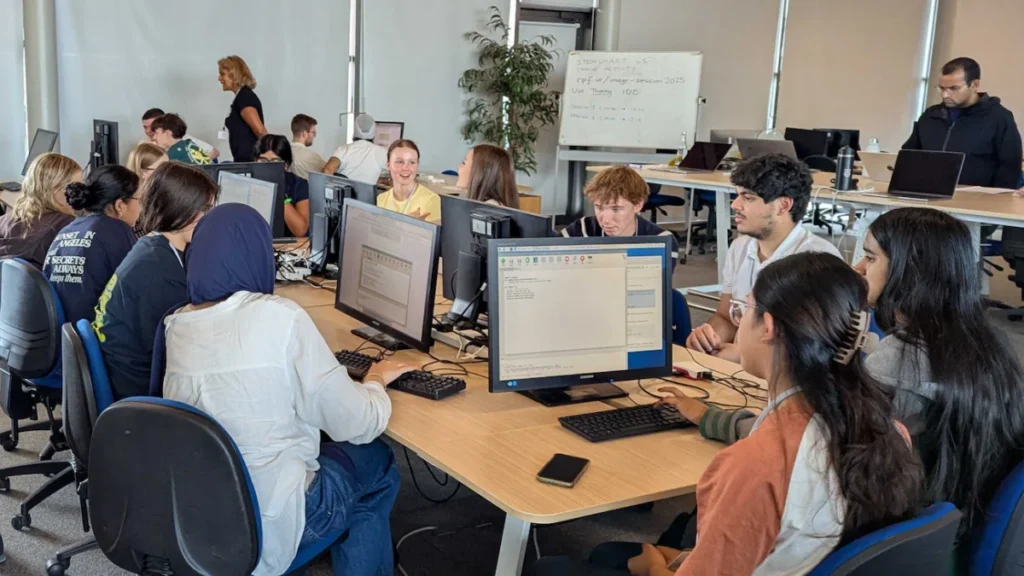
The program reaches its zenith in an "AI-a-thon," a competitive yet collaborative event modeled after industry hackathons. During this event, students work in interdisciplinary teams to solve real-world healthcare problems. These teams are not limited to students; they include professional data scientists, healthcare clinicians, and educators. This professional integration provides students with a rare opportunity to see how their classroom learning translates into the workplace, fostering a sense of agency and professional identity.
Technological Infrastructure: CODAP and Python Integration
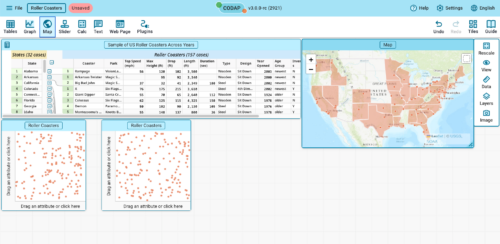
To facilitate this deep dive into data, the DSAIY curriculum utilizes the Common Online Data Analysis Platform (CODAP), an open-source, web-based tool developed by The Concord Consortium. CODAP is specifically designed for education, offering a highly visual and interactive interface that allows students to manipulate large datasets without the steep learning curve associated with professional statistical software.

One of the platform’s key strengths is its ability to visualize individual cases within a larger aggregate. Students can click on a single data point in a scatter plot and instantly see the full profile of the individual it represents. This feature is crucial for healthcare education, as it reminds students that behind every statistic is a human story. As students progress through the curriculum, they transition from CODAP’s visual environment to writing simple Python scripts. This graduated approach allows them to experience the power of code-based modeling while maintaining a strong conceptual grasp of the underlying data structures.
Addressing Algorithmic Bias Through Case Studies
A cornerstone of the DSAIY curriculum is its focus on ethics and fairness. Rather than treating bias as an abstract concept, the program uses concrete examples from the medical field to illustrate how data can fail certain populations. A primary case study involves the pulse oximeter, a device used to measure blood oxygen levels. Because these devices rely on light absorption through the skin, their accuracy can be significantly reduced in patients with darker skin pigmentation.
In the classroom, students replicate this phenomenon by collecting their own data and using CODAP to analyze the variability in readings. This hands-on experimentation leads to profound discussions about the socio-technical nature of medical devices. Students are encouraged to ask: Who was included in the original clinical trials for this device? What happens when a machine learning model is trained on data that lacks diversity? By grappling with the ethics of "outliers" and data exclusion, students learn that data is never neutral; it is a reflection of the systems and biases of the society that produced it.
Implementation Data and Demographic Impact
The DSAIY program has already seen significant implementation success. At the time of the seminar, the curriculum had been delivered by 11 teachers to more than 800 students across the state of Rhode Island. The choice of Rhode Island as a pilot site is strategic, as the state’s diverse student population provides a robust testing ground for the curriculum’s accessibility.
The data from these pilots suggest a high level of engagement, particularly among groups traditionally underrepresented in STEM. Jessen Eller noted that female participation in the DSAIY courses has been remarkably high, with some instructors reporting that the healthcare-focused curriculum attracted more girls than any other computer science elective in their school’s history. This suggests that framing AI and data science within a social-good context, such as healthcare, may be a key strategy for closing the gender gap in technology education.
To ensure the program’s sustainability, the DSAIY team provides extensive support for educators. Teachers participate in four days of intensive professional development and receive ongoing technical assistance throughout the school year. This support structure recognizes that many teachers may feel as intimidated by AI as their students, and provides them with the confidence to lead complex discussions on algorithmic fairness and statistical modeling.
The Foundational Role of Data Literacy
The overarching conclusion of the seminar was a powerful call to action: AI literacy cannot exist without data literacy. While the public discourse often focuses on the "magic" of generative AI, the reality is that every AI system is only as good as the data that feeds it. When students are taught to examine, question, and reason about data, they develop a "computational skepticism" that is essential for the modern age.
This data-first approach ensures that students do not view AI as an infallible authority. Instead, they see it as a tool—one that is prone to error, subject to human bias, and in constant need of oversight. By understanding the mechanics of data collection and model evaluation, students are better prepared to use tools like ChatGPT responsibly, recognizing when an output is likely to be biased or inaccurate based on the probable nature of its training data.
Broader Implications for the Future of Education
The success of the DSAIY program offers a blueprint for how AI might be integrated into other subjects across the humanities and sciences. By moving away from a siloed "computer science only" approach, schools can weave AI and data literacy into the fabric of the general curriculum. This interdisciplinary model reflects the reality of the modern workforce, where data science is no longer the sole province of programmers, but a required skill for doctors, historians, artists, and policymakers.
As the Raspberry Pi Foundation continues its seminar series, the work of Kathy Jessen Eller and The Concord Consortium serves as a reminder that the goal of technology education is not just to produce more coders, but to produce more informed, ethical, and critical thinkers. The future of healthcare, and indeed the future of democracy, may well depend on the ability of the next generation to look at an AI-generated answer and ask the most important question of all: "Why?"
The seminar series will continue on July 14 with a presentation by Dan Verständig of Goethe University Frankfurt, who will explore the intersections of Social Explainable AI (Social XAI) and Critical Computational Literacy. This upcoming session promises to build on the foundations laid by the DSAIY program, further exploring how society can demand transparency and accountability from the algorithms that increasingly govern human life.