A groundbreaking experiment conducted by physicists at the Massachusetts Institute of Technology (MIT) has provided an unprecedented, real-time glimpse into the intricate dance of electronic phases within a quantum material. This pivotal research, focusing on the emergence, disappearance, and re-formation of distinct electronic patterns, offers profound implications for understanding exotic phenomena such as high-temperature superconductivity and magnetism, potentially accelerating the development of next-generation quantum technologies.
Decoding Quantum Coexistence: A Fundamental Leap
The concept of coexisting phases is not alien to everyday experience; a glass of ice water, for instance, visibly demonstrates the simultaneous presence of solid and liquid states. However, at the quantum scale, this coexistence manifests in a far more enigmatic manner. Here, electrons within a material spontaneously organize themselves into collective, ordered patterns, creating distinct electronic phases that can share the same physical space. The ability to observe these quantum phenomena dynamically and in real-time has long been a formidable challenge for condensed matter physicists.
The MIT team’s breakthrough, detailed in the prestigious journal Nature Physics, centered on erbium tritelluride, a rare-earth material renowned for its propensity to form these intricate electronic structures known as charge density waves (CDWs). Their meticulous investigation revealed a startling disparity in how two such coexisting electronic phases emerge: one transitions smoothly and uniformly across the material, while the other germinates in isolated pockets that subsequently expand and coalesce. This differential behavior provides critical clues for deciphering the complex interplay of electronic states in quantum matter.
Erbium Tritelluride: A Quantum Laboratory
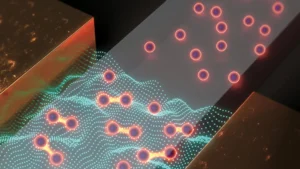
Erbium tritelluride (ErTe$_3$) serves as an ideal platform for such investigations due to its inherent properties. Under ambient conditions, its electrons are distributed relatively uniformly. However, as the material is cooled, its electrons undergo a collective self-organization, adopting a repeating, wave-like pattern—the aforementioned charge density wave. A CDW can be conceptualized as a periodic modulation of electron density, akin to an "electronic crystal" where regions of higher electron concentration alternate with regions of lower concentration, rather than electrons behaving independently. This ordered state is a hallmark of many strongly correlated electron systems.
What makes ErTe$_3$ particularly fascinating is its capacity to host not one, but two distinct charge density waves, each appearing at a specific critical temperature. The first, often referred to as the dominant CDW, materializes when the material is cooled to approximately -8°C (265 Kelvin). This wave primarily extends along one crystallographic direction. Upon further cooling, to roughly -113°C (160 Kelvin), a second, subdominant CDW emerges, oriented perpendicularly to the first. The result is a veritable "electronic checkerboard"—two orthogonal patterns coexisting within the same material, posing a fundamental question: How precisely does this second phase come into being? Does it appear uniformly, grow gradually, or nucleate locally and spread? Until now, answering this question with real-time observation has eluded scientists.
The Ingenious "Shake and Listen" Experiment
To unravel this mystery, the MIT physicists employed a sophisticated experimental technique known as time-resolved pump-probe spectroscopy. Atomically thin samples of erbium tritelluride were first cooled to an ultra-low temperature of approximately -230°C (43 Kelvin), a state where both charge density waves were stably coexisting.
The experiment commenced with a powerful, ultrashort laser pulse – the "pump." This pulse delivered a burst of energy to the material, momentarily disrupting or effectively "shaking" and temporarily destroying the delicate electronic checkerboard pattern. Following a precisely controlled delay, ranging from femtoseconds (quadrillionths of a second) to picoseconds (trillionths of a second), a second, weaker laser pulse – the "probe" – was fired. This probe pulse had just enough energy to eject electrons from the disturbed sample, a phenomenon known as photoemission.
By meticulously measuring the energy and momentum of these emitted electrons, the researchers were able to reconstruct instantaneous snapshots of the electronic configuration within the material as it recovered from the initial perturbation. This "shake and listen" approach, as aptly described by MIT physicist Nuh Gedik, allowed the team to essentially perturb the system and then monitor its dynamic response, capturing the evolution of the two electronic phases separately and in unprecedented detail. This method offers a powerful window into non-equilibrium dynamics, providing insights that static measurements simply cannot.
Two Phases, Two Distinct Pathways to Recovery
The results of the pump-probe experiment yielded a surprising and crucial differentiation in the recovery mechanisms of the two CDWs. The dominant charge density wave, once disrupted, exhibited a gradual and uniform return across the entire sample. Even after significant disturbance, its electronic order smoothly rebuilt itself, suggesting a continuous transformation. This behavior is characteristic of a second-order phase transition, similar to the gradual loss of magnetism in a material as it is heated, where order changes continuously without sudden, localized jumps.

In stark contrast, the second, subdominant charge density wave displayed a fundamentally different recovery pattern. Instead of a smooth, uniform re-emergence, this phase began to reappear in isolated, localized regions, which then gradually expanded outwards, eventually coalescing to restore the full ordered state. This nucleation and growth mechanism is typical of a first-order phase transition, analogous to the boiling of water where bubbles of steam (a new phase) form and expand within the liquid.
"This observation is a game-changer," commented Dr. Gedik, whose team led the research. "For the first time, we’ve watched these quantum phases come alive, not just as static structures, but as dynamic entities with their own distinct birth processes. Understanding these different emergence pathways is absolutely critical for predicting and controlling the behavior of more complex quantum materials."
Broader Context: The World of Quantum Materials
Quantum materials are a class of substances where the collective behavior of electrons gives rise to exotic and often counter-intuitive properties. Unlike conventional materials where electron behavior can be described individually, in quantum materials, strong interactions between electrons lead to emergent phenomena that defy simple classical explanations. These materials are at the forefront of condensed matter physics research, holding the promise for revolutionary technological advancements.
Charge density waves are just one example of such collective electronic states. Other prominent examples include superconductivity (zero electrical resistance below a critical temperature), magnetism, and topological states of matter. The challenge lies in the complex interplay between these different orders. Often, multiple electronic phases compete or coexist within the same material, and their interactions dictate the overall properties. For instance, in many high-temperature superconductors, CDWs are found to coexist with or even compete with the superconducting state. Unraveling this intricate relationship is paramount to understanding and ultimately harnessing superconductivity at higher, more practical temperatures.
Implications for Superconductivity and Beyond
The findings from the MIT experiment carry significant implications, particularly for the long-standing quest to understand and achieve high-temperature superconductivity. Many of the most promising high-temperature superconductors, such as the cuprates, are known to exhibit charge density wave orders that coexist or intertwine with their superconducting phases. The ability to observe how these competing or collaborating phases emerge and interact in real-time offers a powerful new lens through which to study these complex materials.
"This work provides a crucial piece of the puzzle," explained a theoretical physicist familiar with the research, who was not directly involved in the study. "If we can control the nucleation and growth of one phase versus another, we might gain a handle on enhancing desired properties, like superconductivity, or suppressing unwanted ones, such as competing orders that might hinder it."
Beyond superconductivity, these insights could inform the development of other quantum technologies. For example, understanding the dynamics of electronic phases is vital for designing novel spintronic devices, which utilize the spin of electrons in addition to their charge, or for building more robust quantum bits (qubits) for quantum computers. Materials exhibiting tunable electronic phases could serve as active components in ultra-low-energy computing, memory storage, or sensing applications.
The Road Ahead: Future Research and Challenges
The success of this experiment marks a significant milestone, but it also opens up numerous avenues for future research. One immediate direction is to investigate how these distinct emergence mechanisms are affected by external parameters such as strain, electric fields, or doping. Could manipulating these external factors allow scientists to control which phase dominates or how quickly it forms?
Another critical step will be to extend these real-time observations to other quantum materials, particularly those that exhibit even more complex phase diagrams, including the aforementioned high-temperature superconductors. The challenge will be to adapt and refine the pump-probe techniques to probe even more subtle electronic correlations and interactions.
Furthermore, the theoretical understanding of these dynamic phase transitions needs to evolve in tandem with experimental capabilities. The observed first-order nucleation and growth versus second-order uniform recovery presents a rich landscape for theoretical models to explain the underlying microscopic mechanisms driving these distinct behaviors.
In conclusion, the MIT physicists’ ability to capture the birth and reassembly of coexisting quantum phases in real-time represents a monumental achievement in condensed matter physics. By providing an unprecedented dynamic view into the heart of quantum materials, this research not only deepens our fundamental understanding of how electronic orders emerge and interact but also offers a powerful new tool in the ongoing scientific endeavor to unlock the full potential of quantum phenomena for the benefit of future technologies. The journey to a new era of quantum innovation has just received a vital new compass.