BIRMINGHAM, Mich. — Humanoid robots, once confined to the realm of science fiction and advanced research labs, are now making tangible strides toward integration into real-world industrial environments. This transition marks a pivotal moment in automation, promising transformative changes across manufacturing, logistics, and beyond. However, the journey from proof-of-concept demonstrations to widespread, scalable deployment in factories and warehouses presents a formidable array of manufacturing and operational challenges. Bruce Richard, an expert from Jabil, a global manufacturing solutions provider, succinctly characterizes this complex evolution as a "crawl, walk, run process," underscoring the phased and deliberate approach required for success.
The burgeoning interest in humanoid robots stems from their inherent design, which, mimicking human form, allows them to potentially navigate and operate within existing human-centric infrastructures without extensive retooling or specialized environments. Unlike traditional industrial robots, which often require dedicated, segregated workspaces, humanoids are envisioned to eventually work alongside human counterparts, performing a diverse range of tasks. Yet, achieving this vision at scale demands rigorous attention to safety, reliability, and economic viability. Manufacturers are currently in the nascent stages of defining precise protocols and operational frameworks to ensure humanoids can integrate safely and reliably into dynamic factory ecosystems.
The Dawn of Industrial Humanoids: From Concept to Reality
The concept of human-like machines performing labor dates back centuries, but the practical realization of humanoid robots began in earnest in the late 20th and early 21st centuries. Early pioneers like Honda’s ASIMO and Boston Dynamics’ Atlas demonstrated impressive mobility and balance, largely within controlled environments. These early iterations, while groundbreaking, were primarily research platforms, showcasing the potential rather than immediate industrial applicability. The "event" of humanoids moving beyond proof-of-concept isn’t a singular occurrence but a gradual yet accelerating shift driven by exponential advancements in several critical technological domains.
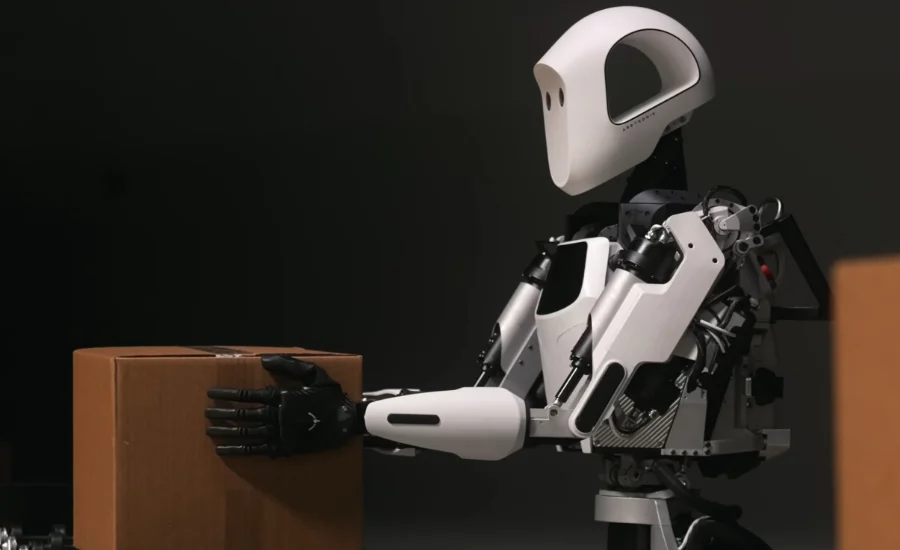
Over the past decade, significant leaps in artificial intelligence (AI), machine learning (ML), computer vision, and advanced mechatronics have coalesced to make industrial-grade humanoids a more tangible prospect. Companies like Agility Robotics with Digit, Figure AI, Tesla with Optimus, and Sanctuary AI with Phoenix are actively developing bipedal robots capable of performing increasingly complex tasks. These modern humanoids are designed with industrial applications in mind, focusing on robustness, energy efficiency, and the ability to interact with a wide variety of objects and tools. This evolution is underpinned by substantial investment, with venture capital pouring into robotics startups, signaling a strong belief in their future industrial relevance. For instance, Agility Robotics recently secured significant funding, including from Amazon, to scale production of its Digit robot for logistics and warehouse operations, a clear indicator of market readiness for specific, initial use cases.
Navigating the Early Deployment Landscape
Initial deployments of humanoid robots are strategically focused on simpler, highly repetitive tasks within carefully controlled industrial environments. Factories and warehouses serve as ideal proving grounds due to their structured nature, where tasks can be meticulously defined and monitored during these critical early deployment phases. Examples include material handling, machine tending, basic assembly, and quality inspection — roles that often involve ergonomic challenges or labor shortages for human workers.
This cautious approach is essential for gathering real-world data on performance, durability, and most importantly, safety. As Richard points highlights, these systems are inherently complex, often incorporating "thirty to fifty different actuators and motors." This intricate electromechanical design necessitates an extremely high degree of manufacturing precision, robust testing protocols, and unwavering operational consistency. Any variability in hardware, even minor deviations in manufacturing tolerances, can significantly impact performance, reliability, and safety, making mass production a significant hurdle.
Deep Dive into Scaling Challenges
The path to scaling humanoid robotics for broader industrial use is fraught with multifaceted challenges, extending beyond mere technological feasibility to encompass supply chain maturity, cost-effectiveness, and regulatory adaptation.
1. Mechanical and Electromechanical Complexity:
The sheer number of moving parts – actuators, motors, sensors, and structural components – within a humanoid robot presents an engineering marvel but also a manufacturing nightmare. Each component must function flawlessly and in perfect synchronization. The integration of 30-50 high-precision actuators, often operating under significant load, demands advanced materials science to ensure durability and lightweight design. Furthermore, power management for these complex systems is critical; balancing high performance with battery life remains a perpetual design challenge. Maintaining manufacturing tolerances across hundreds of thousands of such units, ensuring repeatability, and conducting comprehensive testing for every robot off the assembly line requires sophisticated automation in the robot’s own manufacturing process. "You can’t have variability in the hardware," Richard emphasizes, highlighting the stringent quality control necessary to ensure consistent performance and safety.
2. Software and AI Development:
While hardware provides the body, software and AI are the brains. The advancements in AI, particularly large language models (LLMs) and advanced robotics engineering, are indeed accelerating humanoid development, as Richard notes. However, translating sophisticated AI algorithms from controlled simulations to the chaotic reality of a factory floor is a monumental task. Humanoids need to perceive their environment accurately (using LiDAR, cameras, depth sensors), understand complex instructions, adapt to unforeseen circumstances, and learn from experience – often in real-time. This requires robust computer vision, natural language processing, advanced motion planning, and reinforcement learning capabilities. The software must be resilient to errors, capable of self-diagnosis, and easily updated, akin to modern vehicle operating systems. The development of a universal operating system or AI framework for humanoids is still in its infancy, with many developers creating proprietary solutions, which can hinder broader integration and interoperability.
3. Supply Chain Maturity and Industrialization:
One of the most significant bottlenecks to widespread deployment is the immaturity of the specialized supply chain for humanoid robot components. Unlike established industries like automotive or consumer electronics, the market for humanoid-specific actuators, sensors, and processors is still relatively niche. "We need to get the supply chain more mature," Richard asserts. This involves scaling the production of critical components, improving their reliability, and driving down costs through economies of scale. Currently, many specialized components are produced in smaller batches, leading to higher unit costs and longer lead times. Industrialization requires standardization of interfaces, robust quality control across a diverse supplier base, and a global logistics network capable of supporting rapid scaling. Jabil’s role, as a manufacturing solutions provider, is crucial here; they work with robotics OEMs on manufacturing, supply chain optimization, industrialization, and scaling, acting as a vital bridge between innovation and mass production.
4. Safety and Human-Robot Interaction (HRI):
The prospect of humanoids working alongside humans introduces complex safety considerations. Unlike traditional industrial robots often caged for safety, humanoids are designed for co-existence. This necessitates advanced perception systems to detect humans, predict their movements, and react safely. Current industrial safety standards, such as ISO 10218 for industrial robots and ISO/TS 15066 for collaborative robots, provide a foundational framework, but humanoids’ unique form factor and diverse capabilities will likely require new, specific standards. Risk assessment becomes paramount, encompassing collision avoidance, pinch point mitigation, emergency stop protocols, and ensuring predictable behavior in dynamic environments. The psychological aspect, including human acceptance and trust in these machines, also plays a role in effective HRI.
Significant Progress and Evolving Capabilities
Despite these hurdles, there has been undeniable and significant progress across many fronts. Richard highlights the rapid evolution of dexterity and manipulation capabilities. "A few years ago, a pick was a vacuum trying to suck onto the side of a product," he explains. "Today, they’re picking products up and being able to manipulate them." This shift from rudimentary gripping to fine motor control is transformative. Modern grippers, often multi-fingered and equipped with haptic feedback, can handle a vast array of objects with varying shapes, textures, and fragility, enabling tasks like intricate assembly or precise tool usage.
Beyond manipulation, advancements in bipedal locomotion have made humanoids more stable and capable of navigating uneven terrain or cluttered factory floors. Improved battery technology and energy management systems are extending operational durations, making them more practical for full shifts. The integration of high-resolution cameras, depth sensors, and advanced computational power allows humanoids to perceive their surroundings with increasing fidelity, akin to human vision.
Broader Impact and Implications for the Future Workforce
The eventual widespread deployment of humanoid robots promises profound implications for industrial operations and the global workforce.
1. Enhanced Efficiency and Productivity:
Humanoids offer the potential for unparalleled operational flexibility. Their ability to perform diverse tasks in existing human-centric environments means less need for specialized robotic cells or extensive infrastructure overhauls. This adaptability can lead to significant gains in efficiency, repeatability, and throughput, particularly in industries facing labor shortages or requiring highly flexible production lines.
2. Redefining Work and Workforce Transformation:
Contrary to fears of mass job displacement, many industry experts, including Richard, believe humanoids will primarily augment, rather than replace, human labor. "Rather than replacing workers," Richard posits, "humanoids will create new operational roles focused on supervision and maintenance." This perspective aligns with historical technological shifts, where new tools often create new categories of jobs. The future workforce will likely require skills in human-robot teaming, programming, maintenance, and oversight of robotic fleets. This necessitates significant investment in training and upskilling programs to prepare workers for these evolving roles.
3. Economic and Societal Considerations:
The economic impact could be substantial, driving down manufacturing costs, increasing competitiveness, and potentially leading to reshoring of some industrial activities. However, ethical considerations around data privacy (as humanoids collect environmental data), accountability for errors, and the broader societal implications of advanced AI in physical forms will need careful navigation. Public perception, often influenced by media portrayals, will also play a crucial role in the acceptance and integration of these machines into everyday industrial life.
Preparing for the Humanoid Era
Ultimately, manufacturers are urged to begin preparing for the humanoid era now. This involves proactively identifying practical industrial use cases where physical AI and humanoid systems could eventually deliver tangible benefits in terms of efficiency, repeatability, and operational flexibility. Companies should invest in understanding the technology, evaluating potential integration points, and perhaps even engaging in pilot programs to gain first-hand experience. Collaborating with robotics OEMs and manufacturing solutions providers like Jabil will be critical in navigating the complexities of industrialization and scaling.
The journey of humanoid robots from ambitious prototypes to indispensable industrial assets is a marathon, not a sprint. It demands sustained innovation, robust engineering, a mature supply chain, and thoughtful integration strategies. As Bruce Richard and the industry acknowledge, the "crawl, walk, run" process is well underway, promising a future where human ingenuity and robotic capabilities converge to unlock unprecedented levels of industrial potential.