In a significant leap forward for the field of quantum information science, an international team of researchers has successfully addressed one of the most persistent bottlenecks in the development of magnon-based quantum technologies. By extending the operational lifespan of magnons—quasiparticles representing collective excitations of electron spins in a magnetic lattice—from a few hundred nanoseconds to an unprecedented 18 microseconds, the team has demonstrated that these magnetic waves can serve as viable candidates for long-term quantum memory and information processing. This nearly hundredfold increase in coherence time marks a turning point, potentially paving the way for quantum computers that are not only more efficient but also dramatically smaller than current iterations, with the possibility of housing a full processor within the dimensions of a small coin.
The research, led by Professor Andrii Chumak at the University of Vienna and published in the journal Science Advances, represents a culmination of years of theoretical speculation and experimental refinement. By combining extreme cryogenic cooling with the selection of ultra-pure materials and specific wave frequencies, the team has proven that the limitations previously thought to be inherent to magnons are, in fact, engineering challenges related to material science. This discovery shifts the focus of the global quantum race, suggesting that the path to scalable quantum hardware may lie in the mastery of magnetic crystals rather than just the manipulation of light or superconducting circuits.
Understanding the Role of Magnons in the Quantum Landscape
To appreciate the magnitude of this breakthrough, one must first understand the unique properties of magnons. In the current quantum computing ecosystem, information is typically carried by photons (light particles) or stored in superconducting qubits (circuits that conduct electricity without resistance). While these technologies are advanced, they come with significant spatial requirements. Superconducting qubits require large, complex microwave structures, often resulting in quantum computers that occupy entire rooms.
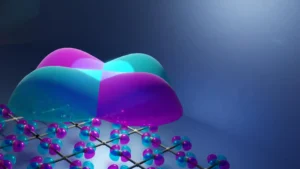
Magnons offer a compelling alternative. They are "spin waves"—disturbances in the magnetic alignment of a solid material. If one imagines a grid of tiny compass needles, a magnon is the wave that occurs when one needle is nudged, causing a ripple of orientation changes to move through the grid. Unlike photons, which travel through a vacuum or optical fibers, magnons are confined to magnetic solids. Crucially, their wavelengths are orders of magnitude shorter than those of photons at the same frequency. This allows magnon-based components to be miniaturized down to the nanometer scale, offering a blueprint for high-density quantum chips that could fit inside a standard smartphone.
Furthermore, magnons are naturally "gregarious" quasiparticles. They interact easily with other quantum systems, including phonons (vibrations) and photons. This makes them ideal candidates for "transducers"—devices that translate quantum information from one medium to another, such as converting a stationary qubit’s state into a signal that can travel across a network.
The Chronology of the Lifespan Challenge
For over a decade, the primary argument against "magnonics" in quantum computing was the "lifetime problem." In the quantum world, information is fragile. To perform a calculation, the quantum state must remain stable (coherent) for long enough to be manipulated. Historically, magnons in even the highest-quality materials were notoriously fleeting. They would dissipate or "decohere" within 50 to 500 nanoseconds. This window was too narrow to perform complex error correction or to store information reliably.
The research timeline leading to the current breakthrough involved several phases of trial and error. Initial experiments focused on Yttrium Iron Garnet (YIG), a synthetic crystal known for having the lowest magnetic damping of any known material. However, even with YIG, researchers consistently hit a wall. In the early 2020s, the scientific community began to suspect that the "magnon bottleneck" was a fundamental limit of physics—a thermal or magnetic noise that could not be bypassed.
The University of Vienna team, working in collaboration with the University of Colorado, Colorado Springs, and partners in Germany and Ukraine, decided to test this assumption by isolating every possible variable that could cause a magnon to decay. Their methodology involved a two-pronged strategy: reducing thermal interference to near-absolute zero and bypassing the surface defects of the materials.
Technical Methodology: The Path to 18 Microseconds
The breakthrough was achieved using a specialized experimental setup centered on ultra-pure YIG spheres. These spheres, roughly the size of a grain of sand, were placed inside a mixed-phase cryostat—a sophisticated refrigeration unit capable of reaching temperatures as low as 30 millikelvin. At this temperature, which is significantly colder than the void of deep space, the thermal energy that usually knocks magnons out of alignment is almost entirely eliminated.
However, cooling alone was not enough. The team’s critical insight involved the "wavelength" of the magnons they generated. In previous studies, researchers often used uniform magnons—waves where the entire magnetic sample oscillates in unison. These uniform waves are highly susceptible to "surface scattering," where tiny imperfections or dust on the outside of the crystal cause the wave to break apart.
The Vienna-led team instead generated short-wavelength magnons. Because these waves are more localized and "tighter," they are less affected by the boundaries of the material. This shift in approach allowed the magnons to travel through the bulk of the crystal without being "tripped up" by its edges.
The results were immediate and startling. Upon testing three different YIG spheres with varying levels of purity, the researchers observed that the magnons in the purest sample survived for 18 microseconds. This represents a 60-fold to 100-fold improvement over the standard results of the previous decade.
Supporting Data and Material Analysis
The data gathered during the experiment provided a clear correlation between material quality and quantum coherence. The researchers utilized three distinct samples:
- Commercial Grade YIG: Showed significant improvement but remained limited by internal impurities.
- High-Purity YIG: Demonstrated lifetimes in the single-digit microsecond range.
- Ultra-Pure YIG: Achieved the record-breaking 18-microsecond threshold.
This gradient proved that the limit of a magnon’s life is not a law of nature, but a reflection of the crystal’s perfection. In the paper published in Science Advances, the authors noted that the damping observed in the 18-microsecond sample was almost entirely due to residual impurities in the crystal lattice. This implies that as the manufacturing of synthetic garnets improves, the lifetime of magnons could theoretically extend into the millisecond range—a duration that would exceed many of today’s top-performing superconducting qubits.
International Collaboration and Academic Synergy
The success of the project highlights the importance of international cooperation in high-stakes physics. The experimental heavy lifting was conducted by Rostyslav Serha, a doctoral researcher whose work formed the core of the study. The theoretical framework and leadership provided by Andrii Chumak were supplemented by the expertise of the University of Colorado, Colorado Springs, which assisted in the high-frequency magnetic modeling.
The contribution of the Vienna Doctoral School in Physics was also notable. Co-author Kaitlin McAllister, a master’s student at the time, was part of an internship program designed to integrate young researchers into world-class projects. The inclusion of researchers from Ukraine, despite the ongoing geopolitical challenges in the region, underscored the scientific community’s commitment to collaborative progress.
Broader Implications: The "Quantum Bus" and Miniaturization
The implications of an 18-microsecond magnon lifetime are profound for the future of hardware architecture. One of the most sought-after components in quantum computing is a "quantum bus." In a classical computer, a bus is a communication system that transfers data between components. In a quantum computer, a bus must transfer "qubits" of information between different parts of a processor without destroying their quantum state.
Because magnons can now survive long enough to travel across a chip, they can serve as this quantum bus. A single magnon could connect hundreds of individual qubits, allowing for a level of scalability that is currently difficult to achieve with bulky wires and microwave resonators.
Furthermore, the "universal translator" aspect of magnons cannot be overstated. Because they can interact with both light (optics) and vibration (mechanics), magnons could act as the glue that holds a hybrid quantum system together. For example, a quantum computer could use superconducting qubits for logic, magnons for internal data transfer, and photons for long-distance communication with other quantum computers.
Analysis of Future Challenges
While the 18-microsecond achievement is a landmark, the path to a commercial "coin-sized" quantum computer remains complex. The requirement for 30 millikelvin temperatures means that while the processor itself might be small, the cooling apparatus—the dilution refrigerator—is still a large, energy-intensive machine.
The next phase of research will likely focus on two areas:
- Material Synthesis: Working with chemical engineers to create YIG crystals with even fewer defects, potentially targeting a "parts-per-billion" purity level.
- On-Chip Integration: Moving from spherical crystals to thin-film architectures that can be mass-produced using existing semiconductor fabrication techniques.
The discovery that material purity is the primary gatekeeper is ultimately an optimistic one for the industry. Unlike fundamental limits of physics, which cannot be changed, material purity is an engineering problem that the global manufacturing sector has a long history of solving—as evidenced by the evolution of ultra-pure silicon for the classical computer revolution.
Conclusion
The work of the University of Vienna and its partners has effectively resuscitated magnonics as a front-runner in the race for practical quantum hardware. By shattering the microsecond barrier, they have transformed magnons from a theoretical curiosity into a robust tool for quantum information storage and transport.
As the world looks toward the next decade of computing, the ability to shrink quantum processors from the size of a room to the size of a coin becomes increasingly vital for the eventual deployment of quantum sensors, secure communication hubs, and portable quantum devices. The 18-microsecond magnon is not just a record; it is a signal that the magnetic foundations of the next technological era are being laid today.