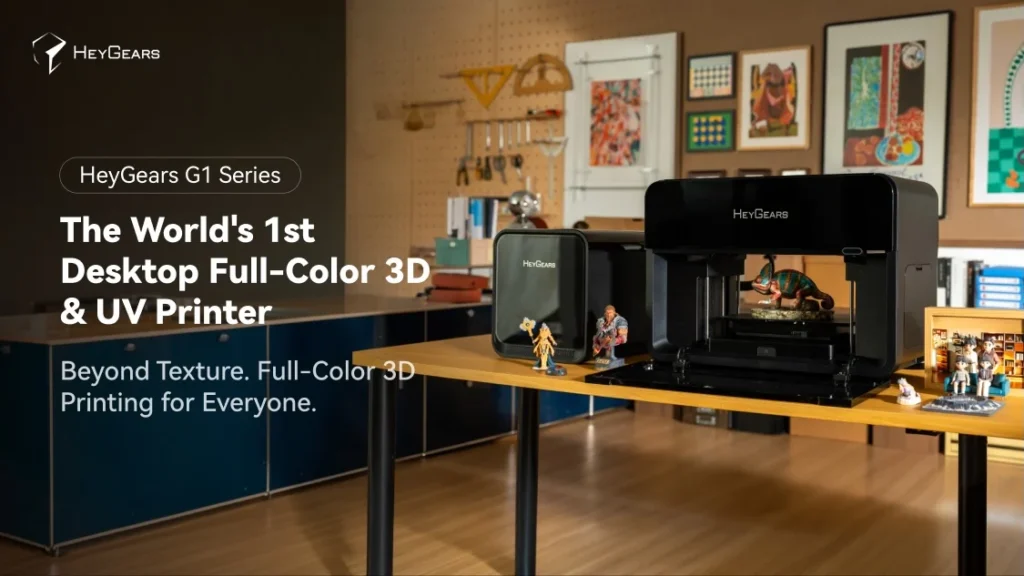
The G1 Series is not merely a refinement of existing resin printing technology but a fundamental integration of two distinct processes: high-precision resin vat polymerization and industrial-grade inkjet technology. This hybrid approach allows the machine to function as a versatile creative hub. The primary objective of the G1 Series is to eliminate the bottleneck of manual post-processing, specifically the labor-intensive task of hand-painting 3D-printed models. For years, the "holy grail" of desktop 3D printing has been the ability to produce "finished-out-of-the-box" products. The G1 Series addresses this by utilizing Precision Piezo Inkjet technology to apply millions of colors and intricate gradients directly during the build process or as a secondary UV printing layer on existing objects.
Technical Specifications and Hardware Architecture
At the heart of the G1X—the flagship model in the series—is the Epson i3200 industrial-grade printhead. This component is a staple in high-end wide-format 2D printing and industrial manufacturing, but its integration into a desktop 3D printer is a notable engineering feat. The printhead features 3,200 high-density nozzles and eight dedicated ink channels, allowing for the delivery of ultra-fine 3.9-picoliter droplets. This level of precision enables the system to achieve resolutions of up to 1440 × 2400 DPI.
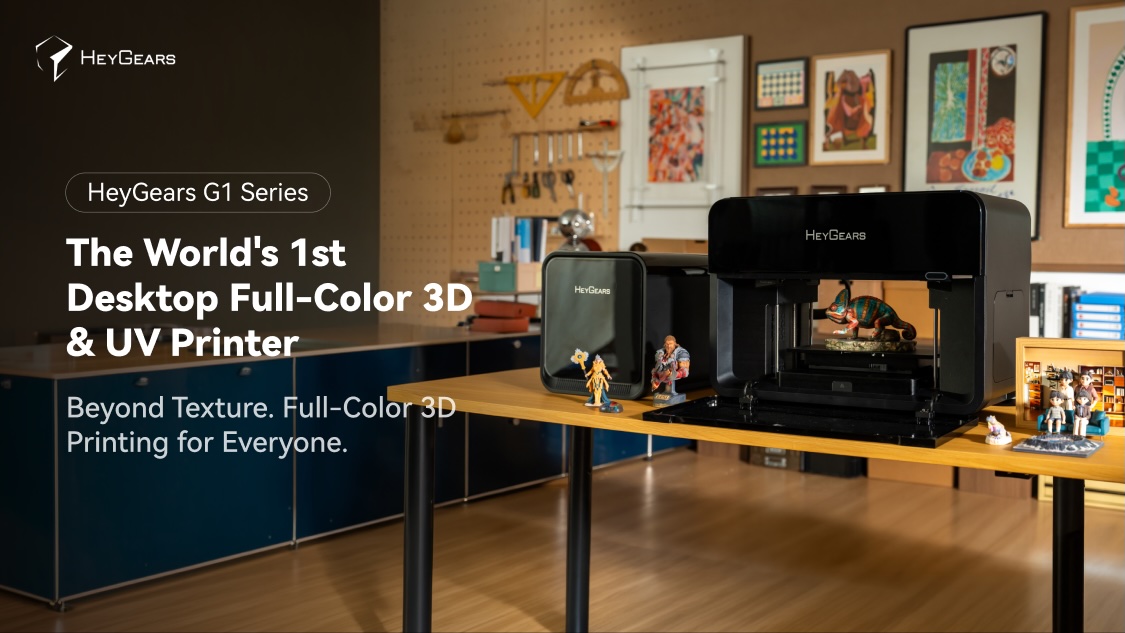
To ensure reliability in a professional environment, the G1 Series incorporates several industrial maintenance features. These include an integrated white-ink circulation system, which prevents the heavy titanium dioxide pigments often found in white ink from settling and clogging the nozzles. Additionally, the system features printhead heating to maintain consistent ink viscosity, automatic cleaning cycles, and moisturizing functions to prevent the ink from drying on the nozzle plate during idle periods. These features are critical for users who require a "workhorse" machine that can handle consistent daily production without frequent manual intervention.
The modularity of the G1 Series is perhaps its most defining characteristic. The platform is designed to handle over 400 different base materials, allowing users to switch between rigid, flexible, transparent, and high-temperature resins. This versatility is further enhanced by the system’s ability to print water-soluble support materials. In traditional resin printing, removing supports often leaves "pitting" or marks on the surface of the model, necessitating sanding and priming. With water-soluble supports, complex internal geometries and delicate overhangs can be printed with the knowledge that the supports will simply dissolve, leaving a pristine surface finish that preserves the printed color and texture.
A Chronology of Development and Market Entry
The launch of the G1 Series on Kickstarter is the culmination of years of research and development by HeyGears, a company that established its reputation in the highly demanding dental and medical 3D printing sectors. Founded by a team of engineers with a focus on high-precision digital manufacturing, HeyGears initially focused on B2B solutions, providing 3D printing ecosystems for clear aligners, dentures, and custom-fit hearing aids.

The timeline leading to the G1 Series launch reflects a strategic pivot toward the "prosumer" and small-business markets:
- 2015-2020: HeyGears establishes a global footprint in the dental and healthcare industries, perfecting high-speed resin printing and automated post-processing.
- 2021-2023: Internal R&D focuses on miniaturizing industrial inkjet technology to fit a desktop form factor, aiming to solve the "color problem" in 3D printing.
- Early 2024: Closed beta testing with selected artists and design studios to refine the "Blueprint Studio" software and AI integration.
- July 23, 2024: The Kickstarter campaign goes live, reaching its initial funding goals within minutes and introducing the Super Early Bird tiers.
This entry into the crowdfunding space is a calculated move to build a community of creators who can provide feedback and develop new use cases for the three-in-one workflow. By bypassing traditional retail channels for the initial launch, HeyGears is able to offer the G1 Starter Pack at a $700 discount off the eventual $2,699 MSRP, making the technology accessible to early adopters.
Three Integrated Workflows: A New Paradigm for Creators
The G1 Series distinguishes itself by offering three primary creative workflows within a single platform, effectively replacing three separate machines.

1. Full-Color 3D Printing
Using UV-cured inkjet technology, the G1X builds models layer-by-layer, injecting color into the resin as it cures. This allows for the creation of character figures, architectural prototypes, and artistic models that feature photorealistic textures and gradients. Because the system can combine transparent and colored materials in a single print, users can create complex objects like medical models with visible internal organs or collectibles with "energy effects" that glow through semi-transparent layers.
2. 3D Textured UV Printing
Beyond simple color, the G1 Series can add tactile, physical textures to 2D surfaces. By layering ink and varnish, the printer can simulate the feel of leather, wood grain, oil paintings, or even Braille. This capability is particularly valuable for the packaging industry and luxury customization businesses, where the "haptic" experience of a product is just as important as its visual appeal.
3. 2D UV Printing on Objects
The G1 Series also functions as a high-resolution flatbed UV printer. Utilizing intelligent object recognition and positioning, the system can identify objects placed on its bed—such as phone cases, power banks, or acrylic signage—and print custom designs directly onto them. This eliminates the need for manual alignment and allows for efficient batch production of personalized merchandise.

Software Integration and the Role of Artificial Intelligence
Recognizing that full-color 3D modeling can be a daunting task for those without professional CAD experience, HeyGears has introduced the HeyVerse and Blueprint Studio software ecosystem. This suite of tools leverages AI to bridge the gap between a digital concept and a physical object.
The "AI-Assisted Design" feature allows users to generate 3D models from text descriptions or 2D images. For example, a user can upload a character sketch, and the AI assists in generating a manifold 3D mesh with appropriate color mapping. Furthermore, the software provides tools for automatic texture generation, print layout optimization, and material usage estimation. This "Upload → Generate → Prepare → Print" workflow is designed to reduce the technical barriers to entry, allowing artists to focus on their creative vision rather than the minutiae of mesh repair and color profiling.
Market Implications and Industry Reaction
The introduction of the G1 Series has sparked significant interest within the manufacturing community. Industry analysts suggest that this release could signal a shift in how small-to-medium enterprises (SMEs) approach prototyping and short-run production. Traditionally, full-color 3D printing was dominated by industrial players like Stratasys (with their PolyJet technology) and Mimaki. While these machines offer incredible quality, their high cost of entry and expensive proprietary materials have kept them out of reach for most small studios.

By bringing a similar inkjet-on-resin capability to the desktop at a fraction of the cost, HeyGears is positioning itself to disrupt the customization market. Reactions from the maker community have been largely positive, with many highlighting the potential for the G1 Series to revolutionize the "indie" toy and collectible market. Instead of printing in grey resin and spending hours painting, creators can now iterate on color schemes digitally and print finished products ready for display or sale.
However, some experts note that the success of the G1 Series will depend on the long-term reliability of its inkjet components and the cost of its specialized ink and resin consumables. HeyGears has addressed these concerns by highlighting their industrial heritage and the use of the robust Epson i3200 platform, but the "real-world" performance in the hands of thousands of Kickstarter backers will be the ultimate test.
Conclusion and Future Outlook
The HeyGears G1 Series represents a bold attempt to unify disparate manufacturing technologies into a cohesive, user-friendly desktop system. As the Kickstarter campaign continues, the focus will likely shift from the hardware specifications to the actual output of the early adopters. With the G1 Starter Pack priced at $1,999 and the comprehensive G1X Deluxe Bundle at $4,999, HeyGears is offering a tiered entry point for various levels of professional need.

If the G1 Series delivers on its promise of "full-color without hand painting," it could set a new standard for what consumers expect from desktop 3D printers. The integration of AI-assisted design and modular hardware suggests a future where the distance between a digital thought and a physical, colorful reality is shorter than ever before. For the broader industry, this launch is a clear indication that the next frontier of 3D printing is not just about "what" we can build, but "how finished" that object can be the moment it leaves the build plate.